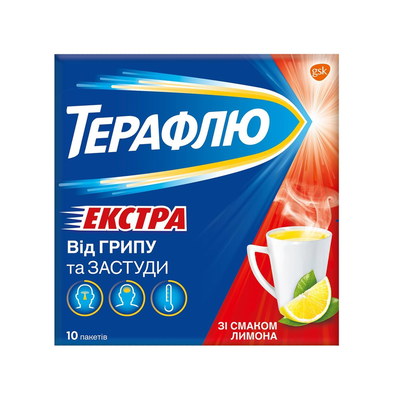
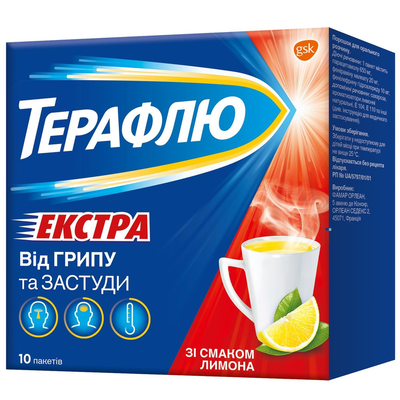
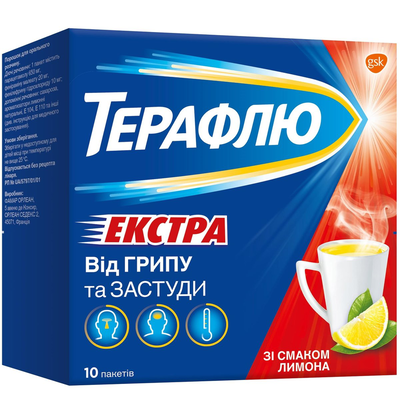
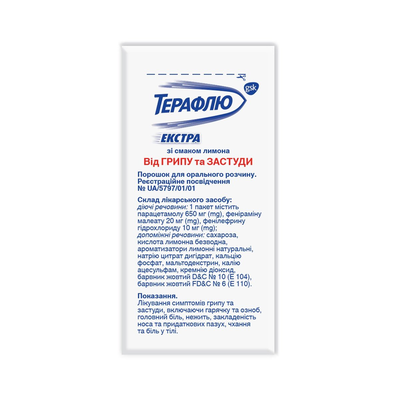
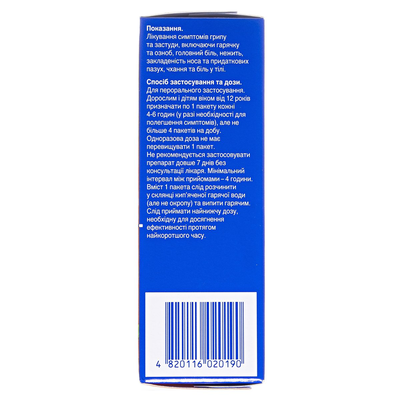
Teraflu Extra Lemon-Flavored Powder for Oral Solution, No. 10, per package
Composition
Active ingredients: 1 packet contains 650 mg of acetaminophen, 20 mg of pheniramine maleate, and 10 mg of phenylephrine hydrochloride;
inactive ingredients: sucrose, anhydrous citric acid, natural lemon flavorings,
sodium citrate dihydrate, calcium phosphate, maltodextrin, acesulfame potassium, silicon dioxide, D&C Yellow No. 10 (E 104), FD&C Yellow No. 6 (E 110).
Dosage Form
Powder for oral solution.
Main physical and chemical properties: free-flowing granulated powder consisting of large white and yellow granules; soft lumps may be present; solution: a cloudy, yellow solution with a lemon odor.
Pharmacotherapeutic group
Analgesics and antipyretics. Paracetamol, combinations without psycholeptics.
ATC code N02B E51.
Pharmacological Properties
Pharmacodynamics.
A combination drug for the treatment of flu and cold symptoms.
Paracetamol has analgesic, antipyretic, and mild anti-inflammatory effects, which are primarily mediated by the inhibition of prostaglandin synthesis in the central nervous system. It does not affect platelet function or hemostasis. The absence of peripheral prostaglandin inhibition accounts for important properties of the drug, such as the preservation of protective prostaglandins in the gastrointestinal tract. Therefore, acetaminophen can be administered to patients for whom peripheral prostaglandin inhibition is undesirable (e.g., patients with a history of gastrointestinal bleeding or elderly patients).
Phenylephrine hydrochloride is a sympathomimetic amine that acts primarily on alpha-adrenergic receptors. When used at therapeutic doses to relieve nasal congestion, the drug does not exert a significant stimulatory effect on the beta-adrenergic receptors of the heart or a significant effect on the central nervous system. It is a widely recognized nasal decongestant and acts by causing vasoconstriction, thereby reducing swelling and redness of the nasal mucosa.
Pheniramine maleate—an H1-receptor blocker—has an antiallergic effect, reduces the severity of local exudative symptoms, and alleviates tearing, rhinorrhea, and itching in the eyes and nose. The reduction in general allergic symptoms associated with respiratory tract diseases results in a moderate sedative effect. It also has an antimuscarinic effect.
Pharmacokinetics.
After oral administration, paracetamol is rapidly and almost completely absorbed from the gastrointestinal tract. Maximum plasma concentration is reached within 10–60 minutes.
Paracetamol is distributed to most tissues of the body. It crosses the placental barrier and is excreted into breast milk. At usual therapeutic doses, paracetamol binds to plasma proteins to a minor extent; however, as concentrations increase, the degree of binding increases.
Paracetamol is primarily metabolized in the liver via two pathways: glucuronidation and sulfation. It is excreted in the urine, primarily as glucuronide and sulfate conjugates. Less than 5% of a paracetamol dose is excreted unchanged. The half-life ranges from 1 to 3 hours.
The maximum plasma concentration of pheniramine maleate is reached in 1–2.5 hours; the half-life is 16–19 hours. 70–83% of the orally administered dose is excreted in the urine unchanged or as metabolites.
Phenylephrine hydrochloride is absorbed unevenly in the gastrointestinal tract and undergoes presystemic metabolism by monoamine oxidase (MAO) in the intestine and liver; Thus, when taken orally, phenylephrine has reduced bioavailability. It is excreted almost entirely in the urine as a sulfate conjugate. Peak plasma concentrations are reached within 45 minutes to 2 hours, and the plasma half-life is 2 to 3 hours.
Indications
Treatment of flu and cold symptoms, including fever and chills, headache, runny nose, nasal and sinus congestion, sneezing, and body aches.
Contraindications
Hypersensitivity to any component of the medication. Severe cardiovascular disease, severe liver and/or kidney dysfunction, congenital hyperbilirubinemia, hyperthyroidism, pheochromocytoma, glucose-6-phosphate dehydrogenase deficiency, severe forms of diabetes mellitus, alcoholism, acute pancreatitis, benign prostatic hyperplasia with urinary retention, bladder neck obstruction, pyloroduodenal obstruction, bronchial asthma, epilepsy, blood disorders (including severe anemia, leukopenia), thrombosis, thrombophlebitis, angle-closure glaucoma, hypertension, and sleep disorders. Do not use during treatment with MAO inhibitors or for 2 weeks after discontinuing such treatment.
Concomitant treatment with tricyclic antidepressants, beta-blockers, or other sympathomimetics is contraindicated.
Drug Interactions and Other Interactions
The drug interactions of each individual component of the medication are well known. There is no reason to believe that the use of these components in combination would affect the drug interaction profile.
Paracetamol.
With regular, long-term use of paracetamol, the anticoagulant effect of warfarin or other coumarin derivatives may be enhanced, and the risk of bleeding may increase. With occasional use of acetaminophen, this effect is not pronounced.
Hepatotoxic drugs may increase the likelihood of paracetamol accumulation and overdose. The risk of paracetamol-induced hepatotoxic effects may increase in patients receiving medications that induce hepatic microsomal enzymes, such as barbiturates and antiepileptic drugs (phenytoin, phenobarbital, carbamazepine), and the antituberculosis drugs rifampin and isoniazid.
Metoclopramide increases the rate of paracetamol absorption and causes an increase in its maximum plasma levels. Similarly, domperidone may increase the rate of paracetamol absorption.
Paracetamol may prolong the half-life of chloramphenicol.
Paracetamol may reduce the bioavailability of lamotrigine, thereby decreasing its effect due to possible induction of its metabolism in the liver.
The absorption of acetaminophen may be reduced when used concomitantly with cholestyramine, but the reduction in absorption is negligible if cholestyramine is administered 1 hour later.
Regular use of acetaminophen concurrently with zidovudine may lead to the development of neutropenia and an increased risk of liver damage. Acetaminophen reduces the effectiveness of diuretics.
Probenecid affects the metabolism of acetaminophen. For patients taking probenecid concurrently, the dose of acetaminophen should be reduced. The hepatotoxicity of acetaminophen may be exacerbated by prolonged or excessive alcohol consumption.
Paracetamol may affect the results of uric acid tests using the phosphotungstic acid method.
Pheniramine maleate.
First-generation antihistamines, such as pheniramine maleate, may enhance the central nervous system depressant effects of certain other medications (e.g., monoamine oxidase inhibitors, tricyclic antidepressants, hypnotics and sedatives, neuroleptics, alcohol, antiparkinsonian agents, barbiturates, anesthetics, tranquilizers, and narcotic analgesics).
Pheniramine enhances the anticholinergic effects of atropine, antispasmodics, other antihistamines, antiparkinsonian agents, and phenothiazine neuroleptics. Pheniramine maleate may also inhibit the action of anticoagulants.
Phenylephrine hydrochloride.
Use of this medication is contraindicated in patients undergoing therapy with monoamine oxidase inhibitors (MAOIs) and in patients who have taken MAOIs within the past 2 weeks. Phenylephrine may potentiate the effects of MAO inhibitors and trigger a hypertensive crisis.
Concomitant use of phenylephrine with other sympathomimetic agents or tricyclic antidepressants (e.g., amitriptyline) may increase the risk of cardiovascular side effects.
Phenylephrine may reduce the effectiveness of beta-blockers and other antihypertensive drugs (e.g., debrisoquine, guanethidine, reserpine, methyldopa). The risk of developing hypertension and other cardiovascular side effects may increase.
Concomitant use of phenylephrine with digoxin and cardiac glycosides may increase the risk of arrhythmia or heart attack.
Concomitant use of phenylephrine with ergot alkaloids (ergotamine and methysergide) may increase the risk of ergotism.
Special Considerations for Use
Use this medication with caution in cases of:
- impaired kidney and/or liver function;
- acute hepatitis;
- hemolytic anemia;
- chronic malnutrition and dehydration;
- cardiovascular diseases;
- diabetes mellitus;
- prostatic hypertrophy, as patients may be prone to urinary retention;
- stenosing peptic ulcer.
Since this medication contains acetaminophen, concomitant use of other medications containing acetaminophen should be avoided due to the risk of severe liver damage in the event of an overdose. Paracetamol overdose can cause liver failure, which may lead to the need for a liver transplant or death. This medication is not recommended for use with vasoconstrictors. Do not exceed the specified doses.
While taking this medication, avoid consuming alcoholic beverages, as ethyl alcohol, when taken concurrently with paracetamol, may cause liver dysfunction. Paracetamol should be used with caution in patients with Raynaud’s disease, heart conditions (including arrhythmia and bradycardia), thyroid disorders, glaucoma, chronic lung diseases, as well as in patients taking medications that affect the liver and in the elderly. Elderly patients with confusion should avoid taking this medication. There is a known risk of premature closure of the ductus arteriosus in the fetus when paracetamol is used during pregnancy.
Patients should consult a doctor:
- if they have breathing problems, such as asthma, emphysema, or chronic bronchitis;
- if symptoms do not improve within 5 days or if symptoms are accompanied by a high fever, a fever lasting more than 3 days, a rash, or a persistent headache;
- regarding the possibility of using the medication in cases of impaired kidney or liver function.
These symptoms may indicate a more serious condition.
This medication may affect the results of laboratory tests for blood glucose levels.
This medication contains phenylephrine, which may trigger angina attacks.
Cases of liver dysfunction/failure have been reported in patients with low glutathione levels, such as those who are severely malnourished, anorexia, have a low body mass index, or suffer from chronic alcohol dependence.
In patients with severe infections, such as sepsis, which are accompanied by decreased glutathione levels, the risk of metabolic acidosis increases when taking acetaminophen. Symptoms of metabolic acidosis include deep, rapid, or labored breathing, nausea, vomiting, and loss of appetite. Seek immediate medical attention if these symptoms occur.
One packet of this medication contains 12.6 g of sucrose, which patients with diabetes should take into account. Patients with rare hereditary disorders such as fructose intolerance, glucose-galactose malabsorption, or sucrase-isomaltase deficiency should not take this medication.
This medication contains the dye FD&C Yellow No. 6 (E 110), which may cause allergic reactions. One packet of this medication contains 42.2 mg of sodium. Patients on a sodium-restricted diet should take the sodium content into account.
Reporting suspected adverse reactions to a doctor after the drug’s registration is important. This allows for continued monitoring of the drug’s benefit-risk profile.
Use During Pregnancy or Breastfeeding
Use of this medication is not recommended during pregnancy or breastfeeding, as its safety in these situations has not been studied.
Pregnancy.
An analysis of a large body of data on pregnant women has not revealed any congenital or fetal/neonatal toxicity. However, the results of epidemiological studies on the intrauterine development of the nervous system in children exposed to acetaminophen are not conclusive. If clinically necessary, acetaminophen may be used during pregnancy at the lowest effective dose for the shortest possible duration and with the lowest possible frequency.
To date, there are no adequate data from studies on reproductive function or on embryo-/fetotoxicity associated with the use of pheniramine.
Currently, there are only limited data on the use of phenylephrine hydrochloride in pregnant women. Uterine vasoconstriction and impaired uterine blood flow associated with the use of phenylephrine may lead to fetal hypoxia. The use of phenylephrine hydrochloride should be avoided during pregnancy.
Breastfeeding.
Paracetamol is excreted into breast milk, but in amounts that are not clinically significant. Available published data do not provide grounds for recommending that breastfeeding be discontinued during treatment with this medication.
There is insufficient information regarding the excretion of pheniramine into breast milk and the amount of the drug that may enter the infant’s system.
There are no data on the excretion of phenylephrine into breast milk. Breastfeeding women should avoid using phenylephrine.
Effect on reaction time when driving or operating machinery
This medication may cause drowsiness in some patients (especially pheniramine), which may significantly impair the ability to drive or operate machinery. Caution should be exercised when driving or operating machinery that requires concentration.
Dosage and Administration
For oral use. Adults and children 12 years of age and older should take 1 packet every 4–6 hours (as needed to relieve symptoms), but no more than 4 packets per day. A single dose should not exceed 1 packet. It is not recommended to use the medication for more than 7 days without consulting a doctor. The minimum interval between doses is 4 hours. Dissolve the contents of 1 packet in a glass of hot boiled water (but not boiling water) and drink while hot. Take the lowest dose necessary to achieve the desired effect in the shortest possible time.
Patients with hepatic insufficiency.
For patients with impaired liver function, the dose should be reduced or the interval between doses increased.
Elderly patients. No dose adjustment is necessary for elderly patients.
Children
Do not administer this medication to children under 12 years of age.
Overdose
In the event of an overdose, symptoms caused by acetaminophen will be the most pronounced.
Symptoms caused by acetaminophen include hepatotoxicity; in severe cases, liver necrosis may develop. A paracetamol overdose, including a high cumulative dose taken over a prolonged period, may cause analgesic-induced nephropathy with irreversible liver dysfunction. Liver damage is possible in adults who have taken 10 g or more of paracetamol and in children who have taken more than 150 mg/kg of body weight. In patients with risk factors—such as regular excessive ethanol consumption, glutathione-deficient cachexia (including digestive disorders, cystic fibrosis, HIV infection, cachexia)—taking 5 g or more of acetaminophen may lead to liver damage.
There is a risk of poisoning, especially in the elderly, young children, patients with liver disease, in cases of chronic malnutrition, and in patients receiving liver enzyme inducers (long-term treatment with carbamazepine, phenobarbital, phenytoin, primidone, rifampicin, or St. John’s wort). In cases of severe poisoning, liver failure may progress to encephalopathy, coma, and death.
With prolonged use of the drug in high doses, the hematopoietic system may be affected, leading to aplastic anemia, pancytopenia, agranulocytosis, neutropenia, leukopenia, and thrombocytopenia. When taking high doses, the central nervous system may be affected by dizziness, psychomotor agitation, and disorientation; in the urinary system—nephrotoxicity (renal colic, interstitial nephritis, capillary necrosis).
Symptoms of paracetamol overdose that appear within the first 24 hours include pallor, nausea, vomiting, and loss of appetite. The first sign of liver damage may be abdominal pain, which does not always occur within the first 24–48 hours but may develop later, up to 4–6 days after taking the medication. Liver damage usually occurs no later than 72–96 hours after taking the medication. Abnormalities in glucose metabolism (hypoglycemia), metabolic acidosis, and hemorrhages may occur. Acute renal failure with acute tubular necrosis may develop even in the absence of severe liver damage and may manifest as severe lower back pain, hematuria, and proteinuria. Cases of cardiac arrhythmias and acute pancreatitis have been reported.
Treatment: In the event of a paracetamol overdose, immediate medical attention is required, even if no symptoms of overdose are present. Administer N-acetylcysteine intravenously or orally as an antidote to paracetamol at an early stage. Gastric lavage and/or oral administration of methionine may have a beneficial effect for at least 48 hours after overdose. Administration of activated charcoal and monitoring of respiration and circulation may be helpful. If seizures occur, diazepam may be administered.
Symptoms caused by pheniramine maleate and phenylephrine hydrochloride
Symptoms resulting from the synergistic interaction between the parasympatholytic effect of the antihistamine and the sympathomimetic effect of phenylephrine hydrochloride include drowsiness, which may be followed by agitation (especially in children) or central nervous system depression, visual disturbances, rash, nausea, vomiting, persistent headache, hyperhidrosis, nervousness, dizziness, tremor, insomnia, hyperreflexia, irritability, restlessness, circulatory disturbances, hypertension, and bradycardia. In severe cases of phenylephrine overdose, impaired consciousness, arrhythmias, coma, and seizures may occur. Cases of atropine-like “psychosis” have been reported following an overdose of pheniramine. Atropine-like symptoms may include: mydriasis, photophobia, dry skin and mucous membranes, hyperthermia, and intestinal atony.
Treatment. There is no specific antidote for treating an overdose of antihistamines. The patient should receive standard emergency care, including activated charcoal, a saline laxative, and standard measures to support the cardiorespiratory system. Stimulants must not be used; vasoconstrictors may be used to treat arterial hypotension.
To counteract hypertensive effects, an α-receptor blocker (phentolamine) may be administered intravenously. Diazepam may be used if seizures occur.
Side Effects
The adverse reactions listed below are categorized by frequency: very common (≥ 1/10), common (≥ 1/100, < 1/10), uncommon (≥ 1/1,000, < 1/100), rare (≥1/10,000, < 1/1,000), very rare (< 1/10,000), frequency unknown (cannot be estimated from the available data).
Cardiovascular and lymphatic system disorders: very rare—thrombocytopenia, agranulocytosis, leukopenia, pancytopenia, anemia, including hemolytic anemia, sulfhemoglobinemia, and methemoglobinemia (cyanosis, shortness of breath, chest pain), bruising, or bleeding.
Immune system disorders: rare—hypersensitivity, angioedema; frequency unknown—anaphylactic reactions, Stevens-Johnson syndrome, toxic epidermal necrolysis.
Psychiatric disorders: rare—nervousness, insomnia, confusion, psychomotor agitation and disorientation, anxiety, fear, irritability, sleep disturbances, hallucinations, depressive states.
Nervous system: common—drowsiness; rare—dizziness, headache, paresthesia, tinnitus, tremor.
Ocular system: mydriasis, acute angle-closure glaucoma (more common in patients with glaucoma), accommodation disorders.
Cardiovascular system: rarely—tachycardia, palpitations, hypertension.
Endocrine system: rarely—hypoglycemia, up to hypoglycemic coma.
Gastrointestinal system: common—nausea, vomiting; rare—dry mouth, constipation, abdominal pain and discomfort, diarrhea, heartburn, decreased appetite, hypersalivation.
Respiratory system: very rare—bronchospasm in patients sensitive to aspirin and other NSAIDs.
Hepatic and biliary tract disorders: rare—liver function abnormalities, elevated liver enzyme levels, usually without the development of jaundice.
Renal and urinary system: rare—dysuria, nephrotoxicity, renal colic; very rare—urinary retention (more likely in patients with benign prostatic hyperplasia).
Skin and subcutaneous tissue disorders: rare—rash, pruritus, erythema multiforme, urticaria, eczema, purpura, allergic dermatitis.
General disorders: rarely—general weakness, malaise.
Unlike second-generation antihistamines, the use of pheniramine is not associated with QTc interval prolongation or cardiac arrhythmia.
Shelf life
2 years.
Storage conditions
Store out of the reach of children at a temperature not exceeding 25 °C.
Packaging
1 packet without secondary packaging, or 10 packets in a cardboard box.
Dispensing Category
Available without a prescription.