
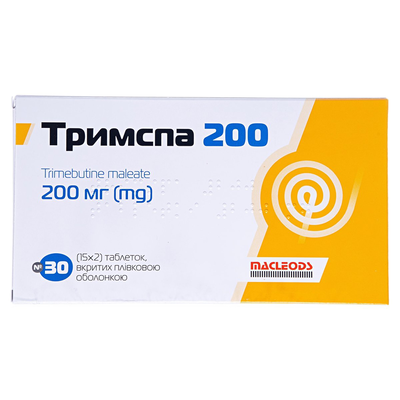
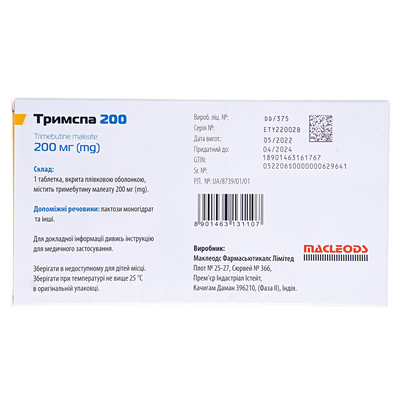
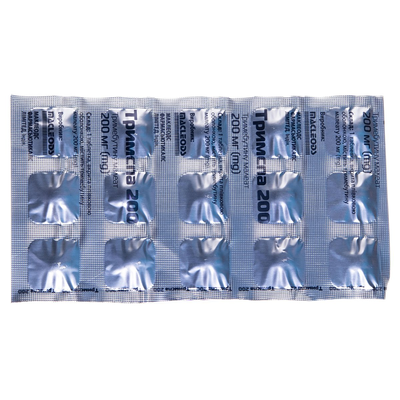
Trimspa 200 tablets, film-coated, 200 mg each, No. 30 (15 x 2)
Ingredients
Active ingredient: trimebutine maleate;
1 tablet contains 200 mg of trimebutine maleate;
Excipients: microcrystalline cellulose, lactose monohydrate, tartaric acid, corn starch, croscarmellose sodium, colloidal anhydrous silicon dioxide, magnesium stearate, hypromellose, diethyl phthalate, titanium dioxide (E 171), talc.
Dosage Form
Film-coated tablets.
Main physical and chemical properties: round, biconvex, white film-coated tablets, smooth on both sides.
Pharmacotherapeutic group
Agents used for functional disorders of the gastrointestinal tract.
ATC code: A03A, A05.
Pharmacological properties
Pharmacodynamics.
Trimebutine is a synthetic agonist of peripheral opioid receptors m, d, and k. Its mechanism of action involves direct effects on the smooth muscle of the digestive tract and the regulation of motility disorders, without affecting the central nervous system. Unlike other opioids, trimebutine is not selective for any of the three receptor types; therefore, it can either enhance or suppress peristalsis. The normalization of motility begins 30 minutes after administration of the drug.
Pharmacokinetics.
Absorption.
After oral administration, trimebutine is almost completely absorbed. Peak concentration is reached within 30 minutes.
Distribution.
Plasma protein binding is approximately 5%. After oral administration, approximately 0.05% crosses the placental barrier, and approximately 0.04% passes into breast milk.
Metabolism.
Trimebutine is metabolized in the liver.
Excretion.
It is excreted in the urine as metabolites.
Indications
Irritable bowel syndrome; functional disorders of the digestive tract accompanied by abdominal pain, cramps, a feeling of fullness, bloating, constipation, or diarrhea.
Contraindications
Hypersensitivity to trimebutine or to any other components of the drug.
Drug Interactions and Other Interactions
Concomitant use of zotepine may prolong the anticholinergic effect. Trimebutine prolongs the action of d-tubocurarine.
Special Considerations
Trimspa 200 may cause drowsiness; therefore, the drug should be used with caution in patients with central nervous system depression.
Trimspa 200 may enhance the sedative effects of drugs that depress the central nervous system and/or ethanol.
This medication contains lactose; therefore, patients with rare hereditary forms of galactose intolerance, lactase deficiency, or glucose-galactose malabsorption should not take this medication.
If you have a known intolerance to certain sugars, consult your doctor before taking this medication.
Pregnancy and Lactation
Since there are no data on the use of this medication during pregnancy or lactation, it is contraindicated for women during these periods. Breastfeeding should be discontinued for the duration of treatment with this medication.
Effects on the Ability to Drive and Operate Machinery
If dizziness or drowsiness occurs, you should refrain from driving or operating machinery.
Directions for Use and Dosage
Take the tablets orally with a glass of boiled water.
For adults, the single dose is 200 mg (1 tablet); the daily dose is 600 mg (3 tablets).
At the start of treatment for irritable bowel syndrome, the maximum daily dose for adults may be 600 mg (3 tablets), divided into 3 doses (i.e., 1 tablet 3 times a day), if necessary.
The duration of treatment is determined by the doctor on an individual basis, depending on the severity of the condition. Typically, the course of treatment lasts 2–6 weeks, depending on the severity of the condition.
Children
Experience with the use of this medication in children is limited; therefore, it should not be prescribed to this patient population.
Overdose
There are no reports of trimebutine overdose. Side effects may be more pronounced.
Side Effects
Gastrointestinal: dry mouth, taste disturbance, diarrhea, dyspepsia, abdominal pain, nausea, constipation.
Nervous system: drowsiness, fatigue, dizziness, restlessness, headache, sensation of cold/heat, hearing loss.
Immune system: allergic reactions, including skin rashes.
Reproductive system disorders: menstrual irregularities, painful breast enlargement.
Kidney and urinary tract disorders: urinary retention.
Shelf life
2 years.
Storage conditions
Store at a temperature not exceeding 25 °C in the original packaging.
Keep out of reach of children.
Packaging
6 tablets per strip, 1 or 5 strips per cardboard package.
15 tablets per strip; 1 or 2 strips per cardboard package labeled in Ukrainian.







