
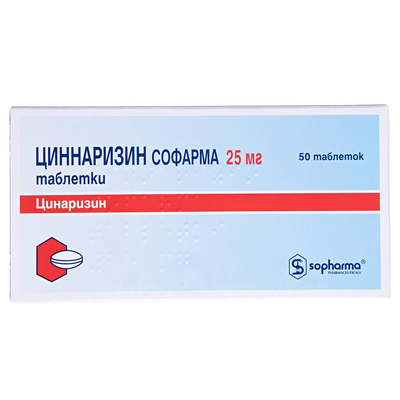
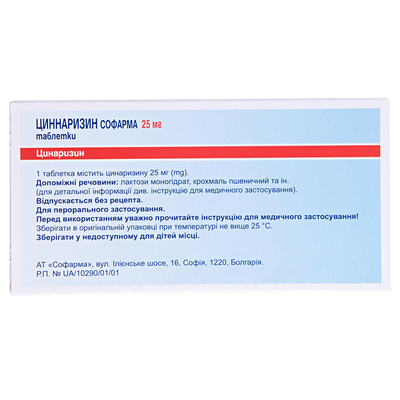
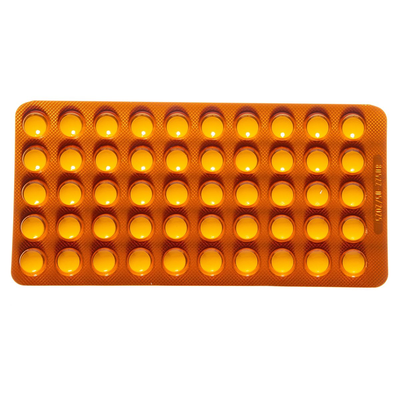
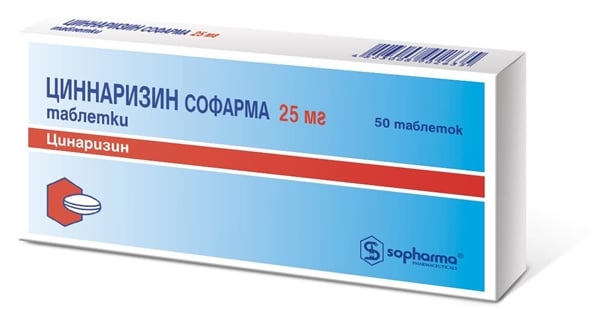
Cinnarizine Sopharma, 25 mg tablets, No. 50 in a blister pack.
Composition
Active ingredient: cinnarizine;
1 tablet contains 25 mg of cinnarizine;
Excipients: lactose monohydrate, wheat starch, povidone K 25, colloidal anhydrous silicon dioxide, magnesium stearate, microcrystalline cellulose.
Dosage Form
Tablets.
Main physical and chemical properties: round, biconvex tablets 7 mm in diameter, white to almost white in color.
Pharmacotherapeutic group
Drugs used for vestibular disorders.
ATC code N07C A02.
Pharmacological properties
Pharmacodynamics.
Cinnarizine improves cerebral and peripheral blood circulation by inhibiting the action of a number of vasoconstrictors and the influx of calcium ions into cells through the blockade of slow voltage-gated calcium channels. In addition to its direct calcium-antagonistic effect, cinnarizine reduces the vasoconstrictive effects of vasoactive substances such as norepinephrine and serotonin by blocking receptor-gated calcium channels. The blockade of calcium entry into cells is tissue-selective and leads to a reduction in vasoconstriction without affecting blood pressure or heart rate. Cinnarizine may further improve impaired microcirculation by increasing the deformability of red blood cells and reducing blood viscosity. When taken, it increases the cells’ resistance to hypoxia.
Cinnarizine inhibits stimulation of the vestibular system, which leads to the suppression of nystagmus and other autonomic disorders. Cinnarizine can be used to prevent or alleviate the symptoms of acute episodes of dizziness.
It has a pronounced antihistamine effect.
Pharmacokinetics.
Absorption: It is absorbed relatively slowly in the gastrointestinal tract. Maximum plasma concentration is reached 1–3 hours after oral administration. This parameter varies significantly—both among individuals and among patients.
Distribution: It binds to plasma proteins by 80% and to red blood cells by up to 13%. Distribution in tissues is more extensive; up to 4 hours after administration, high concentrations are detected in the liver, lungs, myocardium, and brain.
Metabolism: It is metabolized extensively, primarily by N-dealkylation.
Elimination: The half-life is 3–6 hours. It is excreted unchanged in feces and as metabolites in urine.
Indications
- Supportive treatment of symptoms of vestibular disorders, including dizziness, nausea, vomiting, tinnitus, and nystagmus.
- Prevention of motion sickness.
- Prevention of migraines.
- Supportive treatment of symptoms of cerebrovascular origin, including dizziness, tinnitus (ringing in the ears), vascular headaches, irritability, memory loss, and inability to concentrate.
- Supportive treatment of symptoms of peripheral vascular diseases, including Raynaud’s disease, acrocyanosis, intermittent claudication, trophic disorders, and varicose ulcers, paresthesias, nocturnal leg cramps, and a sensation of coldness in the extremities.
Contraindications
Hypersensitivity to the active ingredient or to any of the excipients.
Drug Interactions and Other Interactions
Concomitant use of cinnarizine with alcohol, CNS depressants, or tricyclic antidepressants results in mutual potentiation of their effects and may enhance sedative effects.
Due to its antihistamine effect, cinnarizine may suppress a positive reaction during intradermal diagnostic tests if used within 4 days of the test.
Cinnarizine may cause a false-positive reaction during anti-doping tests in athletes.
Special Considerations
Cinnarizine (like other antihistamines) may cause “gastric discomfort.” Taking the tablets after meals reduces irritation of the stomach lining.
Patients with Parkinson’s disease should be prescribed cinnarizine only if the benefits of treatment outweigh the potential risk of worsening their condition.
Since cinnarizine may cause drowsiness, especially at the start of treatment, patients should avoid concomitant alcohol consumption and the use of central nervous system (CNS) antidepressants or tricyclic antidepressants.
Use the drug with caution in patients over 65 years of age, in children, and in patients with a family history or clinical symptoms of extrapyramidal disorders.
In patients prone to hypotension, blood pressure should be monitored during treatment.
The use of cinnarizine should be avoided in patients with porphyria.
Cinnarizine should be used with caution in patients with hepatic and/or renal insufficiency.
Each tablet contains 63.12 mg of lactose monohydrate. Patients with rare hereditary galactose intolerance, Lapp lactase deficiency, or glucose-galactose malabsorption should not take this medication.
The drug contains wheat starch as an excipient. Wheat starch may contain a small amount of gluten; its use is considered safe for people with celiac disease.
Pregnancy and lactation.
Pregnancy.
Cinnarizine has not been shown to have teratogenic effects in animal studies.
Due to the lack of well-controlled clinical studies on the safety of this medication in pregnant women, its use is contraindicated during pregnancy.
Breastfeeding.
Due to the lack of data on the drug’s excretion into breast milk, its use during lactation is contraindicated. If use of the drug is necessary, breastfeeding should be discontinued.
Effects on the ability to operate vehicles and machinery.
Cinnarizine may cause drowsiness, especially at the start of treatment; this should be taken into account, and caution should be exercised when prescribing the drug to drivers and machinery operators while weighing the benefits and risks.
Dosage and Administration
Adults and children over 12 years of age.
Cerebral circulation disorders: 1 tablet of 25 mg 3 times daily (75 mg/day).
Balance disorders: 1 tablet of 25 mg three times a day (75 mg/day).
Peripheral circulatory disorders: 2–3 25-mg tablets three times daily (150–225 mg/day). Since the dizziness effect is dose-dependent, the dosage should be increased gradually.
Motion sickness: 1 25-mg tablet half an hour before travel; the dose may be repeated every 6 hours.
The maximum recommended daily dose should not exceed 225 mg (9 tablets).
Cinnarizine Sopharma is best taken after meals.
The effectiveness of treatment depends on the individual dosing regimen and a sufficiently long course of treatment.
Children.
Not recommended for children under 12 years of age.
Overdose
Acute overdoses of cinnarizine have been reported following doses ranging from 90 to 2,250 mg. The main signs and symptoms of overdose are related to its anticholinergic (atropine-like) effects.
Symptoms: altered consciousness ranging from drowsiness to stupor and coma, vomiting, extrapyramidal symptoms, hypotension, tremor, and seizures. Seizures have been observed in a small number of children. In most cases, clinical manifestations were not severe, but fatalities have been reported following overdose when cinnarizine was used concomitantly with other medications.
Treatment: In cases of overdose, discontinue the drug and take measures to rapidly eliminate it (gastric lavage, activated charcoal, symptomatic therapy).
There is no specific antidote.
Side Effects
Drowsiness and gastrointestinal disturbances may occur. These symptoms are usually temporary and subside as the optimal dose is gradually achieved.
In elderly patients undergoing long-term treatment, there have been cases of exacerbation or onset of extrapyramidal symptoms, sometimes in combination with depressive states. In such cases, the drug should be discontinued.
The following adverse reactions, classified by organ system, have been observed with the use of cinnarizine:
Immune system: hypersensitivity, including allergic reactions.
Nervous system disorders: headache, drowsiness, hypersomnia, lethargy, dyskinesia, extrapyramidal disorders, parkinsonism, tremor.
Gastrointestinal disorders: nausea, stomach discomfort, vomiting, abdominal pain, dyspepsia, dry mouth.
Liver and biliary tract disorders: cholestatic jaundice.
Skin and subcutaneous tissue disorders: hypersensitivity reactions may develop, hyperhidrosis (excessive sweating), lichenoid keratosis, lichen planus, subacute cutaneous lupus erythematosus (lichen planus and lupus).
Musculoskeletal and connective tissue disorders: muscle rigidity.
General disorders: rapid fatigue.
Effects on laboratory and diagnostic test results: weight gain.
Shelf life
3 years.
Storage conditions
Keep out of reach of children.
Store in the original packaging at a temperature not exceeding 25 °C.
Packaging
50 tablets per blister pack made of PVC film and aluminum foil. 1 blister pack per cardboard box.
Conditions of Sale
Available without a prescription.
Manufacturer
Sofarma JSC.
CJSC “VITAMINS.”







