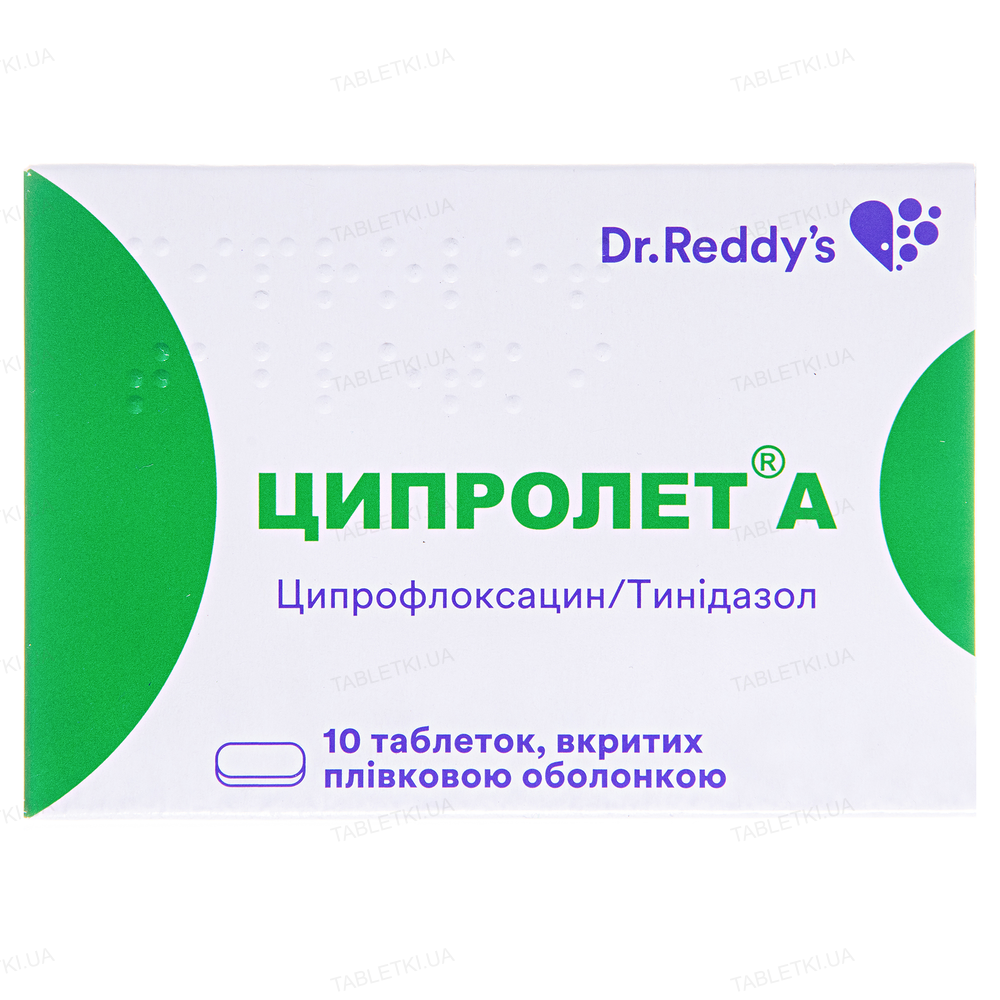


Ciprolet A tablets, film-coated, No. 10
Composition
Active ingredients: ciprofloxacin, tinidazole;
1 film-coated tablet contains 500 mg of ciprofloxacin hydrochloride (equivalent to 500 mg of ciprofloxacin) and 600 mg of tinidazole;
Inactive ingredients: corn starch, microcrystalline cellulose, croscarmellose sodium, sodium starch glycolate (type A), colloidal anhydrous silicon dioxide, talc, magnesium stearate, hydroxypropyl methylcellulose, sorbic acid, titanium dioxide (E 171), polyethylene glycol 6000, polysorbate 80, dimethicone, Opadry 13 F80003 white.
Dosage Form
Film-coated tablets.
Main physical and chemical properties: white or almost white film-coated tablets, oval in shape, with a score line on one side and a smooth surface on the other.
Pharmacotherapeutic group
Combined antibacterial agents. Fluoroquinolones in combination with other antibacterial agents. ATC code J01R A04.
Pharmacological Properties
Pharmacodynamics. The pharmacological properties of Ciprolet®A are determined by the pharmacological properties of each of its active ingredients. The mechanism of action of ciprofloxacin is based on the inhibition of the bacterial enzyme DNA gyrase. This inhibition results in disruption of the three-dimensional structure of bacterial DNA and prevents further division of bacterial cells. Ciprofloxacin is active against both Gram-positive and Gram-negative bacteria.
The spectrum of activity of ciprofloxacin includes the following microorganisms:
aerobic Gram-negative bacteria—Escherichia coli, Klebsiella pneumoniae, Salmonella typhi, Proteus mirabilis, Proteus vulgaris, Shigella sonnei, Shigella boydii, Shigella dysenteriae, Shigella flexneri, Enterobacter cloacae, Morganella morganii, Providencia rettgeri, Providencia stuartii, Citrobacter diversus, Citrobacter freundii, Serratia marcescens, Campylobacter jejuni, Pseudomonas aeruginosa, Neisseria gonorrhoeae, Haemophilus influenzae, Haemophilus parainfluenzae, Bacillus anthracis, Moraxella catarrhalis;
aerobic Gram-positive bacteria—staphylococci, including penicillinase-producing strains and methicillin-resistant strains, streptococci, including Streptococcus pneumoniae, Listeria monocytogenes, Corynebacterium spp.
Tinidazole is a 5-nitroimidazole derivative with a substituted imidazole moiety that is active against anaerobic bacteria and protozoa. The mechanism of action of tinidazole against anaerobic bacteria and protozoa is associated with the drug’s penetration into microbial cells and with DNA damage or inhibition of DNA synthesis.
Tinidazole is active against both protozoa and obligate anaerobic bacteria. Protozoa sensitive to tinidazole include Trichomonas vaginalis, Entamoeba histolytica, and Giardia lamblia.
Tinidazole is active against Gardnerella vaginalis and most anaerobic bacteria, including Bacteroides fragilis, Bacteroides melaninogenicus, Bacteroides spp., Clostridium spp., Eubacterium spp., Fusobacterium spp., Peptococcus spp., Peptostreptococcus spp., and Veillonella spp.
Pharmacokinetics.
Ciprofloxacin is rapidly absorbed after oral administration. Bioavailability is approximately 70%. Food does not affect the extent of ciprofloxacin absorption but may slow the rate of absorption. Maximum plasma concentrations of ciprofloxacin are reached within 1–2 hours. Ciprofloxacin reaches therapeutic concentrations in nearly all tissues and body fluids. Plasma protein binding is low—20–40%. The half-life is 3–5 hours. Tinidazole is rapidly and completely absorbed when taken orally.
After oral administration of a 2-g dose of tinidazole, serum concentrations peaked at
40–51 μg/mL within 2 hours and decreased to 11–19 μg/mL after 24 hours. The half-life of tinidazole in blood plasma is 12–14 hours. Tinidazole is actively distributed throughout all body tissues and crosses the blood-brain barrier. Nearly 12% of tinidazole in plasma is bound to blood proteins. Tinidazole is excreted by the liver and kidneys. Within 5 days, 60–65% of the administered dose is excreted by the kidneys, with 20–25% excreted unchanged. Approximately 12% of the dose is excreted in the feces.
Indications
Infections caused by microorganisms susceptible to the drug, including mixed aerobic-anaerobic infections and protozoal infections: respiratory tract—pleurisy, pleural empyema, lung abscess; ENT organs—chronic sinusitis, mastoiditis; skin and soft tissues—infected ulcers, abscesses, cellulitis, soft tissue infections in patients with diabetes mellitus; gastrointestinal tract—bacterial diarrhea, dysentery, amoebiasis, other mixed gastrointestinal infections; intra-abdominal infections; gynecological infections; bone infections—chronic osteomyelitis; dental infections.
Contraindications
Hypersensitivity to ciprofloxacin or other fluoroquinolones; hypersensitivity to tinidazole or other 5-nitroimidazole derivatives; organic neurological disorders; history of blood disorders; pregnancy or breastfeeding, pediatric patients. Concomitant use of ciprofloxacin and tizanidine is contraindicated (see the section “Interactions with Other Medications and Other Types of Interactions”).
Interactions with Other Medications and Other Types of Interactions
Concomitant use of Ciprolet®A with iron preparations, sucralfate, and antacids containing magnesium, aluminum, or calcium, as well as drugs with high buffering capacity (e.g., antiretrovirals), reduces the extent of ciprofloxacin absorption. Therefore, Ciprolet®A should be administered 1–2 hours before or 4 hours after taking these medications. This restriction does not apply to the class of H2-receptor blockers.
Theophylline
Concomitant use of theophylline and ciprofloxacin leads to increased plasma concentrations of theophylline and prolongation of its half-life, which in turn may cause adverse reactions. In rare cases, such adverse reactions may be life-threatening or fatal. If concomitant use of these drugs cannot be avoided, the concentration of theophylline in serum should be monitored, and its dose should be reduced appropriately (see the “Special Considerations for Use” section).
Cyclosporine
When this medication is used concomitantly with cyclosporine, an increase in serum creatinine levels has been observed in isolated cases. Therefore, frequent (twice weekly) monitoring of plasma creatinine concentrations is necessary for these patients.
Indirect Anticoagulants
Ciprolet®A may increase the concentration and prolong the half-life of indirect anticoagulants.
When ciprofloxacin is used concomitantly with vitamin K antagonists, the anticoagulant effect of the vitamin K antagonist may be enhanced. The degree of risk may vary depending on the underlying type of infection, age, and the patient’s general condition; therefore, it is difficult to accurately assess the effect of ciprofloxacin on increases in the International Normalized Ratio (INR). Frequent monitoring of the INR should be performed during and immediately after the concomitant use of ciprofloxacin and a vitamin K antagonist (e.g., warfarin, acenocoumarol, fenprocoumon, or fluindione).
Tizanidine
Tizanidine must not be administered concomitantly with ciprofloxacin (see the “Contraindications” section). In a clinical study involving healthy volunteers, concomitant administration of ciprofloxacin and tizanidine resulted in increased plasma concentrations of tizanidine (a 7-fold increase in Cmax, range: 4–21-fold; A 10-fold increase in AUC, range: 6–24-fold). Increased tizanidine concentrations in serum are associated with hypotensive and sedative adverse reactions.
Methotrexate
When ciprofloxacin is co-administered, tubular transport (renal metabolism) of methotrexate may be slowed, which may lead to increased plasma concentrations of methotrexate. This may increase the likelihood of toxic side effects caused by methotrexate. Concomitant use is not recommended.
Ropinirole.
Clinical studies have shown that the concomitant use of ropinirole with ciprofloxacin, a moderate CYP450 1A2 inhibitor, leads to a 60% and 84% increase in the AUC and Cmax of ropinirole, respectively. Monitoring for ropinirole side effects and appropriate dose adjustments are recommended during and immediately after concomitant use with ciprofloxacin (see the “Special Considerations for Use” section).
Clozapine.
Following concomitant administration of 250 mg of ciprofloxacin with clozapine for
7 days, serum concentrations of clozapine and N-desmethylclozapine were increased by 29% and 31%, respectively. Clinical monitoring and appropriate dose adjustment of clozapine are recommended during and immediately after concomitant use with ciprofloxacin (see the “Special Precautions for Use” section).
Drugs that prolong the QT interval.
Ciprolet®A, like other fluoroquinolone-containing medications, should be prescribed with caution to patients receiving drugs that prolong the QT interval (e.g., Class IA and III antiarrhythmics, tricyclic antidepressants, macrolides, antipsychotics) (see the “Special Considerations for Use” section).
Metoclopramide.
Metoclopramide accelerates the absorption of ciprofloxacin, resulting in a faster attainment of peak plasma concentrations. No effect on the bioavailability of ciprofloxacin has been observed.
Omeprazole.
Concomitant use of ciprofloxacin and medications containing omeprazole results in a slight decrease in the Cmax and AUC of ciprofloxacin.
Lidocaine.
It has been shown that in healthy subjects, the concomitant use of ciprofloxacin, a moderate inhibitor of cytochrome P450 1A2 isoenzymes, and lidocaine-containing medications reduces the clearance of intravenous lidocaine by 22%. Although lidocaine is generally well tolerated, an interaction with ciprofloxacin is possible; this interaction is associated with adverse reactions and may occur when these drugs are used concomitantly.
Sildenafil.
The Cmax and AUC of sildenafil increased approximately twofold in healthy volunteers following oral administration of 50 mg of sildenafil and concomitant administration of 500 mg of ciprofloxacin. Therefore, caution should be exercised when co-administering Ciprolet®A with sildenafil, and the risk-benefit ratio should be considered.
Oral hypoglycemic agents.
Cyprolet®A may increase the concentration and prolong the half-life of oral hypoglycemic agents. When ciprofloxacin is co-administered with oral antidiabetic drugs, particularly sulfonylureas (e.g., glibenclamide, glimepiride), cases of hypoglycemia have been reported, which are likely associated with ciprofloxacin potentiating the effect of oral antidiabetic agents (see the “Adverse Reactions” section). Therefore, frequent monitoring of blood glucose levels is necessary in these patients.
Duloxetine.
Clinical studies have shown that concomitant use of duloxetine with potent CYP450 1A2 inhibitors, such as fluvoxamine, may lead to an increase in the AUC and Cmax of duloxetine. Although there are no clinical data on a possible interaction with ciprofloxacin, similar effects can be expected with concomitant use of these drugs (see the “Special Considerations for Use” section).
Nonsteroidal anti-inflammatory drugs.
Animal studies have shown that the combination of very high doses of quinolones (gyrase inhibitors) and certain nonsteroidal anti-inflammatory drugs (with the exception of acetylsalicylic acid) may induce seizures.
Ciprofloxacin affects the metabolism of caffeine, causing a prolongation of its half-life. When ciprofloxacin and phenytoin are used concomitantly, changes in serum phenytoin levels (increases or decreases) have been reported. Concomitant use of Ciprolet®A and probenecid is associated with increased ciprofloxacin concentrations in plasma. Metoclopramide accelerates the absorption of Ciprolet®A, thereby shortening the time to reach peak plasma concentrations of ciprofloxacin (this does not affect the bioavailability of ciprofloxacin).
Special Considerations for Use
The use of ciprofloxacin should be avoided in patients who have experienced serious adverse reactions in the past while taking fluoroquinolones. Treatment of such patients with ciprofloxacin should be initiated only if no alternative treatments are available and after a thorough benefit-risk assessment (see the “Contraindications” section).
Alcoholic beverages should not be consumed during treatment with this medication due to the potential for a disulfiram-like reaction (flushing, abdominal cramps, vomiting, tachycardia). Alcohol should not be consumed for 72 hours after discontinuing the medication.
Patients with epilepsy, a history of seizures, vascular diseases, or organic brain lesions should not be prescribed Ciprolet®A should be prescribed only when absolutely necessary. If central nervous system side effects occur during treatment, the medication should be discontinued. If severe and persistent diarrhea occurs during or after treatment with Ciprolet®A, pseudomembranous colitis should be ruled out, as this condition requires immediate discontinuation of the drug and initiation of appropriate therapy.
In patients with impaired liver and/or kidney function, monitoring of ciprofloxacin concentrations in plasma is recommended. No dose adjustment is required for elderly patients. In some cases, hypersensitivity and allergic reactions may occur as early as after the first dose of ciprofloxacin. In very rare cases, life-threatening anaphylactic reactions may develop. In such cases, ciprofloxacin administration must be discontinued, and medical treatment must be initiated immediately. At the first sign of tendinitis (e.g., painful swelling, inflammation), treatment with the drug must be discontinued immediately, and physical activity should be avoided. Ciprofloxacin may cause photosensitivity reactions; therefore, direct sunlight should be avoided during treatment. If photosensitivity reactions occur, ciprofloxacin therapy must be discontinued. Patients taking Ciprolet®A should drink sufficient fluids to prevent crystalluria.
Severe infections and/or mixed infections caused by Gram-positive or anaerobic bacteria
For the treatment of severe infections, infections caused by staphylococci, or infections caused by anaerobic bacteria, ciprofloxacin should be used in combination with appropriate antibacterial agents in accordance with approved protocols.
Streptococcal infections (including Streptococcus pneumoniae)
Ciprofloxacin is not recommended for the treatment of streptococcal infections due to insufficient efficacy.
Urinary tract infections
Orchiepididymitis and inflammatory diseases of the pelvic organs may be caused by fluoroquinolone-resistant Neisseria gonorrhoeae. Ciprofloxacin should be administered concomitantly with other appropriate antibacterial agents, except in clinical situations where the presence of ciprofloxacin-resistant strains of Neisseria gonorrhoeae has been ruled out. If no clinical improvement occurs within 3 days, the treatment regimen should be reviewed.
Intra-abdominal infections
Data on the efficacy of ciprofloxacin in the treatment of postoperative intra-abdominal infections are limited.
Traveler’s diarrhea
When selecting a drug, information regarding the resistance of relevant microorganisms to ciprofloxacin in the countries the patient has visited should be taken into account.
Bone and joint infections
Ciprofloxacin should be used in combination with other antimicrobial agents depending on the results of microbiological testing.
Pulmonary anthrax
Use in humans is based on in vitro susceptibility testing, animal studies, and limited data from human use. The physician should follow national and/or international protocols for the treatment of anthrax.
Antibiotic-associated diarrhea
Cases of antibiotic-associated diarrhea have been reported during the use of antibacterial agents, ranging in severity from mild diarrhea to severe forms. The most common cause of antibiotic-associated diarrhea is usually Clostridium difficile. The drug Ciprolet A contains tinidazole, which, in most cases, is active against Clostridium difficile; therefore, the likelihood of antibiotic-associated diarrhea occurring during treatment with Ciprolet A is minimal, though it cannot be ruled out (in cases where Clostridium difficile is resistant to tinidazole). The physician should carefully evaluate the patient’s clinical data and, if necessary, correct fluid and electrolyte imbalances, consider the need for additional protein supplementation, and prescribe antibacterial agents to which Clostridium difficile is susceptible.
Complicated urinary tract infections and pyelonephritis
The use of ciprofloxacin for the treatment of urinary tract infections should be considered when other treatments are not feasible. Treatment should be based on the results of microbiological testing.
Other specific severe infections
The use of ciprofloxacin may be justified based on microbiological test results for other infections in accordance with official guidelines or after a careful benefit-risk assessment when other treatments are not available or when standard therapy has proven ineffective. The use of ciprofloxacin for specific severe infections other than those mentioned above has not been evaluated in clinical trials, and clinical experience is limited. Therefore, caution is recommended when treating patients with such infections.
Hypersensitivity to the drug
In some cases, hypersensitivity and allergic reactions may occur as early as after the first dose of ciprofloxacin (see the “Adverse Reactions” section), and these should be reported to a physician immediately. In rare cases, anaphylactic/anaphylactoid reactions may progress to a state of shock, which is life-threatening. In some cases, these reactions occur as early as after the first dose of ciprofloxacin. In such cases, administration of the drug must be discontinued, and medical treatment (treatment for anaphylactic shock) must be initiated immediately.
Musculoskeletal System
In general, ciprofloxacin should not be used in patients with a history of tendon disorders or conditions associated with the use of quinolones. Nevertheless, in rare cases, following microbiological testing of the pathogen and an assessment of the benefit-risk ratio, ciprofloxacin may be prescribed to these patients for the treatment of certain severe infectious processes, namely, when standard therapy is ineffective or bacterial resistance is present, and when the results of microbiological testing justify the use of ciprofloxacin. Tendinitis or tendon rupture (particularly of the Achilles tendon) may occur with the use of ciprofloxacin, sometimes bilaterally, and may occur within the first 48 hours of treatment. There have been reports of tendon ruptures occurring several months after discontinuation of treatment with the drug. The risk of tendinopathy may be increased in elderly patients, in patients with impaired renal function, in organ transplant recipients, and in those taking corticosteroids concomitantly; therefore, the concomitant use of corticosteroids with this medication should be avoided (see the “Adverse Reactions” section). If any signs of tendinitis (such as painful swelling or inflammation) occur, ciprofloxacin should be discontinued and alternative treatments considered. The affected limb should be rested, and corticosteroids should not be used if signs of tendinopathy are present.
Ciprofloxacin should be used with caution in patients with myasthenia gravis (see the “Adverse Reactions” section).
Photosensitivity
Ciprofloxacin has been shown to cause photosensitivity reactions. Patients taking ciprofloxacin are advised to avoid direct sunlight or UV radiation during treatment (see the “Adverse Reactions” section).
Central Nervous System
Quinolones may cause seizures or lower the seizure threshold. Ciprofloxacin should be used with caution in patients with CNS disorders who may be prone to seizures. If seizures occur, the drug should be discontinued (see the “Adverse Reactions” section). Psychotic reactions may occur even after the first dose of ciprofloxacin. In rare cases, depression or psychosis may progress to suicidal thoughts and behaviors, such as suicide or attempted suicide. In such cases, the drug should be discontinued and appropriate measures taken as required by the clinical situation.
Peripheral neuropathy
Cases of sensory or sensorimotor polyneuropathy have been reported in patients taking ciprofloxacin, manifested by paresthesia, hypoesthesia, dysesthesia, or weakness (based on neurological symptoms such as pain, burning, sensory disturbances, or muscle weakness, either alone or in combination). Patients experiencing symptoms of neuropathy, including pain, burning, tingling, numbness, and/or weakness, should discontinue ciprofloxacin and consult a physician before resuming treatment with the drug to prevent the development of irreversible conditions (see the “Adverse Reactions” section).
Cardiac disorders
The use of ciprofloxacin has been associated with cases of QT interval prolongation (see the “Adverse Reactions” section).
Since women generally have a longer QT interval than men, they may be more sensitive to medications that cause QT prolongation. Elderly patients may also be more sensitive to the effects of drugs on the QT interval. Caution should be exercised when co-administering ciprofloxacin with drugs that may cause QT interval prolongation (such as Class IA and III antiarrhythmics, tricyclic antidepressants, macrolides, antipsychotics) (see the section “Interactions with Other Medications and Other Types of Interactions”) or in patients with risk factors for QT interval prolongation or the development of bidirectional ventricular torsades de pointes (e.g., congenital long QT syndrome, uncorrected electrolyte imbalances such as hypokalemia or hypomagnesemia, and cardiac conditions, particularly heart failure, myocardial infarction, or bradycardia).
Gastrointestinal Tract
If severe and persistent diarrhea occurs during or after treatment (even several weeks after treatment), you should inform your doctor, as this symptom may mask a serious gastrointestinal disorder (such as pseudomembranous colitis, which can be fatal) that requires immediate treatment (see the “Adverse Reactions” section). In such cases, the drug should be discontinued and appropriate therapy initiated (e.g., vancomycin, 4 × 250 mg/day orally). Medications that inhibit peristalsis are contraindicated.
Kidneys and Urinary System
During treatment with Ciprolet®A, patients’ renal function should be monitored, particularly serum creatinine levels (twice weekly). Crystalluria associated with the use of ciprofloxacin has been reported (see the “Adverse Reactions” section). Patients taking ciprofloxacin should receive adequate fluid intake. Excessive urine alkalinity should be avoided.
Hepatobiliary System
Cases of liver necrosis and life-threatening hepatic failure have been reported with ciprofloxacin (see the “Adverse Reactions” section). If any signs or symptoms of liver disease appear (such as anorexia, jaundice, dark urine, pruritus, or tenderness of the anterior abdominal wall), treatment should be discontinued. A temporary increase in transaminase and alkaline phosphatase levels, as well as the development of cholestatic jaundice, may also be observed, particularly in patients with pre-existing liver damage who have received ciprofloxacin (see the “Adverse Reactions” section).
Glucose-6-phosphate dehydrogenase deficiency
Hemolytic reactions have been reported in patients with glucose-6-phosphate dehydrogenase deficiency while taking ciprofloxacin. Ciprofloxacin should be avoided in such patients unless the potential benefit outweighs the potential risk. In such cases, patients should be monitored for signs of hemolysis.
Resistance
During or after a course of treatment with ciprofloxacin, resistant bacteria may be isolated with or without clinically evident superinfection. There may be a certain risk of isolating ciprofloxacin-resistant bacteria during prolonged courses of treatment and when treating nosocomial infections and/or infections caused by Staphylococcus and Pseudomonas species.
Cytochrome P450
Ciprofloxacin moderately inhibits CYP450 1A2 and may therefore cause an increase in serum concentrations of concomitantly administered substances that are also metabolized by this enzyme (e.g., theophylline, methylxanthines, caffeine, duloxetine, clozapine, olanzapine, ropinirole, tizanidine). Concomitant administration of ciprofloxacin and tizanidine is contraindicated. Increased plasma concentrations, associated with drug-specific adverse reactions, are caused by the inhibition of their metabolic clearance by ciprofloxacin. Therefore, patients taking these substances concomitantly with ciprofloxacin should be closely monitored for possible clinical signs of overdose. It may also be necessary to measure serum concentrations (e.g., of theophylline) (see the section “Interactions with Other Medications and Other Types of Interactions”).
Methotrexate
Concomitant administration of ciprofloxacin and methotrexate is not recommended (see the section “Interactions with Other Medications and Other Types of Interactions”).
Effect on Laboratory Test Results
Ciprofloxacin may affect the results of Mycobacterium spp. culture tests in vitro by inhibiting the growth of mycobacterial cultures, which may lead to false-negative culture results in patients taking ciprofloxacin.
Risk of Aortic Aneurysm and Aortic Dissection Following Fluoroquinolone Use
Epidemiological studies report an increased risk of aortic aneurysm and aortic dissection following fluoroquinolone use, particularly in elderly patients. Therefore, fluoroquinolones should be used only after a careful benefit-risk assessment and after considering other treatment options in patients with a positive family history of aneurysm, in patients diagnosed with an aortic aneurysm and/or aortic dissection, or in the presence of other risk factors or conditions leading to aortic aneurysms and dissections (e.g., Marfan syndrome, Ehlers-Danlos syndrome, Takayasu’s arteritis, giant cell arteritis, Behçet’s disease, hypertension, atherosclerosis).
If sudden pain occurs in the abdomen, chest, or back, patients should immediately seek medical attention at the emergency department.
Fluctuations in Blood Glucose Levels
Fluoroquinolones may cause disturbances in blood glucose levels, including hyperglycemia and hypoglycemia (see the “Adverse Reactions” section), typically in patients with diabetes who are receiving concomitant treatment with oral hypoglycemic agents (e.g., glibenclamide) or insulin. There have been reports of severe cases of hypoglycemia leading to coma. Close monitoring of blood glucose levels is recommended for such patients.
The use of ciprofloxacin should be avoided in patients who have experienced serious adverse reactions in the past while taking fluoroquinolones. Treatment of such patients with ciprofloxacin should be initiated only if no alternative treatments are available and after a careful benefit-risk assessment (see the “Contraindications” section).
Long-term, disabling, potentially irreversible serious adverse reactions.
Very rare reports have been received of long-term (ranging from several months to years), disabling, potentially irreversible serious adverse reactions affecting various, and sometimes multiple organ systems simultaneously (musculoskeletal, nervous, mental, and sensory systems) in patients receiving treatment with quinolones and fluoroquinolones, regardless of age or previously identified risk factors. Treatment with ciprofloxacin should be discontinued immediately at the first signs or symptoms of any serious adverse reactions, and a physician should be consulted immediately.
Use During Pregnancy or Breastfeeding. The drug is contraindicated during pregnancy or breastfeeding.
Effect on reaction time when operating motor vehicles or other machinery. During treatment, patients should refrain from operating motor vehicles and/or other machinery that requires increased concentration and rapid psychomotor reactions.
Dosage and Administration
The usual dose of Ciprolet®A for adults is 1 tablet twice daily. Adults should take the medication orally 1 hour before or 2 hours after a meal. The tablets should be swallowed whole without chewing and taken with a small amount of liquid. For patients with creatinine clearance between 31 and 60 mL/min, the maximum daily dose should be 2 tablets per day; for patients with creatinine clearance of 30 mL/min or less, the maximum daily dose should be 1 tablet per day. For severe infections of the abdominal organs or respiratory tract, or for chronic osteomyelitis, the maximum daily dose is 3 tablets per day. The duration of treatment depends on the severity of the infection and the results of bacteriological tests. The usual course of treatment for acute infections is 5–7 days; however, for chronic, recurrent infections, the course of treatment is 10–14 days. It is recommended to continue taking the medication for at least 3 days after the fever subsides or the symptoms of the infection resolve.
Children: The efficacy and safety of this medication in pediatric practice have not been established; therefore, it should not be used in children.
Overdose
Symptoms of overdose may include dizziness, tremor, headache, fatigue, convulsions, hallucinations, confusion, abdominal discomfort, renal and hepatic failure, as well as crystalluria and hematuria. Cases of renal toxicity have been reported in cases of acute overdose. No specific antidote is known. In case of overdose, gastric lavage should be performed. The patient should be closely monitored and receive supportive care, including monitoring of renal function and the use of antacids containing magnesium, aluminum, or calcium, which may reduce the absorption of ciprofloxacin. Adequate fluid intake should be maintained. Tinidazole is readily removed during dialysis. Ciprofloxacin is removed in small amounts (less than 10%) by hemodialysis or peritoneal dialysis.
Side Effects
Infections and infestations: fungal superinfections/candidiasis, including oral candidiasis and vaginal candidiasis, cutaneous candidiasis, thrush, vaginitis, antibiotic-associated/pseudomembranous colitis, which may be fatal.
Gastrointestinal: nausea, diarrhea, elevated liver enzymes (ALT, AST), alkaline phosphatase, vomiting, dyspeptic symptoms, heartburn, abnormal liver function test results, anorexia, constipation, flatulence, bilirubinemia, jaundice, cholestatic jaundice, pseudomembranous colitis, liver necrosis (which very rarely progresses to life-threatening liver failure), pancreatitis, hepatitis (non-infectious), metallic taste in the mouth, abdominal pain, coated tongue, glossitis, stomatitis.
*Nervous system disorders: dizziness, sleep disturbances, agitation, confusion, migraine, hallucinations, increased sweating, paresthesia, dysesthesia, hypoesthesia, emotional disturbances (restlessness, fear, anxiety), sleep disorders, convulsions, increased drowsiness, insomnia, pathological/nightmarish dreams, lethargy, intracranial hyperesthesia, depression, tremor, unsteady gait, psychosis, increased intracranial pressure, ataxia, twitching, headache, sensory disturbances, peripheral neuropathy, and polyneuropathy.
Cardiovascular system: arrhythmias (including extrasystoles, atrial flutter, ventricular arrhythmia, tachycardia, palpitations, bidirectional ventricular tachycardia), syncope (fainting), vasodilation, hot flashes, decreased/increased blood pressure, vasculitis, and QT interval prolongation.
Hematologic and lymphatic system disorders: eosinophilia, leukopenia, anemia, neutropenia, leukocytosis, altered prothrombin levels, thrombocytopenia, thrombocythemia, thrombocytosis, hemolytic anemia, petechiae, agranulocytosis, pancytopenia (life-threatening), bleeding, methemoglobinemia, monocytosis, bone marrow suppression (life-threatening).
*Psychiatric disorders: psychomotor agitation/anxiety, restlessness, agitation, anxiety, abnormal dreams, confusion and disorientation, depression, hallucinations, psychoses, psychotic reactions (mania, phobias, depersonalization), delirium, irritability.
*Musculoskeletal and connective tissue disorders: pain in the extremities, arthralgia, joint dysfunction, myalgia, joint swelling, myasthenia gravis, exacerbation of myasthenia gravis symptoms, myoclonus, tendon damage, tendinitis, tendon ruptures (primarily Achilles), tendon injuries, gout attacks, pain in the back, neck, and chest.
Genitourinary system: increased creatinine levels, increased blood urea nitrogen levels, renal failure, impaired renal function, vaginal candidiasis, hematuria, crystalluria, polyuria, urinary retention, urethral bleeding, candiduria, cylindruria, albuminuria, exacerbation of urolithiasis, tubulointerstitial nephritis, darkening of urine.
Reproductive disorders: breast tenderness, gynecomastia.
Endocrine disorders: hyperglycemia, hypoglycemia, hypoglycemic coma, syndrome of inappropriate antidiuretic hormone secretion (SIADH).
Respiratory system: dyspnea (including asthmatic episodes), laryngeal edema.
Hypersensitivity reactions. Skin and subcutaneous tissue disorders: skin rash, itching, maculopapular rash, skin redness, hives, photosensitivity reactions, appearance of nonspecific blisters, allergic reactions, drug fever, anaphylactoid/anaphylactic reactions (including anaphylactic shock), serum sickness-like reaction, petechiae, erythema multiforme, erythema nodosum, exfoliative dermatitis, Stevens-Johnson syndrome, toxic epidermal necrolysis, hyperpigmentation, angioedema (including swelling of the face, lips, neck, conjunctiva, and hands).
*Ocular disorders: visual disturbances, color vision abnormalities, blurred vision, achromatopsia.
*Sensory and balance disorders: taste disturbances, ringing/noise in the ears, temporary deafness, hearing impairment, visual disturbances, diplopia, chromatopsia, parosmia, olfactory disturbances/impaired sense of smell.
*General disorders: abdominal pain, candidiasis, asthenia, pain in the extremities, back pain, chest pain, hot flashes. Nonspecific pain syndrome, general malaise, increased fatigue, weakness, fever; lymphadenopathy, edema, increased sweating (hyperhidrosis); gait disturbance.
Metabolic disorders: edema, hyperglycemia, increased amylase activity, increased lipase activity.
* Very rare reports have been received of long-term (ranging from several months to several years), disabling, potentially irreversible serious adverse reactions affecting various, and sometimes simultaneously affecting multiple organ systems and the senses (including reactions such as tendinitis, tendon rupture, arthralgia, pain in the extremities, gait disturbance, neuropathies associated with paresthesia, depression, fatigue, memory impairment, sleep disturbances, and impairment of hearing, vision, taste, and smell) in patients treated with quinolones and fluoroquinolones, regardless of previously identified risk factors.
Shelf life
3 years.
Storage Conditions
Store in the original packaging to protect from light at a temperature not exceeding 25°C
Packaging
10 tablets per blister pack, 1 blister pack per box.
Manufacturer
Dr. Reddy’s Laboratories Ltd., FTO – II
Manufacturer’s location and address of its place of business.
Plots No. 42r, 43, 44r, 45r, 46r, 53, 54, 83, village Bachupali, Bachupali Mandal, Medchal Malkaygiri District – 500090, Telangana State, India
To report an adverse reaction or lack of efficacy when using this medication, please call (24 hours a day):
+38(044) 207-51-97 or +38 (050) 414-39-39; or via email at: DrugSafetyUa@drreddys.com