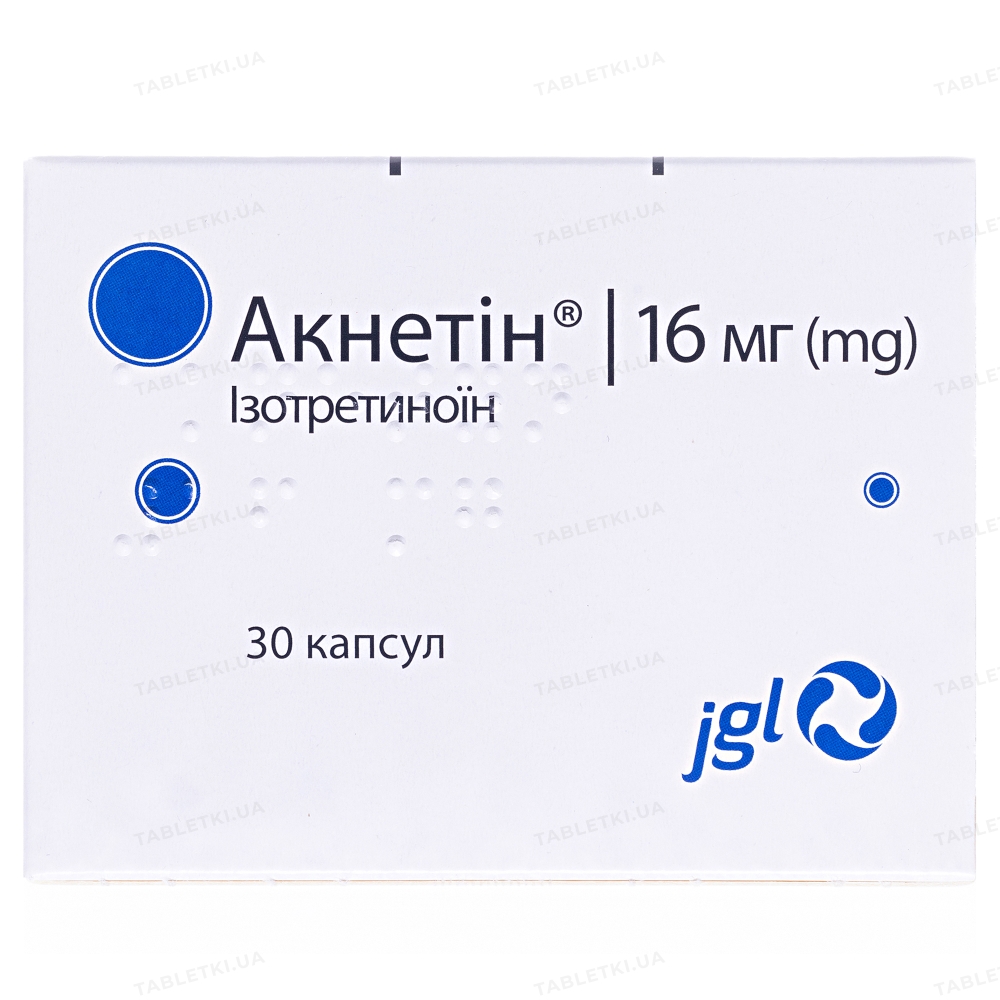
Aknetin 16 mg capsules, No. 30 (10 x 3)
Composition
Active ingredient: isotretinoin;
1 capsule contains 8 mg or 16 mg of isotretinoin;
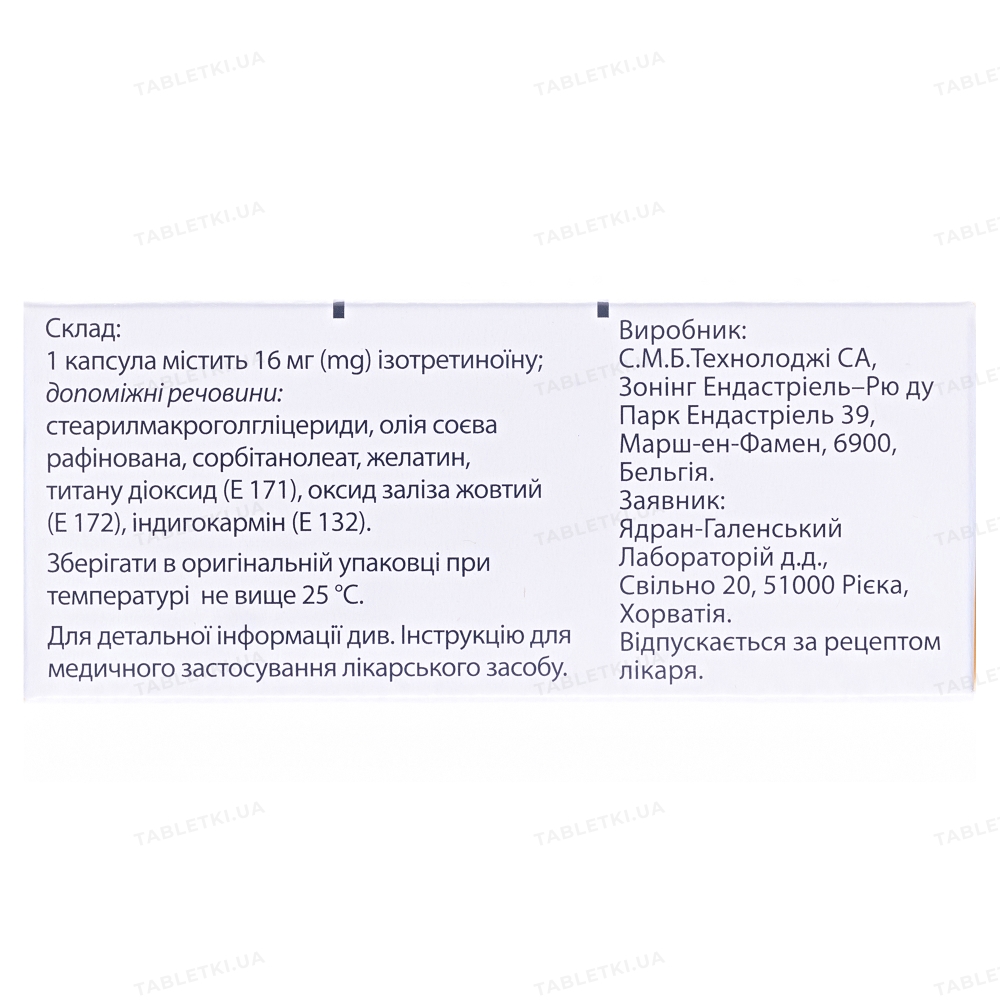
excipients: stearyl macrogol glycerides, refined soybean oil, sorbitan oleate, gelatin, titanium dioxide (E 171), red iron oxide (E 172) (for the 8 mg strength), yellow iron oxide (E 172) (for the 16 mg strength), indigo carmine (E 132) (for the 16 mg strength).
Dosage form
Capsules.
Main physical and chemical properties:
8 mg capsules — No. 3 gelatin capsules with a reddish-brown body and cap. Capsule contents — an orange-colored waxy paste;
16 mg capsules—No. 1 gelatin capsules with a white body and a green cap. Capsule contents—an orange-colored waxy paste.
Pharmacotherapeutic group
Agents for the systemic treatment of acne. ATC code D10B A01.
Pharmacological Properties
Pharmacodynamics.
Mechanism of action. Isotretinoin is a stereoisomer of trans-retinoic acid (tretinoin). The exact mechanism of action of isotretinoin has not yet been fully elucidated; however, it has been established that the improvement in the clinical presentation of severe forms of acne is associated with a reduction in sebaceous gland activity and a histologically confirmed decrease in their size. In addition, the anti-inflammatory effect of isotretinoin on the skin has been demonstrated.
Pharmacokinetics.
Efficacy. Hyperkeratosis of the epithelial cells of the hair follicle and sebaceous gland leads to the shedding of corneocytes into the gland duct and to its obstruction by keratin and excess sebum. This results in the formation of a comedone, and in some cases, an inflammatory process develops. Acnetin® inhibits the proliferation of sebocytes and treats acne by restoring the normal process of cell differentiation. Sebum is the primary substrate for the growth of Propionibacterium acnes. Reduced sebum production inhibits bacterial colonization of the duct.
Absorption. The absorption of isotretinoin in the gastrointestinal tract is variable and linearly dependent on the dose within the therapeutic dosage range. The absolute bioavailability of isotretinoin has not been determined, as there is no formulation of the drug for intravenous administration; however, extrapolation of results from studies in dogs suggests very low and variable systemic bioavailability. Taking isotretinoin with food doubles its bioavailability compared to taking it on an empty stomach.
Distribution. Isotretinoin is almost completely bound to plasma proteins (99.9%), primarily to albumin. The volume of distribution of isotretinoin in the human body is unknown, as there is no formulation for intravenous administration. Isotretinoin concentrations in the epidermis are only half those in blood serum. Plasma concentrations of isotretinoin are approximately 1.7 times higher than those in whole blood due to poor penetration of isotretinoin into red blood cells.
Metabolism. Following oral administration, three major metabolites are observed in plasma: 4-oxo-isotretinoin, tretinoin (all-trans retinoic acid), and 4-oxo-retinoin. These metabolites have demonstrated biological activity in several in vitro tests. 4-oxo-isotretinoin, as shown in several clinical studies, contributes significantly to the therapeutic activity of isotretinoin (inhibition of sebum secretion, regardless of plasma levels of isotretinoin and tretinoin). The major metabolite is 4-oxo-isotretinoin, whose steady-state plasma concentrations are 2.5 times higher than those of the parent drug. Other metabolites, including glucuronide conjugates, are minor.
Since isotretinoin and tretinoin (all-trans retinoic acid) are reversibly interconverted, the metabolism of tretinoin is linked to that of isotretinoin. It has been established that 20–30% of the isotretinoin dose is metabolized via isomerization.
In the pharmacokinetics of isotretinoin in humans, enterohepatic
circulation may play a significant role.
In vitro metabolism studies have shown that several CYP enzymes are involved in the conversion of isotretinoin to 4-oxo-isotretinoin and tretinoin. Apparently, none of the isoforms plays a dominant role. Acnetin® and its metabolites have no significant effect on the activity of CYP enzymes.
Elimination. After oral administration of radioactively labeled isotretinoin, approximately equal amounts are detected in urine and feces. The terminal-phase half-life of the unchanged drug following oral administration in patients with acne averages 19 hours. The terminal half-life of 4-oxo-isotretinoin ranges from 7 to 39 hours.
Isotretinoin belongs to the group of natural (physiological) retinoids. Endogenous retinoid concentrations return to normal approximately 2 weeks after discontinuation of Acnetin®.
Pharmacokinetics in Special Clinical Cases. Since isotretinoin is contraindicated in patients with impaired liver function, data on the pharmacokinetics of the drug in this patient group are limited.
Renal insufficiency does not significantly reduce the plasma clearance of isotretinoin or 4-oxo-isotretinoin.
Indications
Severe forms of acne (particularly nodular and conglobate acne, and acne with a tendency toward permanent scarring) that do not respond to standard treatments (systemic antibiotic therapy, topical treatment).
Before initiating treatment with isotretinoin in patients under 18 years of age, two independent prescribing physicians must agree that no other appropriate and effective treatment is available (see the “Children” section).
Contraindications
Pregnancy and breastfeeding. Do not use in women of childbearing age unless all conditions of the “Pregnancy Prevention Program” are met (see below). Hypersensitivity to isotretinoin or to any other components of the medication; liver failure; severe hyperlipidemia; hypervitaminosis A; concomitant therapy with tetracyclines. Because Acnetin® contains soybean oil, the drug is contraindicated in patients with allergies to peanuts and soy.
Interactions with Other Medications and Other Types of Interactions
Due to the potential for exacerbation of hypervitaminosis A symptoms, the concurrent use of Acnetin® and vitamin A should be avoided.
Cases of benign increased intracranial pressure (pseudotumor cerebri) have been reported with the concurrent use of isotretinoin and tetracyclines. Therefore, concomitant use with tetracyclines should be avoided (see sections “Contraindications” and “Special Precautions for Use”).
Concomitant use with topical keratolytic or exfoliative agents for the treatment of acne is contraindicated due to the potential for increased local irritation (see the “Precautions” section).
Special Precautions for Use
Teratogenic Effects.
Acnetin® is a potent human teratogen and induces a high incidence of severe and life-threatening congenital malformations.
Acnetin® is strictly contraindicated:
- pregnant women;
- women of childbearing age, unless all conditions of the “Pregnancy Prevention Program” (see below) are met.
Pregnancy Prevention Program.
This medication is TERATOGENIC
Acnetin® is contraindicated in women of childbearing age, except in cases where all of the following conditions are met:
- the woman has been diagnosed with severe acne (nodular and conglobate acne, acne with a tendency toward permanent scarring) that does not respond to standard treatments (systemic antibiotic therapy, topical treatment) (see the “Contraindications” section);
- the woman has been assessed for her potential to become pregnant;
- the woman understands the teratogenic risk of the drug;
- the woman understands the need for mandatory monthly follow-up visits with a doctor;
- the woman understands and agrees to the need for effective contraception: continuously for 1 month prior to starting treatment with Acnetin®, during treatment, and for 1 month after treatment ends. At least one highly effective method of contraception (whose effectiveness does not depend on the patient, such as an intrauterine device or implant) or two complementary, user-dependent methods of contraception (such as oral contraceptives and condoms), for at least 1 month prior to starting treatment with Acnetin®, during treatment, and for 1 month after the end of treatment;
- when selecting a method of contraception in each specific case, individual circumstances are assessed, and the patient is invited to participate in the discussion to ensure her commitment to and use of the selected methods;
- even in the event of amenorrhea, the woman uses reliable methods of contraception;
- the woman confirms that she understands the nature of the precautionary measures;
- The woman has been informed of the risk of pregnancy during treatment with Acnetin® and understands the need to seek immediate medical advice if pregnancy is suspected or confirmed;
- The woman understands the necessity of and agrees to undergo regular pregnancy tests before, during, and 5 weeks after treatment;
- the woman confirms that she is aware of the risks associated with isotretinoin use and the need for precautionary measures.
The use of contraceptives in accordance with the above recommendations during isotretinoin treatment must be recommended even to sexually inactive women, except in cases where the physician has every reason to believe that there is no risk of pregnancy.
The physician must be certain that:
- the patient is capable of understanding and complying with all of the above requirements for preventing pregnancy;
- the patient is familiar with the above conditions;
- the patient understands the need for consistent and correct use of at least one highly effective method of contraception (whose effectiveness does not depend on the patient, such as an intrauterine device or implant) or two complementary methods of contraception used simultaneously (whose effectiveness depends on the user, such as oral contraceptives and condoms);
- the patient confirms that she is familiar with the above conditions;
- a negative result from a reliable pregnancy test must be obtained before starting the medication, during treatment, and 1 month after the end of therapy. The dates and results of the pregnancy tests must be documented.
If a woman receiving isotretinoin treatment becomes pregnant, treatment should be discontinued, and the patient should be referred to a physician who specializes in or has experience with teratology for evaluation and guidance. If pregnancy occurs after treatment has ended, there remains a risk of severe and serious congenital malformations in the fetus. This risk persists until the drug is completely eliminated from the body, which occurs within one month after the end of treatment.
Prevention of Pregnancy.
Patients must be informed about methods of contraception. If they are not using
effective methods of contraception, the treating physician should provide appropriate recommendations. If the treating physician is unable to provide such information, the patient should be referred to a physician with the appropriate specialty.
As a minimum requirement, women of reproductive age should use at least one highly effective method of contraception (whose effectiveness does not depend on the user) or two complementary methods of contraception simultaneously (whose effectiveness depends on the user). Contraceptive methods should be used for at least 1 month prior to starting treatment with Acnetin®, during treatment, and for 1 month after treatment ends, even in patients with amenorrhea. When selecting a contraceptive method in each specific case, individual circumstances should be evaluated, and the patient should be invited to participate in the discussion to ensure her commitment to and use of the selected methods.
Pregnancy test.
In accordance with current practice, it is recommended to perform a pregnancy test with a minimum sensitivity of 25 mMO/mL under medical supervision during the first 3 days of the menstrual cycle.
Before starting treatment.
At least one month after starting contraception and shortly (preferably a few days) before the first dose of the medication, the patient should undergo a pregnancy test under medical supervision to ensure she is not pregnant at the start of isotretinoin treatment. The healthcare provider should document the test results.
For patients with irregular menstrual cycles, the timing of the pregnancy test depends on sexual activity. The test should be performed 3 weeks after unprotected sexual intercourse. The physician must inform the patient about methods of contraception.
Acnetin® may only be prescribed to patients who have been using effective contraception for at least 1 month. The test must confirm that the patient is not pregnant at the start of isotretinoin treatment.
During treatment.
The patient should visit the doctor regularly, ideally once a month. The need for monthly pregnancy testing is determined in accordance with local practice and taking into account sexual activity and the history of recent menstrual cycles (abnormal menstruation, irregular periods, or amenorrhea). If indicated, a pregnancy test should be performed on the day of the visit or 3 days prior to the visit.
Completion of treatment.
One month after the end of treatment, a final test is performed to rule out pregnancy.
Precautions regarding the prescription and dispensing of the medication.
For women of reproductive age, a prescription for Acnetin® should ideally be written for only 30 days; continuation of treatment requires a new prescription from a doctor.
It is recommended that the pregnancy test, prescription, and medication pickup all take place on the same day. Acnetin® should be dispensed at the pharmacy no later than 7 days after the prescription is written. This monthly monitoring will ensure regular pregnancy testing and confirm that the patient is not pregnant before the next course of treatment.
For patients who, in the opinion of the prescribing physician, have compelling reasons to indicate that there is no risk of pregnancy, after consistent use of isotretinoin without pregnancy (after the first 1–3 months), subsequent prescriptions may be issued for a treatment period exceeding 30 days (up to 12 weeks).
Male patients.
Current data indicate that in women, exposure to the drug from the semen and seminal fluid of men who have used Acnetin® is insufficient to cause teratogenic effects of Acnetin®. Men should ensure that others, especially women, do not use the medication. Patients should be reminded not to give their prescribed medication to others, especially women.
Additional Precautions.
Patients should be advised never to give this medication to others and to return any unused capsules to their pharmacist upon completion of treatment. Patients must not donate blood during treatment or for 1 month after completing treatment with isotretinoin, due to the potential risk to the fetus of pregnant women who receive donated blood.
Educational materials.
To help physicians, pharmacists, and patients avoid the risk of Acnetin® affecting the fetus, the manufacturer provides educational materials aimed at preventing the drug’s teratogenic effects, recommendations on the use of contraception before starting therapy, and recommendations regarding the need for pregnancy testing.
Complete information on the teratogenic risk and strict adherence to pregnancy prevention measures is contained in the “Pregnancy Prevention Program,” which must be provided to all patients—both men and women.
In addition, the educational materials include warnings regarding the potential risks of isotretinoin to mental health and sexual function.
Mental Disorders.
In patients receiving Acnetin®, depression, worsening depression, anxiety, aggressive tendencies, mood swings, psychotic symptoms, suicidal thoughts, suicide attempts, and suicide have been reported (see the “Adverse Reactions” section).
Patients and, if appropriate, their parents or guardians should be advised of the risk of psychiatric disorders prior to prescribing isotretinoin and, preferably, before any referral of the patient to a physician who may consider treatment with isotretinoin. be advised of the risk of developing psychiatric disorders.
Before starting treatment with isotretinoin, all patients must undergo a mental health assessment and be regularly monitored during treatment for the development or worsening of psychiatric disorders. In particular, caution is advised in patients with a history of depression. If necessary, patients should be prescribed appropriate treatment for mental disorders. Discontinuation of Acnetin® may not resolve the symptoms of mental disorders—in such cases, the patient requires further monitoring by specialists.
Awareness on the part of family or friends may be helpful in identifying mental disorders.
Sexual dysfunction.
The use of isotretinoin may be associated with sexual dysfunction (see the “Adverse Reactions” section). There have been reports of persistent sexual dysfunction, where symptoms did not resolve despite discontinuation of isotretinoin.
Patients and, if appropriate, their parents or guardians, should be advised of the risk of sexual dysfunction before the drug is prescribed, and ideally before any referral to a healthcare provider who may consider treatment with isotretinoin, should be counseled regarding the risk of sexual dysfunction associated with isotretinoin use. The patient’s age and sexual maturity should be taken into account when selecting the most appropriate approach to such counseling, including the possibility of discussing the matter without the presence of parents or guardians, if appropriate.
Before starting treatment with isotretinoin, all patients should be asked about symptoms of sexual dysfunction and monitored for the development of new sexual disorders during treatment.
Skin and Subcutaneous Tissue Disorders.
In rare cases, an exacerbation of acne is observed at the start of therapy, which usually
resolves within 7–10 days without the need to adjust the drug dose.
Exposure to intense sunlight or UV radiation should be avoided. If sun protection is necessary, use a sunscreen with a high sun protection factor (SPF 15 or higher).
Deep chemical dermabrasion and laser treatment should not be performed during treatment with Acnetin® or for 5–6 months after treatment, as there is a high risk of hypertrophic scarring in atypical areas, as well as a risk of hyper- and hypopigmentation in the treated areas. During treatment with Acnetin® and for 6 months after treatment, waxing should not be performed due to the risk of epidermal detachment.
Concomitant use of Acnetin® with topical keratolytic or exfoliating agents for the treatment of acne should be avoided due to the potential for increased local irritation (see the “Interactions with Other Medications and Other Interactions” section).
Patients receiving Acnetin® are advised to use moisturizing ointments or body creams, as well as lip balm, to reduce dryness of the skin and lips at the start of treatment.
During the postmarketing period, cases of severe skin reactions (exudative erythema multiforme, Stevens-Johnson syndrome, toxic epidermal necrolysis) have been reported. Since these reactions are difficult to distinguish from other skin reactions that may occur (see the “Adverse Reactions” section), patients should be warned about the signs and symptoms of these conditions and their skin reactions should be closely monitored. If severe skin reactions are suspected, treatment with isotretinoin should be discontinued.
Allergic reactions.
Anaphylactic reactions have been rarely reported, in some cases following prior topical application of retinoids. Allergic skin reactions have been reported infrequently. Serious cases of allergic vasculitis, often accompanied by purpura (bruises and red spots), as well as non-cutaneous manifestations, have been reported. Serious allergic reactions require discontinuation of therapy and careful monitoring of the patient’s condition.
Ocular disorders.
Dry eyes, corneal opacity, impaired night vision, and keratitis usually resolve after discontinuation of treatment. Cases of dry eyes that persist after discontinuation of treatment have been reported. To prevent dry eyes, a moisturizing eye ointment or artificial tears may be used. If contact lenses are not tolerated, glasses should be worn during treatment.
Some patients may experience a decrease in night vision acuity, which sometimes occurs suddenly (see the section “Ability to Affect Reaction Time When Driving or Operating Machinery”). If such patients report vision problems, they should be referred to an ophthalmologist, and discontinuation of the medication should be considered.
Musculoskeletal and Connective Tissue Disorders
While taking Acnetin®, muscle and joint pain may occur, as well as an increase in serum creatine phosphokinase levels, especially during intense physical exertion (see the section “Adverse Reactions”). In some cases, this may progress to rhabdomyolysis, which is a life-threatening condition.
Several years after treatment with isotretinoin for dyskeratosis at very high doses, skeletal changes developed, such as premature closure of the epiphyseal growth plates, hyperostosis, and calcification of ligaments and tendons. The daily doses, duration of treatment, and total cumulative dose in these patients generally exceeded those recommended for the treatment of acne.
Cases of sacroiliitis have been reported in patients taking isotretinoin. To distinguish sacroiliitis from other causes of back pain in patients with clinical signs of sacroiliitis, a thorough evaluation may be necessary, including imaging studies such as MRI. In cases reported during the postmarketing period, sacroiliitis resolved after discontinuation of Acnetin® and initiation of appropriate treatment.
Benign intracranial hypertension.
Cases of benign intracranial hypertension have been reported, sometimes caused by concomitant use of tetracyclines (see the sections “Contraindications” and “Drug Interactions and Other Interactions”). Symptoms of benign intracranial hypertension include headache, nausea, and vomiting, visual disturbances, and papilledema. Patients who develop benign intracranial hypertension should discontinue the drug immediately.
Hepatobiliary disorders.
It is recommended to monitor liver enzymes prior to treatment, 1 month after treatment initiation, and then every 3 months, unless there are clinical indications for more frequent monitoring. Temporary and reversible elevations in liver transaminase levels have been reported; in most cases, these elevations remained within the normal range and returned to baseline levels during treatment. If transaminase levels exceed normal limits, the dose should be reduced or the drug discontinued.
Renal impairment.
Impaired renal function or renal insufficiency does not affect the pharmacokinetics of isotretinoin. Therefore, isotretinoin may be administered to patients with renal insufficiency. However, it is recommended to start with a low dose and titrate it to the maximum tolerated
(see the “Dosage and Administration” section).
Lipid metabolism.
Fasting serum lipid levels should be measured (prior to treatment, 1 month after initiation, and then every 3 months, unless there are clinical indications for more frequent monitoring). Elevated serum lipid levels usually normalize after reducing the dose or discontinuing the drug, as well as with dietary management. The use of isotretinoin is associated with increased triglyceride levels. Isotretinoin should be discontinued in cases of uncontrolled hyperlipidemia or if symptoms of pancreatitis occur.
An increase in triglyceride levels above 8 mg/L or 9 mmol/L may be accompanied by the development of acute pancreatitis, which may be fatal.
Gastrointestinal disorders.
Inflammatory bowel disease (including regional ileitis) may develop during treatment with isotretinoin. Patients who develop severe (hemorrhagic) diarrhea should discontinue the medication immediately.
High-risk groups.
Patients with diabetes mellitus, obesity, alcoholism, or lipid metabolism disorders may require more frequent monitoring of serum glucose and/or lipid levels during treatment with isotretinoin. Elevated fasting blood glucose levels and new cases of diabetes mellitus have been reported during treatment with isotretinoin.
Fructose intolerance.
This medication contains sorbitan oleate. Patients with hereditary fructose intolerance should not take this medication.
Use during pregnancy or breastfeeding.
Pregnancy.
Pregnancy is an absolute contraindication for the use of Acnetin® (see section
“Contraindications”). Women of childbearing age should use effective contraception during treatment and for one month after treatment. If pregnancy occurs while a woman is taking Acnetin®, despite precautionary measures, or within one month after the end of therapy, there is a very high risk of the child being born with severe and serious birth defects.
Fetal malformations associated with isotretinoin include central nervous system disorders (hydrocephalus, cerebellar malformations/anomalies, microcephaly), facial malformations (“cleft lip”), abnormalities of the external ear (absence of the external ear, small or absent external auditory canal), eye malformations (microphthalmia), cardiac and vascular anomalies (conotruncal heart defects, such as tetralogy of Fallot, transposition of the great arteries, septal defects), and anomalies of the thymus and parathyroid glands. In addition, there is an increased risk of spontaneous miscarriage.
If a woman undergoing treatment with isotretinoin becomes pregnant, therapy should be
discontinued, and the patient should consult a physician who specializes in and has experience with teratology for
assess her condition and provide consultation.
Breastfeeding.
Due to isotretinoin’s high lipophilicity, there is a high likelihood that it will pass into breast milk. Due to the potential for adverse effects in the infant resulting from the drug’s exposure through breast milk, the use of isotretinoin is contraindicated in women who are breastfeeding (see the “Contraindications” section).
Fertility.
If a man takes isotretinoin at therapeutic doses, it does not affect sperm count, motility, or morphology and does not compromise embryo formation or development.
Effect on the ability to drive or operate machinery.
This medication may potentially affect the ability to operate vehicles and other machinery. During treatment and, in rare cases, after treatment, some patients have experienced a decrease in twilight vision (see the “Adverse Reactions” and “Special Precautions for Use” sections). Since these effects have manifested suddenly in some individuals, patients should be informed of the possibility of this problem and warned to exercise caution when driving or operating machinery. Very rare cases of drowsiness, dizziness, and visual disturbances have been reported. Patients should be warned that if these symptoms occur, they should not drive, operate machinery, or engage in any other activity that could endanger themselves or others.
Dosage and Administration
Standard Dosage Regimen.
Treatment with isotretinoin should be prescribed and administered only by a physician who has experience using systemic retinoids to treat severe acne and is fully aware of the risks of retinoid therapy and the requirements for monitoring patients’ condition.
Acnetin® is indicated for adults and children 12 years of age and older, starting at a dose of 0.4 mg/kg per day. The capsules should be taken with food 1 or 2 times daily.
If a scheduled dose is missed, do not take a double dose of the medication!
The therapeutic response to Acnetin®, as well as adverse effects, are dose-dependent and vary in severity. This requires individual dose adjustment during treatment. For most patients, the dose ranges from 0.4 to 0.8 mg/kg per day.
A temporary worsening of the condition is often observed at the start of treatment. Treatment efficacy and side effects vary among patients; therefore, after 4 weeks of therapy, the dose for adults should be individually adjusted to between 0.1 and 1 mg/kg per day. The maximum daily dose of 1 mg/kg may be prescribed only for a limited time.
The treatment course usually lasts 16 to 24 weeks. When evaluating treatment results, it is important to remember that the drug’s effects often persist even after treatment is discontinued. For this reason, a repeat course should not be prescribed sooner than 8 weeks after the previous course.
For most patients, a single course of treatment is sufficient to clear up acne. If a relapse is confirmed, a repeat course of isotretinoin may be offered. The dose for repeat treatment should be prescribed in accordance with the recommendations above.
For patients who have difficulty tolerating the recommended doses, treatment may be continued at a lower dose; this should be accompanied by an extension of the treatment duration and may, accordingly, increase the risk of recurrence. For such patients, the course of treatment should be continued at the highest tolerable dose.
Dosage in Special Cases.
Patients with renal impairment. In patients with severe renal impairment, treatment should be initiated at a lower dose (e.g., 10 mg/day), and then titrated up to 1 mg/kg/day or to the maximum tolerated dose (see the “Special Considerations” section).
Patients with intolerance. For patients who experience severe intolerance to the recommended dose, treatment may be continued at a lower dose. In such cases, the duration of therapy will be longer, and the risk of relapse will be higher. To achieve maximum efficacy, the highest tolerated dose should be used.
Children.
This medication should not be used to treat acne during the prepubertal period, and it is not recommended for children under 12 years of age, as the safety and efficacy of use in this age group have not been studied.
Before initiating treatment with isotretinoin in patients under 18 years of age, two independent prescribing physicians must agree that no other appropriate and effective treatment is available (see the “Indications” section).
Overdose
Isotretinoin is a vitamin A derivative. Although the acute toxicity of isotretinoin is low, signs of hypervitaminosis A may occur in the event of an accidental overdose. Signs of acute vitamin A toxicity include severe headache, nausea or vomiting, drowsiness, irritability, and itching. The symptoms of accidental and intentional overdose are likely the same. These symptoms are reversible and resolve without treatment.
Side Effects
Some side effects of isotretinoin are dose-dependent. Side effects are usually reversible after dose adjustment or discontinuation of the drug, but some may persist after treatment is stopped. The most commonly reported symptoms associated with isotretinoin use are dryness of the skin and mucous membranes, including the lips (cheilitis), the nasal cavity (nosebleeds), and the eyes (conjunctivitis).
The following categories are used to describe the frequency of adverse reactions: very common (≥1/10), common (≥1/100, <1/10), uncommon (≥1/10,000, <1/1,000), very rare (≤ 1/10,000), and frequency unknown (cannot be estimated from the available data).
Within each frequency group, adverse reactions are listed in order of decreasing severity.
Infections: very rare—Gram-positive bacterial infections of the skin and mucous membranes.
Blood and lymphatic system disorders: very common—anemia, increased erythrocyte sedimentation rate, thrombocytopenia, thrombocytosis; common—neutropenia; very rare — lymphadenopathy.
Immune system disorders: rare — allergic skin reactions, anaphylactic reactions, hypersensitivity reactions.
Metabolism and nutrition disorders: very rare—diabetes mellitus, hyperuricemia.
Psychiatric disorders: rare — tendency toward aggression, anxiety, mood changes; very rare — behavioral disorders, psychotic disorders; frequency unknown — depression, worsening of depression, suicide, suicide attempts, suicidal thoughts.
Nervous system disorders: common—headache; very rare—benign intracranial hypertension, seizures, drowsiness, dizziness.
Eye disorders: very common—blepharitis, conjunctivitis, dry eyes, eye irritation; very rare — blurred vision, cataracts, color vision abnormalities, contact lens intolerance, corneal opacity, decreased night vision, keratitis, optic disc edema (as a manifestation of benign intracranial hypertension), photophobia, visual disturbances.
Ear and labyrinth disorders: very rare—hearing impairment.
Vascular disorders: very rare — vasculitis (e.g., Wegener’s granulomatosis, allergic vasculitis).
Respiratory, thoracic, and mediastinal disorders: common—nosebleeds, nasal dryness, nasopharyngitis; very rare — bronchospasm (especially in patients with asthma), dysphonia.
Gastrointestinal system: very rare — colitis, ileitis, dry throat, gastrointestinal bleeding, hemorrhagic diarrhea, inflammatory bowel disease, nausea, pancreatitis. Cases of severe diarrhea have also been reported (see the “Special Considerations for Use” section).
Hepatobiliary system: very common—elevated transaminase levels (see the “Special Considerations for Use” section); very rare—hepatitis.
Skin and subcutaneous tissue disorders: very common—cheilitis, dermatitis, dry skin, localized desquamation, pruritus, erythematous rash, skin trauma (risk of injury from friction); rare—alopecia; very rare—fulminant forms of acne, exacerbation of acne (acne-related erythema), erythema (face), exanthema, hair disorders, hirsutism, onychodystrophy, paronychia, photosensitivity, pyogenic granuloma, skin hyperpigmentation, increased sweating; frequency unknown—erythema multiforme, Stevens-Johnson syndrome, toxic epidermal necrolysis.
Musculoskeletal and connective tissue disorders: very common — arthralgia, myalgia, back pain (especially in children and adolescents); very rare — arthritis, calcinosis (calcification of ligaments and tendons), premature closure of epiphyseal growth plates, exostosis, hyperostosis, decreased bone density, tendinitis; frequency unknown — rhabdomyolysis, sacroiliitis.
Renal and urinary system: very rare — glomerulonephritis; frequency unknown — urethritis.
Reproductive system and mammary glands: frequency unknown — sexual dysfunction, including erectile dysfunction and decreased libido, gynecomastia, vulvovaginal dryness, orgasmic dysfunction, genital hypesthesia.
General disorders: very rare — tissue granulation (excessive formation), fatigue.
Laboratory parameters: very common — hypertriglyceridemia, decreased high-density lipoprotein levels; common — hypercholesterolemia, hyperglycemia, hematuria, proteinuria; very rare — elevated blood creatine phosphokinase levels.
Reporting adverse reactions after the drug’s approval is of great importance. This allows for monitoring the benefit-risk ratio when using this drug. Healthcare and pharmaceutical professionals, as well as patients or their legal representatives, should report all cases of suspected adverse reactions and lack of efficacy of the drug through the Automated Pharmacovigilance Information System at the following link: http:aisf.dec.gov.ua.
Shelf life
2 years.
Storage conditions
Store in the original packaging at a temperature not exceeding 25 °C.
Packaging
10 capsules per blister pack; 3 blister packs per package.
Manufacturer
S.M.B. Technologies SA
Manufacturer’s location and address of operations.
Zone Industrielle - Rue du Parc Industriel 39, March-en-Famen, 6900, Belgium.
Applicant
Jadran-Galenski Laboratories d.d.
Location of the applicant.
Svobodna 20, 51000 Rijeka, Croatia.