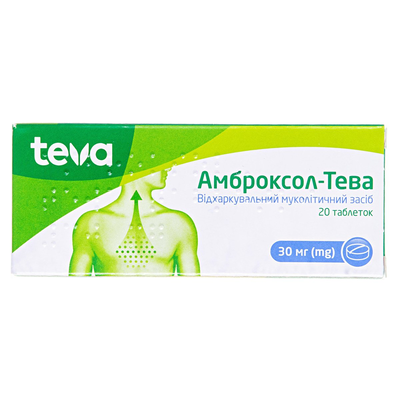
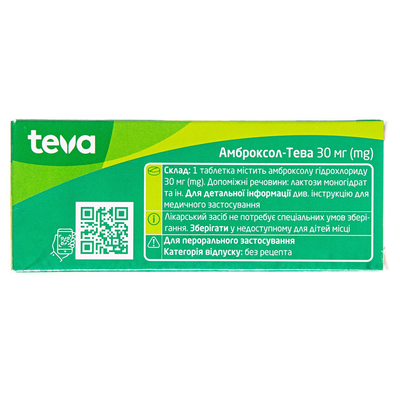
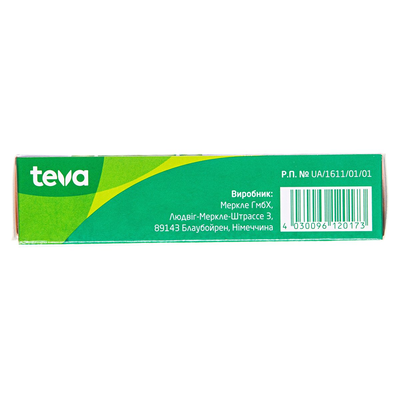
Ambroxol-Teva 30 mg tablets, No. 20 (10 x 2)
Composition
Active ingredient: ambroxol hydrochloride;
1 tablet contains 30 mg of ambroxol hydrochloride;
Excipients: lactose monohydrate, corn starch, magnesium stearate, colloidal anhydrous silicon dioxide.
Dosage Form
Tablets.
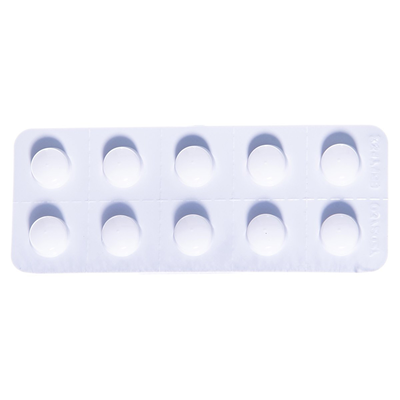
Main physical and chemical properties: white, round, biconvex tablets with a score line on one side.
Pharmacotherapeutic group
Agents used for cough and the common cold. Mucolytics. ATC code R05C B06.
Pharmacological properties
Pharmacodynamics. Ambroxol is a benzylamine derivative and a metabolite of bromhexine. It differs from bromhexine in the absence of a methyl group and the presence of a hydroxyl group in the para-trans position of the cyclohexyl ring. Various studies have demonstrated evidence of mucolytic and secretolytic effects. In general, the drug’s action begins 30 minutes after oral administration; the effect lasts from 6 to 12 hours, depending on the individual dose. It has been reported that ambroxol increases the serous component of bronchial secretions. It is believed to improve sputum clearance by reducing viscosity and activating the ciliated epithelium. Ambroxol activates the surfactant system by acting directly on type II pneumocytes in the alveoli and Clara cells in the bronchioles. It stimulates the formation and secretion of surfactant in the alveolar and bronchial regions of the lungs in both fetuses and adults. These effects have been demonstrated in cell cultures and in vivo. Ambroxol has been reported to have antioxidant activity. The use of ambroxol increases the concentration of the antibiotics amoxicillin, cefuroxime, erythromycin, and doxycycline in sputum and broncho-pulmonary secretions. Pharmacokinetics.
Absorption. When taken orally, ambroxol is rapidly and almost completely absorbed. Maximum concentration (Tmax) after oral administration is reached within 1–3 hours. The absolute bioavailability of ambroxol is reduced by one-third after oral administration due to first-pass metabolism.
Distribution. Plasma protein binding is nearly 85%.
Ambroxol penetrates the cerebrospinal fluid, crosses the placental barrier, and is excreted in breast milk.
Metabolism. Metabolites (dibromantranilic acid and glucuronides) are formed in the liver.
Excretion. Nearly 90% of the drug is excreted by the kidneys as metabolites. Less than 10% of ambroxol is excreted by the kidneys unchanged.
Due to its high degree of protein binding, large volume of distribution, and slow redistribution of the drug from tissues into the blood during dialysis or forced diuresis, significant excretion of ambroxol is unlikely. The terminal plasma half-life ranges from 7 to 12 hours. The half-life of ambroxol and its metabolites in plasma is nearly 22 hours.
Hepatic and Renal Dysfunction
In patients with severe liver disease, the clearance of ambroxol is reduced by 20–40%. In patients with severe renal insufficiency, the half-life of ambroxol metabolites is prolonged.
Indications
Secretolytic therapy for acute and chronic bronchopulmonary diseases associated with impaired bronchial secretion and reduced mucus clearance.
Contraindications
Hypersensitivity to ambroxol and/or other components of the drug.
Rare hereditary conditions that may cause incompatibility with an excipient in the drug (see the “Special Warnings and Precautions for Use” section).
Interactions with Other Medications and Other Forms of Interaction
Concomitant use of Ambroxol-Teva tablets and cough suppressants may lead to excessive mucus accumulation due to suppression of the cough reflex. Therefore, such a combination is permissible only after a physician has carefully assessed the balance between the expected benefit and the potential risk of use.
The use of Ambroxol-Teva tablets in combination with antibiotics (such as amoxicillin, cefuroxime, erythromycin, and doxycycline) improves the delivery of antibiotics to lung tissue. This combination with doxycycline is widely used for therapeutic purposes.
There are no reports of adverse interactions with other medications.
Special Considerations for Use
Only a few cases of severe skin reactions have been reported: Stevens-Johnson syndrome and toxic epidermal necrolysis (Lyell’s syndrome), associated with the use of expectorants such as ambroxol hydrochloride. For the most part, these can be attributed to the severity of the patients’ underlying disease and the concomitant use of another medication. The development of severe skin reactions, such as erythema multiforme and acute generalized exanthematous pustulosis, associated with the use of ambroxol. If a skin rash develops or worsens (sometimes accompanied by blisters or mucosal lesions), stop taking ambroxol immediately and consult a doctor.
In the early stages of Stevens-Johnson syndrome or Lyell’s syndrome, patients may experience nonspecific symptoms similar to those of early-stage influenza, such as fever, body aches, rhinitis, cough, and sore throat. It is a mistake to use symptomatic treatment with cough and cold medications when such nonspecific symptoms, similar to those of early-stage flu, are present.
Since ambroxol may increase mucus secretion, Ambroxol-Teva tablets should be used with caution in cases of impaired bronchial motility and increased mucus secretion (for example, in a rare condition such as primary ciliary dyskinesia).
In patients with severe renal insufficiency, accumulation of the hepatic metabolites of ambroxol is possible. Patients with impaired renal function and severe liver disease should use ambroxol only after consulting a doctor.
If a patient has a known intolerance to certain sugars, they should consult their doctor before taking this medication. Patients with rare hereditary forms of galactose intolerance, Lapp lactase deficiency, or glucose-galactose malabsorption should not take this medication.
Pregnancy and lactation.
Pregnancy
Ambroxol hydrochloride crosses the placental barrier. Animal studies have not shown any direct or indirect harmful effects on pregnancy, embryonic/fetal development, labor, or postnatal development.
Clinical studies of the drug’s use after the 28th week of pregnancy have not revealed any harmful effects on the fetus.
Nevertheless, standard precautions regarding medication use during pregnancy should be observed. Use of this medication is not recommended during the first trimester of pregnancy.
Breastfeeding
Ambroxol hydrochloride passes into breast milk. Although no adverse effects on infants are expected, ambroxol is not recommended for use while breastfeeding.
Fertility
Preclinical studies do not indicate any direct or indirect adverse effects on fertility.
Effects on the ability to drive and operate machinery
There are no data on the effect on reaction time when driving or operating machinery. No studies have been conducted on the effect on reaction time when driving or operating machinery.
Dosage and Administration
Ambroxol-Teva, 30 mg tablets, for oral use. The tablets should be swallowed whole with plenty of warm liquid (e.g., tea or broth) after a meal. The mucolytic effect of ambroxol is enhanced by drinking plenty of fluids.
Children aged 6 to 12 years: The usual dose is 1/2 tablet 2–3 times daily (equivalent to 30–45 mg of ambroxol hydrochloride per day).
Children over 12 years of age and adults: the usual dose is 1 tablet 3 times a day for the first 2–3 days (equivalent to 90 mg of ambroxol hydrochloride per day). Treatment should be continued at a dose of 1 tablet 2 times a day (equivalent to 60 mg of ambroxol hydrochloride per day).
If necessary, the therapeutic effect for adults and children over 12 years of age can be enhanced by taking 2 tablets twice daily (equivalent to 120 mg of ambroxol hydrochloride per day).
The duration of treatment depends on the specific course of the disease. In general, there are no restrictions on the duration of use, but long-term therapy should be conducted under a doctor’s supervision.
Ambroxol-Teva tablets should not be used for more than 4–5 days without consulting a doctor.
In cases of impaired kidney function or severe liver disease, the medication may be taken only under a doctor’s supervision. In such cases, it is recommended to reduce the dose and increase the interval between doses.
Children. Use in children over 6 years of age who cannot tolerate the syrup or solution for inhalation and oral administration.
For children under 6 years of age, Ambroxol-Teva is administered as a syrup or drops.
Overdose
Currently, there are no reports of specific symptoms of overdose in humans.
Symptoms reported in isolated cases of overdose and/or accidental use of the medication correspond to the known side effects of ambroxol at recommended doses and require symptomatic treatment.
Side Effects
Adverse reactions are classified by frequency into the following categories: very common (≥ 1/10); common (≥ 1/100, < 1/10); uncommon (≥ 1/1,000, < 1/100); rare (≥ 1/10,000, < 1/1,000); very rare (< 1/10,000); unknown (cannot be estimated from the available data).
Immune system disorders:
rare – hypersensitivity reactions;
unknown – angioedema, pruritus, anaphylactic reactions, including anaphylactic shock, other allergic reactions.
Skin and subcutaneous tissue disorders:
Rare – skin rash, urticaria;
frequency unknown – erythema, severe skin lesions (including Stevens-Johnson syndrome, Lyell’s syndrome, erythema multiforme, acute generalized exanthematous pustulosis).
Gastrointestinal disorders:
common – nausea;
uncommon – vomiting, dyspepsia, abdominal pain, diarrhea;
very rare – hypersalivation.
Respiratory system:
frequency unknown – shortness of breath (as a hypersensitivity reaction).
General disorders:
Uncommon – mucosal reactions, fever.
Shelf life
5 years.
Storage conditions
This medication does not require special storage conditions. Keep out of reach of children.
Packaging
10 tablets per blister pack, 2 blister packs per box.
Sales Conditions
Available without a prescription.
Manufacturer
Merkle GmbH.