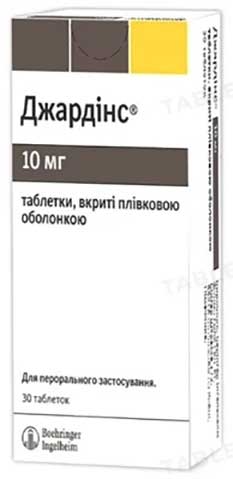
Jardins tablets, film-coated, 10 mg, No. 30 (10 x 3)
Composition
Active ingredient: empagliflozin;
1 tablet contains 10 mg or 25 mg of empagliflozin;
Excipients: lactose monohydrate; microcrystalline cellulose; hydroxypropyl cellulose; croscarmellose sodium; colloidal anhydrous silicon dioxide; magnesium stearate; Opadry® Yellow 02B38190 coating (hypromellose 2910, titanium dioxide (E171), talc, polyethylene glycol 400, yellow iron oxide (E172)).
Dosage Form
Film-coated tablets.
Main physical and chemical properties:
10 mg tablets: round, biconvex, film-coated tablets, pale yellow in color with beveled edges, embossed with the “Boehringer Ingelheim” logo on one side and “S10” on the other;
25 mg tablets: oval, biconvex, film-coated tablets, pale yellow in color with beveled edges, embossed with the “Boehringer Ingelheim” logo on one side and “S25” on the other.
Pharmacotherapeutic group
Drugs used in diabetes mellitus, sodium-dependent glucose cotransporter 2 (SODC2) inhibitors. ATC code A10B K03.
Pharmacological Properties
Pharmacodynamics.
Mechanism of action
Empagliflozin is a reversible, potent (IC50 1.3 nmol), and selective competitive inhibitor of the sodium-dependent glucose cotransporter 2 (SODCT-2). Empagliflozin does not inhibit other glucose transporters that play an important role in delivering glucose to peripheral tissues, and is 5,000 times more selective for SGLT2 than for SGLT1, the primary transporter responsible for glucose absorption in the intestine. SGLT2 is highly expressed in the kidneys, whereas expression in other tissues is absent or very low. As the primary transporter, it is responsible for the reabsorption of glucose from the tubular lumen back into the bloodstream. In patients with type 2 diabetes and hyperglycemia, a greater amount of glucose is filtered and reabsorbed.
Empagliflozin improves glycemic control in patients with type 2 diabetes by reducing renal glucose reabsorption. The amount of glucose excreted by the kidneys via this glucuretic mechanism depends on blood glucose concentration and glomerular filtration rate (GFR). Inhibition of SGLT2 in patients with type 2 diabetes and hyperglycemia leads to increased urinary glucose excretion. In addition, empagliflozin increases sodium excretion, leading to osmotic diuresis and a reduction in intravascular volume.
In patients with type 2 diabetes, glucose excretion increased immediately after the first dose of empagliflozin and persisted throughout the 24-hour dosing interval. The increase in urinary glucose excretion persisted at the end of the 4-week treatment period and averaged approximately 78 g/day. The increase in urinary glucose excretion led to an immediate reduction in plasma glucose levels in patients with type 2 diabetes.
Empagliflozin improves both fasting and postprandial plasma glucose levels. The mechanism of action of empagliflozin is independent of β-cell function and the insulin signaling pathway, which helps reduce the risk of hypoglycemia. Improvements in markers of β-cell function, including the homeostatic model assessment of β-cell function (HOMA-β), have been observed. In addition, glucose excretion in the urine results in a caloric loss associated with reduced body fat and weight loss. The glucosuria observed with empagliflozin is accompanied by diuresis, which may contribute to a sustained and moderate reduction in blood pressure.
Empagliflozin also reduces sodium reabsorption and increases sodium delivery to the distal tubules. This may affect several physiological functions, including an increase in tubuloglomerular feedback and a reduction in intraglomerular pressure, a reduction in cardiac preload and afterload, and inhibition of sympathetic activity, as well as a reduction in left ventricular wall stress, as evidenced by lower NT-proBNP levels, which may have a beneficial effect on cardiac remodeling, filling pressure, and diastolic function, as well as the preservation of renal structure and function. Other effects, such as increased hematocrit, reduced body weight, and lower blood pressure, may further contribute to benefits for the heart and kidneys.
Clinical Efficacy and Safety
Type 2 Diabetes
Improving glycemic control and reducing the incidence of cardiovascular disease and mortality are integral parts of the treatment of type 2 diabetes.
Treatment with empagliflozin, either alone or in combination with metformin, pioglitazone, sulfonylureas, DPP-4 inhibitors, and insulin has resulted in clinically significant improvements in HbA1c levels, fasting plasma glucose, body weight, and systolic and diastolic blood pressure. With the use of empagliflozin at a dose of 25 mg, the proportion of patients who achieved a target HbA1c level of less than 7% increased, and the number of patients requiring glycemic therapy decreased compared with treatment with empagliflozin 10 mg and placebo. The higher the baseline HbA1c level, the greater the reduction observed with the drug.
In addition, empagliflozin, when added to standard therapy, reduces cardiovascular mortality and cardiovascular events in patients with type 2 diabetes.
Cardiovascular Outcomes
The double-blind, placebo-controlled EMPA-REG OUTCOME trial compared the efficacy of empagliflozin at doses of 10 mg and 25 mg with placebo, as an adjunct to standard therapy in patients with type 2 diabetes and established cardiovascular disease.
Empagliflozin was superior to placebo in preventing mortality due to cardiovascular disease, nonfatal myocardial infarction, or nonfatal stroke. This effect was due to a significant reduction in the risk of cardiovascular mortality, with no significant changes in the incidence of nonfatal myocardial infarction or nonfatal stroke. The reduction in cardiovascular mortality was comparable for empagliflozin 10 mg and 25 mg (see graph below) and was confirmed by an improvement in overall survival (Table 1).
The effect of empagliflozin on the primary composite endpoint of death from cardiovascular disease, nonfatal myocardial infarction, or nonfatal stroke is largely independent of glycemic control or renal function, which, as a rule, was characterized by an eGFR of 30 mL/min/1.73 m² or higher in all patient categories in the EMPA-REG OUTCOME study.
The efficacy of preventing cardiovascular mortality has not been definitively established in patients who took empagliflozin concomitantly with DPP-4 inhibitors, or in Black patients, as the representation of these groups in the EMPA-REG OUTCOME study was limited.
Table 1
Treatment effect by primary endpoints, their components, and mortalitya
| Efficacy Endpoint | Placebo
N=2,333 |
Empagliflozinb
N=4,687 |
| Time to first occurrence of a fatal event due to cardiovascular disease, nonfatal myocardial infarction, or nonfatal stroke, N (%) | 282 (12.1) | 490 (10.5) |
| Risk ratio compared to placebo (95.02% confidence interval (CI))* | 0.86 (0.74; 0.99) | |
|
0.0382 | |
| Death from cardiovascular disease, N (%) | 137 (5.9) | 172 (3.7) |
| Risk ratio compared to placebo (95% CI) | 0.62 (0.49; 0.77) | |
|
<0.0001 | |
| Nonfatal myocardial infarction, N (%) | 121 (5.2) | 213 (4.5) |
| Risk ratio compared to placebo (95% CI) | 0.87 (0.70; 1.09) | |
|
0.2189 | |
| Nonfatal stroke, N (%) | 60 (2.6) | 150 (3.2) |
| Risk ratio compared to placebo (95% CI) | 1.24 (0.92; 1.67) | |
|
0.1638 | |
| Overall mortality, N (%) | 194 (8.3) | 269 (5.7) |
| Risk ratio compared to placebo (95% CI) | 0.68 (0.57; 0.82) | |
|
<0.0001 | |
| Mortality not related to cardiovascular disease, N (%) | 57 (2.4) | 97 (2.1) |
| Risk ratio compared to placebo (95% CI) | 0.84 (0.60; 1.16) |
a Data from treated patients (i.e., patients who received at least one dose of the study drug).
b Combined doses of empagliflozin 10 mg and 25 mg.
* Since the study results were included in an interim analysis, a two-sided 95.02% confidence interval is used, corresponding to a p-value < 0.0498 for statistical significance.

Fig. 1. Time to death from cardiovascular disease in the EMPA-REG OUTCOME study.
Heart failure requiring hospitalization
In the EMPA-REG OUTCOME trial, empagliflozin reduced the risk of heart failure requiring hospitalization compared with placebo (empagliflozin group—2.7%; placebo group – 4.1%; OR 0.65, 95% CI 0.50–0.85).
Nephropathy
In the EMPA-REG OUTCOME study, when assessing the time to the first episode of nephropathy, the OR was 0.61 (95% CI 0.53; 0.70) in the empagliflozin group (12.7%) compared with the placebo group (18.8%).
In addition, empagliflozin increased the risk (OR 1.82; 95% CI 1.40; 2.37) of developing persistent normo- or microalbuminuria (49.7%) in patients with macroalbuminuria at baseline compared with placebo (28.8%).
Heart Failure
Use of empagliflozin in patients with heart failure and reduced ejection fraction
A randomized, double-blind, placebo-controlled trial (EMPEROR-reduced) was conducted involving 3,730 patients with chronic heart failure (New York Heart Association [NYHA] Class II–IV) and reduced left ventricular ejection fraction (LVEF ≤40%) to evaluate the efficacy and safety of empagliflozin 10 mg once daily as an adjunct to standard heart failure therapy. The primary endpoint was the time to the first occurrence of confirmed cardiovascular (CV) death or hospitalization for heart failure (HF). Changes in the incidence of confirmed HFH (first and recurrent) and eGFR (CKD-EPI) relative to baseline were included in the confirmatory trial. Treatment for heart failure at the start of the study included ACE inhibitors/angiotensin II receptor blockers/angiotensin-neprilysin receptor inhibitors (88.3%), beta-blockers (94.7%), mineralocorticoid receptor antagonists (71.3%), and diuretics (95.0%).
1,863 patients were randomized to the empagliflozin 10 mg group (placebo: 1,867). The median duration of treatment was 15.7 months. The study population consisted of 76.1% men and 23.9% women, with a mean age of 66.8 years (range: 25–94 years); 26.8% of patients were over 75 years of age. 70.5% of the study population were of Caucasian descent, 18.0% were of Mongoloid descent, and 6.9% were of Negroid descent/African Americans. At the time of randomization, 75.1% of patients had NYHA Class II heart failure, 24.4% had NYHA Class III heart failure, and 0.5% had NYHA Class IV heart failure. The mean ejection fraction was 27.5%. At baseline, the mean eGFR was 62.0 mL/min/1.73 m², and the mean urinary albumin-to-creatinine ratio (UACR) was 22 mg/g. In approximately half of the patients (51.7%), eGFR was ≥60 mL/min/1.73 m²; in 24.1%, it ranged from 45 to <60 mL/min/1.73 m²; in 18.6% it ranged from 30 to <45 mL/min/1.73 m², and in 5.3% it ranged from 20 to <30 mL/min/1.73 m².
Empagliflozin demonstrated the greatest efficacy in reducing the risk of the primary composite endpoint—cardiovascular death or hospitalization for heart failure—compared with placebo. In addition, empagliflozin significantly reduced the risk of HF (first and recurrent) and significantly slowed the rate of decline in eGFR (Table 2).
Table 2
Treatment effect on the primary composite endpoint, its components, and two key secondary endpoints included in the pre-specified confirmatory trial
| Placebo | Empagliflozin 10 mg | |
| N | 1,867 | 1,863 |
| Time to first confirmed episode of cardiovascular death or major adverse cardiovascular event, N (%) | 462 (24.7) | 361 (19.4) |
| Risk ratio compared to placebo (95.04% CI)* | 0.75 (0.65, 0.86) | |
|
<0.0001 | |
| Cardiovascular death, N (%)* | 202 (10.8) | 187 (10.0) |
| Risk ratio compared to placebo (95% CI) | 0.92 (0.75, 1.12) | |
| HSN (first episode), N (%) | 342 (18.3) | 246 (13.2) |
| Risk ratio compared to placebo (95% CI) | 0.69 (0.59, 0.81) | |
| GSN (first and recurrent), number of events | 553 | 388 |
| Risk ratio compared to placebo (95.04% CI)* | 0.70 (0.58, 0.85) | |
|
0.0003 | |
| Slope of eGFR change (EPI CKD), rate of decline (mL/min/1.7 m²/year) |
|
|
| Difference between treatment groups compared to placebo (99.9% CI) | 1.73 (1.10, 2.37) | |
|
p < 0.0001 |
CV = cardiovascular, HFH = hospitalization for heart failure, eGFR = estimated glomerular filtration rate, CKD EPI = epidemiological adjustment for chronic kidney disease
* Death from cardiovascular disease and hospitalization for heart failure were determined by an independent clinical events committee and verified using a randomized subset
** Estimated glomerular filtration rate was analyzed based on the processed dataset. The lag was -0.95 mL/min/1.73 m² for placebo and -3.02 mL/min/1.73 m² for empagliflozin. The lag represents an acute effect on the estimated glomerular filtration rate, whereas the slope represents a long-term effect.

Fig. 2 Time to the first confirmed event of cardiovascular death or hospitalization for heart failure
Results for the primary composite endpoint generally showed hazard ratios (HR) below 1 in all predefined subgroups, including patients with heart failure, with or without type 2 diabetes, and with or without impaired renal function (estimated glomerular filtration rate [eGFR] ≥ 20 mL/min/1.73 m²).
Use of empagliflozin in patients with heart failure and preserved ejection fraction
A randomized, double-blind, placebo-controlled trial (EMPEROR-Preserved) was conducted involving 5,988 patients with chronic heart failure (NYHA II–IV) and preserved ejection fraction (LVEF > 40%) to evaluate the efficacy and safety of empagliflozin 10 mg once daily as an adjunct to standard therapy. The primary endpoint was time to the first occurrence of death from cardiovascular disease or confirmed hospitalization for heart failure (HF). Confirmed hospitalization for HF (first and recurrent) and the slope of change in eGFR (CKD-EPI) from baseline were included in the confirmatory analysis. Baseline therapy included ACE inhibitors/angiotensin receptor blockers/angiotensin receptor-neprilysin inhibitors (80.7%), beta-blockers (86.3%), mineralocorticoid receptor antagonists (37.5%), and diuretics (86.2%).
Empagliflozin demonstrated the greatest efficacy in reducing the risk of the primary endpoint of death from cardiovascular disease or hospitalization for heart failure compared with placebo. In addition, empagliflozin significantly reduced the risk of hospitalization for heart failure (both primary and recurrent) and significantly slowed the rate of decline in eGFR.
Table 3
Treatment effect on the primary composite endpoint, its components, and two key secondary endpoints included in the pre-specified confirmatory trial
| Endpoint | Placebo | Empagliflozin, 10 mg |
| N | 2991 | 2997 |
| Time to the first confirmed episode of cardiovascular death or hospitalization for heart failure, N (%) | 511 (17.1) | 415 (13.8) |
| Risk ratio compared to placebo (95.04% CI)* | 0.79 (0.69, 0.90) | |
|
< 0.0003 | |
| Cardiovascular death, N (%)* | 244 (8.2) | 219 (7.3) |
| Risk ratio compared to placebo (95% CI) | 0.92 (0.75, 1.12) | |
| Hospitalization for HF (first episode), N (%) | 352 (18.3) | 259 (8.6) |
| Risk ratio compared to placebo (95% CI) | 0.71 (0.60, 0.83) | |
| Hospitalization for HF (first and recurrent), number of events | 541 | 407 |
| Risk ratio compared with placebo (95.04% CI)* | 0.73 (0.61, 0.88) | |
|
0.0009 | |
| Slope of eGFR change (EPI CKD)cr, rate of decline (mL/min/1.73 m²/year) |
|
|
| Difference between treatment groups compared to placebo (99.9% CI) | 1.36 (1.06, 1.66) | |
|
p < 0.0001 |
CV – cardiovascular, HF – heart failure, eGFR – estimated glomerular filtration rate, CKD EPI – epidemiological adjustment for chronic kidney disease.
* Death from cardiovascular disease and hospitalization for heart failure were determined by an independent clinical events committee and monitored based on a randomized cohort.
** Estimated glomerular filtration rate was analyzed based on the processed dataset. The lag was -0.95 mL/min/1.73 m² with placebo and -3.02 mL/min/1.73 m² with empagliflozin. The lag represents an acute effect on the estimated glomerular filtration rate, whereas the slope represents a long-term effect.

Fig. 3 Time to the first confirmed event of cardiovascular death or hospitalization for heart failure.
Results for the primary composite endpoint were consistent across each of the predefined subgroups, classified, for example, by LVEF, diabetes status, or renal function (up to 20 mL/min/1.73 m²).
Chronic Kidney Disease
A randomized, double-blind, placebo-controlled trial of empagliflozin 10 mg once daily (EMPA-KIDNEY) was conducted with 6,609 patients with chronic kidney disease (eGFR ≥ 20 – < 45 mL/min/1.73 m² or eGFR ≥ 45 – < 90 mL/min/1.73 m² with a urinary albumin-to-creatinine ratio (UACR) ≥ 200 mg/g) to evaluate cardiovascular and renal outcomes as an adjunct to standard therapy. The primary endpoint was time to the first occurrence of kidney disease progression (a sustained decrease of ≥ 40% in eGFR from the time of randomization, a sustained eGFR < 10 mL/min/1.73 m², end-stage kidney disease, or death from kidney disease) or death from cardiovascular disease. The first hospitalization for heart failure or death from cardiovascular disease, hospitalization for any reason (first and subsequent), and all-cause mortality were included in the confirmatory trial.
Baseline therapy included an ACE inhibitor or angiotensin II receptor blocker in 85.2% of patients.
3,304 patients were randomized to the 10-mg empagliflozin group (placebo: 3,305). The median duration of treatment was 24.3 months. The study population consisted of 66.8% men and 33.2% women, with a mean age of 63.3 years (range 18–94 years); 23.0% of patients were over 75 years of age. 58.4% of the study population were of Caucasian descent, 36.2% were of Mongoloid descent, and 4.0% were of Negroid descent/African Americans.
At the start of the study, the mean eGFR was 37.3 mL/min/1.73 m²; in 21.2% of patients, eGFR was ≥ 45 mL/min/1.73 m², in 44.3% it was between 30 and < 45 mL/min/1.73 m², and in 34.5% was < 30 mL/min/1.73 m², including 254 patients with an eGFR < 20 mL/min/1.73 m². The mean urinary albumin-to-creatinine ratio (UACR) was 329 mg/g; in 20.1% of patients, the UACR was < 30 mg/g, in 28.2% it ranged from 30 to ≤ 300 mg/g, in 51.7% it was > 300 mg/g; and in 41.1% it was < 200 mg/g. The main causes of CKD were diabetic nephropathy/diabetic kidney disease (31%), glomerular disease (25%), hypertensive disease/renovascular disease (22%), and other/unknown causes (22%).
Empagliflozin was superior to placebo in reducing the risk of the primary composite endpoint, which included progression of kidney disease or death from cardiovascular disease (see Table 4). In addition, empagliflozin significantly reduced the risk of hospitalization for any cause (first and repeat).
Table 4
Treatment effects for the primary composite endpoint and key secondary endpoints included in the pre-specified confirmatory trial, and its components
| Placebo | Empagliflozin,
10 mg |
|
| N | 3,305 | 3,304 |
| Time to first occurrence of kidney disease progression (sustained decrease in eGFR ≥ 40% from the time of randomization, sustained eGFR < 10 mL/min/1.73 m², end-stage kidney disease* (ESRD), or death from kidney disease) or death from cardiovascular disease, N (%) | 558 (16.9) | 432 (13.1) |
| Hazard ratio compared with placebo (99.83% CI) | 0.72 (0.59, 0.89) | |
| p-value for demonstrating non-inferiority | <0.0001 | |
| Sustained reduction in eGFR ≥ 40% from the time of randomization N (%) | 474 (14.3) | 359 (10.9) |
| Hazard ratio compared to placebo (95% CI) | 0.70 (0.61, 0.81) | |
| p-value | <0.0001 | |
| CKD* or persistent eGFR < 10 mL/min/1.73 m², N (%) | 221 (6.7) | 157 (4.8) |
| Risk ratio compared to placebo (95% CI) | 0.69 (0.56, 0.84) | |
| p-value | 0.0003 | |
| Death from kidney disease, N (%)** | 4 (0.1) | 4 (0.1) |
| Hazard ratio compared to placebo (95% CI) | ||
| p-value | ||
| Deaths from cardiovascular disease, N (%) | 69 (2.1) | 59 (1.8) |
| Hazard ratio compared to placebo (95% CI) | 0.84 (0.60, 1.19) | |
| p-value | 0.3366 | |
| CVD* or death from CVD, N (%)# | 217 (6.6) | 163 (4.9) |
| Hazard ratio compared to placebo (95% CI) | 0.73 (0.59, 0.89) | |
| p-value | 0.0023 | |
| Incidence of all-cause hospitalizations (first and repeat),
Number of events |
1,895 | 1,611 |
| Hazard ratio compared to placebo (99.03% CI) | 0.86 (0.75, 0.98) | |
| p-value | 0.0025 |
CV – cardiovascular,
HFH—hospitalization for heart failure, eGFR—estimated glomerular filtration rate.
* End-stage renal disease (ESRD) is defined as the initiation of maintenance dialysis or receipt of a kidney transplant.
** Too few deaths from kidney disease were recorded to calculate an appropriate hazard ratio.
# Preliminarily defined as one of two stop criteria in a pre-specified interim analysis

Fig. 4. Time to the first episode of kidney disease progression or estimated risk of death, estimated cumulative incidence function.
Results for the primary composite endpoint were consistent across each of the pre-specified subgroups, classified by eGFR, underlying cause of kidney disease, diabetes status, or use of ACE inhibitors. The benefits of treatment were more pronounced in patients with high levels of albuminuria.
During treatment, eGFR declined more slowly over time in the empagliflozin group compared with the placebo group. Empagliflozin slowed the annual rate of eGFR decline by 1.37 mL/min/1.73 m²/year (95% CI 1.16, 1.59) compared with placebo, based on a preliminary analysis of all eGFR measurements taken from the 2-month visit through the final follow-up visit. Patients receiving empagliflozin experienced an initial decrease in eGFR that returned to baseline after discontinuation of treatment, as demonstrated in several empagliflozin studies, confirming that hemodynamic changes play a role in the acute effect of empagliflozin on eGFR.
Pharmacokinetics.
Absorption
The pharmacokinetics of empagliflozin have been extensively described in healthy volunteers and patients with type 2 diabetes. Following oral administration, empagliflozin was rapidly absorbed, with peak plasma concentrations observed at a mean tmax of 1.5 hours after dosing. Thereafter, plasma concentrations declined in a biphasic manner, with a rapid distribution phase and a relatively slow terminal phase. The mean values for the area under the “concentration-time” curve (AUC) and maximum concentration (Cmax) in plasma at rest were 1,870 nmol/h and 259 nmol/L for empagliflozin 10 mg, and 4,740 nmol/h and 687 nmol/L for empagliflozin 25 mg once daily. The systemic exposure to empagliflozin increased proportionally with dose. The pharmacokinetic parameters of empagliflozin at rest following a single dose were similar, indicating linear pharmacokinetics with respect to time. There was no clinically significant difference in the pharmacokinetics of empagliflozin between healthy volunteers and patients with type 2 diabetes.
Administration of 25 mg of empagliflozin after a high-calorie, high-fat meal resulted in a slight reduction in its effect: AUC decreased by approximately 16%, and Cmax by approximately 37% compared with administration on an empty stomach. This effect of food intake on the pharmacokinetics of empagliflozin is not considered clinically significant. Empagliflozin may be taken with or without food.
Distribution
The volume of distribution at rest is 73.8 L. Following administration of an oral solution of [14C]-empagliflozin to healthy volunteers, the distribution into red blood cells was approximately 37%, and plasma protein binding was 86%.
Biotransformation
No significant metabolites of empagliflozin were detected in human plasma. The most common metabolites were three glucuronide conjugates (2-, 3-, and 6-O-glucuronide). The systemic exposure of each metabolite was less than 10% of the total exposure to the drug. In vitro studies indicate that the primary route of empagliflozin metabolism in humans is glucuronidation by the uridine-5’-diphosphoglucuronosyltransferases UGT2B7, UGT1A3, UGT1A8, and UGT1A9.
Elimination
The terminal half-life of empagliflozin is 12.4 hours, and the apparent oral clearance is 10.6 L/h. The inter-subject and intra-subject variability for oral empagliflozin clearance was 39.1% and 35.8%, respectively. With once-daily dosing, steady-state plasma concentrations of empagliflozin were achieved by the 5th dose. Consistent with the half-life, up to 22% accumulation (relative to plasma AUC) was observed at steady state. Following administration of an oral solution of [14C]-empagliflozin to healthy volunteers, approximately 96% of the labeled substance was excreted in the feces (41%) and urine (54%). Most of the labeled substance was excreted unchanged in the feces, and about half of the labeled substance was excreted unchanged in the urine.
Special Patient Populations
Patients with renal impairment
In patients with mild, moderate, or severe renal impairment (eGFR < 30–< 90 mL/min/1.73 m²) and in patients with renal insufficiency/end-stage renal disease (ESRD), the AUC of empagliflozin increased by approximately 18%, 20%, 66%, and 48%, respectively, compared with subjects with normal renal function. Peak plasma levels of empagliflozin were similar in patients with moderate renal impairment and renal insufficiency/ESRD compared with subjects with normal renal function. Peak plasma levels of empagliflozin were approximately 20% higher in patients with mild and severe renal impairment compared with subjects with normal renal function. Based on the pharmacokinetics in subjects, the apparent oral clearance of empagliflozin decreased with a reduction in eGFR, resulting in an increase in the drug’s effect.
Patients with hepatic impairment
In patients with mild, moderate, and severe hepatic impairment according to the Child–Pugh classification, the AUC of empagliflozin increased by approximately 23%, 47%, and 75%, and Cmax increased by approximately 4%, 23%, and 48%, respectively, compared with subjects with normal liver function.
Body Mass Index
Body mass index had no clinically significant effect on the pharmacokinetics of empagliflozin. AUC was 5.82%, 10.4%, and 17.3% lower in patients with a BMI of 30, 35, and 45 kg/m², respectively, compared with patients with a BMI of 25 kg/m².
Gender
Gender had no clinically significant effect on the pharmacokinetics of empagliflozin.
Race
AUC was 13.5% higher in patients of Mongoloid descent with a body mass index of 25 kg/m² compared with patients of other races with a body mass index of 25 kg/m².
Elderly Patients
Age had no clinically significant effect on the pharmacokinetics of empagliflozin.
Children
Clinical studies have been initiated to evaluate the use of empagliflozin in children aged 10–18 years with type 2 diabetes. The pharmacokinetic and pharmacodynamic data available to date are comparable to those in adults.
Indications
Type 2 diabetes
Treatment of type 2 diabetes in adults when diet and exercise alone do not provide adequate glycemic control:
- as monotherapy in cases of metformin intolerance;
- in combination with other hypoglycemic medications.
For results of studies on combination therapy, including glycemic control, cardiovascular, and renal complications, see the sections “Special Considerations for Use,” “Drug Interactions and Other Interactions,” and “Pharmacological Properties.”
Heart Failure
JARDINS is indicated for adult patients for the treatment of symptomatic chronic heart failure.
Chronic Kidney Disease
JARDINS is indicated in adult patients for the treatment of chronic kidney disease.
Contraindications
Hypersensitivity to the active ingredient or to any of the excipients.
Drug Interactions and Other Interactions
Pharmacodynamic interactions
Diuretics
Empagliflozin may enhance the diuretic effect of thiazide and loop diuretics and may increase the risk of dehydration and hypotension (see the “Special Precautions for Use” section).
Insulin and insulin secretagogues
Insulin and insulin secretagogues, such as sulfonylureas, may increase the risk of hypoglycemia. To reduce the risk of hypoglycemia, a reduction in the dose of insulin or the insulin secretagogue may be recommended when used in combination with empagliflozin (see the sections “Dosage and Administration” and “Adverse Reactions”).
Pharmacokinetic Interactions
Effect of Other Medications on Empagliflozin
In vitro data indicate that the primary route of empagliflozin metabolism in humans is glucuronidation by the uridine-5’-diphosphoglucuronosyltransferases UGT1A3, UGT1A8, UGT1A9, and UGT2B7. Empagliflozin is a substrate for the human uptake transporters OAT3, OATP1B1, and OATP1B3, but not for OAT1 or OCT2. Empagliflozin is transported by P-glycoprotein (P-gp) and breast cancer resistance protein (BCRP).
Concomitant use of empagliflozin with probenecid, an inhibitor of uridine diphosphoglucuronosyltransferase (UGT) and OAT3, resulted in a 26% increase in the peak plasma concentration of empagliflozin and a 53% increase in AUC. These changes were not considered clinically significant.
The effect of UGT induction (including induction by rifampicin or phenytoin) on empagliflozin has not been studied. Concomitant treatment with known UGT enzyme inducers is not recommended due to the potential risk of reduced efficacy. If a UGT enzyme inducer must be administered concomitantly, monitoring of glycemic control to assess the response to JARDINS is advisable.
An in vitro interaction study with gemfibrozil, an inhibitor of the OAT3 and OATP1B1/1B3 transporters, showed that following concomitant administration, the Cmax of empagliflozin increased by 15%, while AUC decreased by 59%. These changes were not considered clinically significant.
Inhibition of the OATP1B1/1B3 transporters during concomitant use with rifampicin resulted in a 75% increase in Cmax and a 35% decrease in the AUC of empagliflozin. These changes were not considered clinically significant.
The effect of empagliflozin when co-administered with verapamil, a P-gp inhibitor, was similar to that observed when empagliflozin was administered alone. This indicates that P-gp inhibition has no clinically significant effect on empagliflozin.
Interaction studies conducted in healthy volunteers indicate that the pharmacokinetics of empagliflozin are not affected by concomitant administration of metformin, glimepiride, pioglitazone, sitagliptin, linagliptin, warfarin, verapamil, ramipril, simvastatin, torasemide, and hydrochlorothiazide.
Effect of empagliflozin on other medications
Empagliflozin may increase renal excretion of lithium and lower blood lithium levels. Serum lithium concentrations should be monitored more frequently after initiation of empagliflozin therapy or following a dose adjustment. The patient should be referred to the physician who prescribed the lithium-containing medications for monitoring serum lithium concentrations.
Based on in vitro studies, empagliflozin does not inhibit, inactivate, or induce CYP450 isoforms. Empagliflozin does not inhibit UGT1A1, UGT1A3, UGT1A8, UGT1A9, or UGT2B7. Drug-drug interactions involving major CYP450 or UGT isoforms between empagliflozin and concomitantly administered substrates of these enzymes are considered unlikely.
Empagliflozin does not inhibit P-gp at therapeutic doses. Based on in vitro studies, it is unlikely that empagliflozin will interact with active substances that are P-gp substrates. Concomitant use of digoxin, a P-gp substrate, and empagliflozin resulted in a 6% increase in AUC and a 14% increase in Cmax of digoxin. These changes were not considered clinically significant.
Empagliflozin does not inhibit human uptake transporters such as OAT3, OATP1B1, and OATP1B3 in vitro at clinically relevant concentrations; therefore, drug-drug interactions with substrates of these uptake transporters are considered unlikely.
Interaction studies conducted in healthy volunteers indicate that empagliflozin has no clinically significant effect on the pharmacokinetics of metformin, glimepiride, pioglitazone, sitagliptin, linagliptin, simvastatin, warfarin, ramipril, digoxin, diuretics, and oral contraceptives.
Special Instructions for Use
Ketoacidosis
In patients with diabetes who have taken SGLT-2 inhibitors (including empagliflozin), cases of ketoacidosis have been reported, including life-threatening and fatal cases. In several cases, ketoacidosis presented atypically, with only a moderate increase in blood glucose levels (below 14 mmol/L (250 mg/dL)). It is unknown whether increasing the dose of empagliflozin affects the likelihood of ketoacidosis. Although ketoacidosis is less likely in patients without diabetes, cases have also been reported in such patients.
The risk of ketoacidosis should be considered in the presence of nonspecific symptoms such as nausea, vomiting, loss of appetite, abdominal pain, excessive thirst, difficulty breathing, confusion, unusual fatigue, or drowsiness. If these symptoms occur, patients should be evaluated immediately for ketoacidosis, regardless of their blood glucose level.
If a patient is suspected of having or is diagnosed with ketoacidosis, empagliflozin should be discontinued immediately.
Treatment should be interrupted if a patient is hospitalized for major surgical procedures or in the event of serious acute illnesses. Monitoring of ketones is recommended in these patients. Measuring ketone levels in urine takes priority over measuring them in blood. Treatment with empagliflozin may be resumed once ketone levels have normalized and the patient’s condition has stabilized.
Before initiating empagliflozin therapy, the patient’s medical history should be reviewed to identify factors that may indicate a predisposition to ketoacidosis.
Patients with impaired β-cell function (e.g., in cases of type 2 diabetes mellitus with low C-peptide levels, latent autoimmune diabetes in adults, or a history of pancreatitis); patients with conditions that lead to restricted food intake or severe dehydration; patients for whom the insulin dose is being reduced, and patients with an increased need for insulin due to acute illness, surgery, or alcohol abuse. SGLT-2 inhibitors should be used with caution in these patients.
Resuming treatment with SGLT-2 inhibitors in patients with a history of ketoacidosis that occurred previously during treatment with SGLT-2 inhibitors is not recommended, unless another factor causing ketoacidosis has been clearly identified and eliminated.
JARDINS should not be used to treat patients with type 1 diabetes. Data from a clinical trial program in patients with type 1 diabetes showed an increased incidence of ketoacidosis with empagliflozin 10 mg and 25 mg as an adjunct to insulin compared with placebo.
Renal impairment
Due to limited experience, it is not recommended to initiate treatment with empagliflozin in patients with an estimated glomerular filtration rate (eGFR) < 20 mL/min/1.73 m².
In patients with an eGFR < 60 mL/min/1.73 m², the daily dose of empagliflozin is 10 mg (see the “Dosage and Administration” section).
The efficacy of empagliflozin in lowering glucose levels depends on renal function and is reduced in patients with an eGFR < 45 mL/min/1.73 m² and is likely absent in patients with
eGFR < 30 mL/min/1.73 m² (see sections “Dosage and Administration,” “Pharmacodynamics,” and “Pharmacokinetics”).
Monitoring of Renal Function
It is recommended to assess renal function as follows:
- before starting empagliflozin and periodically during treatment, i.e., at least once a year (see sections “Dosage and Administration,” “Adverse Reactions,” “Pharmacodynamics,” and “Pharmacokinetics”);
- before starting any concomitant medication that may have an adverse effect on renal function.
Use in patients at risk of a decrease in extracellular fluid volume
Given the mechanism of action of SGLT-2 inhibitors, the osmotic diuresis associated with glucosuria may lead to a slight decrease in blood pressure (see the “Pharmacodynamics” section). The drug should be used with caution in patients for whom a decrease in blood pressure caused by empagliflozin may pose a risk, such as patients with cardiovascular disease, patients taking antihypertensive medications and with a history of hypotension, or patients aged 75 years or older.
If conditions that may lead to fluid loss (such as gastrointestinal disorders) develop, patients receiving empagliflozin should be carefully monitored for signs of intravascular volume depletion (e.g., physical examination, blood pressure measurement, laboratory tests, including hematocrit levels) and administered electrolytes as needed. Consider temporarily discontinuing empagliflozin therapy until fluid loss is resolved.
Elderly patients
The effect of empagliflozin on urinary glucose excretion is associated with osmotic diuresis, which may affect hydration status. Patients aged 75 years and older are at increased risk of a decrease in extracellular fluid volume. Most of these patients receiving empagliflozin experienced adverse reactions associated with a decrease in intravascular volume compared with patients in the placebo group (see the “Adverse Reactions” section). Therefore, special attention should be paid to extracellular fluid volume when co-administering medications that may lead to its reduction (e.g., diuretics, ACE inhibitors).
Complicated Urinary Tract Infections
Cases of complications in the form of genitourinary tract infections, including pyelonephritis and urosepsis, have been reported in patients receiving empagliflozin (see the “Adverse Reactions” section). Consider temporarily discontinuing empagliflozin treatment in patients with complicated urinary tract infections.
Necrotizing perineal fasciitis (Fournier’s gangrene)
Cases of necrotizing perineal fasciitis (also known as Fournier’s gangrene) have been reported in women and men with diabetes who were taking SGLT-2 inhibitors. Fournier’s gangrene is a rare but serious and potentially life-threatening infection that requires urgent surgical intervention and antibiotic treatment.
Patients should be advised to seek immediate medical attention if they experience symptoms such as pain, tenderness, erythema, or swelling in the genital or perineal area, accompanied by fever or malaise. It should be noted that a urogenital infection or perineal abscess may precede necrotizing fasciitis. If Fournier’s gangrene is suspected, JARDINS should be discontinued and treatment initiated promptly (including administration of antibiotics and surgical debridement of the affected area).
Lower Limb Amputation
In a study with another SGLT-2 inhibitor, an increase in the incidence of lower limb amputations (primarily of the toes) was observed. It is unknown whether this effect is common to this class of drugs. Patients with diabetes should be advised to undergo preventive care for foot conditions.
Liver Damage
During clinical trials, cases of liver damage were reported with the use of empagliflozin. A causal relationship between empagliflozin and liver damage has not been established.
Elevated hematocrit
Elevated hematocrit has been observed during treatment with empagliflozin (see the “Adverse Reactions” section).
Chronic kidney disease
Patients with albuminuria may derive greater benefit from treatment with empagliflozin.
Infiltrative cardiomyopathy or Takotsubo cardiomyopathy
The use of empagliflozin in patients with infiltrative heart disease or takotsubo cardiomyopathy has not been specifically studied. Therefore, its efficacy in these patients has not been established.
Urinalysis
In patients taking JARDINS, the urine glucose test will be positive due to the drug’s mechanism of action.
Interference with 1,5-anhydroglucitol (1,5-AG) levels
Monitoring glycemic control using 1,5-AG levels is not recommended, as 1,5-AG measurements are unreliable for assessing glycemic control in patients taking SGLT-2 inhibitors. Alternative methods of glycemic control are recommended.
Lactose
This medication contains lactose. Patients with rare hereditary galactose intolerance, total lactase deficiency, or glucose-galactose malabsorption should not take this medication.
Sodium
One tablet of this medication contains less than 1 mmol of sodium (23 mg), meaning this medication is virtually sodium-free.
Use During Pregnancy or Breastfeeding.
Pregnancy
There are no data on the use of empagliflozin in pregnant women. As a precaution, it is advisable to avoid using JARDINS during pregnancy.
Breastfeeding
It is unknown whether empagliflozin is excreted in human breast milk. JARDINS should not be used while breastfeeding.
Reproductive function
No studies have been conducted on the effect of JARDINS on human fertility.
Effect on the ability to drive or operate machinery
JARDINS has a negligible effect on the ability to drive and operate machinery. However, patients should be informed of the risk of hypoglycemia if JARDINS is used in combination with sulfonylureas and/or insulin.
Dosage and Administration
Dosage
Type 2 diabetes
The recommended starting dose is 10 mg of empagliflozin once daily as monotherapy or as part of combination therapy with other antidiabetic medications. For patients who tolerate empagliflozin 10 mg once daily well, have an eGFR ≥ 60 mL/min/1.73 m², and require stricter glycemic control, the dose may be increased to 25 mg once daily. The maximum daily dose is 25 mg (see information below and the “Special Considerations for Use” section).
Heart Failure
The recommended dose is 10 mg of empagliflozin once daily.
Chronic Kidney Disease
The recommended dose is 10 mg of empagliflozin per day.
All Indications
When empagliflozin is used in combination with a sulfonylurea or insulin, consider using a lower dose of the sulfonylurea or insulin to reduce the risk of hypoglycemia (see the sections “Interactions with Other Medications and Other Interactions” and “Adverse Reactions”).
If a dose is missed, it should be taken as soon as the patient remembers; however, a double dose should not be taken on the same day.
Special Patient Populations
Patients with renal impairment
Due to limited experience, it is not recommended to initiate treatment with empagliflozin in patients with an estimated glomerular filtration rate (eGFR) < 20 mL/min/1.73 m².
In patients with an eGFR < 60 mL/min/1.73 m², the daily dose of empagliflozin is 10 mg.
In patients with type 2 diabetes, the efficacy of empagliflozin in lowering glucose levels is reduced when eGFR < 45 mL/min/1.73 m² and is likely be absent when eGFR < 30 mL/min/1.73 m². Therefore, if eGFR is below 45 mL/min/1.73 m², additional antidiabetic therapy should be considered if necessary (see the sections “Special Considerations for Use,” “Adverse Reactions,” “Pharmacodynamics,” and “Pharmacokinetics”).
Patients with hepatic impairment
No dose adjustment is required in patients with hepatic impairment. The effect of empagliflozin is enhanced in patients with severe hepatic impairment. Experience with empagliflozin in patients with severe hepatic impairment is limited; therefore, this drug is not recommended for use in this patient population (see the “Pharmacological Properties” section).
Elderly Patients
No dose adjustment based on the patient’s age is necessary. In patients aged 75 years and older, the increased risk of decreased extracellular fluid volume should be taken into account (see sections “Special Considerations for Use” and “Adverse Reactions”).
Directions for Use
The tablets may be taken with or without food, with water, without chewing.
Children.
The safety and efficacy of empagliflozin in children (under 18 years of age) have not been studied; the drug should not be used in this patient population.
Overdose
Symptoms
In controlled clinical trials, single doses of up to 800 mg of empagliflozin in healthy volunteers and multiple daily doses of up to 100 mg of empagliflozin in patients with type 2 diabetes did not resultany toxicity. Empagliflozin increased urinary glucose excretion, leading to an increase in urine volume. The observed increase in urine volume was not dose-dependent and was not clinically significant. There is no experience with doses above 800 mg in humans.
Treatment
In the event of an overdose, treatment should be initiated based on the patient’s clinical condition. The removal of empagliflozin by hemodialysis has not been studied.
Side Effects
Type 2 Diabetes
The most common adverse reaction was hypoglycemia when used with sulfonylureas or insulin.
Heart Failure
The EMPEROR studies included patients with heart failure and reduced left ventricular ejection fraction (N = 3,726) and preserved ejection fraction (N = 5,985), who received empagliflozin 10 mg or placebo. Approximately half of these patients had type 2 diabetes. The most common adverse reaction based on the pooled data from the EMPEROR-Reduced and EMPEROR-Preserved studies was hypovolemia (empagliflozin 10 mg: 11.4%, placebo: 9.7%).
Chronic Kidney Disease
The EMPA-KIDNEY study included patients with chronic kidney disease (N = 6,609) who received 10 mg of empagliflozin or placebo. Approximately 44% of patients had type 2 diabetes.
The most common adverse reactions in the EMPA-KIDNEY study were gout (empagliflozin 7.0% vs. placebo 8.0%) and acute kidney injury (empagliflozin 2.8% vs. placebo 3.5%), which were reported more frequently in patients taking placebo.
The overall safety profile of JARDINS generally was consistent across all studied indications.
Adverse reactions that occurred in patients receiving empagliflozin during placebo-controlled studies are presented in Table 5.
Adverse reactions are classified by organ system (according to MedDRA) and frequency of occurrence. Frequency is defined as very common (> 1/10), common (> 1/100–< 1/10), uncommon (> 1/1,000–< 1/100), uncommon (> 1/10,000–< 1/1,000), rare (< 1/10,000), and unknown (cannot be estimated from the available data).
Table 5
Adverse reactions (based on placebo-controlled studies)
| Organ system classes | Very common | Common | Uncommon | Uncommon | Rare |
| Infections and infestations | Vaginal candidiasis, vulvovaginitis, balanitis, and other genital infectionsa
Urinary tract infections (including pyelonephritis and urosepsis)a |
Necrotizing fasciitis of the perineum
(Fournier’s gangrene) *
|
|||
| Metabolic and digestive disorders | Hypoglycemia (when used with sulfonylureas or insulin)a | Thirst | Ketoacidosis* | ||
| Gastrointestinal disorders | Constipation | ||||
| Skin and subcutaneous tissue disorders | Itching (general)
Rash |
Urticaria, angioedema | |||
| Vascular disorders | Decrease in interstitial fluid volume a | ||||
| Renal and urinary tract disorders | Increased
of urine a |
Dysuria | Tubulo-interstitial nephritis
|
||
| Examination | Elevated serum lipids a | Elevated blood creatinine levels / decreased glomerular filtration rate a
Increased hematocrit a
|
a See the sections below for additional information.
* See the “Special Considerations for Use” section.
Description of Some Adverse Reactions
Hypoglycemia
The incidence of hypoglycemia depended on the background therapy during the relevant studies and was similar when empagliflozin and placebo were used as monotherapy, as an adjunct to metformin, as an adjunct to pioglitazone with or without metformin, as an adjunct to linagliptin and metformin, and when empagliflozin was used in combination with metformin in treatment-naive patients, compared with patients who had previously used empagliflozin and metformin as separate components. An increase in the incidence of mild hypoglycemia was observed with empagliflozin and placebo when added to metformin and sulfonylurea (empagliflozin 10 mg—16.1%, empagliflozin 25 mg—11.5%, placebo—8.4%) and when added to basal insulin with or without metformin and with or without a sulfonylurea (empagliflozin 10 mg—19.5%, empagliflozin 25 mg—28.4%, placebo—20.6% during the first 18 weeks of treatment, when the insulin dose could not be adjusted, empagliflozin 10 mg—36.1%, empagliflozin 25 mg—36.1%, and placebo—35.3% during the 78-week study), as well as in combination with insulin in a pre-filled syringe, with or without metformin (empagliflozin 10 mg — 39.8%, empagliflozin 25 mg — 41.3%, placebo — 37.2% during the first 18 weeks of treatment, when the insulin dose could not be adjusted, empagliflozin 10 mg—51.1%, empagliflozin 25 mg—57.7%, and placebo—58% during the 52-week study).
In the EMPEROR studies on heart failure, a similar incidence of hypoglycemia was observed when the drug was added to sulfonylureas or insulin (empagliflozin 10 mg: 6.5%, placebo: 6.7%).
Severe hypoglycemia (hypoglycemia requiring treatment)
No increase in the incidence of severe hypoglycemia was observed with empagliflozin compared with placebo when used as monotherapy, as an add-on to metformin, as an add-on to metformin and a sulfonylurea, and as an add-on to pioglitazone with or without metformin, as an add-on to linagliptin and metformin, as well as when empagliflozin was used in combination with metformin in treatment-naive patients, compared with patients who had previously used empagliflozin and metformin as separate components. An increased incidence of severe hypoglycemia was observed with empagliflozin and placebo as an adjunct to basal insulin with or without metformin and with or without a sulfonylurea (empagliflozin 10 mg—0%, empagliflozin 25 mg—1.3%, placebo—0% during the first 18 weeks of treatment, when the insulin dose could not be adjusted; empagliflozin 10 mg—0%, empagliflozin 25 mg – 1.3%, placebo – 0% during the 78-week study) and as an adjunct to pre-filled insulin pens with or without metformin (empagliflozin 10 mg – 0.5%, empagliflozin 25 mg – 0.5%, placebo – 0.5% during the first 18 weeks of treatment, when the insulin dose could not be adjusted; empagliflozin 10 mg—1.6%, empagliflozin 25 mg—0.5%, and placebo—1.6% during the 52-week study).
In the EMPEROR studies on heart failure, a similar incidence of hypoglycemia was observed in patients with diabetes treated with empagliflozin and placebo as an adjunct to sulfonylurea or insulin (empagliflozin 10 mg: 2.2%, placebo: 1.9%).
Vaginal candidiasis, vulvovaginitis, balanitis, and other genital infections
Vaginal candidiasis, vulvovaginitis, balanitis, and other genital infections occurred more frequently with empagliflozin (empagliflozin 10 mg—4.0%, empagliflozin 25 mg—3.9%) compared with placebo (1.0%). These infections occurred more frequently in women receiving empagliflozin compared with those in the placebo group; in men, the difference in frequency was less pronounced. Genitourinary infections were mild or moderate in severity.
In the EMPEROR studies on heart failure, the incidence of these infections was higher in patients with type 2 diabetes (empagliflozin 10 mg: 2.3%, placebo: 0.8%) than in patients without diabetes (empagliflozin 10 mg: 1.7%, placebo: 0.7%) when treated with empagliflozin compared with placebo.
Increased Urine Output
Increased urine output (including the predefined terms—pollakiuria, polyuria, and nocturia) was observed more frequently in patients receiving empagliflozin (empagliflozin 10 mg—3.5%, empagliflozin 25 mg—3.3%) compared with patients in the placebo group (1.4%). Increased urine output was mostly mild or moderate in intensity. The incidence of nocturia was similar between the placebo and empagliflozin groups (< 1%).
In the EMPEROR studies on heart failure, increased urination was observed with similar frequency in patients receiving empagliflozin and placebo (empagliflozin 10 mg: 0.9%, placebo: 0.5%).
Urinary Tract Infections
The overall incidence of urinary tract infections reported as adverse events was similar in patients receiving empagliflozin 25 mg and placebo (7.0% and 7.2%), and higher with empagliflozin 10 mg (8.8%). Compared with placebo, urinary tract infections occurred more frequently with empagliflozin in patients with a history of chronic or recurrent urinary tract infections. The severity (mild, moderate, severe) of urinary tract infections was similar in patients receiving empagliflozin and placebo. Urinary tract infections occurred more frequently in women receiving empagliflozin compared with placebo; there was no difference in men.
Decrease in Interstitial Fluid Volume
The overall incidence of a decrease in intravascular volume (including the predefined terms—decreased blood pressure [ambulatory], decreased systolic blood pressure, dehydration, arterial hypotension, hypovolemia, orthostatic hypotension, and syncope) was similar in patients receiving empagliflozin (empagliflozin 10 mg—0.6%, empagliflozin 25 mg—0.4%) and placebo (0.3%). The incidence of decreased extracellular fluid volume was higher in patients aged 75 years and older who received empagliflozin 10 mg (2.3%) or empagliflozin 25 mg (4.3%), compared with placebo (2.1%).
Increased serum creatinine levels/decreased glomerular filtration rate
The overall incidence of increased serum creatinine and decreased glomerular filtration rate was similar with empagliflozin and placebo (increased serum creatinine: empagliflozin 10 mg—0.6%, empagliflozin 25 mg—0.1%, placebo—0.5%; decrease in glomerular filtration rate: empagliflozin 10 mg—0.1%, empagliflozin 25 mg—0%, placebo—0.3%).
Generally, in patients receiving empagliflozin, initial increases in creatinine levels and decreases in glomerular filtration rate during long-term treatment were temporary or reversible after discontinuation of therapy.
In the EMPA-REG OUTCOME study, patients taking empagliflozin experienced an initial decrease in eGFR (mean decrease of 3 mL/min/1.73 m²). Thereafter, eGFR remained stable throughout continuous treatment. Mean eGFR returned to baseline values after discontinuation of treatment, suggesting that severe hemodynamic disturbances may play a role in these changes in renal function. This phenomenon was also observed in the EMPEROR heart failure study and the EMPA-KIDNEY study.
Increases in Serum Lipid Levels
The mean percentage increase from baseline for empagliflozin 10 mg and 25 mg compared with placebo was 4.9% for total cholesterol, 5.7% versus 3.5%; HDL-cholesterol 3.3% and 3.6% versus 0.4%; LDL-cholesterol 9.5% and 10.0% versus 7.5%, triglycerides 9.2% versus 10.5%.
Increase in hematocrit
The mean changes in hematocrit from baseline were 3.4% and 3.6% for empagliflozin 10 mg and 25 mg, respectively, compared with 0.1% for placebo. In the EMPA-REG OUTCOME study, hematocrit levels returned to baseline 30 days after discontinuation of treatment.
Reporting of Suspected Adverse Reactions
Reporting adverse reactions after a drug’s approval is essential. This allows for monitoring the benefit-risk profile of the drug. Healthcare and pharmaceutical professionals, as well as patients or their legal representatives, should report all cases of suspected adverse reactions and lack of efficacy of the drug through the Automated Pharmacovigilance Information System at: https://aisf.dec.gov.ua.
Shelf life
3 years.
Storage conditions
Store in the original packaging at a temperature not exceeding 25°C. Keep out of the reach of children.
Packaging
10 tablets per perforated blister pack; 1 or 3 blister packs per cardboard box.
Manufacturer
Boehringer Ingelheim Pharma GmbH & Co. KG, Germany
or
Rottendorf Pharma GmbH, Germany.
Manufacturer’s location and address of its place of business.
Binger Strasse 173, 55216, Ingelheim am Rhein, Germany
or
Ostenfelder Strasse 51-61, 59320 Ennigerloh, Germany.