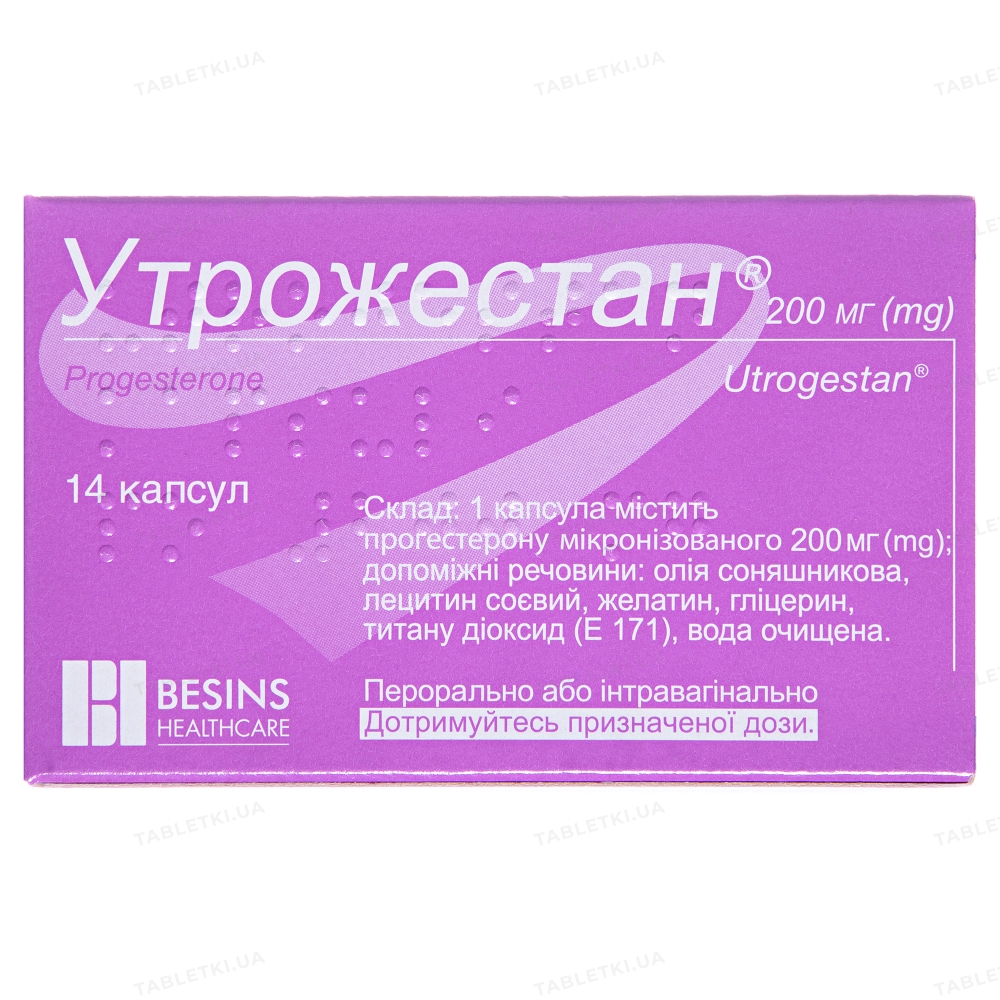

Utrogestan 200 mg capsules, No. 14 (7 x 2)
Active ingredient: progesterone;
1 capsule contains 100 mg or 200 mg of micronized progesterone;
Excipients: sunflower oil, soy lecithin, gelatin, glycerin, titanium dioxide (E 171), purified water.
Dosage Form
Capsules.
Main physical and chemical properties:
100 mg capsules: round, soft, slightly yellowish gelatin capsules containing a whitish oily suspension;
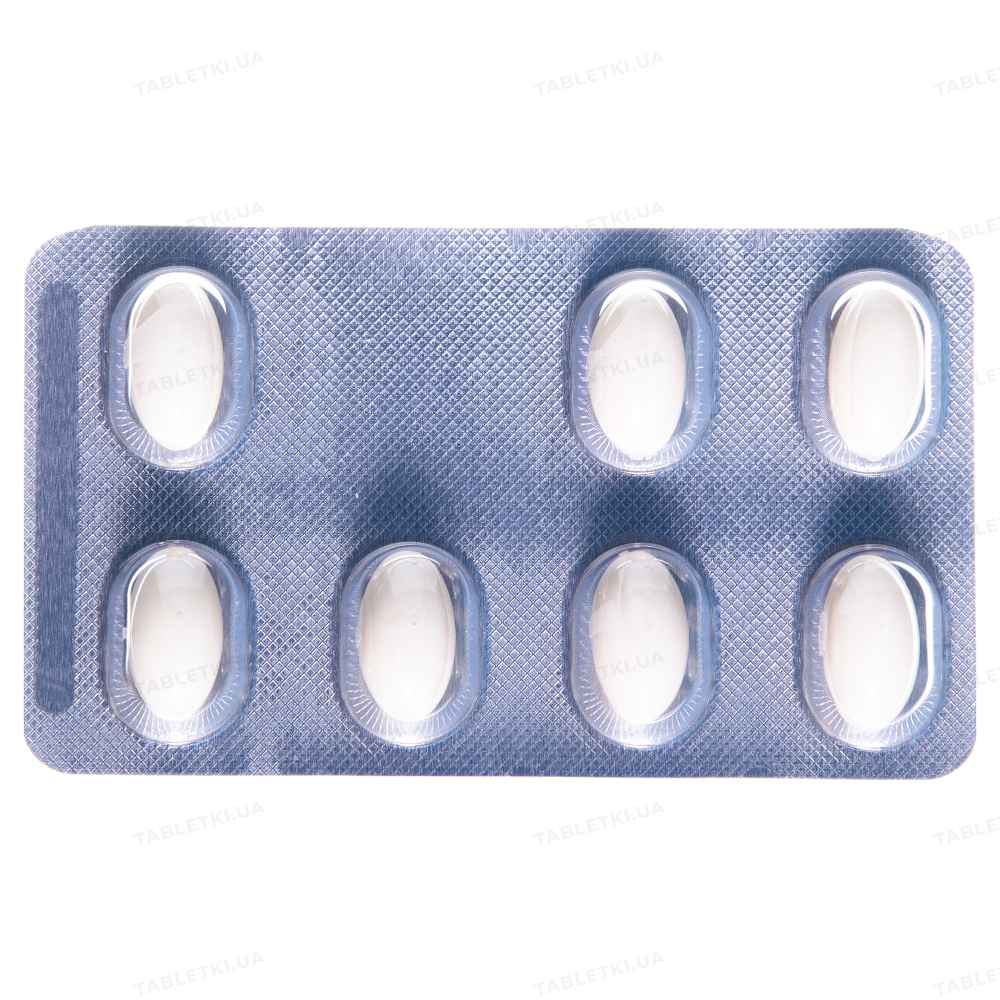
200 mg capsules: oval, soft, slightly yellowish gelatin capsules containing a whitish oily suspension.
Pharmacotherapeutic group
Sex hormones and drugs used in the treatment of disorders of the reproductive system. Progestogens. ATC code G03D A04.
Pharmacological Properties
Pharmacodynamics.
The drug’s pharmacological properties are due to progesterone, one of the hormones produced by the corpus luteum, which promotes the formation of a normal secretory endometrium in women. It induces the transition of the uterine mucosa from the proliferative phase to the secretory phase, and after fertilization, it promotes its transition to the state necessary for the development of the fertilized egg. It reduces the excitability and contractility of the muscles of the uterus and fallopian tubes. It has no androgenic activity. It blocks the secretion of hypothalamic LH and FSH-releasing factors, inhibits pituitary secretion of gonadotropic hormones, and suppresses ovulation.
Pharmacokinetics.
Oral administration
An increase in plasma progesterone levels is observed starting one hour after absorption of the drug in the gastrointestinal tract. Peak plasma progesterone levels are observed 1–3 hours after administration (4.25 ng/mL at 1 hour, 11.75 ng/mL at 2 hours, after 4 hours – 8.37 ng/mL, after 6 hours – 2 ng/mL, and 1.64 ng/mL after 8 hours). The main metabolites of progesterone in plasma are 20-alpha-hydroxy-delta-4-alpha-pregnanolone and 5-alpha-dihydroprogesterone. The drug is excreted in the urine as glucuronide metabolites, the main ones being 3-alpha, 5-beta-pregnanediol (pregnanediol). These metabolites are identical to those produced by the physiological secretion of the corpus luteum.
Intravaginal Use
After vaginal administration, progesterone is rapidly absorbed by the vaginal mucosa.
Plasma progesterone levels begin to rise within the first hour, with peak plasma levels reached 1–3 hours after application.
At the average dose (100 mg of progesterone at night) Utrogestan® allows for the achievement and maintenance of a physiological and stable plasma progesterone level (averaging 9.7 ng/mL), similar to that observed during the luteal phase of the menstrual cycle with normal ovulation. Thus, Utrogestan® stimulates adequate endometrial maturation and promotes embryo implantation.
At higher doses (over 200 mg per day), which are increased gradually, vaginal administration allows for plasma progesterone levels comparable to those in the first trimester of pregnancy.
Metabolism. The metabolites in plasma and urine are identical to those found during physiological secretion by the corpus luteum: in plasma, these are primarily 20-alpha-hydroxy-delta-4-alpha-pregnanolone and 5-alpha-dihydroprogesterone. Urinary excretion accounts for 95% in the form of glucuronide metabolites, the main component of which is 3-alpha, 5-beta-pregnanediol (pregnanediol).
Indications
Conditions associated with progesterone deficiency.
Oral administration
Gynecological:
- conditions associated with progesterone deficiency, namely:
- premenstrual syndrome,
- menstrual cycle disorders (dysovulation, anovulation),
- fibrocystic breast disease,
- perimenopause;
- hormone replacement therapy during menopause (in combination with estrogen therapy);
- Infertility due to luteal insufficiency.
Obstetric:
- prevention of recurrent pregnancy loss or threatened miscarriage due to luteal insufficiency;
- threat of preterm labor.
Intravaginal use
- Reduced fertility in cases of primary or secondary infertility associated with partial or complete luteal insufficiency (dysovulation, maintenance of the luteal phase during preparation for in vitro fertilization, egg donation program).
- Prevention of recurrent pregnancy loss or threatened spontaneous miscarriage due to luteal insufficiency.
- Prevention of preterm labor in women with a short cervix or in women with a history of preterm spontaneous labor.
- Inability or limitation to take the medication orally.
Contraindications
- Hypersensitivity to any component of the drug.
- Severe hepatic insufficiency.
- Suspected or confirmed neoplasia of the breast or genital organs.
- Undiagnosed vaginal bleeding.
- Miscarriage or incomplete abortion.
- Thrombophlebitis. Thromboembolic disorders.
- Cerebral hemorrhage.
- Porphyria.
Drug interactions and other forms of interaction
During menopausal hormone therapy with estrogens, it is strongly recommended to prescribe progesterone no later than the 12th day of the cycle.
If Utrogestan® is used in combination with beta-adrenergic agents to treat threatened preterm labor, the doses of the latter may be reduced.
Concomitant use of other medications may alter the metabolism of progesterone, causing an increase or decrease in plasma progesterone concentrations and, consequently, leading to changes in the drug’s effects.
Potent inducers of liver enzymes, namely: barbiturates, antiepileptic drugs (phenytoin), rifampicin, phenylbutazone, spironolactone, and griseofulvin, cause increased metabolism in the liver.
Some antibiotics (ampicillins, tetracyclines) may alter the intestinal microflora, resulting in changes to the enterohepatic steroid cycle.
It is known that such drug interactions are individual and may vary significantly among different patient groups; therefore, it is impossible to definitively predict any clinical manifestations of such interactions. All progestins may reduce glucose tolerance, which may require an increase in the daily dose of insulin and other antidiabetic agents in patients with diabetes mellitus.
The bioavailability of progesterone may be reduced by smoking and increased by alcohol.
Special Considerations for Use
Treatment at the recommended doses does not have a contraceptive effect.
If treatment is started very early in the menstrual cycle, especially before the 15th day of the cycle, a shortened cycle or bleeding may occur.
In cases of uterine bleeding, the drug should not be prescribed without determining the cause, particularly following an endometrial examination.
Use with caution in patients with fluid retention (e.g., hypertension, cardiovascular or renal disease, or in patients with epilepsy, migraine, or bronchial asthma), a history of depression, diabetes mellitus, liver dysfunction, or photosensitivity.
Before prescribing the drug, patients with a family history of neoplasms and patients with recurrent cholestasis or persistent itching during pregnancy, liver dysfunction, heart or kidney failure, fibrocystic breast disease, epilepsy, bronchial asthma, otosclerosis, diabetes mellitus, multiple sclerosis, or systemic lupus erythematosus.
Due to the risk of thromboembolism and metabolic complications, which cannot be completely ruled out, the drug should be discontinued in the event of:
- visual disturbances, such as vision loss, double vision, retinal vascular lesions, proptosis, or optic disc edema;
- venous thromboembolic or thrombotic complications, regardless of the extent of the lesion;
- severe headache, migraine.
If amenorrhea occurs during treatment, pregnancy—which may be the cause of amenorrhea—should be confirmed or ruled out. Oily discharge may occur with vaginal use of the drug, which is related to the drug’s formulation.
More than half of early spontaneous abortions are caused by genetic complications. In addition, infectious complications and mechanical factors may cause early miscarriages; the only justification for prescribing progesterone in this case would be to delay the expulsion of a dead ovum. Therefore, the prescription of progesterone, as recommended by a physician, should be reserved for cases in which progesterone secretion is insufficient.
Before starting treatment, the patient must undergo a thorough medical and comprehensive gynecological examination, including an intravaginal and breast examination, as well as a Pap smear, taking into account medical history, contraindications, and precautions for use. Regular follow-up visits with a doctor are recommended during treatment. Women receiving hormone replacement therapy should carefully weigh all the risks and benefits associated with the therapy.
In postmenopausal patients with symptoms who are receiving or have received hormone replacement therapy (HRT), there is a slight or moderate increase in the likelihood of being diagnosed with breast cancer. This may be due to earlier diagnosis of the disease or the actual benefits of HRT, or a combination of both. The risk of being diagnosed with breast cancer increases with the duration of treatment and returns to baseline levels five years after discontinuing HRT. Breast cancer diagnosed in patients receiving or who have recently received HRT is less invasive than that occurring in women who have not undergone HRT. A doctor should discuss the increased risk of breast cancer with patients who will be receiving long-term hormone therapy, while weighing the benefits of HRT.
The medication should not be taken with food; it should be taken at bedtime. Taking it with food increases the drug’s bioavailability.
Utrogestan contains soy lecithin and may cause hypersensitivity reactions (hives and anaphylactic shock).
Pregnancy and lactation.
The use of Utrogestan® is not contraindicated during pregnancy, including during the first weeks (see the “Indications” section (obstetric indications)).
No cases of adverse effects on the fetus have been observed during the period of drug use.
When the drug is used during the second and third trimesters of pregnancy, liver function should be monitored.
The transfer of progesterone into breast milk has not been studied in detail. Therefore, its use should be avoided during breastfeeding.
There is evidence of a possible risk of hypospadias when progestins are used during pregnancy to prevent recurrent pregnancy loss or threatened miscarriage due to luteal insufficiency; the patient should be informed of this.
Affects the ability to operate vehicles and machinery.
Drivers and machinery operators: drowsiness and dizziness may occur following oral administration of the drug.
Taking the capsules before bedtime helps avoid these unpleasant effects.
Cases of drowsiness and dizziness have been observed only with oral administration of the drug.
Dosage and Administration
The duration of treatment depends on the nature of the condition.
Oral administration
In most cases, the average daily dose is 200–300 mg in 1 or 2 doses (200 mg in the evening before bedtime and 100 mg in the morning if necessary).
- In cases of luteal phase deficiency (premenstrual syndrome, menstrual cycle disorders, premenopause, fibrocystic mastopathy): take for 10 days (usually from the 17th to the 26th day of the cycle, inclusive).
- For hormone replacement therapy during menopause: since estrogen-only therapy is not recommended, progesterone should be used as a supplement to it during the last 2 weeks of each treatment course, which follow a one-week maintenance phase of any hormone replacement therapy during which withdrawal bleeding may occur.
- If there is a risk of preterm labor: take 400 mg of Utrogestan® every 6–8 hours until symptoms subside. The effective dose and frequency of administration are determined on an individual basis, depending on the clinical manifestations of the risk of preterm labor. After symptoms resolve, the dose of Utrogestan® is gradually reduced to a maintenance dose (for example, 200 mg 3 times daily). At this dose, the drug may be used up to 36 weeks of pregnancy.
The use of progesterone after 36 weeks of pregnancy is not recommended.
Intravaginal administration
The capsules are inserted deep into the vagina while lying on your back.
Wash your hands thoroughly before each administration; ensure that no detergent remains on your hands.
On average, the dose is 200 mg of progesterone per day (1 capsule of 200 mg or 2 capsules of 100 mg, divided into 2 doses—morning and evening—which are inserted deep into the vagina, using an applicator if necessary). The dose may be increased depending on the patient’s response.
- In cases of partial luteal phase deficiency (anovulation, menstrual cycle disorders), the daily dose is 200 mg for 10 days (usually from the 17th to the 26th day of the cycle).
- In cases of complete luteal phase deficiency [complete absence of progesterone in women with non-functioning (absent) ovaries (egg donation)]: the progesterone dose is 100 mg on days 13 and 14 of the transfer cycle. From day 15 to day 25 of the cycle, the progesterone dose is 200 mg, divided into two doses (morning and evening). Starting on day 26, in the event of an early pregnancy diagnosis, the dose is gradually increased each week by 100 mg of progesterone per day, reaching a maximum of 600 mg of progesterone per day, divided into three doses. This dosage should be maintained until day 60.
- Maintenance of the luteal phase during an in vitro fertilization cycle: treatment begins on the evening of the embryo transfer day, at a dose of 600 mg per day in 3 doses (200 mg every 8 hours).
- In cases of threatened miscarriage or for the prevention of recurrent miscarriages due to luteal insufficiency: 200–400 mg per day (100–200 mg per dose every 12 hours) until the 12th week of pregnancy.
- Prevention of preterm labor in women with a short cervix or in women with a history of preterm spontaneous labor: the dose is 200 mg per day, taken in the evening before bedtime from the 22nd to the 36th week of pregnancy.
Children. There are no clinical data on the use of this medication in children.
Overdose
Symptoms of overdose may manifest as side effects, including drowsiness, dizziness, euphoria, dysmenorrhea, shortened menstrual cycle, and metrorrhagia.
In some individuals, the usual dose may be excessive due to existing or secondary unstable endogenous progesterone secretion, hypersensitivity to the drug, or very low concomitant blood estradiol levels.
In such cases, the following should be done:
- reduce the progesterone dose or administer progesterone in the evening before bedtime for 10 days per cycle if drowsiness or transient dizziness occurs;
- postpone the start of treatment to a later point in the cycle (for example, on day 19 instead of day 17) in the event of a shortened cycle or bleeding;
- check whether estradiol levels are sufficient in a patient receiving hormone replacement therapy during premenopause.
Side Effects
The following effects have been observed with oral administration:
| Organ system class | Common side effects > 1/100; < 1/10 | Uncommon side effects > 1/1,000; < 1/100 | Very rare side effects > 1/10,000;
< 1/1,000 |
Very rare side effects
< 1/10,000 |
| Disorders of the reproductive system and mammary glands | Changes in menstruation
Amenorrhea Intermittent bleeding |
Mastodynia | ||
| Central nervous system disorders | Headaches | Drowsiness
Brief dizziness |
Depression | |
| Gastrointestinal disorders | Vomiting
Diarrhea Constipation |
Nausea | ||
| Hepatobiliary diseases | Cholestatic jaundice | |||
| Immune system disorders | Hives | |||
| Diseases of the skin and subcutaneous tissue | Itchy
Acne |
Chloasma |
Side effects such as changes in libido, breast discomfort, premenstrual symptoms, hyperthermia, insomnia, alopecia, hirsutism, venous thromboembolism, pulmonary embolism, fluid retention, changes in body weight, gastrointestinal disturbances, and anaphylactic reactions.
Drowsiness and/or transient dizziness are particularly common in cases of concomitant hypoestrogenism. Reducing the dose of this medication or increasing the estrogen dose immediately resolves these symptoms without reducing the therapeutic effect.
If treatment is started very early in the menstrual cycle—especially before the 15th day—the cycle may shorten or breakthrough bleeding may occur.
With vaginal administration of the drug, hypersensitivity reactions may occur, including burning, itching, redness, and the appearance of oily discharge.
Reporting Suspected Adverse Reactions
Reporting suspected adverse reactions after the drug’s approval is crucial. This allows for continued monitoring of the drug’s benefit-risk profile. Healthcare professionals are asked to report any suspected adverse reactions through the national reporting system.
Shelf Life
3 years.
Storage conditions
Store out of the reach of children at a temperature not exceeding 25 °C.
Packaging
100 mg capsules—15 soft capsules per blister pack; 2 blister packs per cardboard box.
200 mg capsules—7 soft capsules per blister; 2 blisters per cardboard box.
Manufacturer
Sindea Pharma, SL.
Manufacturer’s location and address.
Polygono Industrial Emiliano Revilla Sans. Avenida de Agreda, 31, Olvega, 42110 (Soria), Spain.
Applicant
Bezen Healthcare SA.
Location of the applicant and/or its representative.
Rue Washington 80, 1050 Ixelles, Belgium.