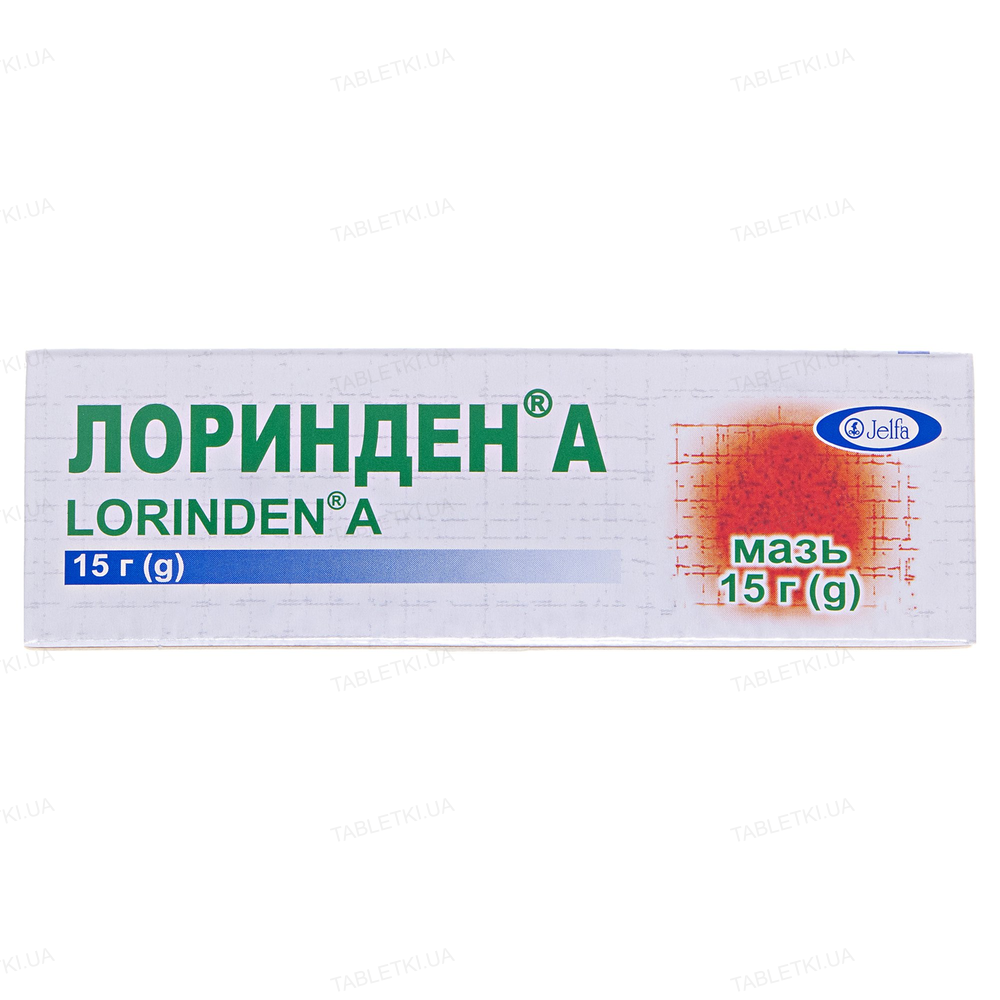
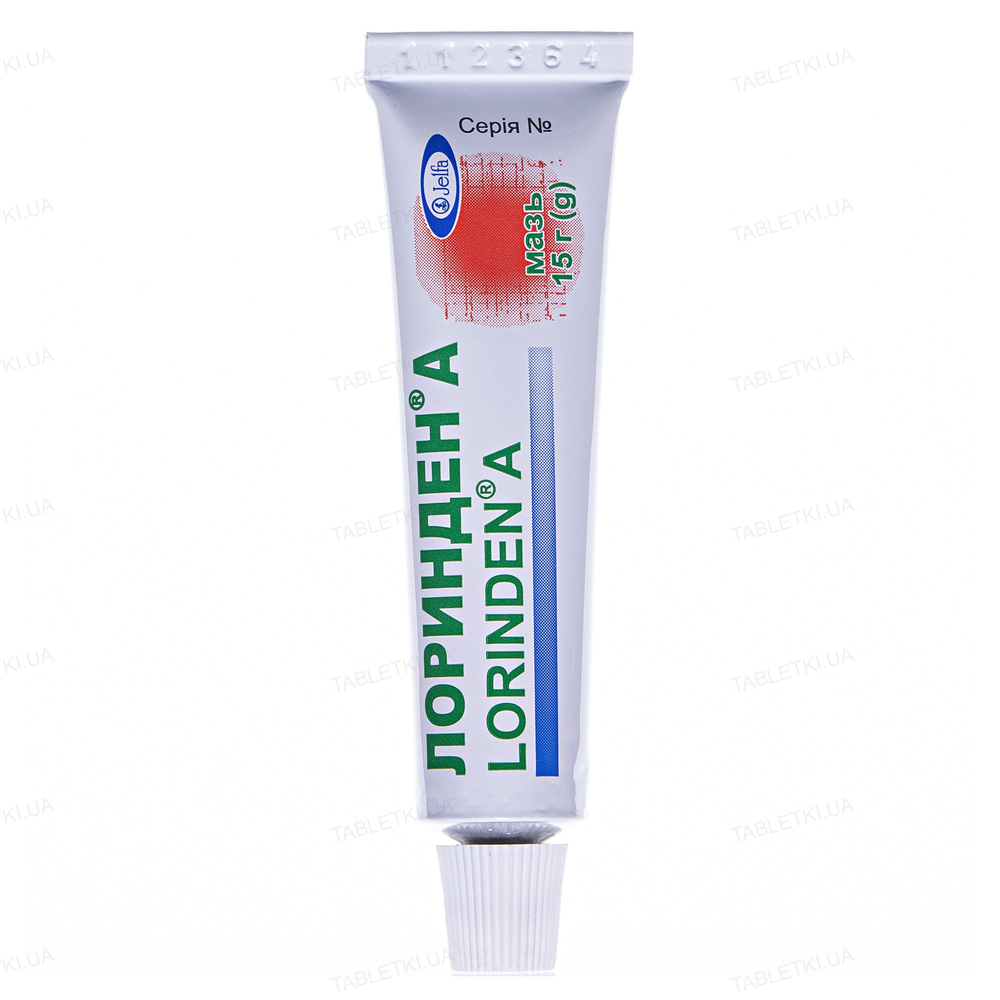
Laurinden A ointment, 15 g tubes
Ingredients
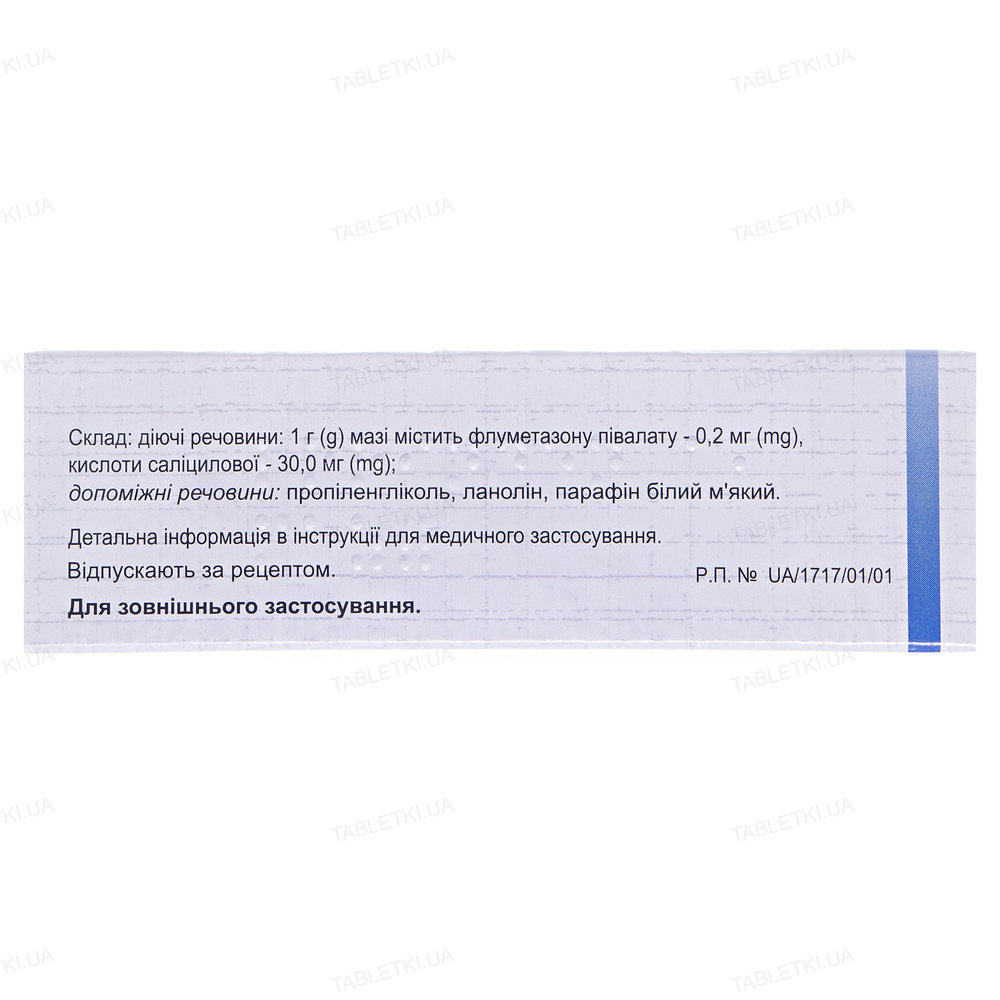
Active ingredients: flumethasone pivalate; salicylic acid;
1 g of ointment contains 0.2 mg of flumethasone pivalate and 30.0 mg of salicylic acid;
excipients: propylene glycol, lanolin, white soft paraffin.
Dosage Form
Ointment.
Main physical and chemical properties: a white, oily, soft mass with a light yellow tint.
Pharmacotherapeutic group
Corticosteroids in combination with an antiseptic for dermatological use.
ATC code D07B B01.
Pharmacological properties
Pharmacodynamics.
The properties of Lorinden® A ointment are due to the combined action of flumethasone pivalate and salicylic acid.
Flumethasone pivalate is a synthetic glucocorticosteroid with moderate anti-inflammatory activity. When applied as an ointment, it exerts a moderate local effect. It has lipophilic properties, easily penetrates the stratum corneum, and exerts a prolonged anti-inflammatory, antipruritic, and antiallergic effect. When applied topically, flumethasone pivalate inhibits the formation of prostaglandins and leukotrienes in the skin by suppressing phospholipase A2 activity and reducing the release of arachidonic acid from phospholipidscell membranes. It inhibits phagocytosis and the release of interleukins and other cytokines that cause inflammatory processes. It inhibits the release of histamine and the occurrence of local allergic reactions, and attenuates proliferative processes. Due to its local vasoconstrictive action, it reduces exudative reactions. It reduces protein synthesis and collagen deposition.
Salicylic acid, at the concentration present in this medication, has a mild keratolytic effect.
Pharmacokinetics.
Flumethasone pivalate easily penetrates the stratum corneum, where it accumulates. It is not metabolized in the skin. A small amount may penetrate the body upon topical application and, in such cases, exert a systemic effect. After penetrating the skin, the drug is metabolized primarily in the liver and is excreted in the urine and, in small amounts, in the bile as glucuronide conjugates and in its unchanged form. Absorption of flumethasone pivalate increases when applied to delicate skin in skin folds or on the face, or to skin with a damaged epidermis or affected by inflammation. The use of an occlusive dressing, which increases skin temperature and moisture, also increases the absorption of flumethasone pivalate. In addition, absorption increases with frequent application of the medication or when applied to large areas of skin. Absorption through the skin is more intense in younger individuals than in older patients.
Topical application of salicylic acid facilitates the penetration of flumethasone pivalate through the stratum corneum.
Indications
Skin inflammation (without exudation), not complicated by bacterial infection, including allergic conditions, accompanied by persistent itching and hyperkeratosis: seborrheic dermatitis, atopic dermatitis, nodular urticaria (papular urticaria), allergic contact dermatitis, erythema multiforme, lupus erythematosus, psoriasis, lichen planus.
Contraindications
Hypersensitivity to glucocorticosteroids, salicylic acid, or any other components of the ointment.
Viral (e.g., herpetic skin lesions) and fungal skin diseases, cutaneous tuberculosis, skin neoplasms, common acne and rosacea, perioral and diaper dermatitis, anal itching, inflammation, or ulcers of varicose veins.
Do not apply to large areas of skin, especially if the skin’s integrity is compromised, such as in cases of burns.
Interactions with Other Medications and Other Types of Interactions
No interactions with other medications have been identified with the topical use of glucocorticosteroids.
During treatment, it is not recommended to receive the smallpox vaccine or undergo other types of immunization, especially during prolonged use on large areas of skin, given the possibility of an inadequate immune response.
Only with prolonged use on large areas of skin, in response to significant absorption of salicylic acid, is an enhanced effect of methotrexate and oral hypoglycemic agents (sulfonylurea derivatives) observed. “Lorinden® A” may enhance the effects of immunosuppressive drugs and inhibit the effects of immunostimulatory drugs.
Special Instructions for Use
Do not use continuously for more than 2 weeks. With long-term use on large areas of skin, the frequency of side effects increases.
Discontinue use immediately if it causes pain or allergic reactions (itching, burning, or redness of the skin).
During topical application of flumethasone pivalate, pituitary secretion of adrenocorticotropic hormone (ACTH) may decrease due to suppression of the hypothalamic-pituitary-adrenal axis, blood cortisol levels may decrease, and iatrogenic Cushing’s syndrome may develop, which resolves after discontinuation of treatment. During treatment, adrenal function should be monitored periodically by measuring cortisol levels in blood and urine following adrenocorticotropic hormone (ACTH) stimulation. If an infection develops at the application site, antibacterial or antifungal therapy should be administered. If the infection does not resolve, discontinue use of the ointment until the infection is cleared.
Patients with narrow- or wide-angle glaucoma, as well as those with cataracts, should avoid applying the medication to the eyelids or the skin around the eyes, given the possibility of exacerbating the symptoms of the disease.
Vision disturbances may occur with the use of systemic and topical corticosteroids.
If symptoms such as blurred vision or other visual disturbances occur, consult an ophthalmologist to evaluate possible causes, which may include cataracts, glaucoma, or rare conditions such as central serous chorioretinopathy, which has been reported with the use of systemic and topical corticosteroids.
Avoid contact of the medication with the eyes and mucous membranes.
Use on the skin of the face, armpits, and groin area only when absolutely necessary, as increased absorption and the development of side effects (telangiectasia, perioral dermatitis) are possible, even after short-term use.
The use of the ointment under an occlusive dressing should be limited to exceptional situations due to the potential for atrophy and epidermal defects, as well as superinfection.
Use the medication with caution in cases of subcutaneous tissue atrophy, particularly in elderly patients.
During treatment of chronic conditions, such as psoriasis or chronic eczema, the medication should not be abruptly discontinued.
Use with caution in patients with psoriasis, as topical application of glucocorticosteroids in this case may lead to disease relapses caused by the development of tolerance, the spread of pustular psoriasis, and systemic toxicity resulting from skin dysfunction.
The product contains propylene glycol and lanolin, which may cause skin irritation and local skin reactions (e.g., contact dermatitis).
Use during pregnancy or breastfeeding.
Animal studies have confirmed that glucocorticosteroids have teratogenic effects when administered orally, even in small doses. Teratogenic effects have also been confirmed with topical application of potent glucocorticosteroids. No controlled studies have been conducted on the potential teratogenic effects of topical flumethasone pivalate in pregnant women.
“Lorinden® A” ointment may be used in pregnant women only for a short period of time, on small areas of skin, and only if, in the physician’s opinion, the benefit outweighs the potential risk of use. Do not use this medication during the first trimester of pregnancy.
The extent to which flumethasone pivalate penetrates into breast milk following topical application is unknown. When glucocorticosteroids are taken orally, no significant amounts of these hormones—which could affect a newborn—have been detected in breast milk. However, it is recommended that breastfeeding women use Lorinden® A ointment with caution and under a doctor’s supervision. In isolated cases, the medication may be used for a short period on small areas of skin. Do not apply Lorinden® A ointment to the skin of the breasts.
Effect on reaction time when driving or operating machinery.
This medication does not impair mental or motor functions, nor does it affect the ability to operate vehicles or other machinery.
Directions for Use and Dosage
This medication is intended for topical use. Apply a thin layer of the ointment to the affected skin 1–2 times daily. The medication may be applied under an occlusive dressing. Treatment should not be continued for more than 2 weeks. Do not apply to the facial skin for more than 1 week. It is recommended to use no more than 1 tube per week.
In cases of severe lichenification or excessive hyperkeratosis, an occlusive dressing may be used; it should be changed every 24 hours.
Children
Do not use this medication in children under 12 years of age. Children 12 years of age and older may use the ointment in isolated cases on small areas of skin. Do not apply the medication to the face.
Overdose
With prolonged use on large areas of skin, symptoms of overdose may occur, manifested by an increase in side effects (swelling, burning sensation, irritation, itching, hypertension, hyperglycemia, increased susceptibility to infections, dysfunction of the hypothalamic-pituitary-adrenal axis, and inhibition of growth and development in children), and in severe cases, the development of Cushing’s syndrome. The medication should be discontinued gradually and in a timely manner, or low-potency glucocorticosteroids should be administered. Symptoms of salicylate poisoning may rarely occur: headache, dizziness, ringing in the ears; extremely rarely—disturbances in acid-base balance and decreased visual acuity. Treatment is symptomatic.
Side Effects
Skin and subcutaneous tissue: rash, peeling skin, acne, post-steroidal purpura, inhibition of epidermal growth, subcutaneous tissue atrophy, dry skin, burning sensation, irritation, itching, excessive body hair growth or alopecia, skin depigmentation or hyperpigmentation, atrophy and disruption of skin integrity, telangiectasia, contact and perioral dermatitis, inflammation of hair follicles, secondary infections. In rare cases, the following may occur: hives, maculopapular rash, or exacerbation of existing symptoms.
Ocular side effects: When applied topically to the eyelids, cataracts or glaucoma may occasionally develop.
Blurred vision may occur.
Cardiovascular system: hypertension.
Endocrine system: glucosuria, hyperglycemia, dysfunction of the hypothalamic-pituitary-adrenal axis, Cushing’s syndrome, and inhibition of growth and development in children.
Other: Application of the ointment under an occlusive dressing, given the increased absorption, may cause systemic effects, manifested as edema, hypertension, and increased susceptibility to infections.
Hypersensitivity reactions may occur in individuals with an individual intolerance to any component of the drug.
Shelf life
3 years.
Storage conditions
Store at a temperature not exceeding 25 °C. Keep out of reach of children.
Packaging
15 g per tube; 1 tube per box.
Manufacturer
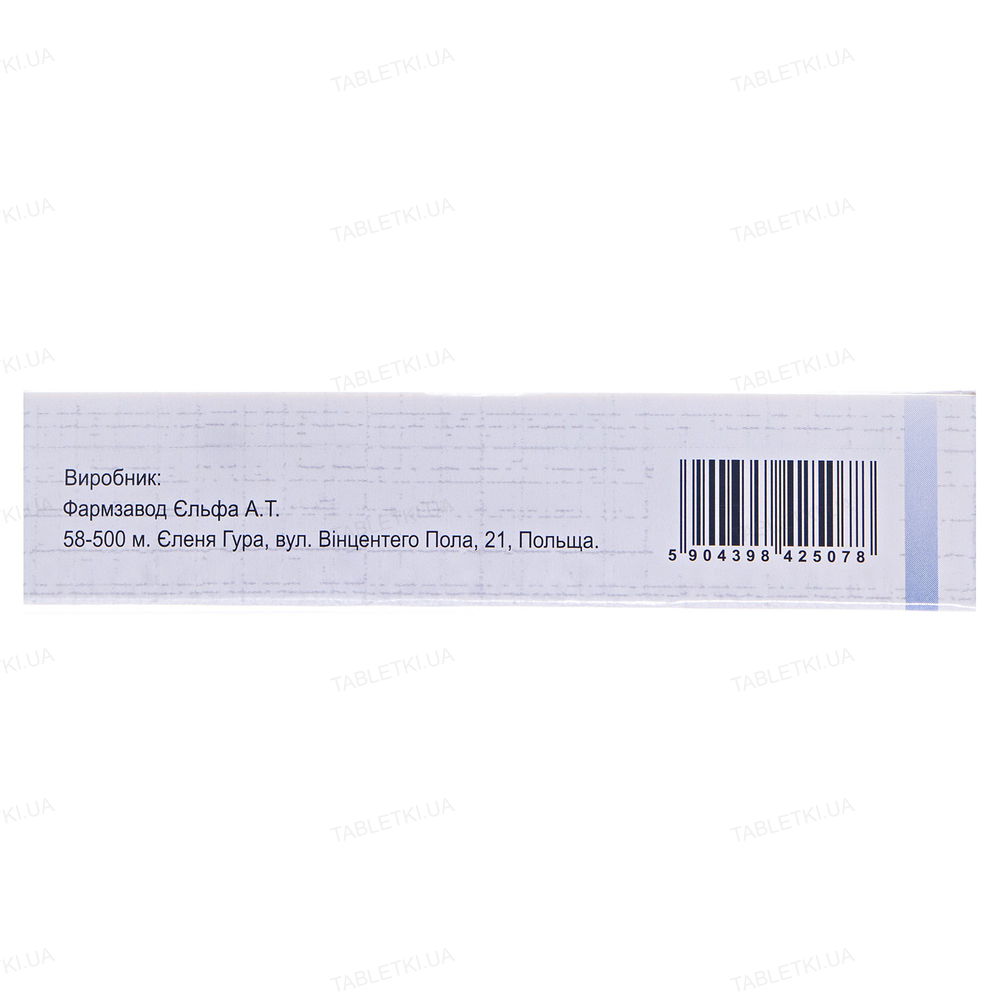
Yelpa Pharmaceutical Plant, A.T.
Address
58-500 Jelenia Góra, 21 Wincenty Pola St., Poland.