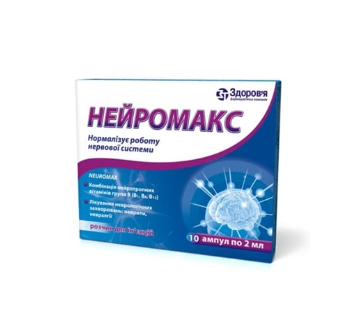
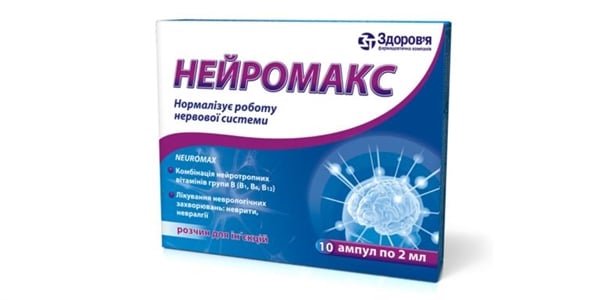
Neuromax solution for injection, 2 mL, No. 10, in ampoules
Composition
Active ingredients: 1 mL of solution contains 50 mg of pyridoxine hydrochloride, 50 mg of thiamine hydrochloride, and 0.5 mg of cyanocobalamin;
Excipients: lidocaine hydrochloride, potassium hexacyanoferrate, sodium polyphosphate, benzyl alcohol, sodium hydroxide, water for injection.
Dosage Form
Solution for injection.
Main physicochemical properties: clear red solution.
Pharmacotherapeutic group
Vitamin B1 preparations in combination with vitamin B6 and/or vitamin B12. ATC code A11D B.
Pharmacological properties
Pharmacodynamics.
Neurotropic B vitamins have a beneficial effect on inflammatory and degenerative diseases of the nerves and the musculoskeletal system. They are used to treat deficiencies, and in high doses, they possess analgesic properties, help improve blood circulation, and normalize the functioning of the nervous system and the process of hematopoiesis.
Vitamin B1 (thiamine) is a very important active ingredient. In the body, vitamin B1 is phosphorylated to form the biologically active thiamine diphosphate (cocarboxylase) and thiamine triphosphate (TTR).
Thiamine diphosphate, as a coenzyme, participates in important functions of carbohydrate metabolism, which are crucial for metabolic processes in nervous tissue and influence the conduction of nerve impulses at synapses. A vitamin B1 deficiency leads to the accumulation of metabolites in tissues—primarily lactic and pyruvic acids—which results in various pathological conditions and disorders of the nervous system.
Vitamin B6 (pyridoxine) in its phosphorylated form (pyridoxal-5'-phosphate, PALP) acts as a coenzyme for a number of enzymes involved in the general non-oxidative metabolism of amino acids. Through decarboxylation, they participate in the formation of physiologically active amines (adrenaline, histamine, serotonin, dopamine, tyramine); through transamination, they contribute to anabolic and catabolic metabolic processes (e.g., glutamate-oxaloacetate transaminase, glutamate-pyruvate transaminase, γ-aminobutyric acid, α-ketoglutarate transaminase), as well as various processes of amino acid breakdown and synthesis. Vitamin B6 affects four different stages of tryptophan metabolism. As part of hemoglobin synthesis, vitamin B6 catalyzes the formation of α-amino-β-ketoadipic acid.
Vitamin B12 (cyanocobalamin) is essential for cellular metabolic processes. It affects hematopoiesis (exogenous anti-anemic factor), participates in the formation of choline, methionine, creatinine, and nucleic acids, and has an analgesic effect.
Pharmacokinetics.
After parenteral administration, thiamine is distributed throughout the body. Approximately 1 mg of thiamine is metabolized daily. Metabolites are excreted in the urine. Dephosphorylation occurs in the kidneys. The biological half-life of thiamine is 0.35 hours. Thiamine does not accumulate in the body due to its limited solubility in fats.
Vitamin B6 is phosphorylated and oxidized to pyridoxal-5-phosphate. In plasma, pyridoxal-5-phosphate and pyridoxal bind to albumin. The transport form is pyridoxal. To cross the cell membrane, albumin-bound pyridoxal-5-phosphate is hydrolyzed by alkaline phosphatase into pyridoxal.
After parenteral administration, vitamin B12 forms complexes with transport proteins, which are rapidly absorbed by the liver, bone marrow, and other proliferative organs. Vitamin B12 enters the bile and participates in the enterohepatic circulation. Vitamin B12 crosses the placenta.
Indications
Neurological disorders of various origins: neuritis, neuralgia, polyneuropathies (diabetic, alcohol-induced), radicular syndrome, retrobulbar neuritis, and facial nerve lesions.
Contraindications
Hypersensitivity to the drug’s components; acute cardiac conduction disturbance; acute decompensated heart failure.
Vitamin B1 is contraindicated in cases of allergic reactions.
Vitamin B6 is contraindicated in cases of gastric and duodenal ulcers in the acute phase (as it may increase gastric acidity).
Vitamin B12 is contraindicated in cases of erythremia, erythrocytosis, and thromboembolism.
Lidocaine. Hypersensitivity to lidocaine or other amide-type local anesthetics; a history of epileptiform seizures caused by lidocaine; severe bradycardia; severe hypotension; cardiogenic shock, severe forms of chronic heart failure (Classes II–III), sick sinus syndrome, Wolff–Parkinson–White syndrome, Adams-Stokes syndrome, second- and third-degree atrioventricular (AV) block, hypovolemia, severe hepatic/renal dysfunction, porphyria, myasthenia gravis.
Pregnancy and lactation.
Interactions with Other Medications and Other Forms of Interaction
The action of thiamine is inactivated by 5-fluorouracil, as the latter competitively inhibits the phosphorylation of thiamine to thiamine pyrophosphate. Loop diuretics, such as furosemide, which inhibit tubular reabsorption, may, during long-term therapy, cause increased thiamine excretion and, thus, lower thiamine levels.
Concomitant use with levodopa is contraindicated, as vitamin B6 may reduce the antiparkinsonian effect of levodopa. Concomitant use with pyridoxine antagonists (e.g., isoniazid, hydralazine, penicillamine, or cycloserine) or oral contraceptives may increase the need for vitamin B6.
Consumption of sulfite-containing beverages (e.g., wine) increases the breakdown of thiamine.
Lidocaine potentiates the depressant effect on the respiratory center caused by anesthetics (hexobarbital, intravenous sodium thiopental), hypnotics, and sedatives; it attenuates the cardiotonic effect of digitoxin. Concomitant use with hypnotics and sedatives may enhance the depressant effect on the central nervous system (CNS).
Ethanol enhances the inhibitory effect of lidocaine on respiratory function.
Beta-blockers (including Propranolol, Nadolol) when used together slow the metabolism of lidocaine in the liver, enhance the effects of lidocaine (including its toxic effects), and increase the risk of bradycardia and hypotension. When β-blockers and lidocaine are used concomitantly, the dose of lidocaine must be reduced.
Curare-like agents—may cause increased muscle relaxation (up to paralysis of the respiratory muscles).
Norepinephrine, mexiletine—increase the toxicity of lidocaine (lido-caine clearance is reduced).
Isadrine and glucagon—increase lidocaine clearance.
Cimetidine, midazolam—increase the concentration of lidocaine in blood plasma. Cimetidine displaces lidocaine from its binding to blood proteins and slows its inactivation in the liver, leading to an increased risk of enhanced lidocaine side effects. Midazolam moderately increases the concentration of lidocaine in the blood.
Anticonvulsants, barbiturates (including phenobarbital, phenytoin)—when taken concomitantly with lidocaine—may accelerate lidocaine metabolism in the liver, reduce blood concentrations, and enhance the cardiodepressive effect.
Antiarrhythmic drugs (amiodarone, verapamil, quinidine, ajmaline, disopyramide), anticonvulsants (hydantoin derivatives)—increased cardiodepressive effect; Concomitant use with amiodarone may lead to the development of seizures.
Novocaine, novocaineamide (procaineamide)—when used in combination with lidocaine, central nervous system excitation and hallucinations may occur.
Monoamine oxidase inhibitors, chlorpromazine, bupivacaine, amitriptyline, nortriptyline, imipramine—when used in combination with lidocaine, the risk of developing arterial hypotension increases and the local anesthetic effect of lidocaine is prolonged.
Opioid analgesics (morphine)—when used in combination with lidocaine, the analgesic effect of opioid analgesics is enhanced, but respiratory depression is also increased.
Prenylamine—increases the risk of developing “pirouette”-type ventricular arrhythmia.
Propafenone—may increase the duration and severity of CNS side effects.
Rifampicin—may reduce the concentration of lidocaine in the blood.
Polymyxin B—respiratory function should be monitored.
Cardiac glycosides—when used concomitantly with lidocaine, the cardiotonic effect of cardiac glycosides is weakened.
Digitalis glycosides—in cases of digitalis intoxication, lidocaine may exacerbate AV block.
Vasoconstrictors (epinephrine, methoxamine, phenylephrine)—when used in combination with lidocaine, they slow the absorption of lidocaine and prolong its duration of action.
Guanadrel, guanethidine, mecamylamine, trimetaphan—when used together for spinal and epidural anesthesia, they increase the risk of severe hypotension and bradycardia.
Acetazolamide, thiazide, and loop diuretics—when used in combination with lidocaine, they reduce the effect of lidocaine as a result of hypokalemia.
Anticoagulants (including ardeparine, dalteparin, danaparoid, enoxaparin, heparin, and warfarin)—when used in combination with lidocaine, they increase the risk of bleeding.
Drugs that block neuromuscular transmission—when used in combination with lidocaine, the effects of these neuromuscular-blocking agents are potentiated, as they reduce the conduction of nerve impulses.
Special Instructions for Use
This medication should not be administered intravenously.
Intramuscular injections of vitamin B12 may cause anaphylactic reactions in patients with hypersensitivity.
Parenteral administration of vitamin B12 may temporarily interfere with the diagnosis of funicular myelosis or pernicious anemia.
Long-term use of vitamin B6 (6 to 12 months) at doses exceeding 50 mg per day or at doses exceeding 1,000 mg per day (for more than 2 months) may lead to reversible peripheral sensory neuropathy. If symptoms of peripheral sensory neuropathy (paresthesia) occur, the dose of the medication should be adjusted and, if necessary, treatment should be discontinued.
The drug contains less than 1 mmol (23 mg) of sodium per dose, i.e., it is essentially sodium-free.
The drug contains less than 1 mmol (39 mg) of potassium per dose, i.e., it is virtually sodium-free.
Since the drug contains vitamin B6, it should be used with caution in patients with a history of gastric or duodenal ulcers, or with severe renal or hepatic impairment.
Patients with neoplasms, except in cases accompanied by megaloblastic anemia and vitamin B12 deficiency, should not use this medication.
This medication should not be used in cases of severe cardiac decompensation or angina.
Since the drug contains lidocaine, it should be noted that treating the injection site with disinfectant solutions containing heavy metals increases the risk of a local reaction in the form of pain and swelling.
Since lidocaine has a pronounced antiarrhythmic effect and may itself act as an arrhythmogenic factor, the drug should be used with caution in individuals with a history of arrhythmia.
Use with caution in patients with moderate heart failure, moderate arterial hypotension, incomplete AV block, intraventricular conduction disturbances, moderate hepatic and renal insufficiency (creatinine clearance 10 mL/min), respiratory dysfunction, epilepsy, following cardiac surgery, in patients with a genetic predisposition to hyperthermia, in debilitated patients, and in elderly patients.
ECG monitoring is mandatory during lidocaine administration. In the event of sinus node dysfunction, PQ interval prolongation, QRS widening, or the development of a new arrhythmia, the dose should be reduced or administration discontinued.
Before using lidocaine in patients with heart disease (hypokalemia reduces the effectiveness of lidocaine), blood potassium levels must be normalized.
Intramuscular administration may increase creatinine levels, which could lead to a misdiagnosis of acute myocardial infarction.
Pregnancy and lactation.
During pregnancy and lactation, a daily intake of 1.4–1.6 mg of vitamin B1 and 2.4–2.6 mg of vitamin B6 is recommended. During pregnancy, these doses may be higher if the patient has a deficiency of vitamins B1 and B6.
Vitamins B1 and B6 pass into breast milk. High doses of vitamin B6 may reduce milk production.
This medication contains 100 mg of vitamin B6 per ampule; therefore, it should not be used during pregnancy or while breastfeeding.
Affects the ability to drive and operate machinery.
This medication does not affect the ability to drive or operate complex machinery. If dizziness occurs during treatment with this medication, you should refrain from driving or operating machinery.
Pregnancy and Lactation
The daily requirement for vitamin B6 during pregnancy or breastfeeding is up to 25 mg.
This medication contains 100 mg of vitamin B6 per ampule; therefore, it should not be used during pregnancy or lactation.
Administration and Dosage
For intramuscular injection.
Skin tests with local anesthetics should be performed on individuals with a confirmed history of reactions to these medications. Challenge tests are recommended if skin test results are negative. Testing of patients with a proven allergic reaction to local anesthetics should be performed only by allergists with experience in the field of drug allergies.
In severe (acute) cases, treatment should begin with 2 mL of the solution administered intramuscularly once daily until acute symptoms are relieved. To continue treatment, 2 mL (1 injection) is administered 2–3 times a week. The course of treatment lasts at least 1 month.
Intramuscular injections should be administered into the upper outer quadrant of the gluteal muscle.
To maintain or continue the therapeutic course of injections or to prevent relapses, Neuromax film-coated tablets are recommended.
Children. This medication should not be used in children.
Effect on the Ability to Drive and Operate Machinery
This medication does not affect the ability to drive a car or operate complex machinery. If dizziness occurs during treatment with this medication, you should refrain from driving or operating machinery.
Overdose
Vitamin B1 has a broad therapeutic range. Very high doses (more than 10 g) produce a curare-like effect, inhibiting the conduction of nerve impulses.
Vitamin B6 has very low toxicity.
Excessive intake of vitamin B6 in doses exceeding 1 g per day for several months may lead to neurotoxic effects.
Cases have been reported of neuropathies with ataxia and sensory disturbances, cerebral seizures with EEG abnormalities, and, in rare cases, hypochromic anemia and seborrheic dermatitis following administration of more than 2 g per day.
Vitamin B12: Following parenteral administration (and, in rare cases, following oral administration) of doses exceeding the recommended levels, allergic reactions, eczematous skin conditions, and benign acne have been observed.
With long-term use at high doses, abnormalities in liver enzyme activity, pain in the cardiac region, and hypercoagulation may occur.
Treatment: symptomatic therapy.
Lidocaine. Symptoms: psychomotor agitation, dizziness, general weakness, decreased blood pressure, tremor, visual disturbances, tonic-clonic seizures, coma, collapse, possible AV block, CNS depression, respiratory arrest. The first symptoms of overdose in healthy individuals occur at a blood concentration of lidocaine exceeding 0.006 mg/kg; seizures occur at 0.01 mg/kg.
Treatment: discontinuation of the drug, oxygen therapy, anticonvulsants, vasopressors (norepinephrine, mezaton); in cases of bradycardia—anticholinergic agents (0.5–1 mg of atropine). Intubation, mechanical ventilation, and resuscitation measures may be necessary. Dialysis is not very effective.
Side Effects
Long-term use (more than 6–12 months) at doses exceeding 50 mg of vitamin B6 daily may lead to peripheral sensory neuropathy, nervous agitation, malaise, dizziness, and headache.
Gastrointestinal system: gastrointestinal disorders, including nausea, vomiting, diarrhea, abdominal pain, and increased gastric acidity.
Immune system: hypersensitivity reactions (skin rashes, respiratory distress, anaphylactic shock, angioedema), increased sweating.
Skin disorders: itching, hives, acne, generalized exfoliative dermatitis.
Cardiovascular disorders: tachycardia, arrhythmias, bradycardia, delayed cardiac conduction, transverse heart block, cardiac arrest, peripheral vasodilation, collapse, increased/decreased blood pressure, chest pain.
Nervous system disorders: central nervous system stimulation (when used in high doses), anxiety, headache, dizziness, sleep disturbances, confusion, drowsiness, loss of consciousness, coma; in patients with hypersensitivity—euphoria, tremor, trismus, motor restlessness, paresthesias, seizures.
Eye disorders: nystagmus, reversible blindness, diplopia, flashing “floaters” before the eyes, photophobia, conjunctivitis.
Hearing disorders: hearing impairment, tinnitus, hyperacusis.
Respiratory system: shortness of breath, rhinitis, respiratory depression or arrest.
Other: sensation of heat, cold, or numbness in the extremities; edema; weakness; malignant hyperthermia; sensory disturbances; motor block.
General disorders: reactions at the injection site.
In the event of very rapid parenteral administration, systemic reactions in the form of seizures may occur.
Shelf life
2 years.
Children
This medication should not be used in children.
Storage conditions
Store in the original packaging at a temperature between 2 °C and 8 °C.
Keep out of reach of children.
Incompatibility
Pyridoxine is incompatible with medications containing levodopa, as concomitant use enhances the peripheral decarboxylation of levodopa and thereby reduces its antiparkinsonian effect.
Thiamine is incompatible with oxidizing and reducing compounds: mercury chloride, iodide, carbonate, acetate, tannic acid, iron and ammonium citrate, as well as with sodium phenobarbital, riboflavin, benzylpenicillin, glucose, and metabisulfite, since it is inactivated in their presence. Copper accelerates the breakdown of thiamine; furthermore, thiamine loses its activity when the pH of the preparation increases by more than 3 (toward alkalinity) from the initial level.
Cyanocobalamin is incompatible with heavy metal salts.
Packaging
2 mL in ampules: No. 5, No. 10 per box; No. 5, No. 5×2, No. 10 in a blister pack per box.
Manufacturer
Limited Liability Company “Pharmaceutical Company ‘Zdorovye’.”