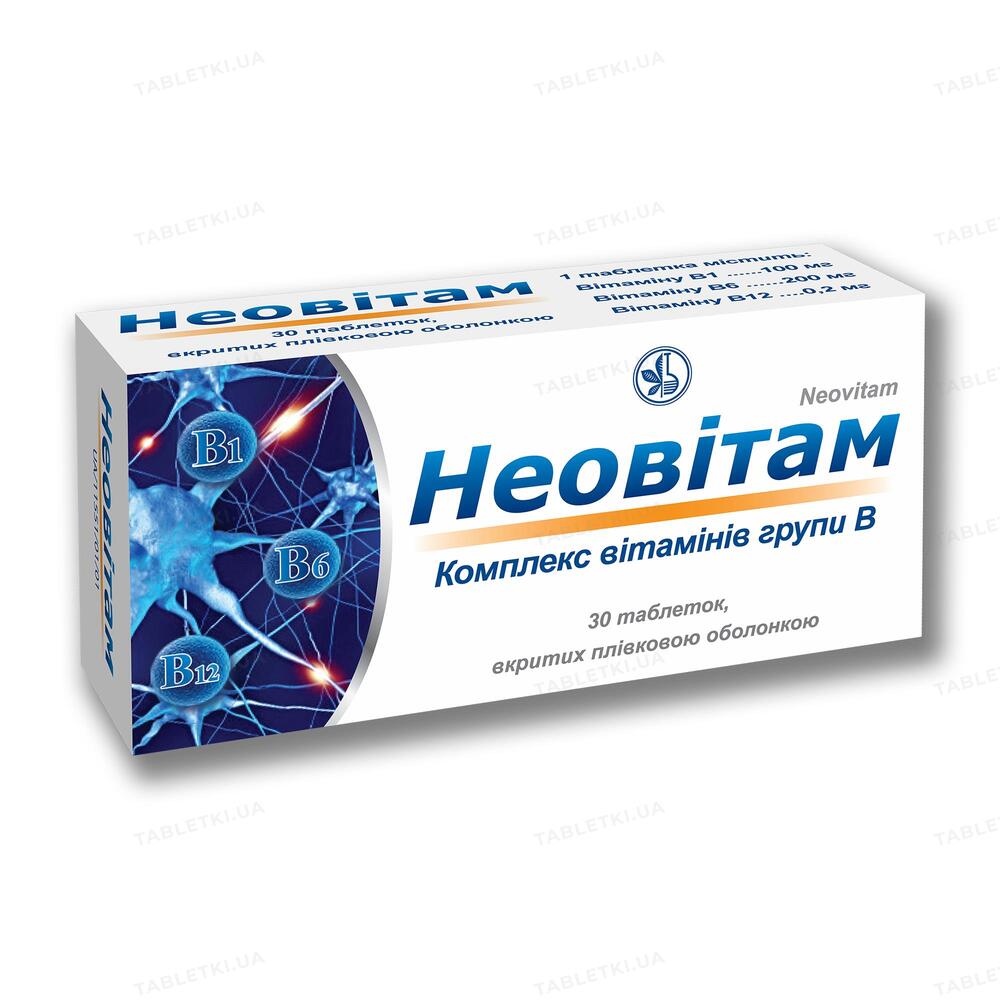
Neovitam tablets, film-coated, No. 30 (10 x 3)
Ingredients
Active ingredients:
1 tablet contains: vitamin B1 (thiamine hydrochloride) 100 mg; vitamin B6 (pyridoxine hydrochloride) 200 mg; vitamin B12 (cyanocobalamin) 0.2 mg;
excipients: microcrystalline cellulose, magnesium stearate, povidone;
coating: Opadry II 57U White film-coating mixture: talc, maltodextrin, polydextrose, titanium dioxide (E 171), medium-chain triglycerides, hypromellose.
Dosage Form
Film-coated tablets.
Main physical and chemical properties: round tablets with a biconvex surface, coated with a white or almost white film coating.
Pharmacotherapeutic group
Vitamin B1 in combination with vitamin B6 and/or B12.
ATC code A11D B.
Pharmacological properties
Pharmacodynamics.
This medication contains a combination of neurotropic active ingredients from the B-complex vitamins: thiamine (B1), pyridoxine (B6), and cyanocobalamin (B12). They play a particularly important role as coenzymes in intermediate metabolism occurring in the central and peripheral nervous systems.
Like all other vitamins, they are essential nutrients that cannot be synthesized directly by the body.
Therapeutic administration of vitamins B1, B6, and B12 compensates for insufficient dietary intake of these vitamins, ensuring that the body has the necessary amount of coenzymes. The therapeutic use of these vitamins in various diseases of the nervous system is aimed, on the one hand, at compensating for a concurrent deficiency (possibly due to an increased need in the body caused directly by the disease) and, on the other hand, to stimulate the body’s natural recovery mechanisms.
Vitamins B1, B6, and B12 have very low toxicity and pose no potential risk to humans.
Pharmacokinetics.
Thiamine. After oral administration, it undergoes dose-dependent transport, the mechanism of which is twofold: active absorption up to a concentration of 2 μmol and passive diffusion at concentrations above 2 μmol. The half-life is approximately 4 hours. The human body can store up to 30 mg of thiamine. Due to rapid metabolism, vitamin reserves are very limited and are depleted within 4–10 days.
Pyridoxine. Pyridoxine is absorbed very rapidly, primarily in the upper gastrointestinal tract, and is excreted within 2–5 hours at most.
The human body can store approximately 40–150 mg of the vitamin, and 1.7–3.6 mg is excreted in the urine per day.
Cyanocobalamin. Vitamin B12 is absorbed from the gastrointestinal tract through two mechanisms:
- release under the action of gastric juice and rapid binding to the intrinsic factor;
- independently of the intrinsic factor through passive entry into the bloodstream.
At doses exceeding 1.5 μg, the latter mechanism plays a significant role. Vitamin B12 is stored primarily in the liver. The metabolic rate is 2.5 μg per day, or 0.05% of the stored amount. Vitamin B12 is primarily excreted in bile and is largely reabsorbed via the enterohepatic circulation.
Indications
As part of complex therapy for neurological disorders:
- trigeminal neuralgia;
- intercostal neuralgia;
- sciatica;
- lumbar syndrome (lumbago);
- plexitis (of the cervical and brachial plexuses);
- radicular neuritis resulting from degenerative spinal disorders;
- facial palsy (facial nerve damage).
Contraindications
Hypersensitivity to any component of the medication.
Vitamin B1 is contraindicated in patients with allergic diseases.
Vitamin B6 is contraindicated in cases of gastric and duodenal ulcers during the acute phase (as it may increase gastric acidity).
Vitamin B12 is contraindicated in cases of erythremia, erythrocytosis, and thromboembolism.
Interactions with Other Medications and Other Types of Interactions
The action of thiamine is inactivated by 5-fluorouracil, as the latter competitively inhibits the phosphorylation of thiamine to thiamine pyrophosphate.
Antacids reduce the absorption of thiamine. Loop diuretics that inhibit tubular reabsorption (e.g., furosemide) may, during long-term therapy, cause increased thiamine excretion and thus reduce thiamine levels.
Concomitant use with pyridoxine antagonists (e.g., isoniazid, hydralazine, penicillamine, or cycloserine) or oral contraceptives may increase the need for vitamin B6. When used concomitantly, vitamin B6 may reduce the effectiveness of levodopa.
Consumption of alcohol and black tea reduces the absorption of thiamine.
Beverages containing sulfites (e.g., wine) accelerate the breakdown of thiamine.
Special Considerations for Use
This medication should not be used in high doses for more than 4 weeks, as this may cause neurological symptoms.
Alcohol and black tea reduce the absorption of thiamine. Beverages containing sulfites (e.g., wine) increase the breakdown of thiamine.
Since this medication contains vitamin B6, it should be used with caution in patients with a history of peptic ulcers of the stomach or duodenum, or with severe renal or hepatic impairment.
When vitamin B12 is administered, the clinical picture and laboratory test results for funicular myelosis or pernicious anemia may lose their specificity. Patients with neoplasms, except in cases accompanied by megaloblastic anemia and vitamin B12 deficiency, should not receive this medication.
This medication should not be used in cases of severe or acute cardiac decompensation or angina.
Use during pregnancy or breastfeeding.
Use of this medication is not recommended during pregnancy or while breastfeeding.
Effect on reaction time when driving or operating machinery.
This medication does not affect the ability to drive or operate machinery.
If dizziness occurs during treatment with this medication, patients should refrain from driving or operating machinery.
Dosage and Administration
Take the tablets after meals, without chewing, with a small amount of liquid.
The recommended dose is 1 tablet per day. In individual cases, the dose may be increased to 1 tablet 3 times daily.
The duration of treatment is determined by the doctor on a case-by-case basis. After a 4-week treatment period, the doctor will decide whether to adjust or reduce the dosage of the medication.
Children.
Use of this medication in children is contraindicated due to a lack of clinical experience.
Overdose
Vitamin B1: has a wide therapeutic range. Very high doses (more than 10 g) produce a curare-like effect, inhibiting the conduction of nerve impulses.
Vitamin B6: has very low toxicity. Neuropathies with ataxia and sensory disturbances, cerebral convulsions with ECG changes, and, in isolated cases, hypochromic anemia and seborrheic dermatitis have been reported following administration of more than 2 g per day.
Excessive use of vitamin B6 in doses exceeding 1 g per day for several months may lead to neurotoxic effects.
Vitamin B12. Following parenteral administration (very rarely—following oral administration) of high doses, allergic reactions, eczematous skin lesions, and a benign form of acne have been observed.
With long-term use of vitamin B12 in high doses, impaired liver enzyme activity, pain in the heart region, and hypercoagulation may occur.
Side Effects
Nervous system: Long-term use (more than 6–12 months) of doses exceeding 50 mg of vitamin B6 daily may lead to peripheral sensory neuropathy, nervous agitation, malaise, dizziness, headaches.
Gastrointestinal system: gastrointestinal disorders, including nausea, vomiting, diarrhea, abdominal pain, and increased gastric acidity.
Renal and urinary tract: chromaturia.
Immune system disorders: anaphylactic shock, anaphylaxis, skin reactions, including itching, hives, and rash.
General disorders: Chronic abuse of extremely high doses of vitamin B6 may cause sensory disturbances, increased sweating, and tachycardia.
Shelf life
3 years.
Storage conditions
Store in the original packaging at a temperature not exceeding 25 °C.
Keep out of reach of children.
Packaging
10 tablets per blister; 3 blisters per pack.
Dispensing Category
Available without a prescription.
Manufacturer
JSC “KYIV VITAMIN PLANT.”
Address
04073, Ukraine, Kyiv, 38 Kopylivska St.
Website: www.vitamin.com.ua