Totema Solution, 10 mL each, No. 20 (10 x 2) in ampoules
Composition
Active ingredients: iron (as iron gluconate hydrate); manganese (as manganese gluconate); copper (as copper gluconate);
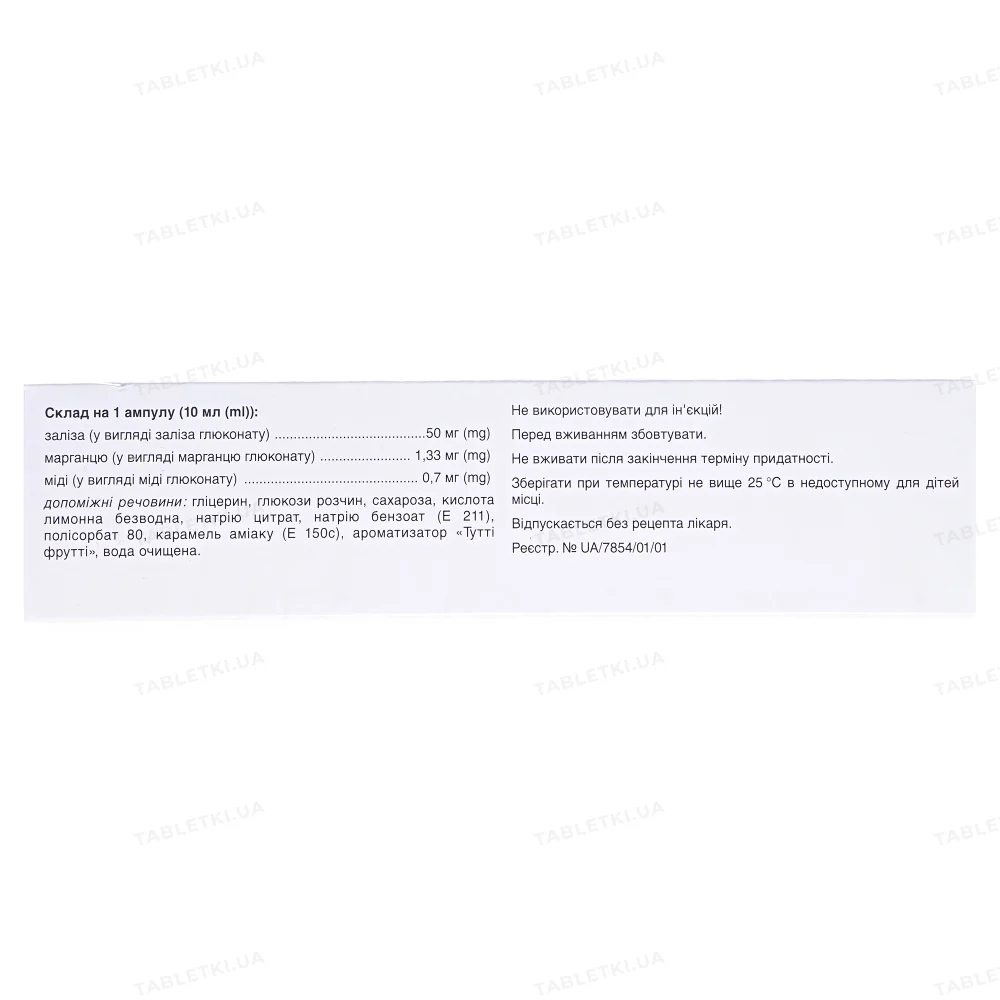
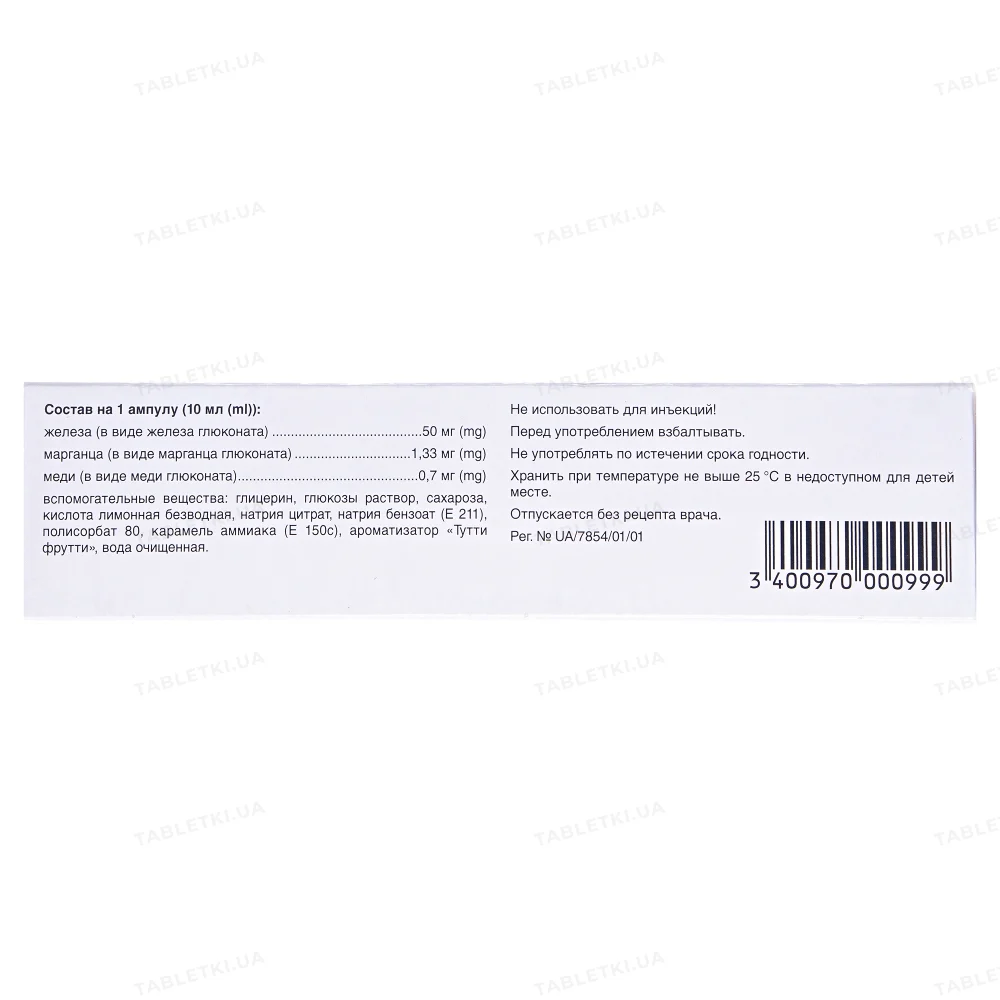
1 ampule (10 mL) contains 50 mg of iron (as iron gluconate hydrate); 1.33 mg of manganese (as manganese gluconate); 0.7 mg of copper (as copper gluconate);
excipients: glycerin, glucose solution, sucrose, citric acid, sodium citrate, sodium benzoate (E 211), polysorbate 80, ammonia caramel (E 150c)*, “Tutti Frutti” flavoring**, purified water.
*Composition of ammonia caramel (E 150c)*: glucose, ammonium hydroxide.
**Ingredients of “Tutti Frutti” flavoring: isoamyl acetate, isoamyl butyrate, benzaldehyde, ethyl methyl phenyl glycidate, gamma-undecalactone, ethyl vanillin, ethanol, water.
Dosage Form
Oral solution.
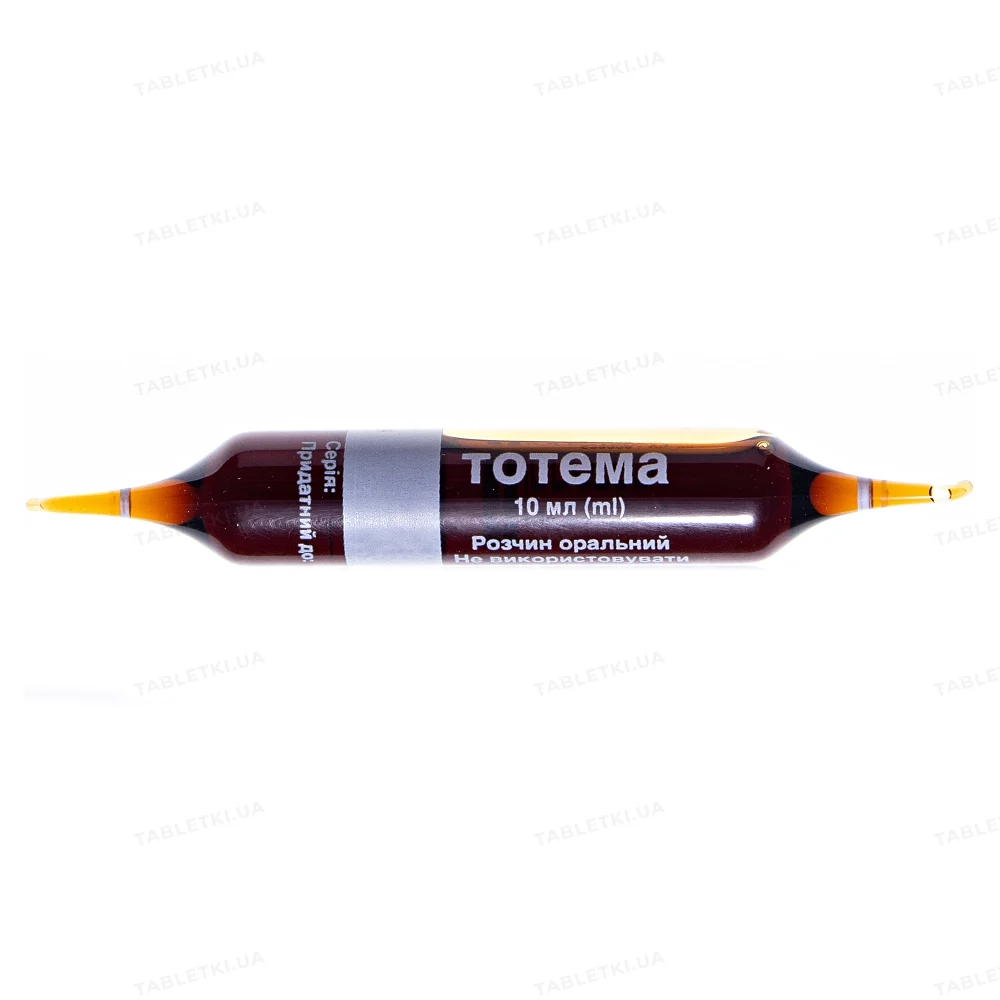
Main physical and chemical properties: a clear, dark brown liquid. A small amount of sediment may be present.
Pharmacotherapeutic group
Antianemic agents. Iron preparations, various combinations.
ATC code B0ZA E10.
Pharmacological properties
Pharmacodynamics.
A combination drug containing essential trace elements—iron (II), copper, and manganese—which are necessary for maintaining the process of hematopoiesis.
Mechanism of action
Iron is an essential trace element that plays a key role in many physiological processes, such as oxygen transport, ATP production, DNA synthesis, and electron transfer.
Iron is the central atom of the heme groups that make up the structure of hemoglobin and is therefore essential for erythropoiesis.
Iron supplements help correct iron deficiency in the body and prevent its development in cases of increased iron requirements or insufficient iron stores.
Pharmacokinetics.
Absorption
Iron absorption is an active process that occurs primarily in the duodenum and the proximal small intestine. Absorption increases as iron stores in the body decrease.
Copper may have a positive effect on iron transport in enterocytes. Iron absorption may be affected by the simultaneous consumption of certain foods or beverages, or by the concurrent use of certain medications (see the sections “Special Considerations for Use” and “Interactions with Other Medications and Other Types of Interactions”).
Distribution
In the body, iron is stored primarily in the bone marrow (erythroblasts) and red blood cells. Iron in the form of ferritin is stored in the liver, spleen, and bone marrow. Iron is transported via the bloodstream by transferrin, primarily to the bone marrow, from where it is incorporated into hemoglobin.
Metabolism
Iron, copper, and manganese are metal ions that are not metabolized by the liver.
Excretion
The average rate of iron excretion in healthy individuals is estimated to be approximately 1 mg/day.
The main routes of excretion are the gastrointestinal tract (shedding of enterocytes, breakdown of heme due to erythrocyte extravasation), the genitourinary tract, and the skin.
The primary route of excretion for manganese and copper is via bile.
Indications
- Treatment of iron-deficiency anemia in adults, children, and infants.
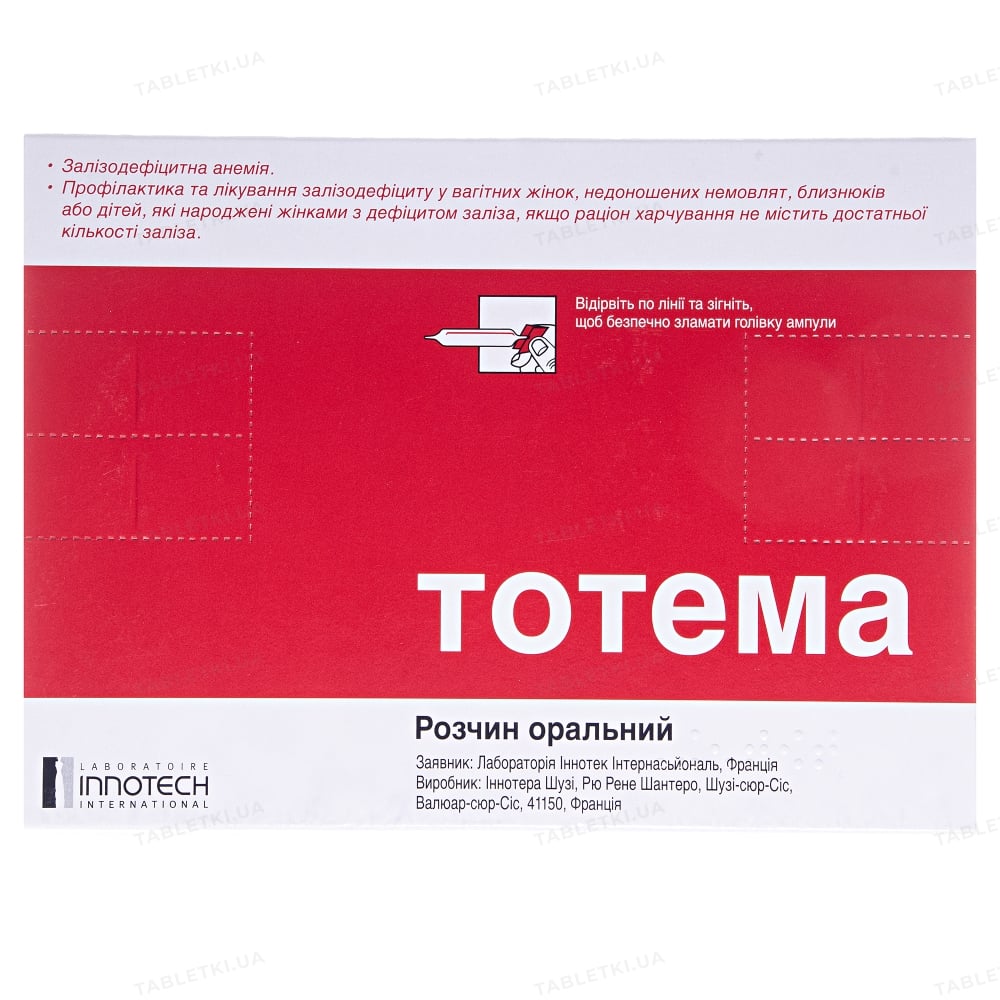
- Prevention and treatment of iron deficiency in pregnant women, premature infants, twins, or children born to women with iron deficiency, if the diet does not contain sufficient iron.
Contraindications
- Hypersensitivity to the active ingredients or to any of the excipients.
- Excess iron in the body due to increased intestinal absorption or altered iron metabolism (e.g., hemochromatosis, thalassemia, refractory anemia, aplastic anemia, sideroblastic anemia) or due to excessive parenteral administration (e.g., repeated or prolonged blood transfusions).
- Anemias not associated with iron deficiency (e.g., hemolytic anemia, megaloblastic anemia, inflammatory anemia).
- Wilson’s disease.
Interactions with Other Medications and Other Types of Interactions
Combinations Not Recommended for Use
+ Iron (salts) (injectable):
Hypotension (pre-syncope) or even shock due to the rapid release of iron from its complex form and transferrin saturation.
Combinations to be used with caution
+ Cyclines (oral administration):
Reduced absorption of cyclines and iron in the gastrointestinal tract.
Iron salts and cyclines should be taken separately (if possible, at least 2 hours apart).
+ Fluoroquinolones:
Reduced absorption of fluoroquinolones in the gastrointestinal tract.
Iron salts and fluoroquinolones should be taken separately (if possible, at least 2 hours apart).
+ Medications for treating gastrointestinal disorders, antacids, and adsorbents:
Reduced absorption of iron in the gastrointestinal tract.
As a precaution, these topical medications or antacids should be taken separately from any other medications (if possible, at least 2 hours apart).
+ Bisphosphonates (oral use):
Reduced absorption of bisphosphonates in the gastrointestinal tract.
Iron salts and bisphosphonates should be taken separately (if possible, with an interval of 30 minutes to more than 2 hours, depending on the bisphosphonate).
+ Calcium:
Reduced absorption of iron salts in the gastrointestinal tract.
Iron salts should be taken between meals, avoiding simultaneous intake of calcium.
+ Cholestyramine:
Reduced absorption of iron salts in the gastrointestinal tract.
Iron salts should be taken 1–2 hours before taking cholestyramine or 4 hours after taking it.
+ Entacapone:
Reduced absorption of entacapone and iron in the gastrointestinal tract due to chelation of iron by entacapone.
Iron salts and entacapone should be taken separately (if possible, at least 2 hours apart).
+ Integrase inhibitors (HIV):
Reduced absorption of integrase inhibitors in the gastrointestinal tract.
Iron salts and antiretroviral drugs should be taken separately (if possible, at least 2 hours apart).
+ Bictegravir:
Reduced absorption of bicttegravir in the gastrointestinal tract by nearly two-thirds when taken concomitantly or on an empty stomach.
Bictegravir should be taken at least 2 hours before taking iron salts or at the same time as a meal.
+ Trientine:
Decreased serum iron concentrations.
Iron salts and trientine should be taken separately.
+ Carbidopa, levodopa:
Decreased absorption of carbidopa and levodopa in the gastrointestinal tract.
Iron salts and carbidopa and levodopa should be taken separately (if possible, at least 2 hours apart).
+ Methyldopa:
Decreased absorption of methyldopa in the gastrointestinal tract (formation of complexes).
Iron salts and methyldopa should be taken separately (if possible, at least 2 hours apart).
+ Penicillamine:
Decreased absorption of penicillamine in the gastrointestinal tract.
Iron salts and penicillamine should be taken separately (if possible, at least 2 hours apart).
+ Thyroid hormones:
Decreased absorption of thyroid hormones in the gastrointestinal tract.
Iron salts and thyroid hormones should be taken separately (if possible, at least 2 hours apart).
+ Strontium:
Decreased absorption of strontium in the gastrointestinal tract.
Iron salts and strontium should be taken separately (if possible, at least 2 hours apart).
+ Zinc:
Reduced absorption of zinc in the gastrointestinal tract.
Iron and zinc supplements should be taken separately (if possible, at least 2 hours apart).
+ Foods:
Phytic acids (whole grains), vegetables, polyphenols (tea, coffee, red wine), calcium (milk, dairy products), and certain proteins (eggs) negatively affect iron absorption.
If possible, iron supplements and these foods should be consumed separately (with an interval of more than 2 hours).
Combinations to Consider
+ Acetohydroxamic acid:
Reduced absorption of these two medications in the gastrointestinal tract due to iron chelation.
Special considerations for use
Special Precautions
- This medication is not recommended for the treatment of iron deficiency in inflammatory conditions.
- Whenever possible, iron supplementation should be administered concurrently with treatment to address the underlying causes of iron loss.
- Accidental administration of a high dose of this medication, especially in children, may lead to toxicity, which can be fatal (see the “Overdose” section).
- Totema is not intended for intravenous administration.
- Accidental entry of the iron solution into the respiratory tract during oral administration may cause the development of granulomas, lesions, or necrosis of the bronchial mucosa, which in turn may lead to coughing, hemoptysis, and/or bronchostenosis (symptoms may appear even several days or months after inhalation of the solution). Elderly patients and patients who have difficulty swallowing are particularly at risk for this complication. If patients suspect that the iron solution has entered the respiratory tract, they should consult a doctor.
- This medication is contraindicated in patients with rare hereditary disorders such as fructose intolerance, glucose-galactose malabsorption syndrome, or sucrase-isomaltase deficiency.
- With prolonged use (at least 2 weeks), glucose and sucrose may be harmful to tooth enamel.
- One ampule (10 mL) contains 108 mg of ethanol as part of the flavoring. The amount of ethanol in 10 mL of this medication is less than that in 3 mL of beer or 2 mL of wine. A small amount of alcohol has no significant effect.
- One ampoule (10 mL) contains less than 1 mmol of sodium (23 mg), meaning it can be considered sodium-free.
- One ampoule (10 mL) contains 20 mg of sodium benzoate. Sodium benzoate may exacerbate jaundice (yellowing of the skin and the whites of the eyes) in newborns (up to 4 weeks of age). The drug is prescribed for children 1 month of age and older.
- Totema should be prescribed with caution to patients with impaired liver function, particularly those with alcoholic liver disease, nonalcoholic fatty liver disease, and viral hepatitis, as well as to patients with active gastrointestinal diseases, such as chronic inflammatory bowel diseases, intestinal strictures, diverticulosis, gastritis, and gastric and intestinal ulcers.
- Patients with renal insufficiency may have an increased need for iron and may require additional iron supplementation to treat iron deficiency or anemia. In patients with renal insufficiency who are not on dialysis, particularly those with stage 2–3 renal insufficiency, oral iron supplements may be prescribed provided they are well tolerated (see the “Dosage and Administration” section). For patients with chronic renal insufficiency on dialysis (Stage 5D), as well as potentially for patients with Stage 3–5 disease, iron preparations should be administered intravenously. Totema is not intended for intravenous administration.
- Consuming large amounts of tea or coffee at the same time impairs iron absorption (see the “Interactions with Other Medications and Other Types of Interactions” section).
Precautions
- Prevention of iron deficiency in infants during their first year of life is based on the early introduction of a varied diet.
- According to the literature, the mucous membrane of the stomach and gastrointestinal tract in patients taking iron supplements may accumulate pigment, which may interfere with surgical procedures on the gastrointestinal tract (see the “Adverse Reactions” section).
Use during pregnancy or breastfeeding.
Pregnancy
There are insufficient data on the use of iron during the first trimester of pregnancy to assess the risks of birth defects.
Data from clinical studies do not indicate that taking iron supplements during pregnancy affects birth weight, preterm birth, or infant mortality. Animal studies have not revealed any reproductive toxicity. Therefore, if necessary, Totema may be used during pregnancy.
Breastfeeding
Small amounts of iron are present in breast milk. Its concentration does not depend on the mother’s intake of iron supplements. Therefore, no effect on breastfed infants is expected.
Fertility
Based on the results of animal studies, it can be assumed that there is no effect on male or female fertility.
Ability to affect reaction time when driving or operating machinery.
No effect.
Dosage and Administration
Dosage
1 ampule of the drug contains 50 mg of elemental iron.
Treatment of iron-deficiency anemia:
Children aged 1 month and older: 3 mg of elemental iron per 1 kg of body weight per day, not to exceed 60 mg per day.
Adults: 100–150 mg of elemental iron per day, i.e., 2–3 ampules per day in one or more doses.
Patients with renal impairment
Patients with impaired renal function generally do not require a dose adjustment (see the “Special Considerations” section).
Patients with hepatic impairment
Patients with hepatic impairment generally do not require a dose adjustment (see the “Special Considerations” section).
Prevention and treatment of iron deficiency:
Pregnant women: 50 mg of iron (1 ampule) daily during the last 2 trimesters of pregnancy (or starting in the 4th month).
Duration of treatment
Treatment should generally continue long enough to resolve anemia (restoration of hemoglobin levels and mean corpuscular volume [MCV]) and/or replenish iron stores (serum ferritin level, transferrin iron saturation), which for adults is 600 mg (for women) and 1,200 mg (for men).
Iron-deficiency anemia: Hemoglobin levels should be checked 4 weeks after the start of therapy. The frequency of subsequent checks depends on the course of the anemia. The duration of treatment is typically 3–6 months, depending on the degree of iron depletion. Longer treatment may be necessary if the underlying cause of iron-deficiency anemia has not been resolved. After hemoglobin levels return to normal, iron supplementation should be continued for another 3 months.
Directions for Use
Intended for oral use.
Shake the ampoule well before use.
Open the ampoule by hand, snapping it at both ends (this can be done safely using a cardboard strip that can be torn along the perforated lines indicated on the packaging). Dissolve the contents of the ampoule in water (plain or sweetened).

It is recommended to take Totema before meals, but the timing and dose may be adjusted depending on individual tolerance of the medication.
Children
The medication may be prescribed to children as young as 1 month of age.
Overdose
Accidental overdoses with iron salts have been reported, especially in young children. Oral intake of 20 mg of elemental iron per kilogram of body weight or more may cause symptoms of intoxication. Ingestion of more than 60 mg/kg may lead to severe toxicity. An equivalent of 200–250 mg of elemental iron per kilogram is considered a potentially lethal dose. Acute iron poisoning can develop in four stages:
- The first stage occurs within 6 hours after oral administration of the drug, with signs of gastrointestinal toxicity predominating, particularly vomiting and diarrhea. Other reactions may include cardiovascular disorders, such as hypotension; metabolic changes, including acidosis and hyperglycemia; and signs of central nervous system depression (ranging from lethargy to coma). After this initial stage, the condition of patients with only mild to moderate poisoning generally does not worsen.
- The second stage, which does not always occur, may begin 6–24 hours after drug administration and is characterized by temporary remission or clinical stabilization.
- During the third stage (12–48 hours after taking the medication), signs of gastrointestinal toxicity recur simultaneously and may be accompanied by the following reactions: shock, metabolic acidosis, severe lethargy or coma, hepatic necrosis and jaundice, hypoglycemia, coagulation disorders, oliguria or renal failure, as well as possible myocardial dysfunction.
- The fourth stage may occur several weeks after taking the medication. It is characterized by gastrointestinal obstruction and, possibly, delayed liver damage.
Treatment for overdose should begin as soon as possible. Depending on the serum iron concentration, the use of a chelating agent (i.e., deferoxamine) is recommended.
Side Effects
Adverse reactions observed during clinical trials of Totema and those reported during postmarketing surveillance are classified by MedDRA system organ class and frequency into the following categories: very common (≥ 1/10); common (≥ 1/100 to < 1/10); uncommon (≥ 1/1,000 to < 1/100); rare (≥ 1/10,000 to < 1/1,000); very rare (< 1/10,000); frequency unknown (cannot be estimated from the available data).
| MedDRA System Organ Class | Common | Frequency unknown
(cannot be estimated from the available data) |
| Immune system disorders | Hypersensitivity, anaphylactic reaction | |
| Gastrointestinal disorders | Constipation, diarrhea, heartburn, nausea, vomiting, black stools, bloating, abdominal pain | Gastrointestinal irritation, gastritis, pseudomelanosis of the gastrointestinal mucosa*
Tooth discoloration** |
| Skin and subcutaneous tissue disorders | Rash, itching, hives, angioedema, allergic dermatitis |
* According to the literature, the mucosa of the stomach and gastrointestinal tract in patients taking iron supplements may accumulate pigment, which may interfere with surgical procedures on the gastrointestinal tract.
** Brown or black spots on the teeth disappear after discontinuation of therapy.
Reporting Suspected Adverse Reactions
Reporting adverse reactions after a drug’s approval is crucial. This allows for monitoring the benefit-risk profile of this drug. Healthcare and pharmaceutical professionals, as well as patients or their legal representatives, should report all cases of suspected adverse reactions and lack of efficacy of the drug through the Automated Pharmacovigilance Information System at the following link: https://aisf.dec.gov.ua.
Shelf Life
2 years. Do not use this medication after the expiration date printed on the package.
Storage Conditions
Store at a temperature not exceeding 25 °C, out of the reach of children.
Packaging
10 mL of solution in a glass ampoule; 10 ampoules per blister pack; 2 blister packs per cardboard box.
Dispensing Category
Over-the-counter.
Manufacturer
Innothera Chouzy, France.
Manufacturer’s location and address of its place of business.
Rue René Chantereau, Chouzy-sur-Cisse, Valloire-sur-Cisse, 41150, France/Rue René Chantereau, Chouzy-sur-Cisse, Valloire-sur-Cisse, 41150, France.
Applicant
Laboratoire Innotech International, France.
Applicant’s location.
22 Avenue Aristide Briand, 94110 Arcueil, France.