
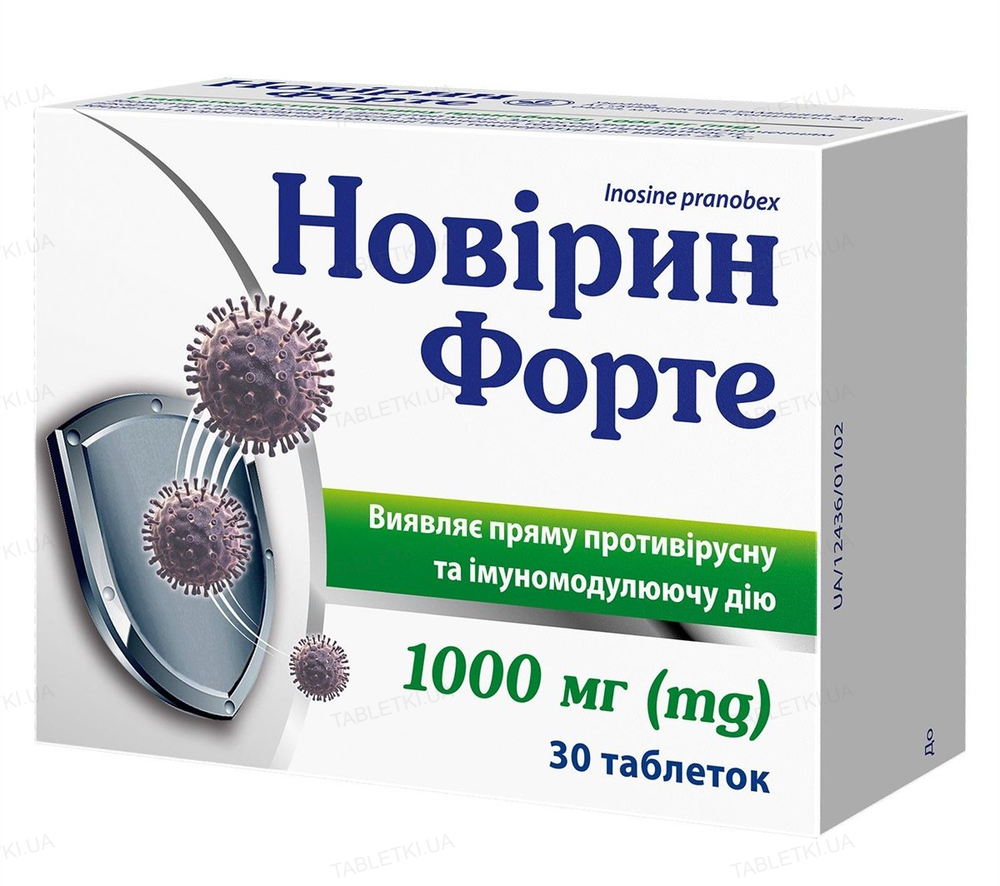
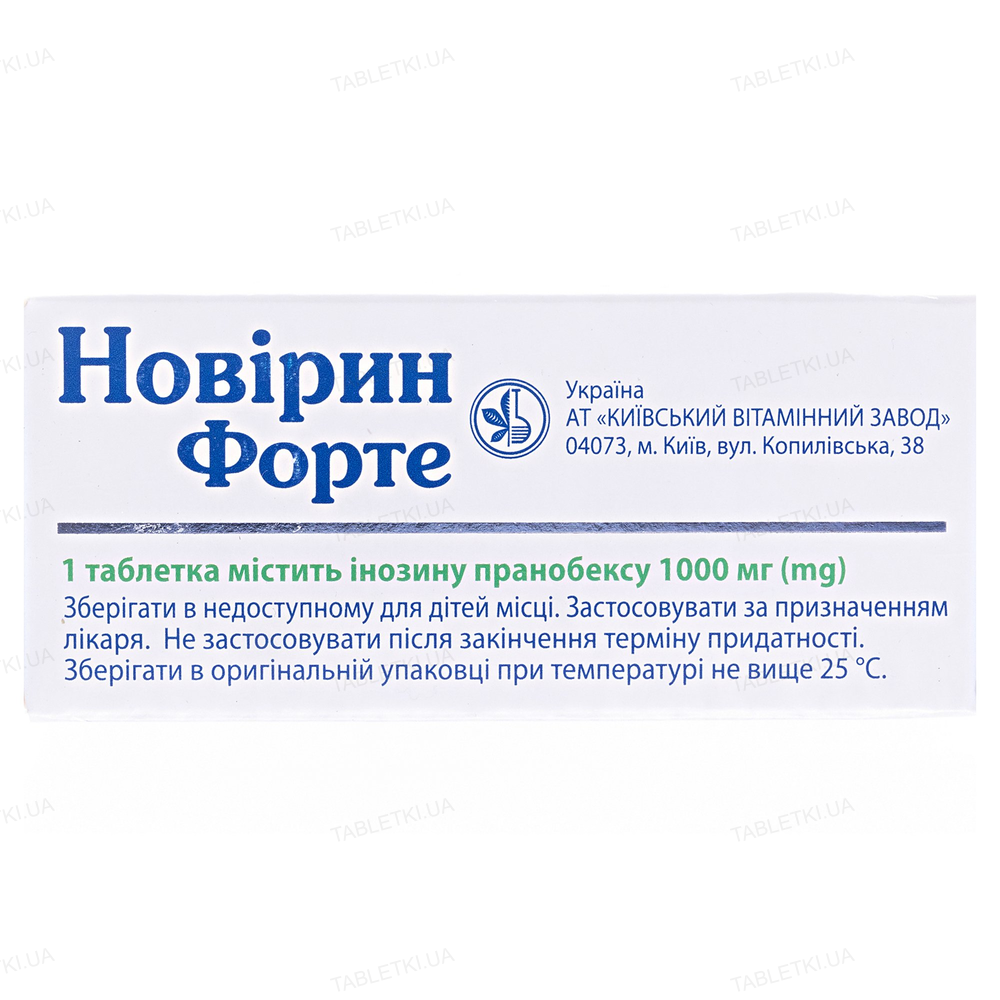
Novirin Forte 1,000 mg tablets, No. 30 (10 x 3)
Composition
Active ingredient: inosine pranobex;
1 tablet contains 1,000 mg of inosine pranobex;
Excipients: potato starch, povidone, magnesium stearate.
Dosage Form
Tablets.
Main physical and chemical properties:
1000 mg tablets: oblong tablets with biconvex surfaces, scored on both sides, ranging in color from nearly white to yellowish-white.
Pharmacotherapeutic group
Direct-acting antiviral agents. ATX code J05A X05.
Pharmacological properties
Pharmacodynamics.
Active ingredient—inosine pranobex (a molecular complex of inosine: acetamidobenzoic acid: N,N-dimethylamino-2-propanol in a 1:3:3 ratio) exerts a direct antiviral and immunomodulatory effect. The direct antiviral effect is due to the binding of virus-infected cells to ribosomes, which slows down viral mRNA synthesis (disrupting transcription and translation) and leads to the inhibition of RNA and DNA replication in genomic viruses; the indirect effect is due to the potent induction of interferon production.
The immunomodulatory effect is due to its action on T-lymphocytes (activation of cytokine synthesis) and an increase in the phagocytic activity of macrophages. Under the influence of the drug, the differentiation of pre-T-lymphocytes is enhanced, mitogen-induced proliferation of T- and B-lymphocytes is stimulated, the functional activity of Tlymphocytes—including their ability to produce lymphokines—and the ratio between T-helper and T-suppressor subpopulations is normalized (the CD4/CD8 immunoregulatory index is restored). The drug significantly enhances the production of interleukin-2 by lymphocytes and promotes the expression of receptors for this interleukin on lymphoid cells; it also stimulates the activity of natural killer cells (NK cells) even in healthy individuals; It stimulates the activity of macrophages for phagocytosis, antigen processing, and presentation, which contributes to an increase in antibody-producing cells in the body from the very first days of treatment.
It also stimulates the synthesis of interleukin-1, microbicidal activity, the expression of membrane receptors, and the ability to respond to lymphokines and chemotactic factors. A herpes infection significantly accelerates the formation of specific anti-herpes antibodies, reduces clinical manifestations, and lowers the frequency of recurrences.
The drug also prevents post-viral impairment of cellular RNA and protein synthesis in infected cells, which is particularly important for cells involved in the body’s immune defense processes. As a result of this comprehensive effect, the viral load on the body is reduced, immune system function is normalized, and the synthesis of endogenous interferons is significantly enhanced, which contributes to resistance to infectious diseases and the rapid localization of the infection focus should an outbreak occur.
Pharmacokinetics.
The drug has high bioavailability; after oral administration, it is rapidly absorbed, with peak plasma concentrations of inosine reached within 1 hour; the pharmacological effect becomes apparent in approximately 30 minutes and lasts up to 6 hours.
Inosine is metabolized via a cycle typical of purine nucleosides, resulting in the formation of uric acid; the remaining components are excreted by the kidneys as glucuronides and oxidized derivatives, as well as in their unchanged form. No accumulation in the body has been observed. Complete elimination of the drug and its metabolites occurs within 48 hours.
Indications
- Infectious diseases of viral etiology in patients with normal and compromised immune status: influenza, parainfluenza, acute respiratory viral infections, viral bronchitis, rhinovirus and adenovirus infections; mumps, measles;
- diseases caused by: herpes simplex viruses (Herpes simplex type I or II) (herpes of the lips, facial skin, oral mucosa, skin of the hands, ophthalmic herpes), subacute sclerosing panencephalitis, genital herpes; Varicella-zoster virus (chickenpox and shingles, including recurrences in immunocompromised patients); Epstein-Barr virus (infectious mononucleosis); cytomegalovirus; human papillomavirus; acute and chronic viral hepatitis B;
- chronic recurrent infections of the respiratory tract and genitourinary system in immunocompromised patients (chlamydia and other diseases caused by intracellular pathogens).
Contraindications
Hypersensitivity to inosine pranobex and to other components of the drug; gout, urolithiasis, severe stage III renal failure, hyperuricemia.
Drug Interactions and Other Interactions
This medication should not be taken concurrently with immunosuppressants. Use with caution in patients taking xanthine oxidase inhibitors (e.g., allopurinol) and agents that increase the excretion of uric acid in the urine, including thiazide diuretics (e.g., hydrochlorothiazide, chlorthalidone, indapamide) and loop diuretics (furosemide, torasemide, ethacrynic acid).
Concomitant use with azidothymidine increases nucleotide formation by enhancing the bioavailability of azidothymidine in blood plasma and increasing intracellular phosphorylation in human blood monocytes.
Special Considerations for Use
It should be noted that Novirin Forte, like other antiviral drugs, is most effective in acute viral infections if treatment is initiated in the early stages of the disease (preferably within the first 24 hours). The drug is used both as monotherapy and as part of a combination therapy with antibiotics, antiviral agents, and other etiotropic agents.
The drug’s active ingredient is metabolized to uric acid and may cause a significant increase in its concentration in the urine. Therefore, Novirin Forte should be used with caution in patients with a history of gout or hyperuricemia, urolithiasis, or renal insufficiency. If the drug must be used in such patients, uric acid levels should be carefully monitored. During long-term treatment, it is advisable to monitor serum and urine uric acid levels, liver function, peripheral blood counts, and renal function parameters on a monthly basis.
Some individuals may experience acute hypersensitivity reactions (angioedema, anaphylactic shock, urticaria). In such cases, drug therapy should be discontinued.
With long-term use of the drug, there is a risk of developing kidney stones.
Elderly patients. No dose adjustment is necessary; the drug should be used at the adult dosage. Elderly patients are more likely than middle-aged patients to experience elevated levels of uric acid in serum and urine.
Pregnancy and lactation.
There are no studies on fetal effects or fertility issues in humans. It is unknown whether inosine pranobex passes into breast milk. In the absence of safety studies, it is not recommended to prescribe this medication during pregnancy or lactation.
Effects on the ability to drive and operate machinery.
The effect of the drug on reaction time while driving or operating other machinery has not been studied. However, when deciding whether to drive or operate machinery, it is important to consider that the drug may cause dizziness or other adverse reactions affecting the nervous system (see the “Side Effects” section).
Dosage and Administration
The drug should be taken orally, preferably after meals and at regular intervals; if necessary, the tablet may be chewed, crushed, and/or dissolved in a small amount of water immediately before use. The duration of treatment is determined by the doctor on an individual basis, depending on the diagnosis, severity of the condition, and frequency of relapses; On average, the duration of treatment is 5–14 days; if necessary, the treatment course is repeated after a 7–10-day break; treatment without a break may last up to 3 months, and with breaks and maintenance doses—up to 6 months.
Recommended Doses and Dosage Regimens
Influenza, parainfluenza, acute respiratory viral infections (ARVI):
Adults: 1 tablet (1,000 mg) 3–4 times daily; Children: a daily dose calculated at 50 mg/kg of body weight, divided into 3–4 doses, for 5–7 days; If necessary, continue treatment or repeat after 7–8 days. To achieve maximum effectiveness for ARVI, it is best to begin treatment at the first signs of illness or on the first day of illness. As a rule, the medication should be taken for another 1–2 days after symptoms subside.
Viral bronchitis:
Adults: 1 tablet of 1,000 mg 3 times daily; children: a daily dose of 50 mg/kg in 3–4 divided doses over 2–4 weeks.
Mumps: a daily dose of 70 mg/kg in 3–4 divided doses for 7–10 days.
Measles: a daily dose of 100 mg/kg in 3–4 divided doses for 7–14 days.
Recurrent herpes virus types I and II:
adults—100 mg/kg per day for 14 days, followed by 50 mg/kg per day for up to 3 months.
Aphthous stomatitis:
adults—1 tablet of 1,000 mg 4 times daily; children—a daily dose of 70 mg/kg in 3–4 divided doses for 6–8 days (acute phase),
Then, for adults: 1 tablet of 1,000 mg 3 times daily; for children: 50 mg/kg in 3–4 divided doses twice a week for 6 weeks.
Infectious mononucleosis: a daily dose of 50 mg/kg in 3–4 divided doses for 8 days. Cytomegalovirus infection: a daily dose of 50 mg/kg in 3–4 divided doses for 25–30 days.
Shingles and cold sores:
adults—1 tablet of 1,000 mg 3–4 times daily; children—a daily dose of 50 mg/kg in 3–4 divided doses for 10–14 days (until symptoms resolve).
Genital herpes: during the acute phase—1 tablet of 1,000 mg 3 times daily for 5–6 days; during remission, the maintenance dose is 1,000 mg once daily for up to 6 months.
Subacute sclerosing panencephalitis: a daily dose of 50–100 mg/kg in 6 doses (every 4 hours) for 8–10 days; after an 8-day break, in mild cases, an additional 1–3 courses; in severe cases, up to 9 courses.
Infections caused by the human papillomavirus (genital warts): 1 tablet of 1,000 mg 3 times daily, treatment course 14–28 days; in combination with cryotherapy or CO₂ laser therapy—1 tablet of 1,000 mg 3 times daily for 5 days, 3 courses with a 1-month interval.
Hepatitis B: for adults—1 tablet of 1,000 mg 3–4 times daily for 15–30 days; followed by a maintenance dose of 1 tablet of 1,000 mg once daily for 2–6 months.
Chronic recurrent infections of the respiratory tract and genitourinary system in immunocompromised patients (as part of a comprehensive treatment regimen):
adults: 1 tablet of 1,000 mg 3–4 times daily, for a treatment course of 2 weeks to 3 months; children: a daily dose of 50 mg/kg divided into 3–4 doses over 21 days (or 3 courses of 7–10 days each with the same intervals).
To restore immune system function and achieve a sustained immunomodulatory effect in patients with compromised immunity, the course of treatment should last 3 to 9 weeks.
Elderly patients. The drug may be administered at the usual adult doses; no dose adjustment is necessary.
Children. The drug is indicated for children 1 year of age and older.
Overdose
No cases of overdose have been reported. Overdose may cause an increase in uric acid concentrations in serum and urine. In case of overdose, gastric lavage and symptomatic therapy are indicated.
Side Effects
The drug is generally well tolerated even with long-term use. The most common side effect is a transient and mild (usually within normal limits) increase in serum and urinary uric acid levels (due to the metabolism of inosine), which returns to normal within a few days after discontinuation of the drug.
Laboratory tests: elevated blood uric acid levels, elevated urinary uric acid levels, elevated blood urea nitrogen levels, elevated transaminase levels, elevated blood alkaline phosphatase levels.
Nervous system: headache, dizziness, fatigue, malaise, sleep disturbances.
Gastrointestinal disorders: nausea, vomiting, epigastric pain, diarrhea, constipation, loss of appetite.
Skin and subcutaneous tissue disorders: itching, skin rashes, hives.
Immune system disorders: hypersensitivity reactions (including angioedema).
Psychiatric disorders: nervousness.
Hepatic and biliary tract disorders: elevated levels of transaminases, alkaline phosphatase, or blood urea nitrogen.
Musculoskeletal and connective tissue disorders: joint pain.
Renal and urinary tract disorders: polyuria (increased urine output).
In postmarketing studies, adverse reactions were reported whose frequency cannot be determined based on the available data:
Gastrointestinal disorders: abdominal pain (in the upper abdomen);
Immune system disorders: anaphylactic reactions, anaphylactic shock, angioedema, hypersensitivity, urticaria;
Skin and subcutaneous tissue disorders: erythema.
Shelf life
3 years.
Storage conditions
Store in the original packaging at a temperature not exceeding 25 °C.
Keep out of reach of children.
Packaging
1,000 mg tablets: 10 tablets per blister pack; 3 or 4 blister packs per package.
Manufacturer
OJSC “KYIV VITAMIN PLANT.”
Manufacturer’s location and address.
04073, Ukraine, Kyiv, 38 Kopylovska St.
Website: www.vitamin.com.ua







