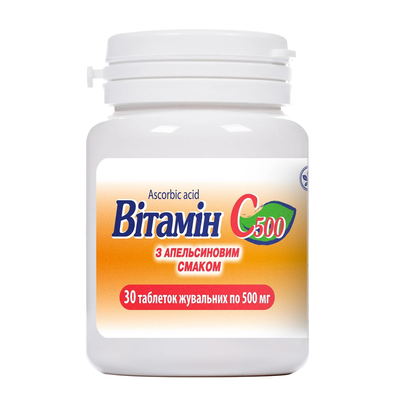
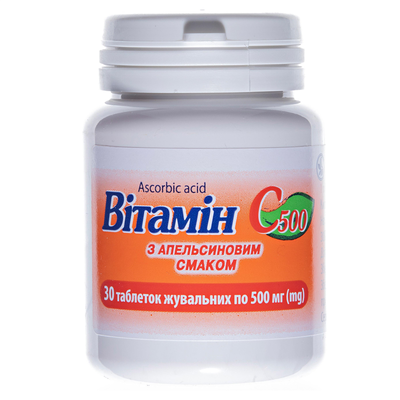
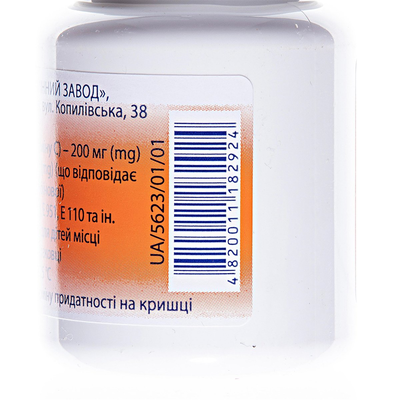
Vitamin C 500 chewable tablets with orange flavor, 0.5 g each, No. 30 in a container (jar)
Ingredients
Active ingredient: ascorbic acid;
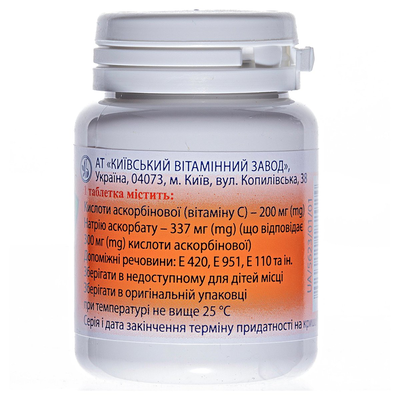
1 tablet contains 200 mg of ascorbic acid (vitamin C) and 337 mg of sodium ascorbate (equivalent to 300 mg of ascorbic acid);
inactive ingredients:
peach-flavored tablets
sorbitol (E 420), aspartame (E 951), acesulfame potassium, microcrystalline cellulose, calcium stearate, peach flavoring, colloidal anhydrous silicon dioxide, curcumin (E 100) as a colorant;
orange-flavored tablets
sorbitol (E 420), aspartame (E 951), acesulfame potassium, microcrystalline cellulose, calcium stearate, orange flavoring, colloidal anhydrous silicon dioxide, sunset yellow FCF (E 110);
lemon-flavored tablets
sorbitol (E 420), aspartame (E 951), acesulfame potassium, microcrystalline cellulose, calcium stearate, lemon flavoring, colloidal anhydrous silicon dioxide, quinoline yellow (E 104).
Dosage Form
Chewable tablets.
Main physical and chemical properties:
peach-flavored tablets
Light brown-yellow tablets with yellow and/or yellow-orange inclusions, round in shape, with a flat surface, a score line, and a bevel. White specks on the surface are permitted;
Orange-flavored tablets
Pink-orange tablets, round in shape, with a flat surface, a score line, and a bevel, or round in shape, with a flat surface, featuring a decorative pattern in the shape of a citrus cross-section on one side. White specks are permitted on the surface;
lemon-flavored tablets
Light yellow, round tablets with a flat surface, a score line, and a bevel, or round tablets with a flat surface and a decorative pattern resembling a citrus cross-section on one side. White specks on the surface are permissible.
Pharmacotherapeutic group
Vitamins. Simple preparations of ascorbic acid (vitamin C). ATC code A11G A01.
Vitamin C (ascorbic acid) belongs to the group of water-soluble vitamins.
Pharmacological Properties
Pharmacodynamics.
Ascorbic acid is essential for the proper functioning and formation of connective tissues, particularly the extracellular matrix and collagen. During collagen synthesis, it participates in the hydroxylation of proline and lysine in the peptide chain. Ascorbic acid is involved in many redox reactions in the body and participates, for example, in the metabolism of phenylalanine, tyrosine, folic acid, norepinephrine, histamine, and certain enzyme systems involved in the synthesis of lipids and proteins, as well as in the hydroxylation of carnitine or serotonin. Ascorbic acid stabilizes capillary walls and enhances iron absorption.
Pharmacokinetics.
Ascorbic acid is readily absorbed in the gastrointestinal tract and penetrates into tissues. The highest concentrations are found in the adrenal glands, the pituitary gland, and the intestinal wall. It is biotransformed in the liver. The main metabolite of ascorbic acid is oxalic acid, which is excreted in the urine. Excretion in the urine is a sign of vitamin C saturation in the body. Ascorbic acid crosses the placenta and passes into breast milk. It can be removed from the body via hemodialysis.
Indications
For the treatment of hypovitaminosis C and avitaminosis C.
To meet the body’s increased need for vitamin C:
- during acute respiratory and infectious diseases;
- during convalescence following severe illnesses or surgical procedures;
- in cases of various forms of intoxication, hemorrhagic diathesis, connective tissue diseases (rheumatoid arthritis), and bleeding (nasal, pulmonary, uterine);
- in cases of radiation sickness, hepatitis, cholecystitis, Addison’s disease, slow-healing soft tissue injuries, infected wounds, and bone fractures.
Contraindications
- Hypersensitivity to ascorbic acid or to any other components of the medication.
- Predisposition to thrombosis; thrombophlebitis; diabetes mellitus; urolithiasis.
- Children under 14 years of age.
- Use with extreme caution in patients with iron metabolism disorders (hemosiderosis, hemochromatosis, thalassemia).
- Fructose intolerance; glucose-galactose malabsorption syndrome.
- Severe kidney disease. Phenylketonuria (since the drug contains aspartame).
Interactions with Other Medications and Other Types of Interactions
When used concomitantly, ascorbic acid enhances the absorption of iron, penicillin, and ethinylestradiol from the gastrointestinal tract. A similar effect applies to aluminum; therefore, this must be taken into account when treating patients concurrently with aluminum-containing antacids.
When used concurrently, ascorbic acid reduces the effectiveness of heparin and anticoagulants.
The absorption of ascorbic acid is reduced when taken concurrently with oral contraceptives, fruit or vegetable juices, or alkaline beverages. Concomitant use of vitamin C and deferoxamine increases tissue toxicity of iron, particularly in the heart muscle, which may lead to circulatory decompensation. Vitamin C should be taken only 2 hours after an injection of deferoxamine. Long-term use of high doses of ascorbic acid reduces the effectiveness of disulfiram treatment.
High doses of the drug reduce the effectiveness of tricyclic antidepressants and phenothiazine-derived antipsychotics, decrease the tubular reabsorption of amphetamine, and impair the renal excretion of mexiletine.
Ascorbic acid increases the total clearance of ethyl alcohol. Quinolone antibiotics, calcium chloride, salicylates, tetracyclines, and corticosteroids, when used for prolonged periods, reduce the body’s stores of ascorbic acid.
At high doses, ascorbic acid affects the absorption of vitamin B12.
Vitamin C increases the excretion of oxalates in the urine, thereby raising the risk of oxalate stone formation. Vitamin C increases the risk of crystalluria during treatment with salicylates.
Special Considerations for Use
Since vitamin C has a mild stimulating effect, it is not recommended to take this medication at the end of the day.
Due to the stimulating effect of ascorbic acid on the production of corticosteroid hormones, monitoring of kidney function and blood pressure is necessary when using it in high doses.
Use this medication with caution in patients with increased blood clotting.
It should be prescribed with particular caution to patients:
- with glucose-6-phosphate dehydrogenase deficiency (high doses of ascorbic acid may trigger hemolytic anemia);
- a history of nephrolithiasis (risk of hyperoxaluria and oxalate precipitation in the urinary tract following administration of high doses of ascorbic acid).
Long-term use of high doses of ascorbic acid may accelerate its own metabolism, which can lead to paradoxical hypovitaminosis after discontinuation of treatment. Do not exceed the recommended dose.
Do not use concurrently with other medications containing vitamin C.
Use with caution in patients with polycythemia or leukemia.
The absorption of ascorbic acid may be altered in cases of impaired intestinal motility, enteritis, or achilia (inhibition of gastric secretion).
Note that high-dose vitamin C may alter certain laboratory test results (blood glucose, bilirubin, transaminases, uric acid, creatinine, and inorganic phosphates). A fecal occult blood test may yield a false-negative result.
This medication contains aspartame (E 951)—a source of phenylalanine—which poses a risk to patients with phenylketonuria. This medication contains the dye Sunset Yellow FCF (E110), which may cause allergic reactions.
If you have a known intolerance to certain sugars, consult your doctor before taking this medication. This medication contains sorbitol (E 420); therefore, patients with a rare hereditary fructose intolerance should not take this medication.
Use During Pregnancy or Breastfeeding.
Long-term use of vitamin C in high doses during pregnancy may adversely affect fetal development; therefore, the recommended dosage should be followed.
Women who are breastfeeding should refrain from taking this medication, as ascorbic acid passes into breast milk.
Effect on reaction time when driving or operating machinery.
No effect.
Directions for Use and Dosage
Take the medication orally after meals, chewing the tablet.
Adults and children 14 years of age and older should take 1 tablet (500 mg) daily for therapeutic purposes. The duration of treatment is 10–15 days.
For acute respiratory and infectious diseases, adults are recommended to take 1–2 tablets (500–1000 mg) per day (in 2 doses) for 7–10 days.
Thereafter, take ½ tablet (250 mg) per day. To achieve the desired dosage, use tablets with the appropriate active ingredient content.
The duration of treatment is determined by the doctor based on the patient’s condition and the course of the disease.
Children.
For children under 14 years of age, it is recommended to use this medication in a different dosage form.
Overdose
Vitamin C is well tolerated. Ascorbic acid is a water-soluble vitamin; excess amounts are excreted in the urine. However, with prolonged use of vitamin C in high doses, suppression of pancreatic islet function is possible, which requires monitoring of pancreatic function.
Overdose may lead to changes in the renal excretion of ascorbic and uric acids during urine acetylation, with a risk of oxalate stone formation.
Use of high doses of the drug may cause vomiting, nausea, or diarrhea, which resolve after discontinuation.
Treatment is symptomatic.
Side Effects
Vitamin C is well tolerated at recommended doses; however, the following side effects may occur:
– Gastrointestinal: when taken at doses exceeding 1,000 mg per day—irritation of the gastrointestinal mucosa, heartburn, nausea, vomiting, diarrhea, and stomach cramps;
– Urinary system: damage to the glomerular apparatus of the kidneys, renal failure, crystalluria, formation of urate, cystine, and oxalate stones in the kidneys and urinary tract;
– allergic reactions: occasionally—eczema, hives, itching, skin rashes, angioedema, anaphylactic shock in cases of sensitization;
– Endocrine system: damage to the pancreatic islets (hyperglycemia, glucosuria) and impaired glycogen synthesis, potentially leading to diabetes mellitus;
– Cardiovascular system: hypertension, myocardial dystrophy;
– hematopoietic system: thrombocytosis, thrombosis, hemolytic anemia, hyperprothrombinemia, erythrocytopenia, neutrophilic leukocytosis; in patients with glucose-6-phosphate dehydrogenase deficiency, red blood cell hemolysis may occur;
– Nervous system: increased excitability, fatigue, sleep disturbances, headache;
– Metabolic disorders: disturbances in zinc and copper metabolism;
– Other: sensation of heat.
Shelf life
2 years.
Storage Conditions
Store in the original packaging at a temperature not exceeding 25 °C.
Keep out of reach of children.
Packaging
10 tablets per blister pack.
10 tablets per blister; 3 blisters per pack.
10 tablets per blister; 6 blisters per pack.
30 tablets per container (jar).
30 tablets per container (jar); 1 container (jar) per pack.
Dispensing category
Over-the-counter.
Manufacturer
JSC “KYIV VITAMIN PLANT.”