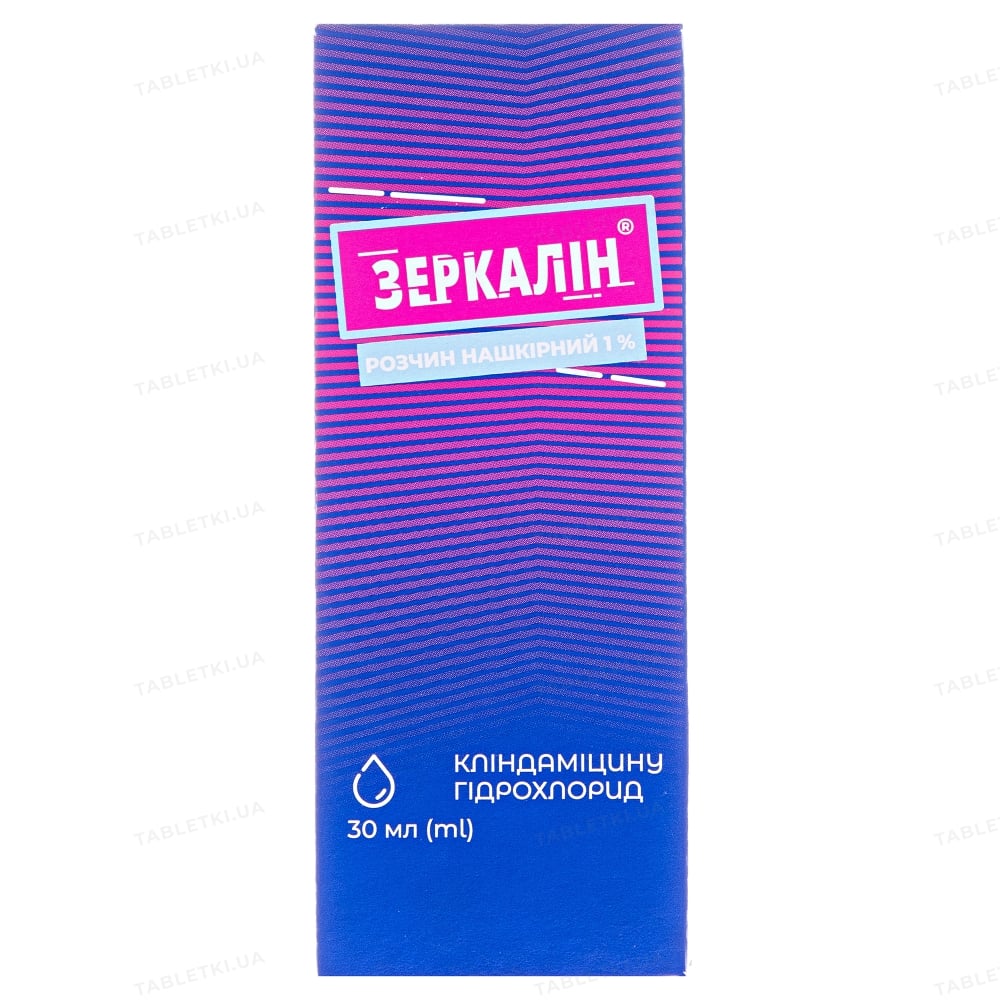
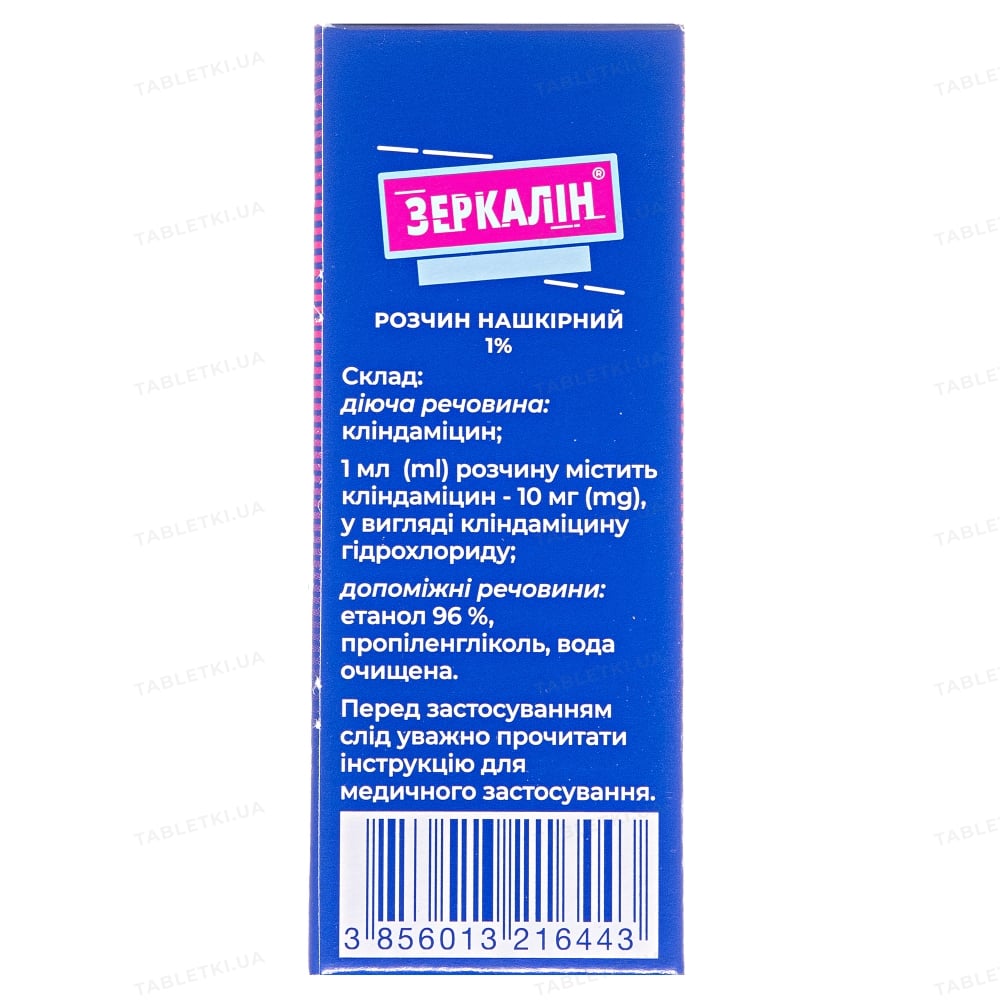
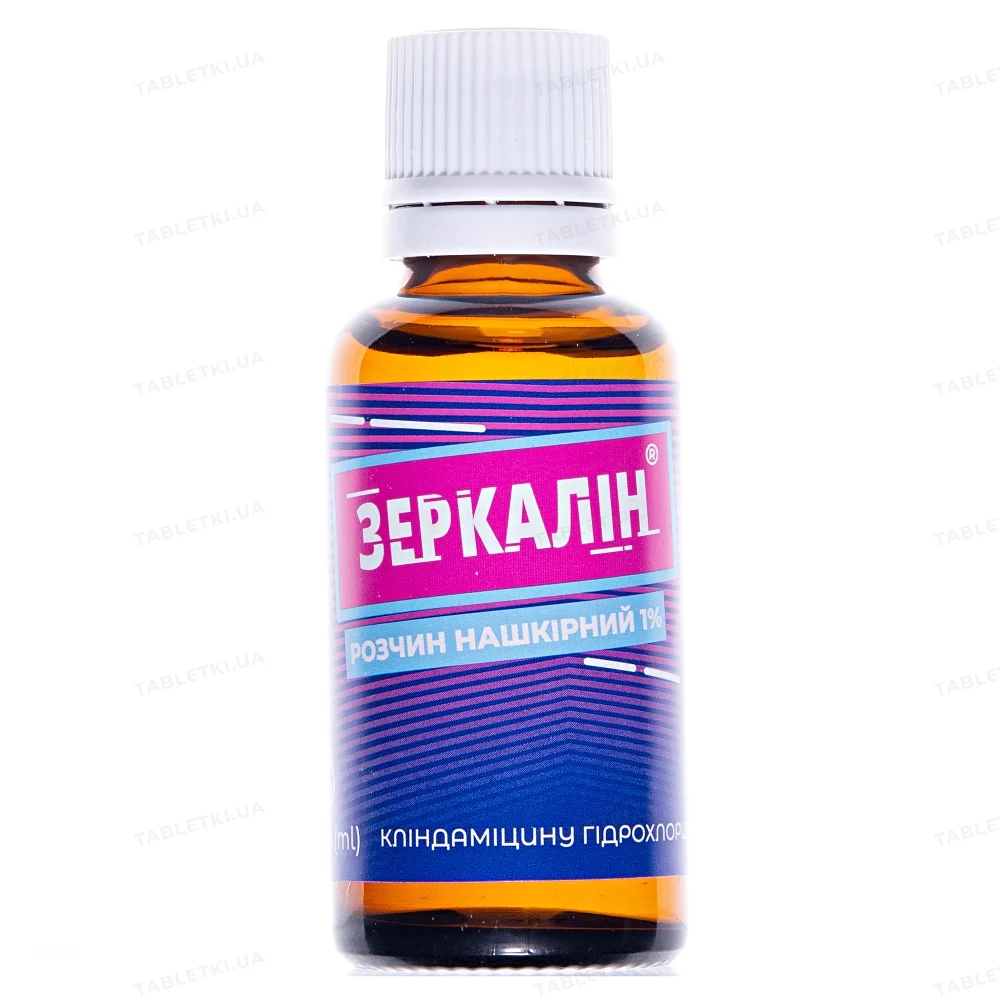
Zerkalin solution for injection, 1%, 30 ml per vial.
Ingredients
Active ingredient: clindamycin;
1 mL of solution contains 10 mg of clindamycin, in the form of clindamycin hydrochloride;
excipients: 96% ethanol, propylene glycol, purified water.
Dosage Form
Topical solution.
Main physical and chemical properties: a colorless, clear liquid with the odor of ethanol.
Pharmacotherapeutic group
Antimicrobial agents for the treatment of acne. Clindamycin.
ATC code D10A F01.
Pharmacological properties
Pharmacodynamics.
Clindamycin is a semisynthetic derivative of lincomycin, an antibiotic derived from a culture of Streptomyces lincolensis. It has bacteriostatic and bactericidal properties, depending on the concentration at the site of action and the susceptibility of the microorganisms. Clindamycin inhibits protein synthesis in susceptible bacteria by binding to the 50S subunit of bacterial ribosomes, thereby interrupting the early stages of protein synthesis.
It is known that the spectrum of activity of clindamycin in vitro and in vivo covers most Gram-positive bacteria, most anaerobic pathogens, and protozoa. The drug is ineffective against Enterobacteriaceae, fungi, and viruses.
After topical application of a 1% solution of clindamycin hydrochloride to the skin, the growth of susceptible bacteria is inhibited, particularly the anaerobic bacterium Propionibacterium acnes, which is found in the sebaceous glands and hair follicles, and the concentration of free fatty acids (FFAs) in sebum is reduced. This reduction in the concentration of FFA in sebum results from the indirect inhibition of microorganisms that produce lipase—an enzyme necessary for the conversion of triglycerides into FFA— or a direct consequence of reduced lipase production by these microorganisms.
In addition to lipases, Propionibacterium acnes produces proteases, hyaluronidases, and chemotactic factors, which, together with comedogenic FFA, are responsible for the development of inflammatory lesions (i.e., papules, pustules, nodules, and cysts) in acne. Therefore, both the antibacterial and anti-inflammatory effects are important for the efficacy of topical clindamycin in patients with acne (in which the inhibition of leukocyte chemotaxis plays a significant role).
Pharmacokinetics.
It is known that in a specially designed in vitro model of human skin, following application of clindamycin hydrochloride (labeled with a radioisotope), nearly 10% of the dose is absorbed by the stratum corneum. Clindamycin penetrates well into inflammatory lesions following topical application. The bioavailability of clindamycin after application to the skin is approximately 7.5%.
Indications
Treatment of acne vulgaris.
Contraindications
Contraindicated in patients with a history of hypersensitivity to products containing clindamycin or lincomycin, to the excipients in the medication, Crohn’s disease, ulcerative colitis, or antibiotic-associated colitis.
Interactions with Other Medications and Other Types of Interactions
Concomitant use of Zerkalin® topical solution with other acne treatments containing substances that cause peeling, softening, or abrasion of the skin (e.g., benzoyl peroxide, tretinoin, resorcinol, salicylic acid, sulfur), due to a possible cumulative irritating effect on the skin.
Due to possible competitive binding to the 50S subunit of the ribosome, clindamycin and erythromycin should not be used simultaneously.
It has been demonstrated that clindamycin, when administered systemically, acts as a neuromuscular blocker, which may enhance the activity of other neuromuscular blockers. Therefore, clindamycin should be used with caution in patients receiving neuromuscular blockers.
Vitamin K antagonists
Elevated coagulation test results (PT [prothrombin time] / INR [international normalized ratio]) and/or bleeding in patients treated with clindamycin in combination with vitamin K antagonists (e.g., warfarin, acenocoumarol, and fluindione). Therefore, patients taking vitamin K antagonists should undergo frequent coagulation testing.
Special Considerations for Use
Clindamycin topical solution should be used with caution in individuals prone to atopy.
The risk of systemic absorption and gastrointestinal side effects, particularly pseudomembranous colitis, is very low with topical application. However, patients should be advised to discontinue clindamycin and notify their doctor if symptoms such as diarrhea occur during topical application of the medication.
Symptoms indicative of pseudomembranous colitis may occur during or after antimicrobial therapy. Pseudomembranous colitis, which can range from mild to life-threatening, has been observed with the use of nearly all antibacterial agents, including clindamycin. This should be taken into account if a patient develops diarrhea after using antibacterial agents. In mild cases, improvement may occur after discontinuation of the drug.
If pseudomembranous diarrhea occurs, clindamycin therapy must be discontinued and appropriate antibacterial treatment initiated. In this case, drugs that inhibit peristalsis are contraindicated.
Topical application of clindamycin may lead to the growth of resistant microorganisms. Therefore, if a superinfection occurs during treatment with clindamycin, the drug should be discontinued and appropriate treatment initiated.
Patients should be advised to exercise caution when applying the solution near the mouth, other mucous membranes, or damaged skin due to its potential irritating effect. If the solution comes into contact with these areas, they should be rinsed with cold water. Zerkalin® topical solution contains propylene glycol, which may irritate the skin.
Use During Pregnancy or Breastfeeding.
Pregnancy. There are no adequate and well-controlled studies in pregnant women during the first trimester of pregnancy. Zerkalin® should be used during pregnancy only if necessary.
Breastfeeding. It is unknown whether clindamycin passes into human milk after administration. However, clindamycin has been reported to be present in breast milk following oral and parenteral administration of the drug. Given the potential for serious adverse reactions in breastfed infants, either the medication should be discontinued or breastfeeding should be suspended for the duration of treatment, taking into account the importance of the medication for the mother.
Effect on the ability to drive or operate machinery.
Clindamycin has no or negligible influence on the ability to drive and operate machinery.
Dosage and Administration
Apply a thin layer of Zerkalin® solution to the affected area of cleansed skin twice daily. The duration of treatment is determined by the physician on an individual basis.
Children.
The safety and efficacy of this medication in children under 12 years of age have not been studied.
Overdose
No cases of overdose have been reported following topical application of clindamycin.
When applied topically, clindamycin may be absorbed in sufficient quantities to cause systemic effects. In case of overdose, general symptomatic and supportive measures should be taken immediately.
Accidental oral ingestion may result in effects comparable to those of therapeutic concentrations of orally administered clindamycin.
Side Effects
The frequency of side effects is defined according to the following categories: very common (> 1/10), common (> 1/100 and < 1/10), uncommon (> 1/1,000 and < 1/100), rare (> 1/10,000 and < 1/1,000), very rare (< 1/10,000), and frequency unknown (cannot be estimated from the available data).
General disorders and administration site conditions
Common: dry skin.
Uncommon: redness, local skin irritation, skin peeling, oily skin, itching, and burning sensation.
Rare: Gram-negative folliculitis.
Gastrointestinal disorders
Uncommon: nausea, vomiting, diarrhea, abdominal pain, cramps.
Very rare: pseudomembranous colitis.
Immune system disorders
Uncommon: hypersensitivity reactions, including contact dermatitis and pruritus.
Nervous system disorders
Very rare: neuromuscular blockade.
Reporting adverse reactions after the drug’s approval is of great importance. This allows for monitoring the benefit-risk ratio when using this drug. Healthcare and pharmaceutical professionals, as well as patients or their legal representatives, should report all cases of suspected adverse reactions, and legal representatives should report all cases of suspected adverse reactions and lack of efficacy of the drug through the Automated Pharmacovigilance Information System at: https://aisf.dec.gov.ua/.
Shelf life
3 years.
Do not use after the expiration date printed on the package.
Storage conditions
Store at a temperature not exceeding 25 °C. Keep out of reach of children.
Packaging
30 mL of solution in a glass vial; 1 glass vial in a cardboard box.
Dispensing Category
Available without a prescription.
Manufacturer
Yadran-Galensky Laboratories d.d.
Manufacturer’s location and address of its place of business.
Svobodna 20, 51000 Rijeka, Croatia.