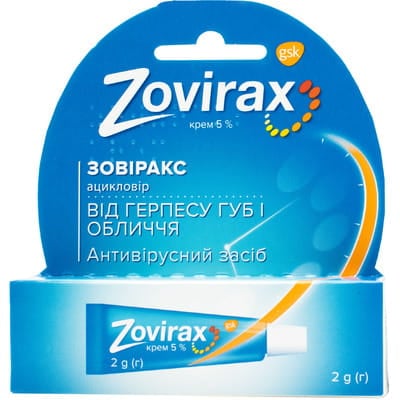
Zovirax 5% cream, 2 g per tube
Composition
Active ingredient: 1 g of cream contains 50 mg of acyclovir;
Inactive ingredients: propylene glycol, white soft paraffin, mineral oil, cetostearyl alcohol, Arlacel 165, poloxamer, sodium lauryl sulfate, dimethicone, purified water.
Dosage Form
Cream.
Main physical and chemical properties: The cream is white to off-white, homogeneous, free of grains, lumps, and foreign particles, and shows no signs of separation.
Pharmacotherapeutic group
Antiviral agents. Acyclovir. ATC code D06B B03.
Pharmacological properties
Pharmacodynamics.
Acyclovir is an antiviral drug with high in vitro activity against herpes simplex virus types I and II. Its toxic effects on host cells are minimal. Once inside cells infected with the herpes virus, acyclovir is phosphorylated to form the active compound—acyclovir triphosphate. The first stage of this process depends on the presence of virus-encoded thymidine kinase. Acyclovir triphosphate acts as both an inhibitor and a substrate for viral DNA polymerase, preventing further synthesis of viral DNA without affecting normal cellular processes.
Pharmacokinetics.
Pharmacokinetic studies have shown minimal systemic absorption of acyclovir following repeated topical application of the cream.
Indications
Treatment of infections of the lips and face caused by the herpes simplex virus (Herpes labialis).
Contraindications
Hypersensitivity to acyclovir, valacyclovir, propylene glycol, or any other components of the cream.
Drug Interactions and Other Interactions
No interactions have been identified.
Special Instructions for Use
The cream should be used only to treat cold sores on the lips and face. It is not recommended to apply the cream to mucous membranes, such as the mouth or eyes, and it should not be used to treat genital herpes. Avoid accidental contact with the eyes.
Individuals suffering from particularly severe and recurrent outbreaks of cold sores should consult a doctor. People with herpes should be advised to prevent the transmission of the virus to others, especially when open sores are present (for example, they should wash their hands before and after using the cream). Use is not recommended for individuals with weakened immune systems. Such individuals should consult a doctor regarding treatment for any infection.
The product contains propylene glycol, which may cause skin irritation, and cetostearyl alcohol, which may cause local skin reactions (e.g., contact dermatitis).
Pregnancy and lactation.
Pregnant and breastfeeding women are advised to use this medication only when, in the doctor’s opinion, the benefits outweigh the risks. However, it should be understood that systemic absorption of acyclovir following topical application of the cream is very low.
Clinical trials have shown that the use of acyclovir in formulations of any composition does not lead to an increase in fetal malformations.
Some clinical data indicate that acyclovir enters breast milk when administered orally. However, the amount of acyclovir that may enter an infant’s body through breastfeeding after topical application of the cream is negligible.
Clinical studies have shown that acyclovir, when taken orally, has no clinically significant effect on male fertility. There are no data on the effect of acyclovir on female fertility.
Effects on the ability to operate vehicles and machinery.
No data available.
Directions for Use and Dosage
This medication is intended for external use.
Adults and children over 12 years of age: apply the cream 5 times a day at approximately 4-hour intervals, except at night. It is important to begin treatment as early as possible upon the onset of infection, preferably during the prodromal period or at the erythema stage. Treatment may also be started at later stages—papules or blisters.
Treatment lasts at least 4 days. If healing has not occurred, treatment may be extended to 10 days. If symptoms do not resolve after 10 days of treatment, the patient should consult a doctor. Wash your hands before and after applying the cream, and avoid unnecessary rubbing or contact with the affected areas with a towel to prevent exacerbation or transmission of the infection.
Children.
There is insufficient data on the safety of this medication in children under 12 years of age; therefore, it is recommended for use in children 12 years of age and older.
Overdose
No side effects are expected following oral or topical application of the entire contents of the tube due to minimal systemic exposure. If an overdose is suspected, seek medical attention.
Side Effects
Skin and connective tissue disorders
Uncommon (≥ 1/1,000; < 1/100): temporary sharp or burning pain after applying the cream, moderate dryness and peeling of the skin, itching.
Rare (≥ 1/10,000; < 1/1,000): erythema, contact dermatitis following application of the cream (sensitivity tests indicated that these cases were most often associated with components of the cream base rather than with acyclovir).
Immune system disorders
Rare (< 1/10,000): immediate hypersensitivity reactions, including angioedema and urticaria.
Shelf life
3 years.
Storage conditions
Store at a temperature not exceeding 25 °C, out of the reach of children. Do not freeze.
Packaging
2 g of cream in an aluminum foil tube with a screw-on plastic cap. 1 tube per cardboard box.
Conditions of Sale
Available without a prescription.