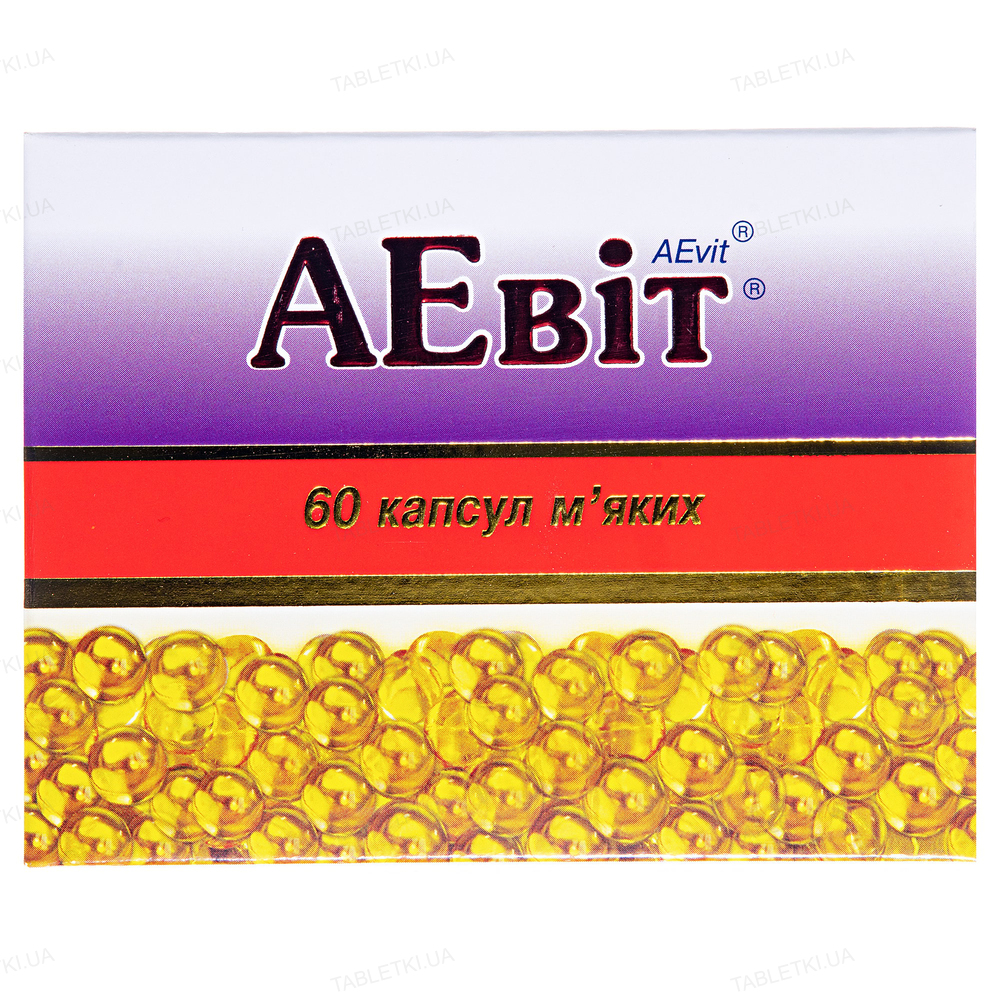
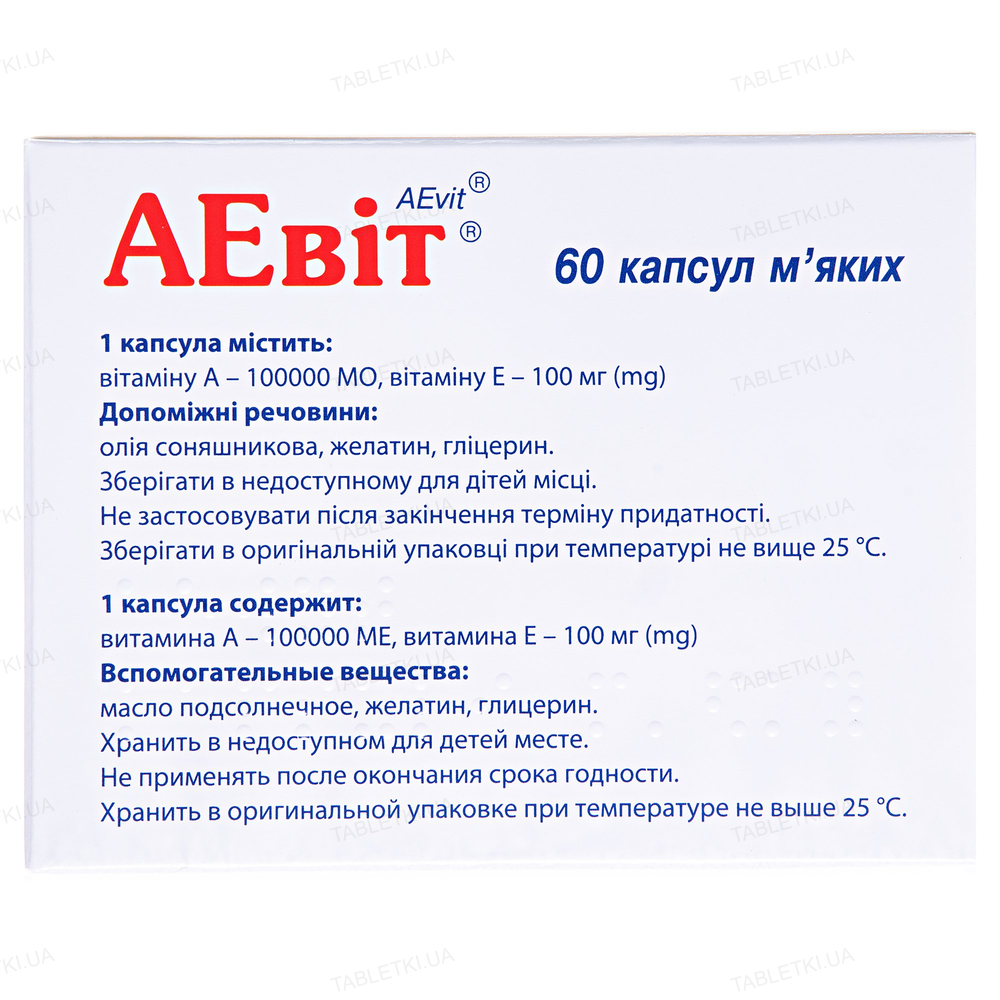
Aevit Soft Capsules, No. 60 (20 x 3)
Composition
Active ingredients: 1 capsule contains 100,000 IU of vitamin A; 100 mg of vitamin E;
excipient: sunflower oil;
capsule shell: gelatin, glycerin.
Dosage Form
Soft capsules.
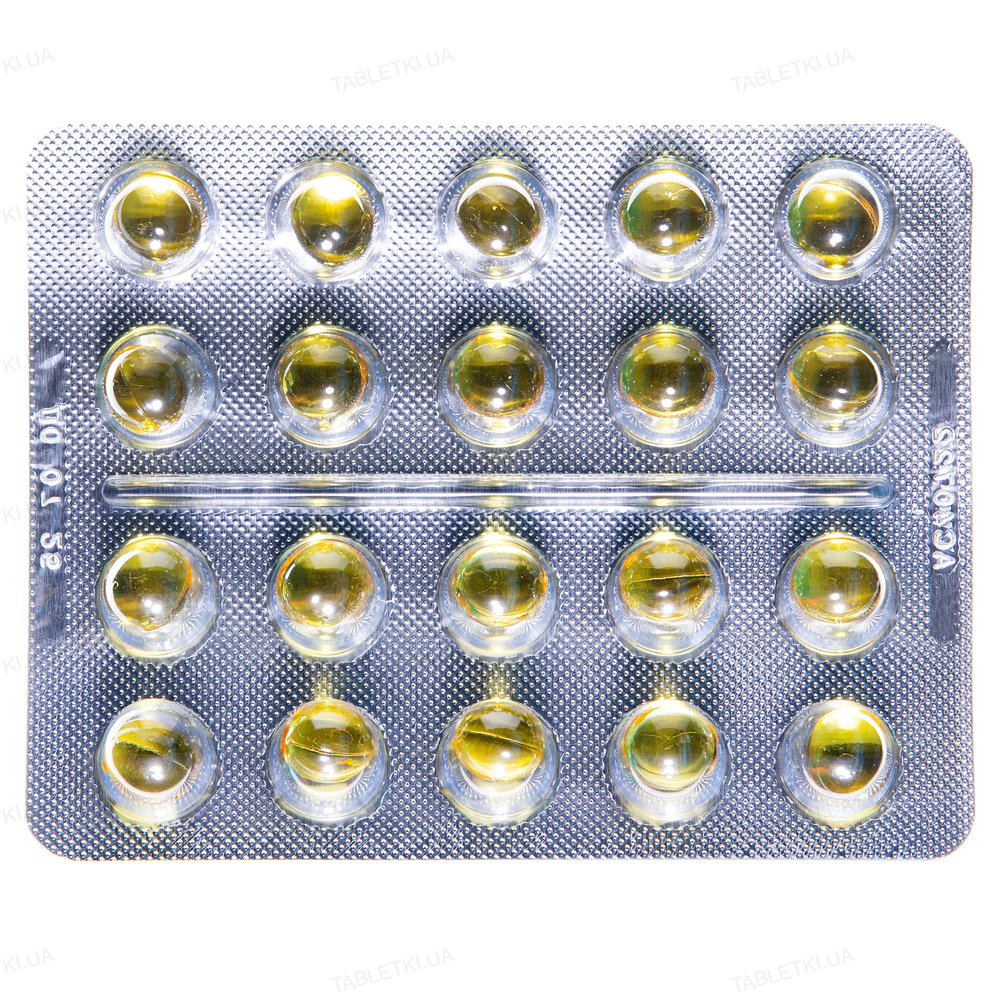
Main physical and chemical properties: Soft gelatin capsules, spherical or round in shape, with a seam, ranging in color from yellow to light brown, filled with an oily liquid ranging in color from light yellow to dark yellow.
Pharmacotherapeutic group
Combined vitamin preparations.
ATC code A11 JA.
Pharmacological properties
Pharmacodynamics.
The properties of the drug are determined by the pharmacological effects of the fat-soluble vitamins A and E included in its composition. The drug acts on the cell nuclei of target organs and initiates the synthesis of enzyme proteins or structural tissue components, stimulates regenerative processes, and enhances the body’s specific and nonspecific resistance.
The drug normalizes metabolism, exhibits active antioxidant activity, restores capillary blood flow and tissue and vascular permeability, and increases tissue resistance to hypoxia.
Pharmacokinetics.
Aevit is well absorbed from the gastrointestinal tract. Vitamins A and E are then transported into the lymph, and subsequently into the blood plasma, where they bind to specific proteins and are transported to organs and tissues. Excess vitamin A is stored in the liver, primarily in the form of palmitic acid esters. Vitamin A is excreted into the intestine via bile and participates in the enterohepatic circulation. In the liver, it undergoes biotransformation, first converting into active metabolites and then into inactive metabolites, which are excreted by the kidneys, intestines, and lungs. Vitamin A is eliminated slowly—34% of the administered dose is excreted from the body within 3 weeks. Excess vitamin E is stored in tissues, forming depots (especially in the liver), which maintain normal levels of vitamin E in the blood plasma. In the body, vitamin E undergoes biotransformation, converting into a number of metabolites with a quinone structure. Vitamin E is excreted unchanged in bile and, in the form of metabolites, in urine.
Indications
AEVit is indicated for therapeutic use in diseases and conditions requiring long-term administration of high doses of vitamin A in combination with vitamin E: atherosclerotic vascular changes, impaired tissue trophism, obliterative endarteritis, psoriasis, systemic lupus erythematosus, optic nerve atrophy, pigmentary retinitis, and as part of complex therapy for dermatitis and acne; as part of complex therapy for cardiovascular diseases (hypertension with signs of left ventricular overload, stable exertional angina of functional classes I and II).
Contraindications
Hypersensitivity to the components of the drug, hypervitaminosis A and E, thyrotoxicosis, chronic glomerulonephritis, gallstone disease, decompensated heart failure, history of sarcoidosis, chronic pancreatitis, severe cardiosclerosis, myocardial infarction.
Interactions with Other Medications and Other Types of Interactions
This medication should not be administered concomitantly with estrogens, which increase the risk of hypervitaminosis A; or with nitrites and cholestyramine, which impair the absorption of vitamin A.
Retinol palmitate reduces the anti-inflammatory effect of glucocorticoids.
This medication should not be used in combination with other vitamin A derivatives due to the risk of overdose and the development of vitamin A toxicity.
Vitamin E enhances the effects of steroidal and nonsteroidal anti-inflammatory drugs (diclofenac sodium, ibuprofen, prednisolone); and reduces the toxic effects of cardiac glycosides (digitoxin, digoxin) and vitamins A and D.
Special Considerations for Use
Use this medication with caution in patients at increased risk of thromboembolism, severe coronary artery atherosclerosis, chronic circulatory insufficiency, acute or chronic nephritis, cholecystitis, or severe lesions of the hepatobiliary system.
This medication should not be prescribed concurrently with other medications containing vitamin A or its synthetic analogs due to the risk of hypervitaminosis A.
Vitamin A tends to accumulate and remain in the body for long periods. Women who have taken high doses of retinol should not plan a pregnancy until at least 6–12 months have passed. This is because, during this time, there is a risk of fetal developmental abnormalities due to high levels of vitamin A in the body.
Use During Pregnancy or Breastfeeding
This medication is contraindicated during pregnancy or breastfeeding.
If the medication must be prescribed, breastfeeding should be discontinued.
Effect on reaction time when driving or operating machinery
There are no data on the effect of this medication on the ability to drive or operate complex machinery.
Dosage and Administration
Take orally after meals, 1 capsule daily for 30–40 days. Repeat the course as needed after 3–6 months.
Children
Do not administer this medication to children.
Overdose
A single large dose of the medication is accompanied by a sudden increase in cerebrospinal fluid pressure (without pathological changes in the cerebrospinal fluid itself), severe headache, drowsiness, and visual disturbances (diplopia). In severe cases, seizures and heart failure may develop. With prolonged use of the medication, chronic hypervitaminosis A may develop, manifested by nervous system disorders (headache, insomnia, irritability, apathy, paresthesias), general weakness, loss of appetite, fever, skin changes (dryness and cracks on the palms and soles, appearance of pigmented spots, hair loss, seborrheic rashes), jaundice, changes in blood counts, bone and muscle pain, gait disturbances, and enlargement of the liver and spleen. When taken in high doses over a long period, creatinuria, increased levels of cholesterol and triglycerides, elevated creatine kinase activity, decreased serum thyroxine and triiodothyronine levels, increased levels of estrogens and androgens in the urine, decreased blood clotting, and gastrointestinal bleeding. If signs of overdose appear, discontinue use of the medication.
Treatment is symptomatic.
Side Effects
Nervous system and sensory organs: increased fatigue, drowsiness, lethargy, irritability, headache, insomnia.
Gastrointestinal system: loss of appetite, nausea, dyspeptic disorders (epigastric pain, diarrhea); very rarely—vomiting.
Allergic reactions, including itching, rash; dry, flaky skin; fever; facial flushing.
Other: with long-term use—hair loss, pain in the bones of the lower extremities.
Prolonged use may exacerbate gallstone disease and chronic pancreatitis. Long-term use of high doses of vitamin A may lead to the development of hypervitaminosis A.
Shelf life
3 years.
Storage conditions
Store in the original packaging at a temperature not exceeding 25 °C.
Keep out of reach of children.
Packaging
- 10 capsules per blister pack.
- 10 capsules per blister; 1 blister per pack.
- 10 capsules per blister; 3 blisters per pack.
- 10 capsules per blister; 5 blisters per pack.
- 20 capsules per blister; 1 blister per pack.
- 20 capsules per blister; 2 blisters per pack.
- 20 capsules per blister; 3 blisters per pack.
- 50 capsules per blister; 1 blister per pack.
Dispensing category
Over-the-counter.
Manufacturer
JSC “KYIV VITAMIN PLANT.”