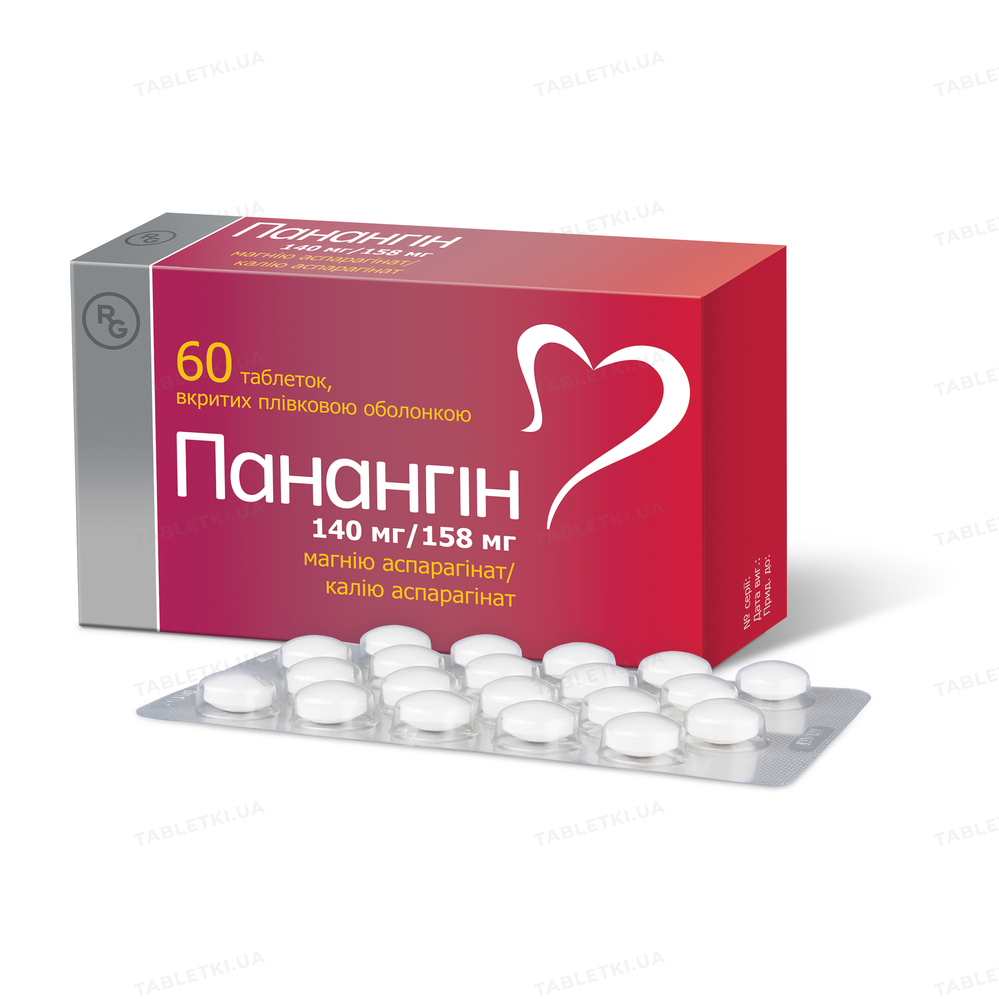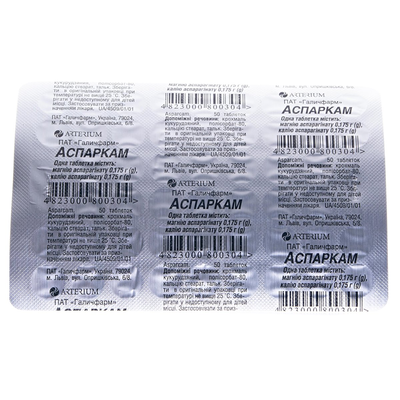
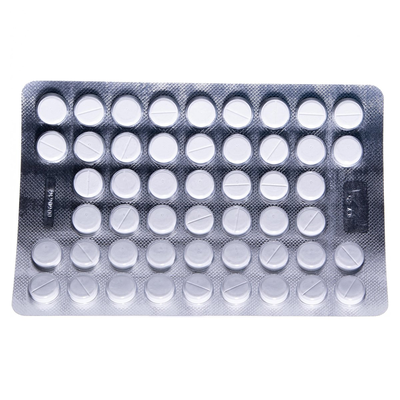
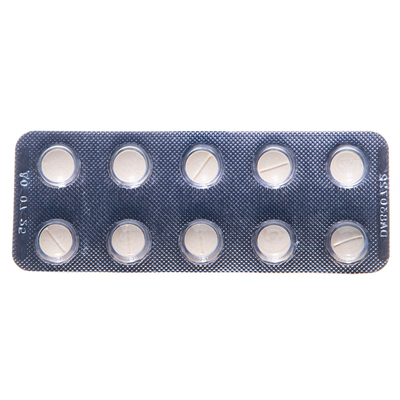
Asparkam tablets, No. 50, in a blister pack.
Composition
Active ingredients: Each tablet contains 0.175 g of magnesium aspartate and 0.175 g of potassium aspartate;
inactive ingredients: corn starch, polysorbate 80, calcium stearate, talc.
Dosage Form
Tablets.
Main physical and chemical properties: white tablets with a smooth surface, flat-cylindrical in shape, scored, with a characteristic odor. A marbled appearance on the tablet surface is permissible.
Pharmacotherapeutic group
Mineral supplements. Magnesium preparations.
ATC code A12C.
Pharmacological properties
Pharmacodynamics.
Potassium and magnesium ions, as important intracellular cations, are involved in the activity of a number of enzymes, in the binding of macromolecules to subcellular components, and in the mechanism of muscle contraction at the molecular level. The ratio of extracellular to intracellular concentrations of potassium, calcium, sodium, and magnesium ions affects the contractile capacity of the myocardium. Aspartate, as an endogenous substance, acts as a transporter of potassium and magnesium ions; it has a high affinity for cells, and its salts dissociate only to a small extent. As a result, the ions enter the intracellular space in the form of complex compounds. Magnesium aspartate and sodium aspartate improve myocardial metabolism. Insufficient levels of potassium and magnesium in the body increase the risk of developing hypertension, atherosclerotic lesions of the coronary arteries, cardiac arrhythmias, and myocardial pathology.
Pharmacokinetics.
Not studied.
Indications
Adjunctive therapy for chronic heart diseases (in heart failure, during the post-infarction period), for cardiac arrhythmias, particularly ventricular arrhythmias.
Adjunctive therapy during treatment with digitalis preparations.
For conditions accompanied by hypokalemia and hypomagnesemia (including saluretic overdose).
Contraindications
- Hypersensitivity to any component of the drug;
- acute and chronic renal failure;
- Addison’s disease;
- hyperkalemia, hypermagnesemia;
- second- or third-degree atrioventricular block;
- cardiogenic shock (blood pressure < 90 mmHg).
Special Safety Precautions
During long-term use of the drug, it is necessary to monitor blood potassium and magnesium levels, as well as to regularly monitor electrolyte balance and ECG data.
As Asparkam contains potassium and magnesium, it should be used with caution in patients with myasthenia gravis; in conditions that may lead to hyperkalemia, such as acute dehydration or extensive tissue damage, particularly in cases of severe burns. For this category of patients, regular monitoring of plasma electrolyte concentrations is recommended.
Asparkam should not be prescribed to patients with gastroduodenal ulcers or obstruction.
Drug Interactions and Other Interactions
Due to the presence of potassium ions in the formulation, the use of Asparkam with potassium-sparing diuretics, ACE inhibitors, beta-blockers, or cyclosporine, the risk of hyperkalemia increases (monitoring of serum potassium levels is required), and the inhibitory effect on intestinal peristalsis is enhanced. The drug inhibits the absorption of oral forms of tetracycline, iron salts, and sodium fluoride (a three-hour interval between doses must be observed).
Asparkam enhances the effect of drugs that stimulate trophic processes in the myocardium; it prevents the development of hypokalemia caused by the use of thiazide diuretics, corticosteroids, and cardiac glycosides. Asparkam reduces the cardiotoxic effects of cardiac glycosides.
When used concomitantly with depolarizing muscle relaxants, neuromuscular blockade is enhanced; when used with anesthetics (ketamine, hexanal, halothane), the central nervous system is depressed.
Asparkam may reduce the effectiveness of neomycin, polymyxin B, tetracycline, and streptomycin.
Special Considerations for Use
Use during pregnancy or breastfeeding.
There are no data on adverse effects of the drug during pregnancy or breastfeeding. However, the drug may be used if, in the physician’s opinion, the expected benefit to the mother outweighs the potential risk to the fetus or infant.
Effect on reaction time when driving or operating machinery.
Asparkam does not affect reaction time when driving or operating machinery.
Dosage and Administration
The usual daily dose for adults is 1–2 tablets 3 times a day. The dose may be increased to 3 tablets 3 times a day. Gastric juice may reduce the drug’s effectiveness, so it is recommended to take the tablets after meals.
The duration of treatment is determined by a doctor.
Children
There is no experience with the use of this medication in children.
Overdose
To date, no cases of overdose have been reported. Theoretically, an overdose may lead to symptoms of hyperkalemia (nausea, vomiting, diarrhea, abdominal pain, a metallic taste in the mouth, bradycardia, weakness, disorientation, muscle paralysis, and paresthesia in the extremities) and hypermagnesemia (facial flushing, thirst, hypotension, hyporreflexia, impaired neuromuscular transmission, respiratory depression, arrhythmia, and convulsions). An electrocardiogram may show an elevated T wave, a decreased P wave amplitude, and a widened QRS complex.
Treatment: discontinuation of the drug, symptomatic therapy (intravenous administration of calcium chloride solution at a dose of 100 mg/min), and, if necessary, hemodialysis.
Side Effects
Adverse reactions occur very rarely:
Gastrointestinal: nausea, vomiting, diarrhea, abdominal pain, discomfort or burning sensation in the epigastric region, gastrointestinal bleeding, ulcers of the gastrointestinal mucosa, dry mouth;
cardiovascular system: myocardial conduction disturbances, decreased blood pressure, AV block;
Central and peripheral nervous system: possible paresthesias, hyporeflexia, convulsions;
allergic reactions: itching, facial flushing, rash;
Respiratory system: possible respiratory depression (due to hypermagnesemia);
Other: sensation of heat.
Shelf life
3 years.
Storage conditions
Store in the original packaging at a temperature not exceeding 25 °C. Keep out of reach of children.
Packaging
50 tablets per blister; 50 tablets per blister, 1 blister per pack.
Dispensing Category
Available without a prescription.
Manufacturer
PJSC “Galichpharm.”