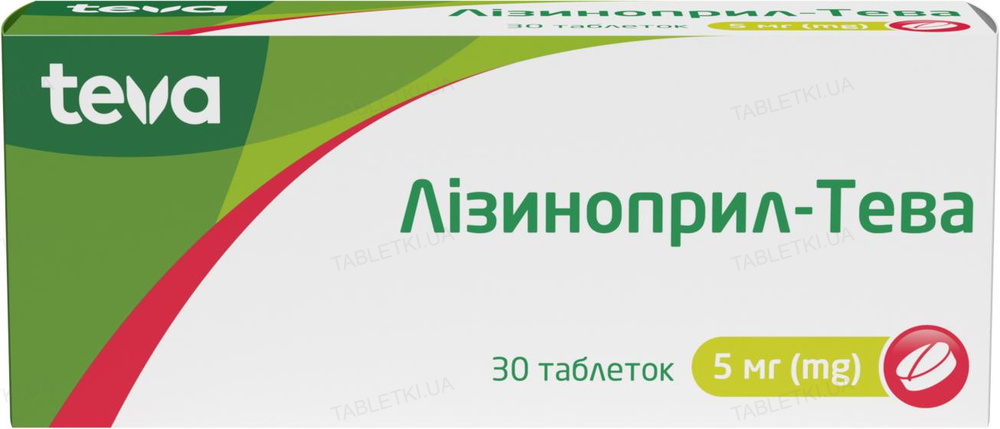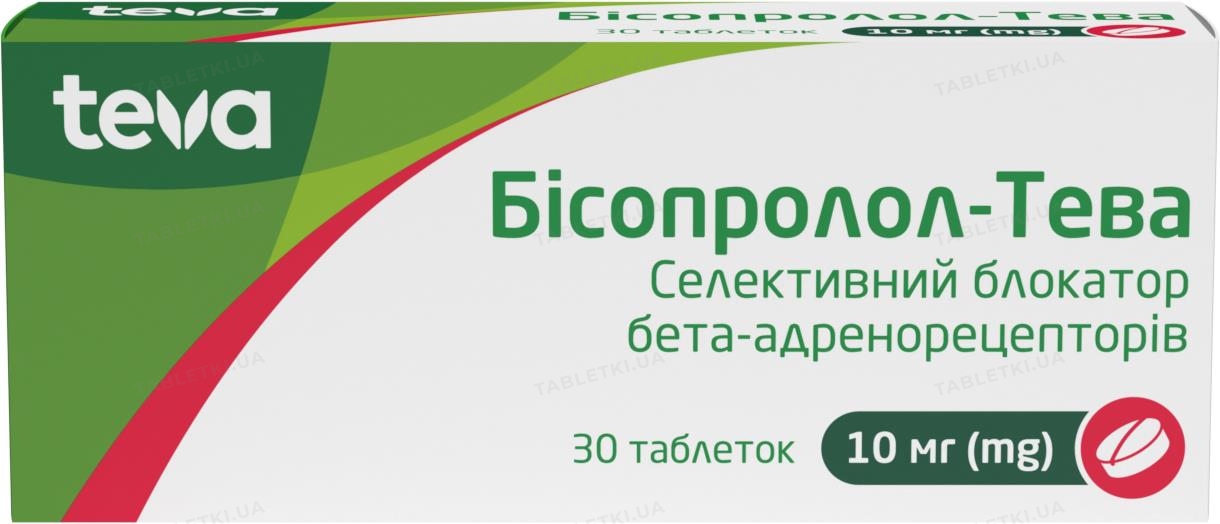
Bisoprolol-Teva 10 mg tablets, No. 30 (10 x 3)
Composition
Active ingredient: bisoprolol;
1 tablet contains 5 mg or 10 mg of bisoprolol hemifumarate;
excipients: lactose monohydrate, microcrystalline cellulose, crospovidone, magnesium stearate;
for 5 mg tablets: yellow dye PB 22812 (containing: lactose monohydrate, yellow iron oxide (E 172));
for 10 mg tablets: beige dye PB 27215 (containing: lactose monohydrate, yellow iron oxide (E 172), red iron oxide (E 172)).
Dosage Form
Tablets.
Main physical and chemical properties:
5 mg tablets – pale yellow with speckles, round, biconvex tablets with “5” embossed and a break line on one side;
10 mg tablets—beige with speckles, round, biconvex tablets with “10” embossed and a break line on one side.
Pharmacotherapeutic group
Selective β-adrenergic receptor blockers.
ATC code C07A B07.
Pharmacological Properties
Pharmacodynamics.
Bisoprolol is a highly selective β1-adrenergic blocker. It has no intrinsic sympathomimetic activity and no clinically significant membrane-stabilizing properties. The drug has very low affinity for β2-receptors in the smooth muscle of the bronchi and blood vessels, as well as for β2-receptors involved in metabolic regulation. Thus, bisoprolol does not affect airway resistance or β2-mediated metabolic effects. The selectivity of bisoprolol for β1-adrenoreceptors extends beyond the therapeutic dose range.
Bisoprolol has no pronounced negative inotropic effect.
The maximum effect of bisoprolol occurs 3–4 hours after administration. The plasma half-life is 10–12 hours, resulting in 24-hour efficacy following a single dose. The maximum antihypertensive effect is achieved after 2 weeks of treatment.
In intensive therapy for patients with ischemic heart disease without chronic heart failure, bisoprolol reduces cardiac output and myocardial oxygen demand by decreasing heart rate and stroke volume. With long-term therapy, increased peripheral resistance is reduced. The antihypertensive effect of β-blockers is also based on a mechanism that reduces plasma renin activity.
Bisoprolol inhibits the response to sympathomimetic activity by blocking cardiac β1-receptors. This leads to a slower heart rate and reduced myocardial contractility, resulting in a decrease in myocardial oxygen demand. This achieves the desired effect in patients with angina and ischemic heart disease.
Pharmacokinetics.
After oral administration, more than 90% of bisoprolol is absorbed from the gastrointestinal tract. Absorption is not affected by food intake. First-pass metabolism in the liver is minimal, contributing to high bioavailability—approximately 90%. Plasma protein binding is approximately 30%. The volume of distribution is 3.5 L/kg.
Bisoprolol is eliminated from the body via two pathways: approximately 50% is metabolized in the liver to form inactive metabolites and excreted by the kidneys, while 50% is excreted by the kidneys unchanged. The total clearance of bisoprolol is 15 L/h. Due to its long half-life (10–12 hours), the drug maintains its therapeutic effect for 24 hours when administered once daily.
The pharmacokinetics of bisoprolol are linear and independent of age.
Since the kidneys and liver contribute approximately equally to the elimination of this drug, no dose adjustment is necessary in patients with renal or hepatic insufficiency. In patients with chronic heart failure, NYHA Class III, plasma bisoprolol levels are higher, and the half-life is longer compared to healthy volunteers. The maximum steady-state plasma concentration is 64±21 ng/mL at a daily dose of 10 mg, with a half-life of 17±5 hours.
Indications
- Hypertension;
- ischemic heart disease (angina pectoris);
- chronic heart failure with left ventricular systolic dysfunction in combination with ACE inhibitors, diuretics, and, if necessary, cardiac glycosides.
Contraindications
- Hypersensitivity to bisoprolol, other beta-blockers, or any component of the drug;
- acute heart failure or decompensated heart failure requiring intravenous inotropic therapy;
- cardiogenic shock;
- second- and third-degree atrioventricular block (except in patients with an artificial pacemaker);
- sick sinus syndrome;
- sinoatrial block;
- symptomatic bradycardia;
- symptomatic arterial hypotension;
- severe bronchial asthma or severe chronic obstructive pulmonary disease;
- severe forms of peripheral arterial occlusive disease or severe forms of Raynaud’s syndrome;
- metabolic acidosis;
- untreated pheochromocytoma;
- concomitant use with floctafenine and sultopride.
Interactions with Other Medications and Other Types of Interactions
Contraindicated combinations
Floctafenine: Beta-blockers may interfere with compensatory cardiovascular responses associated with arterial hypotension or shock, which may be caused by floctafenine.
Sultopride: Bisoprolol should not be used concomitantly with sultopride due to an increased risk of ventricular arrhythmia.
Combinations Not Recommended
Treatment of chronic heart failure
- Class I antiarrhythmic agents (e.g., quinidine, disopyramide, lidocaine, phenytoin, flecainide, propafenone): Potential potentiation of the effect on atrioventricular conduction and enhancement of the negative inotropic effect (careful clinical monitoring and ECG monitoring are required).
All indications
- Calcium channel blockers (the verapamil group; to a lesser extent, diltiazem): adverse effects on myocardial inotropic function and atrioventricular conduction. Intravenous administration of verapamil in patients taking β-blockers may lead to severe hypotension and atrioventricular block.
- Hypotensive drugs with a central mechanism of action (clonidine, methyldopa, guanfacine, moxonidine, rilmenidine): heart failure may worsen due to a decrease in central sympathetic tone (decreased heart rate and cardiac output, vasodilation). Sudden discontinuation of the drug, especially if preceded by discontinuation of β-adrenergic receptor blockers, may increase the risk of rebound hypertension.
- Monoamine oxidase (MAO) inhibitors (except for type B MAO inhibitors): the hypotensive effect of β-blockers is potentiated, and there is a risk of a hypertensive crisis.
Combinations to Be Used with Caution
Treatment of hypertension or ischemic heart disease (angina)
- Class I antiarrhythmic drugs (e.g., quinidine, disopyramide, lidocaine, phenytoin, flecainide, propafenone): may potentiate the effect on atrioventricular conduction and increase the negative inotropic effect.
All indications
- Calcium channel blockers (dihydropyridine derivatives, e.g., nifedipine, felodipine, amlodipine): an increased risk of hypotension is possible. An increased negative effect on myocardial inotropic function cannot be ruled out in patients with heart failure.
- Class III antiarrhythmic drugs (e.g., amiodarone): may potentiate the effect on atrioventricular conduction.
- Other β-blockers, including locally acting β-blockers (e.g., those contained in eye drops for the treatment of glaucoma): systemic effects of bisoprolol may be enhanced.
- Parasympathomimetics: may prolong atrioventricular conduction time and increase the risk of bradycardia.
- Insulin and oral antidiabetic agents: potentiation of the hypoglycemic effect. β-adrenoreceptor blockade may mask the symptoms of hypoglycemia.
- Anesthetics: attenuation of reflex tachycardia, increased risk of myocardial depression and the onset of arterial hypotension (see the “Special Considerations for Use” section).
- Cardiac glycosides: decreased heart rate, prolonged atrioventricular conduction time.
- Nonsteroidal anti-inflammatory drugs (NSAIDs): may attenuate the hypotensive effect of bisoprolol.
- Ergotamine derivatives: exacerbation of peripheral circulatory disorders.
- β-sympathomimetics (e.g., isoprenaline, orciprenaline, dobutamine): Use in combination with bisoprolol may reduce the therapeutic effect of both agents. Higher doses of epinephrine may be required to treat allergic reactions.
- Sympathomimetics that activate α- and β-adrenoreceptors (e.g., epinephrine, norepinephrine) may cause a vasoconstrictive effect mediated by α-adrenoreceptors, leading to an increase in blood pressure and exacerbation of intermittent claudication. Such an interaction is more likely when non-selective β-blockers are used.
When used concomitantly with antihypertensive agents and agents that have a hypotensive effect (e.g., tricyclic antidepressants, barbiturates, phenothiazines), there may be an increased risk of hypotension.
Baclofen: potentiation of the hypotensive effect.
Amifostine: increased hypotensive effect.
When used concomitantly, consider the following
- Mefloquine: There may be an increased risk of bradycardia.
- Corticosteroids: reduced hypotensive effect due to water and sodium retention in the body.
- Rifampicin: a slight decrease in the half-life of bisoprolol is possible due to the induction of liver enzymes that metabolize drugs. A dose adjustment is usually not required.
Special Considerations for Use
Treatment of stable chronic heart failure with bisoprolol should begin with a titration phase.
In patients with ischemic heart disease, treatment should not be discontinued abruptly unless absolutely necessary, as this may lead to a transient worsening of the condition. In patients with ischemic heart disease, there is a risk of myocardial infarction or sudden death if treatment is abruptly discontinued (see the “Dosage and Administration” section for more details). Initiation and discontinuation of bisoprolol therapy require regular monitoring.
Currently, there is insufficient clinical experience with the treatment of heart failure in patients with the following diseases and conditions: type 1 diabetes mellitus (insulin-dependent), severe renal impairment, severe hepatic impairment, restrictive cardiomyopathy, congenital heart defects, hemodynamically significant acquired valvular heart disease, or myocardial infarction within the past 3 months.
This medication should be used with caution in patients with the following conditions:
- bronchospasm (bronchial asthma, obstructive airway diseases);
- concomitant treatment with cholinesterase inhibitors (including tacrine): may prolong atrioventricular conduction time or exacerbate bradycardia;
- use of iodine-containing contrast agents: beta-blockers may interfere with compensatory cardiovascular responses in cases of arterial hypotension or shock caused by the use of iodine-containing contrast agents;
- diabetes mellitus with significant fluctuations in blood glucose levels—due to the possibility of masking symptoms of hypoglycemia (tachycardia, palpitations, excessive sweating). Blood glucose levels must be monitored during treatment with bisoprolol;
- a strict diet;
- desensitization therapy. Like other beta-blockers, bisoprolol may increase sensitivity to allergens and worsen the severity of anaphylactic reactions. In such cases, treatment with epinephrine does not always produce a positive therapeutic effect;
- first-degree atrioventricular block;
- Prinzmetal angina;
- occlusive peripheral arterial disease (symptoms may worsen at the start of therapy);
- general anesthesia.
It is essential to inform the anesthesiologist about the use of β-adrenergic receptor blockers. In patients scheduled for general anesthesia, the use of β-blockers reduces the incidence of arrhythmias and myocardial ischemia during induction of anesthesia, intubation, and the postoperative period. It is recommended to continue β-blocker therapy during the perioperative period. It is essential to inform the anesthesiologist about the use of β-adrenergic receptor blockers, as the anesthesiologist must consider potential interactions with other medications, which may lead to bradyarrhythmia, reflex tachycardia, and a reduction in the reflex mechanism for compensating for blood loss. If bisoprolol is to be discontinued prior to surgery, the dose should be gradually reduced, and the medication should be discontinued 48 hours before general anesthesia.
Combinations of bisoprolol with calcium channel blockers of the verapamil or diltiazem group, with Class I antiarrhythmic drugs, and with centrally acting antihypertensives are not recommended (see the section “Interactions with Other Medications and Other Types of Interactions”).
Although cardioselective β-blockers (β1) have a lesser effect on lung function compared with nonselective β-blockers, their use—as well as that of all β-blockers—should be avoided in patients with obstructive airway diseases unless there are compelling reasons for treatment. If necessary, bisoprolol should be used with caution. In patients with obstructive airway diseases, treatment with bisoprolol should be initiated at the lowest possible dose, and patients should be monitored for the onset of new symptoms (such as shortness of breath, exercise intolerance, cough).
In cases of bronchial asthma or other chronic obstructive pulmonary diseases that may cause symptoms, concomitant therapy with bronchodilators is indicated. In some cases, while taking this medication, patients with bronchial asthma may require higher doses of β2-sympathomimetics due to increased airway resistance.
For patients with psoriasis (including a history of psoriasis), β-blockers (e.g., bisoprolol) should be prescribed only after a careful assessment of the benefit-risk ratio.
Patients with pheochromocytoma should be prescribed bisoprolol only after treatment with α-adrenergic blockers has been initiated.
Symptoms of thyrotoxicosis may be masked while taking this medication.
When bisoprolol is used, a positive result may be observed during doping control.
This medication contains lactose and should not be prescribed to patients with rare hereditary forms of galactose intolerance, lactase deficiency, or glucose-galactose malabsorption syndrome.
Use during pregnancy or breastfeeding.
Pregnancy. Bisoprolol has pharmacological properties that may adversely affect the course of pregnancy and/or the development of the fetus or newborn. Generally, β-blockers reduce placental blood flow, which may cause intrauterine growth restriction, fetal death, spontaneous abortion, or preterm labor. Adverse effects may develop in the fetus and newborn (e.g., hypoglycemia, bradycardia). If treatment with a β-blocker is necessary, it is preferable to use a β1-selective adrenergic blocker.
During pregnancy, the drug should be used only when the expected benefit to the mother outweighs the potential risk to the fetus. Uteroplacental blood flow and fetal growth must be monitored. If adverse effects on the course of pregnancy or the fetus occur, alternative treatment should be considered.
After delivery, the newborn should be kept under close observation. Symptoms of hypoglycemia and bradycardia may occur within the first 3 days.
Breastfeeding. There are no data on the excretion of bisoprolol into breast milk. Therefore, use of the drug is not recommended during breastfeeding.
Effect on the ability to drive or operate machinery.
It has been reported that in patients with ischemic heart disease, the drug did not affect the ability to drive. However, in individual cases, the drug may affect the ability to drive or operate complex machinery. Particular caution is required at the start of treatment, when changing the dose, or when interacting with alcohol.
Dosage and Administration
The tablets are intended for oral use. Bisoprolol-Teva tablets should be taken in the morning on an empty stomach, during or after breakfast, swallowed whole without chewing, with a small amount of liquid. The tablet may be divided into equal doses.
Hypertension; ischemic heart disease (angina)
Treatment should be started gradually with low doses, followed by a gradual increase in dosage. The recommended dose is 5 mg per day. In cases of moderate hypertension (diastolic blood pressure up to 105 mm Hg), a dose of 2.5 mg is appropriate.
If necessary, the daily dose may be increased to 10 mg per day. Further dose increases are justified only in exceptional cases. The maximum recommended dose is 20 mg per day.
Dose adjustments are determined by the physician on an individual basis depending on heart rate and therapeutic benefit.
Chronic heart failure with left ventricular systolic dysfunction in combination with ACE inhibitors, diuretics, and, if necessary, cardiac glycosides
Standard therapy for chronic heart failure: ACE inhibitors (or angiotensin receptor blockers in case of ACE inhibitor intolerance), beta-blockers, diuretics, and, if necessary, cardiac glycosides.
Bisoprolol should be prescribed for the treatment of patients with chronic heart failure without signs of exacerbation.
Treatment should be administered by a physician experienced in the management of chronic heart failure.
Treatment of chronic heart failure with bisoprolol is initiated according to the titration schedule provided below and may be adjusted based on the patient’s individual response.
- 1.25 mg* of bisoprolol hemifumarate once daily for 1 week, increasing to
- 2.5 mg* of bisoprolol hemifumarate once daily for the next 1 week, increasing to
- 3.75 mg* of bisoprolol hemifumarate once daily for the following 1 week, increasing to
- 5 mg of bisoprolol hemifumarate once daily for the next 4 weeks, increasing to
- 7.5 mg of bisoprolol hemifumarate once daily for the next 4 weeks, increasing to
- 10 mg of bisoprolol hemifumarate once daily as maintenance therapy.
* Use bisoprolol at the appropriate dosage.
A dose of 2.5 mg of bisoprolol is recommended at the start of therapy for chronic heart failure.
The maximum recommended dose is 10 mg once daily.
During the titration phase, the following vital signs (blood pressure, heart rate) and symptoms of heart failure progression must be monitored. Symptoms may develop as early as the first day after treatment begins.
Treatment Adjustment
If the maximum recommended dose is poorly tolerated, a gradual reduction in the dose may be necessary. If a gradual worsening of heart failure, hypotension, or bradycardia occurs during or after the titration phase, a dose adjustment is recommended, which may require a temporary reduction in the bisoprolol dose or, possibly, discontinuation of treatment. Once the patient’s condition has stabilized, the possibility of re-initiating bisoprolol treatment should always be considered.
Treatment with this drug should not be discontinued abruptly, especially in patients with ischemic heart disease, as this may lead to a worsening of the patient’s condition. If necessary, treatment with the drug should be discontinued slowly by gradually reducing the dose (for example, by halving the dose each week).
Treatment of stable chronic heart failure is usually long-term.
The course of treatment with bisoprolol is prolonged and depends on the nature and severity of the disease.
Patients with impaired kidney or liver function
Hypertension; ischemic heart disease
For patients with mild to moderate hepatic or renal impairment, dose adjustment is generally not required. Patients with severe renal impairment (creatinine clearance <20 mL/min) and patients with severe hepatic impairment should not exceed a daily dose of 10 mg. There are limited data on the use of bisoprolol in patients on dialysis. No adjustment to the dosing regimen is necessary.
Chronic Heart Failure
There are no data on the pharmacokinetics of bisoprolol in patients with chronic heart failure who also have impaired liver and/or kidney function; therefore, dose increases should be made with caution.
No dosage adjustment of bisoprolol is required for elderly patients.
Children.
There are no clinical data on the efficacy and safety of the drug for the treatment of children; therefore, the drug should not be used in this patient population.
Overdose
Symptoms
In cases of overdose (e.g., administration of a daily dose of 15 mg instead of 7.5 mg), cases of third-degree atrioventricular block, bradycardia, and dizziness have been reported. The most common signs of β-blocker overdose are bradycardia, hypotension, acute heart failure, bronchospasm, and hypoglycemia. There is wide variability in individual sensitivity to a single high dose of bisoprolol; patients with heart failure may be more sensitive to the drug. Therefore, treatment should be initiated with a gradual increase in dosage (see the “Dosage and Administration” section).
Treatment
In case of overdose, discontinue treatment with the drug and provide supportive and symptomatic therapy. There is limited data indicating that bisoprolol is not readily removed by dialysis. If an overdose is suspected, in accordance with the expected pharmacological effects and based on recommendations for other β-blockers, the general measures listed below should be considered.
For bradycardia: intravenous administration of atropine. If there is no response, administer isoprenaline or another drug with a positive chronotropic effect with caution. In exceptional cases, transvenous implantation of a pacemaker may be necessary.
For arterial hypotension: intravenous administration of fluids and vasopressors. Intravenous administration of glucagon may be beneficial.
In cases of second- and third-degree atrioventricular block: close monitoring and intravenous infusion of isoprenaline or transvenous implantation of a pacemaker.
In the event of an exacerbation of chronic heart failure: intravenous administration of diuretics, inotropic agents, and vasodilators.
For bronchospasm: bronchodilators (e.g., isoprenaline), β2-adrenomimetics, and/or aminophylline.
For hypoglycemia: intravenous administration of glucose.
Side Effects
Adverse reactions are classified by frequency as follows: very common (≥1/10); common (≥1/100, <1/10); uncommon (≥1/1,000, <1/100); rare (≥1/10,000, <1/1,000); very rare (<1/10,000); frequency unknown (cannot be estimated from the available data).
Immune system disorders
Rare: development of antinuclear antibodies with specific clinical symptoms such as lupus-like syndrome, which resolves after discontinuation of treatment.
Metabolism and nutrition
Rare: hypoglycemia.
Psychiatric disorders
Uncommon: sleep disturbances, depression.
Rare: nightmares, hallucinations.
Nervous system
Common: fatigue, exhaustion, dizziness*, headache*.
Rarely: loss of consciousness.
Eye disorders
Rare: decreased tear production (should be taken into account when wearing contact lenses).
Very rare: conjunctivitis.
Ear disorders
Rare: hearing impairment.
Cardiac
Very common: bradycardia (in patients with chronic heart failure).
Common: signs of worsening of pre-existing heart failure (in patients with chronic heart failure).
Uncommon: bradycardia (in patients with hypertension or ischemic heart disease), atrioventricular conduction disturbances, signs of worsening of pre-existing heart failure (in patients with hypertension or ischemic heart disease).
Vascular
Common: sensation of coldness or numbness in the extremities, worsening of pre-existing intermittent claudication, hypotension (especially in patients with heart failure).
Uncommon: orthostatic hypotension.
Respiratory system
Uncommon: bronchospasm in patients with a history of bronchial asthma or obstructive airway diseases.
Rare: allergic rhinitis.
Gastrointestinal system
Common: gastrointestinal complaints such as nausea, vomiting, diarrhea, abdominal pain, and constipation.
Hepatic
Rare: hepatitis.
Skin and subcutaneous tissue disorders
Rare: hypersensitivity reactions, including itching, redness, and rash.
Very rare: β-blockers may cause or exacerbate psoriasis, psoriatic rashes, and hair loss.
Musculoskeletal system
Uncommon: muscle weakness, cramps, arthropathy.
Reproductive system
Rare: erectile dysfunction.
General disorders
Common: asthenia (in patients with chronic heart failure), increased fatigue*.
Uncommon: asthenia (in patients with hypertension or ischemic heart disease).
Laboratory tests
Rare: elevated blood triglyceride levels, elevated plasma liver enzyme levels (AST, ALT).
* Applies only to patients with hypertension or ischemic heart disease. These symptoms usually occur at the start of therapy, are mild, and resolve within the first 1–2 weeks.
If any side effects or adverse reactions occur, inform your doctor immediately.
Shelf life
3 years.
Storage Conditions
Store at a temperature not exceeding 25 °C in the original packaging to protect from moisture. Keep out of reach of children.
Packaging
10 tablets per blister pack; 3, 5, or 9 blister packs per box.
Manufacturer
Merkle GmbH.
Address
Ludwig-Merkle-Straße 3, 89143 Blaubeuren, Germany.