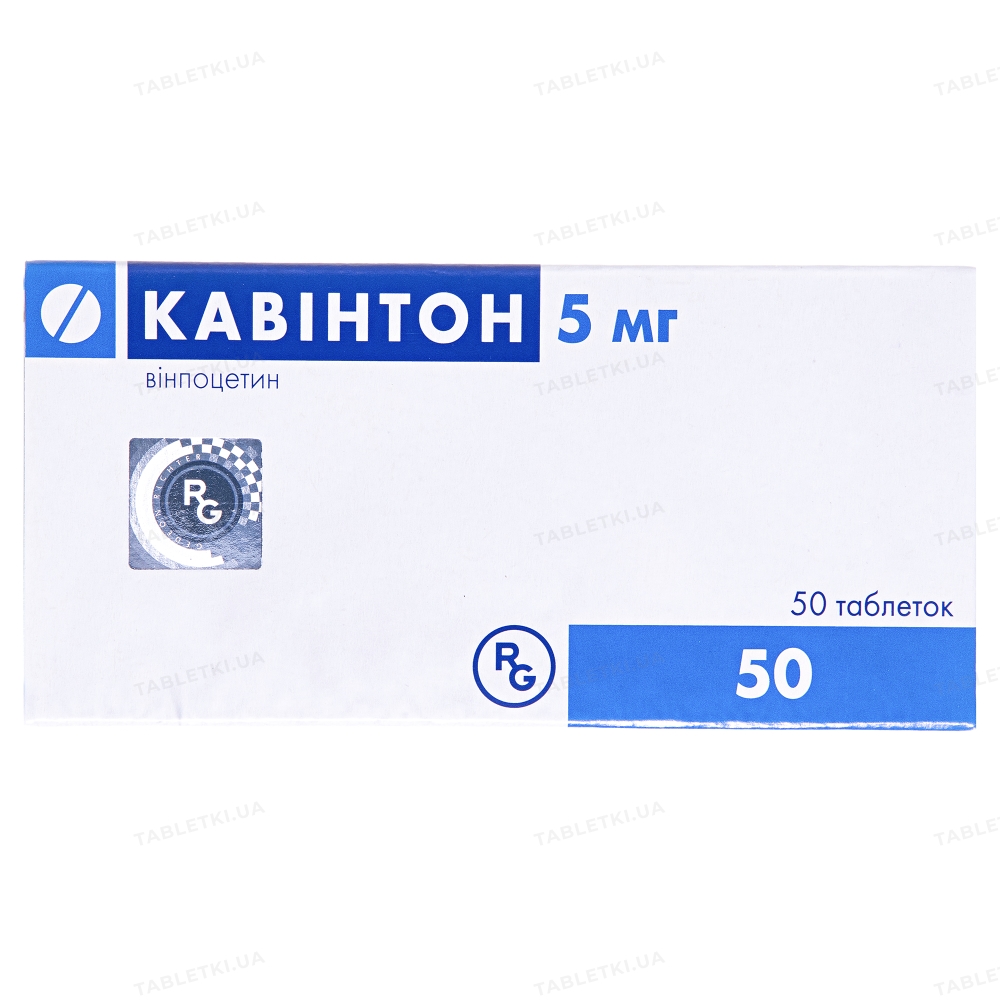
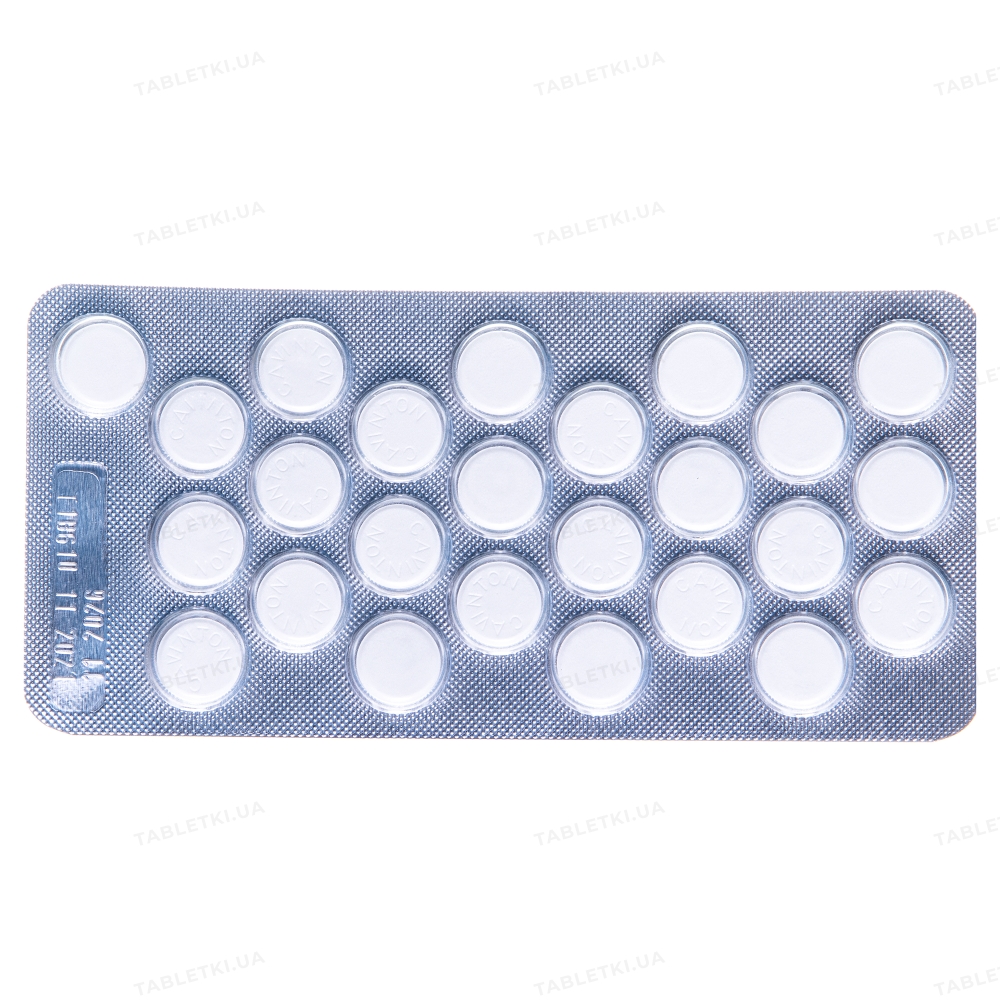
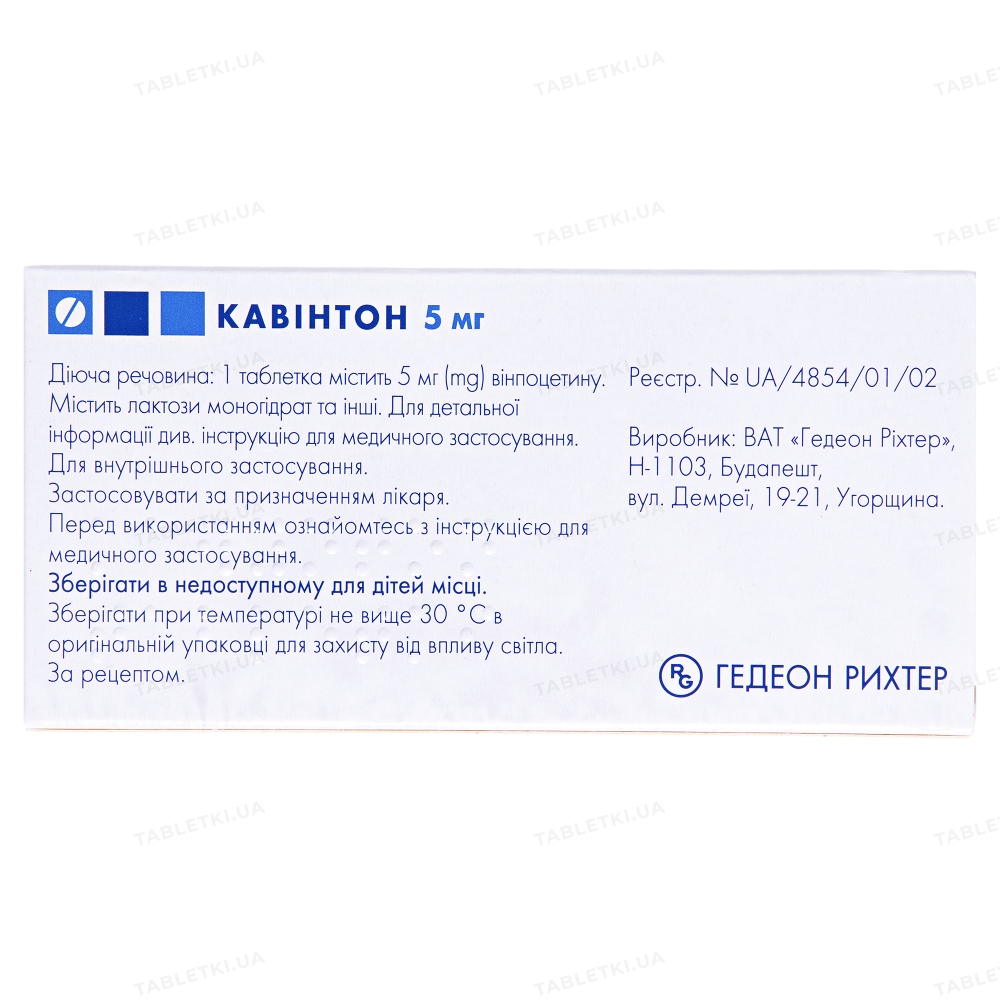
Cavinton 5 mg tablets, No. 50 (25 x 2)
Active ingredient: vinpocetine; 1 tablet contains 5 mg of vinpocetine;
Excipients: colloidal anhydrous silicon dioxide, magnesium stearate, talc, corn starch, lactose monohydrate.
Dosage Form
Tablets.
Main physical and chemical properties: white or cream-white tablets, flat, round with beveled edges, approximately 9 mm in diameter, odorless, engraved with “CAVINTON” on one side.
Pharmacotherapeutic group
Psychostimulants and nootropics. Vinpocetine. ATX code N06B X18.
Pharmacological properties
Pharmacodynamics.
Vinpocetine is a compound with a complex mechanism of action that has a beneficial effect on metabolism in the brain, improves cerebral blood flow, and enhances blood rheology.
Vinpocetine has a neuroprotective effect: the drug mitigates the harmful effects of cytotoxic reactions caused by amino acid stimulation. The drug inhibits voltage-gated Na+ and Ca2+ channels, as well as NMDA and AMPA receptors. The drug enhances the neuroprotective effect of adenosine.
Vinpocetine stimulates cerebral metabolism: the drug increases the uptake of glucose and O₂ and their utilization by brain tissues. The drug increases the brain’s resistance to hypoxia; enhances the transport of glucose—the brain’s exclusive energy source—across the blood-brain barrier; shifts glucose metabolism toward the energetically more favorable aerobic pathway; selectively inhibits the Ca²⁺-calmodulin-dependent enzyme cGMP phosphodiesterase (PDE); and increases the levels of cAMP and cGMP in the brain. The drug increases ATP concentration and the ATP/AMP ratio; increases the metabolism of norepinephrine and serotonin in the brain; stimulates the ascending noradrenergic system; It possesses antioxidant activity; as a result of all the above effects, vinpocetine exerts a cerebroprotective effect.
Vinpocetine improves microcirculation in the brain: the drug inhibits platelet aggregation, reduces pathologically elevated blood viscosity, increases the deformability of red blood cells, and inhibits adenosine uptake; it improves O₂ transport in tissues by reducing the affinity of O₂ for red blood cells.
Vinpocetine selectively increases cerebral blood flow: the drug increases the cerebral fraction of cardiac output; reduces vascular resistance in the brain without affecting parameters of systemic circulation (blood pressure, cardiac output, heart rate, total peripheral resistance); The drug does not cause a “robber effect.” Moreover, taking the drug improves blood flow to damaged (but not yet necrotic) areas of ischemia with low perfusion (“reverse robber effect”).
Pharmacokinetics.
Absorption. Vinpocetine is rapidly absorbed, with peak plasma concentrations reached 1 hour after oral administration. The primary site of absorption of vinpocetine is the proximal gastrointestinal tract. The compound is not metabolized as it passes through the intestinal wall.
Distribution. In studies involving oral administration of the drug to rats, radioactively labeled vinpocetine was found in the highest concentrations in the liver and the gastrointestinal tract. Maximum concentrations in tissues were detected 2–4 hours after administration. The concentration of the radioactive tracer in the brain did not exceed the concentration in the blood.
In humans: protein binding is 66%. The absolute oral bioavailability of vinpocetine is 7%. The volume of distribution is 246.7 ± 88.5 L, indicating significant tissue binding. The plasma clearance of vinpocetine (66.7 L/h) exceeds its hepatic clearance (50 L/h), indicating extrahepatic metabolism of the compound.
Release. Following repeated oral administration of 5 mg and 10 mg, vinpocetine exhibits linear kinetics; steady-state plasma concentrations are 1.2 ± 0.27 ng/mL and 2.1 ± 0.33 ng/mL, respectively. The half-life in humans is 4.83 ± 1.29 hours. Studies conducted using a radioactively labeled compound have shown that the primary route of elimination is via the kidneys and intestines in a ratio of 60%:40%. The highest levels of radioactive tracer were detected in the bile of rats and dogs, but no significant enterohepatic circulation was observed. Apovinkaminic acid is excreted by the kidneys via simple glomerular filtration; the half-life of this substance varies depending on the dose and route of administration of vinpocetine.
Metabolism. The major metabolite of vinpocetine is apovinkaminic acid (AVA), which is formed in the human body at a rate of 25–30%. Following oral administration, the area under the curve (“plasma concentration-time curve”) for VCA is twice as high as after intravenous administration of the drug, indicating the formation of VCA during the presystemic metabolism of vinpocetine. Other identified metabolites include hydroxyvinpocetine, hydroxy-VKA, dihydroxy-VKA-glycinate, and their conjugates with glucuronides and/or sulfates. In all of the studies examined, the amount of vinpocetine excreted unchanged accounted for only a few percent of the administered dose.
An important and significant property of vinpocetine is that no special dose adjustment is required for patients with liver or kidney disease, due to the drug’s metabolism and the absence of accumulation.
Changes in pharmacokinetic properties under specific circumstances (e.g., at a certain age, in the presence of comorbidities). Since vinpocetine is indicated primarily for the treatment of elderly patients, in whom changes in drug kinetics are observed—reduced absorption, altered distribution, and metabolism, reduced excretion—it was necessary to conduct a study to evaluate the drug’s kinetics in this age group, especially during long-term use. The results of these studies demonstrated that the pharmacokinetics of vinpocetine in elderly patients do not differ significantly from those in younger patients and, moreover, there is no accumulation. In cases of impaired liver or kidney function, standard doses of the drug may be used, as vinpocetine does not accumulate in the bodies of such patients, allowing for long-term use of the drug.
Indications
Neurology. For the treatment of various forms of cerebrovascular pathology: conditions following a cerebrovascular accident (stroke), vertebrobasilar insufficiency, vascular dementia, cerebral atherosclerosis, post-traumatic and hypertensive encephalopathy. Helps reduce psychological and neurological symptoms associated with cerebrovascular disease.
Ophthalmology. For the treatment of chronic vascular pathology of the choroid and retina.
Otolaryngology. For the treatment of age-related sensorineural hearing loss, Meniere’s disease, and tinnitus.
Contraindications
- Pregnancy, breastfeeding. It is contraindicated in women of childbearing age who are not using a reliable method of contraception.
- Hypersensitivity to the active ingredient or to any of the excipients.
- Use of the drug in children is contraindicated (due to the lack of data from relevant clinical studies).
Drug Interactions and Other Interactions
Clinical studies have not revealed any interactions between these drugs when vinpocetine is used concomitantly with beta-blockers such as cloranolol and pindolol, nor when used in combination with clopamide, glibenclamide, digoxin, acenocoumarol, or hydrochlorothiazide. In rare cases, a slight additive effect has been observed with the concurrent use of alpha-methyldopa and vinpocetine; therefore, blood pressure should be monitored regularly when this combination is used.
Although clinical trial data have not confirmed any interaction, caution is recommended when vinpocetine is used concomitantly with drugs that affect the central nervous system, as well as in cases of concomitant antiarrhythmic and anticoagulant therapy.
Special Considerations for Use
In cases of increased intracranial pressure, when antiarrhythmic drugs are administered, as well as in cases of arrhythmias and long QT syndrome, the drug may be used after carefully weighing the benefits and risks of therapy.
QT Interval Prolongation
ECG monitoring is recommended in patients with long QT syndrome or when taking a drug that may prolong the QT interval.
Excipient
In cases of lactose intolerance, it is important to note that the drug contains lactose: each Cavinton tablet contains 140 mg of lactose. Patients with rare hereditary disorders of galactose intolerance, total lactase deficiency, or glucose-galactose malabsorption should not take this medication.
Reproduction. Does not affect fertility.
Mutagenicity. Vinpocetine has no mutagenic effect.
Carcinogenicity. Vinpocetine is not a carcinogen.
Pregnancy and lactation.
The use of vinpocetine is contraindicated during pregnancy, while breastfeeding, and in women of reproductive age who are not using a reliable method of contraception.
Reproductive studies. According to study results, vinpocetine did not affect fertility in male and female animals. Oral administration of vinpocetine to animals during pregnancy caused developmental toxicity, including birth defects, at clinically relevant exposures in mg/m² of body surface area. In addition, embryonic and fetal mortality has been observed in animals at high doses.
Pregnancy. Vinpocetine crosses the placenta but is found in lower concentrations in the placenta and fetal blood than in the mother’s blood. Reproductive toxicity, including birth defects, has been documented in animal studies. In animal studies, the administration of high doses of vinpocetine was accompanied in some cases by placental hemorrhage and miscarriage, primarily as a result of increased placental blood flow.
Breastfeeding. Vinpocetine is excreted in breast milk. In studies using labeled vinpocetine, the radioactivity in breast milk was 10 times higher than in the mother’s blood. The amount excreted in breast milk within 1 hour is 0.25% of the administered dose. Since vinpocetine passes into breast milk and there are no data on its effects on the newborn, the use of vinpocetine during breastfeeding is contraindicated.
It affects the ability to operate vehicles and machinery.
No studies have been conducted to investigate the effect on the ability to drive or operate machinery, but the possibility of drowsiness, dizziness, and lightheadedness should be taken into account.
Dosage and Administration
For oral use. The usual dose is 5–10 mg three times daily (15–30 mg per day). The tablets should be taken after meals.
The duration of treatment is determined by the doctor on an individual basis.
Renal or hepatic impairment
No special dose adjustment is required for patients with kidney or liver disease.
Children.
The use of Cavinton in children is contraindicated.
Overdose
Long-term use of vinpocetine at a daily dose of 60 mg is also safe. Even a single oral dose of 360 mg of vinpocetine did not cause any clinically significant adverse cardiovascular or other effects.
Side Effects
Cavinton is a safe medication, as confirmed by safety studies that included data on tens of thousands of patients and demonstrated that even the most common adverse events do not fall into the “Common > 1/100” category as defined by MedDRA; that is, the side effects most likely to occur were reported at a frequency of less than 1%. For this reason, the “Common” frequency category is not included in the table below.
Adverse reactions are listed below, categorized by organ system and frequency of occurrence in accordance with MedDRA terminology:
and
Shelf life
5 years.
Storage conditions
Store at a temperature not exceeding 30 °C in the original packaging to protect from light.
Keep out of reach of children!
Packaging
25 tablets per blister pack; 2 blister packs per cardboard box.
Manufacturer
Gedeon Richter OJSC.
Address
H-1103, Budapest, Demrey Street, 19–21, Hungary.