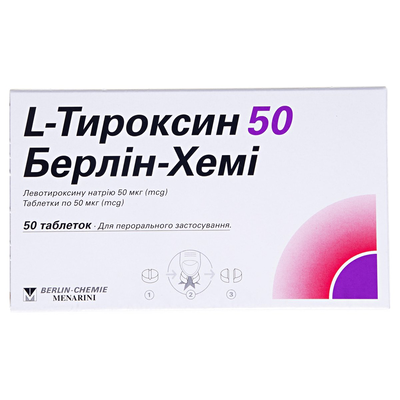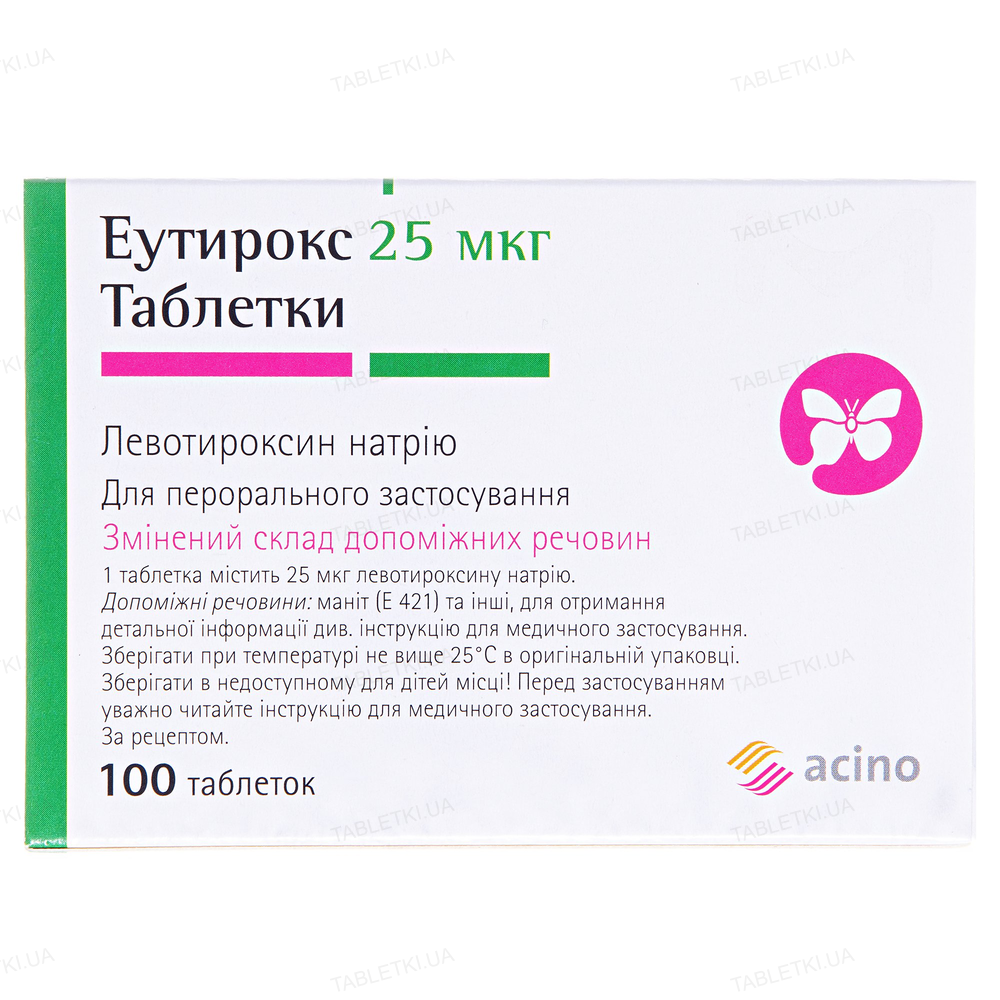
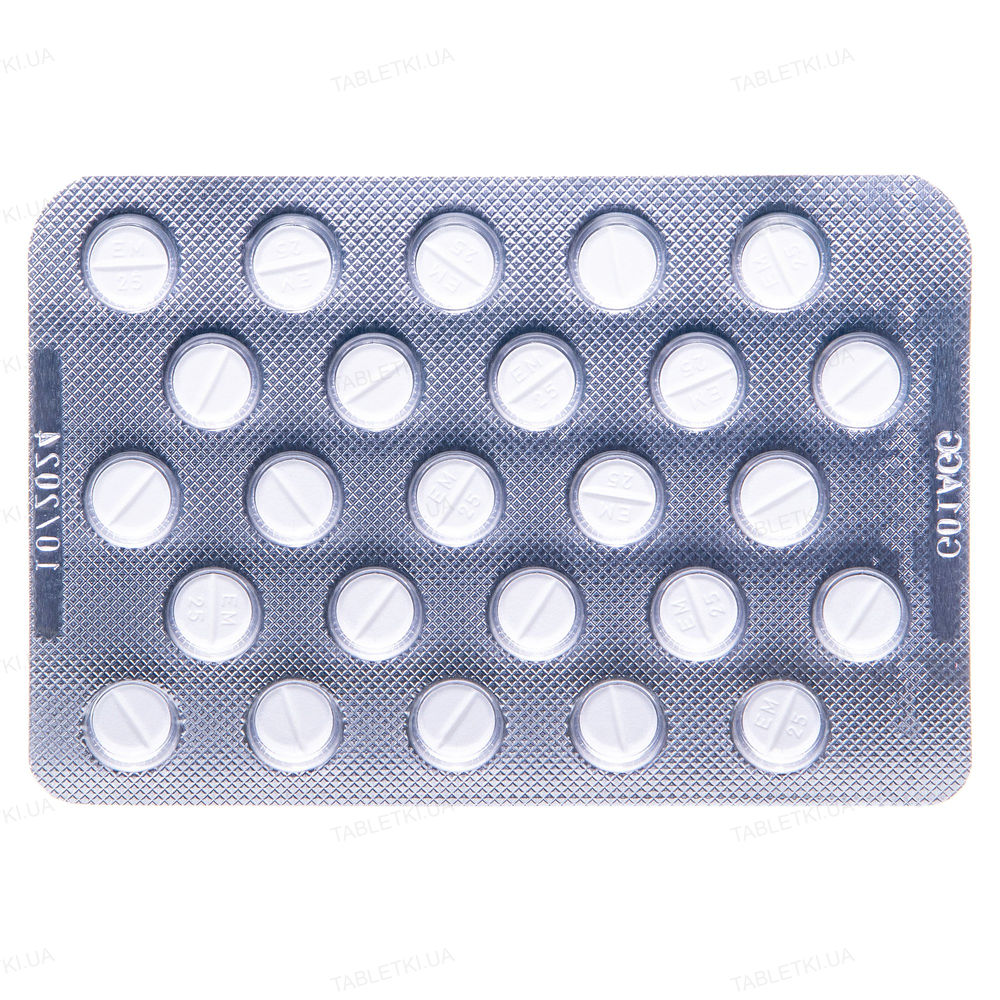
Eutirox 25 mcg tablets, No. 100 (25 x 4)
Sosa
Active ingredient: levothyroxine sodium;
1 tablet contains 25 mcg, 50 mcg, 75 mcg, 100 mcg, 125 mcg, or 150 mcg of levothyroxine sodium;
Excipients: mannitol (E 421); corn starch; gelatin; croscarmellose sodium; anhydrous citric acid; magnesium stearate.
Dosage Form
Tablets.
Main physical and chemical properties: nearly white, round, flat on both sides, with beveled edges, a score line on both sides, and an engraving on one side reading “EM+dosage.”
Pharmacotherapeutic group
Hormonal preparations for systemic use (excluding sex hormones and insulin). Preparations for the treatment of thyroid disorders. Thyroid preparations. Levothyroxine sodium. ATX code H0ZA A01.
Pharmacological Properties
Pharmacodynamics. The synthetic levothyroxine contained in Eutirox exhibits effects identical to those of the hormone secreted by the thyroid gland. It is converted to T3 (triiodothyronine) in peripheral organs and, like the endogenous hormone, acts on T3 receptors. There is no difference between the functions of the endogenous hormone and exogenous levothyroxine.
Pharmacokinetics. After oral administration, levothyroxine is almost completely absorbed in the upper small intestine. Depending on the dosage form, up to 80% of the dose is absorbed. Maximum concentration (Tmax) is reached in approximately 5–6 hours.
The drug’s clinical effect becomes apparent 3–5 days after oral administration. Levothyroxine rapidly binds to specific transport proteins in the blood (up to 99.97%). This binding is not covalent; therefore, the bound hormone in plasma is able to constantly and rapidly exchange with the free hormone fractions.
Due to its high protein-binding capacity, levothyroxine is not removed by hemodialysis or hemoperfusion.
The drug’s half-life is 7 days. In hyperthyroidism, this period is reduced to 3–4 days, and in hypothyroidism, it is prolonged to 9–10 days. The volume of distribution is 10–12 L. Approximately one-third of the total administered levothyroxine accumulates in the liver, where it rapidly interacts with levothyroxine in the blood serum. Thyroid hormones are metabolized primarily in the liver, kidneys, brain, and muscles. Metabolites are excreted in the urine and feces. The total metabolic clearance of levothyroxine is approximately 1.2 L of plasma per day.
Indications
Eutirox 25–200 mcg
- Treatment of benign euthyroid goiter.
- Prevention of recurrence following surgical treatment of euthyroid goiter, depending on hormone levels in the postoperative period.
- As replacement therapy for hypothyroidism.
- Suppressive therapy for thyroid cancer.
Eutirox 25 – 100 mcg
- As an adjunct to antithyroid therapy for hyperthyroidism.
Eutirox 100/150/200 mcg
- As a diagnostic tool when performing a thyroid suppression test.
Contraindications
- Hypersensitivity to any component of the drug.
- Adrenal insufficiency, pituitary insufficiency, or untreated thyrotoxicosis.
- Acute myocardial infarction, acute myocarditis, acute pancarditis.
- Combination therapy with levothyroxine and antithyroid drugs is not indicated during pregnancy (see the section “Use During Pregnancy or Lactation”).
Drug Interactions and Other Interactions
Hypoglycemic agents. Levothyroxine may reduce the effect of hypoglycemic agents. It is recommended to monitor blood glucose levels frequently at the start of thyroid hormone therapy and, if necessary, adjust the dose of hypoglycemic agents.
Coumarin derivatives. Levothyroxine potentiates the effects of anticoagulants by displacing them from plasma protein binding, which increases the risk of hemorrhages, such as hemorrhages in the spinal cord and brain or gastrointestinal bleeding, especially in the elderly. Therefore, laboratory monitoring of blood coagulation parameters should be performed regularly at the start of and during concomitant therapy, and the daily dose of anticoagulants should be adjusted as necessary.
Protease inhibitors (e.g., ritonavir, indinavir, lopinavir) may interfere with the action of levothyroxine. Careful monitoring of thyroid hormone levels is required. If necessary, the levothyroxine dose should be adjusted.
Phenytoin may interfere with the action of levothyroxine by displacing it from plasma protein binding, leading to increased levels of free thyroxine (fT4) and free triiodothyronine (fT3). On the other hand, phenytoin increases the hepatic metabolism of levothyroxine. Close monitoring of thyroid hormone levels is recommended.
Cholestyramine, colestipol. Taking ion-exchange resins, such as cholestyramine and colestipol, inhibits the absorption of levothyroxine sodium. Therefore, levothyroxine sodium should be taken 4–5 hours before taking such medications.
Medications containing aluminum, iron, and calcium salts. According to data cited in the relevant literature, medications containing aluminum (antacids, sucralfate) may potentially reduce the effect of levothyroxine. Therefore, levothyroxine should be taken at least 2 hours before taking medications containing aluminum. This also applies to medications containing iron and calcium salts.
Salicylates, dicoumarol, furosemide in high doses (250 mg), clofibrate, and other substances may displace levothyroxine sodium from plasma protein binding, leading to an increase in the fT4 fraction.
Proton pump inhibitors (PPIs): Concomitant use with PPIs may reduce the absorption of thyroid hormones due to an increase in intragastric pH caused by PPIs.
Regular monitoring of thyroid function and clinical observation are recommended, with a possible increase in the dose of thyroid hormones.
Orlistat. Concomitant use of orlistat and levothyroxine may lead to the development of hypothyroidism and/or worsening of hypothyroidism control. This may be caused by reduced absorption of iodine salts and/or levothyroxine.
Sevelemere may reduce the absorption of levothyroxine. Therefore, it is recommended to monitor changes in thyroid function tests at the beginning and end of concomitant treatment. If necessary, the levothyroxine dose should be adjusted. Tyrosine kinase inhibitors (e.g., imatinib, sunitinib) may reduce the effectiveness of levothyroxine. Therefore, it is recommended to monitor changes in thyroid function tests at the beginning and end of concomitant treatment. If necessary, the levothyroxine dose should be adjusted.
Propylthiouracil, glucocorticoids, beta-blockers, amiodarone, and iodine-containing contrast agents inhibit the peripheral conversion of T4 to T3. Due to its high iodine content, amiodarone may contribute to the development of both hyperthyroidism and hypothyroidism. The drug should be prescribed with particular caution to patients with nodular goiter of unknown etiology.
Sertraline and chloroquine/proguanil reduce the effectiveness of levothyroxine and increase serum TSH levels.
Drug-induced enzymes (barbiturates, carbamazepine) may increase the hepatic clearance of levothyroxine.
Estrogens. Women taking estrogen-containing contraceptives, as well as postmenopausal women taking hormone replacement therapy, may require higher doses of levothyroxine.
Products containing soy may inhibit the absorption of levothyroxine in the intestine. Therefore, the dose of Eutirox should be adjusted, especially at the start of and after discontinuing soy supplements.
Special Considerations
Before starting treatment with thyroid hormones or performing thyroid suppression tests, conditions such as coronary insufficiency, angina, atherosclerosis, hypertension, and pituitary insufficiency. Thyroid functional autonomy must also be ruled out or the condition must be treated prior to thyroid hormone therapy.
In cases of adrenal cortex dysfunction, appropriate replacement therapy should be administered prior to initiating levothyroxine therapy to prevent acute adrenal insufficiency (see the “Contraindications” section).
Levothyroxine therapy in patients at risk of developing psychotic disorders should be initiated at low doses, with the dosage gradually increased at the start of therapy. It is recommended to monitor the patient’s condition. If psychotic disorders develop, consider adjusting the levothyroxine dose.
Even mild manifestations of hyperthyroidism caused by the drug should be avoided in patients with coronary insufficiency, heart failure, or tachyarrhythmia. Thyroid hormone levels must be monitored regularly when treating such patients.
If secondary hypothyroidism develops, the cause should be identified before initiating replacement therapy. If necessary, a course of replacement therapy should be administered to compensate for adrenal insufficiency.
If functional autonomy of the thyroid gland is suspected, TSH levels should be determined or a thyroid scintigraphy performed before starting treatment with this medication.
When initiating levothyroxine therapy in preterm newborns with very low birth weight, hemodynamic parameters should be monitored, as circulatory disturbances may occur due to immature adrenal function.
Postmenopausal women with hypothyroidism and an increased risk of developing osteoporosis should avoid very high serum levels of levothyroxine that exceed physiological levels. Therefore, laboratory parameters of thyroid function must be closely monitored.
Levothyroxine should not be prescribed to patients with hyperthyroidism while they are undergoing antithyroid therapy for the treatment of hyperthyroidism.
Thyroid hormones should not be used for weight loss. Administration of levothyroxine does not result in weight loss in patients with euthyroid conditions. Higher doses may lead to serious or even life-threatening adverse reactions. High-dose levothyroxine should not be combined with certain substances intended for weight loss (e.g., sympathomimetics) (see the “Overdose” section).
If it is necessary to switch from one levothyroxine-containing medication to another, close monitoring—including clinical and laboratory monitoring—should be conducted during the transition period due to the potential risk of thyroid dysfunction. Some patients may require a dose adjustment.
Concomitant use of orlistat and levothyroxine may lead to the development of hypothyroidism and/or impaired control of hypothyroidism (see the “Interactions with Other Medications and Other Forms of Interaction” section). Patients taking levothyroxine should consult their doctor before starting, stopping, or changing treatment with orlistat, as orlistat and levothyroxine should be taken at different times, and the levothyroxine dose must be adjusted. It is recommended to monitor patients’ serum hormone levels thereafter.
Use with caution in patients with diabetes mellitus and in patients taking anticoagulants (see the section “Interactions with Other Medications and Other Forms of Interaction”).
This medication contains less than 1 mmol of sodium (23 mg) per tablet, i.e., it is essentially sodium-free.
Pregnancy and lactation.
Treatment with this medication, prescribed for hypothyroidism, should be continued during pregnancy or lactation. An increase in the dose may be necessary during pregnancy. Since serum TSH levels may rise as early as the 4th week of pregnancy, pregnant women taking levothyroxine should have their TSH levels checked during each trimester. Serum TSH levels in pregnant women should fall within the appropriate ranges established for each trimester. To correct elevated serum TSH levels, the dose of levothyroxine should be increased. Since postnatal TSH levels correspond to pre-conception levels, the levothyroxine dose should be adjusted immediately after delivery to match the pre-pregnancy dose. The target serum TSH level should be established 6–8 weeks after delivery.
Pregnancy
There are no data on teratogenicity and/or fetotoxicity when the drug is taken at recommended therapeutic doses. Taking very high doses of levothyroxine during pregnancy may adversely affect the fetus and the child’s postnatal development.
Combination therapy with levothyroxine and antithyroid drugs during pregnancy is not indicated for the treatment of hyperthyroidism, as this combination requires higher doses of antithyroid drugs, which can cross the placenta and cause hypothyroidism in the newborn. A thyroid suppression test is not performed during pregnancy, as the use of radioactive substances during pregnancy is contraindicated.
Breastfeeding
Levothyroxine passes into breast milk; however, when the drug is used at the recommended therapeutic doses, its concentration in breast milk is insufficient to cause hyperthyroidism or suppress TSH secretion in the infant.
Effects on the ability to drive and operate machinery.
There are no data on the possible effect on the ability to drive a car or operate complex machinery. However, since levothyroxine is identical in its action to the natural thyroid hormone, Eutirox is not expected to affect reaction time while driving or operating other machinery.
Directions for Use and Dosage
Dosage.
To treat each individual patient according to their specific needs, Eutirox is available in tablets containing 25 mcg to 150 mcg of levothyroxine sodium. Therefore, patients are usually prescribed only 1 tablet per day.
Dosage information is provided for reference only.
The daily dose is determined individually, based on laboratory test results and the clinical presentation of the disease.
Since elevated T4 and free T4 levels have been observed in some patients during levothyroxine therapy, the baseline serum concentration of thyroid-stimulating hormone is a more reliable indicator for further dose adjustment.
Thyroid hormone therapy should be initiated at a low dose and gradually increased (every 2–4 weeks) to the required therapeutic dose.
In elderly patients, patients with ischemic heart disease, and patients with severe or long-standing hypothyroidism, treatment should be initiated with particular caution, starting with low doses (12.5 μg per day); the dose should be increased to a maintenance dose at longer intervals (gradually by 12.5 mcg every 2 weeks), with regular monitoring of thyroid hormone levels. It should be noted that prescribing doses below the optimal levels required for adequate replacement therapy does not result in complete correction of TSH levels.
Experience shows that lower doses are sufficient for patients with low body weight and for patients with large nodular goiters.
| Indications | Recommended Doses
(levothyroxine sodium, mcg/day) |
|||||||||||||||
| Treatment of benign euthyroid goiter | 75–200 | |||||||||||||||
| Prevention of recurrence following surgical treatment of euthyroid goiter | 75–200 | |||||||||||||||
For replacement therapy of hypothyroidism in adults:
|
25–50
100–200 |
|||||||||||||||
For replacement therapy of hypothyroidism in children:
|
12.5–50
Body surface area 100–150 μg/m² |
|||||||||||||||
| As an adjunct to antithyroid therapy for hyperthyroidism | 50–100 | |||||||||||||||
| Suppressive therapy for thyroid cancer | 150–300 | |||||||||||||||
| As a diagnostic tool in the thyroid suppression test |
|
The daily dose may be taken all at once.
The daily dose of the medication should be taken in the morning on an empty stomach, 30 minutes before a meal, with a small amount of water (half a glass of water).
Eutirox is used for life as replacement therapy for hypothyroidism, after surgery (strumaectomy or thyroidectomy), as well as to prevent recurrence after removal of an euthyroid goiter. Comprehensive therapy with thyreostatics should be prescribed after achieving a euthyroid state.
For the benign form of euthyroid goiter, the duration of treatment ranges from 6 months to 2 years. If the condition does not improve after treatment, surgical intervention or radioactive iodine therapy should be prescribed.
Children.
For newborns and infants with congenital hypothyroidism, where a rapid therapeutic effect is necessary, the recommended initial dose is 10 to 15 μg/kg of body weight per day for the first 3 months. After that, the dose is adjusted individually, depending on clinical parameters and thyroid-stimulating hormone (TSH) levels.
For infants, the daily dose should be administered in a single dose 30 minutes before the first feeding. Dissolve the tablet in water to form a suspension, which should be prepared immediately before administration and used after adding a small amount of liquid.
Overdose
An increase in T3 (triiodothyronine) levels is a reliable indicator of drug overdose, more so than an increase in T4 and free T4 (FT4) levels in blood serum.
An overdose may result in symptoms characteristic of increased metabolism (see the “Side Effects” section).
In the event of an overdose, discontinue the medication and perform laboratory tests.
If symptoms manifest as pronounced beta-sympathomimetic effects, such as tachycardia, restlessness, nervous agitation, or hyperkinesia, beta-blockers should be administered. If the dose is significantly exceeded, plasmapheresis is recommended.
In some cases, patients prone to seizures may develop seizures if the individually tolerable dose of the drug is exceeded.
An overdose of levothyroxine can cause symptoms of hyperthyroidism and lead to acute psychosis, especially in patients at risk of developing psychotic disorders.
There have been several reports of sudden coronary death in patients who have abused (exceeded the recommended dosage) levothyroxine for many years.
Side Effects
Clinical symptoms of hyperthyroidism may occur in the event of an overdose, when the dose exceeds the patient’s individual tolerance for levothyroxine, or if the dose is increased sharply at the start of treatment. Symptoms: Cardiovascular disorders: cardiac arrhythmias (atrial fibrillation, extrasystoles), tachycardia, angina, palpitations, hot flashes; nervous system disorders: headache, insomnia, anxiety, pseudotumor cerebri, tremor; gastrointestinal disorders: vomiting, diarrhea, weight loss; skin and musculoskeletal disorders: increased sweating, muscle weakness, and cramps; general disorders: fever, menstrual irregularities.
In such cases, the daily dose of the medication should be reduced or treatment should be interrupted for several days. Once the side effects have subsided, treatment may be resumed.
In cases of hypersensitivity to the drug’s components, allergic reactions may occur on the skin (rash, hives) and in the respiratory tract, including skin rashes, itching, hives, and shortness of breath. Cases of angioedema have been reported.
Shelf life
3 years.
Storage conditions
Store at a temperature not exceeding 25 °C in the original packaging. Keep out of reach of children!
Packaging
25 tablets per blister pack. 2 or 4 blister packs per cardboard box.
Manufacturer
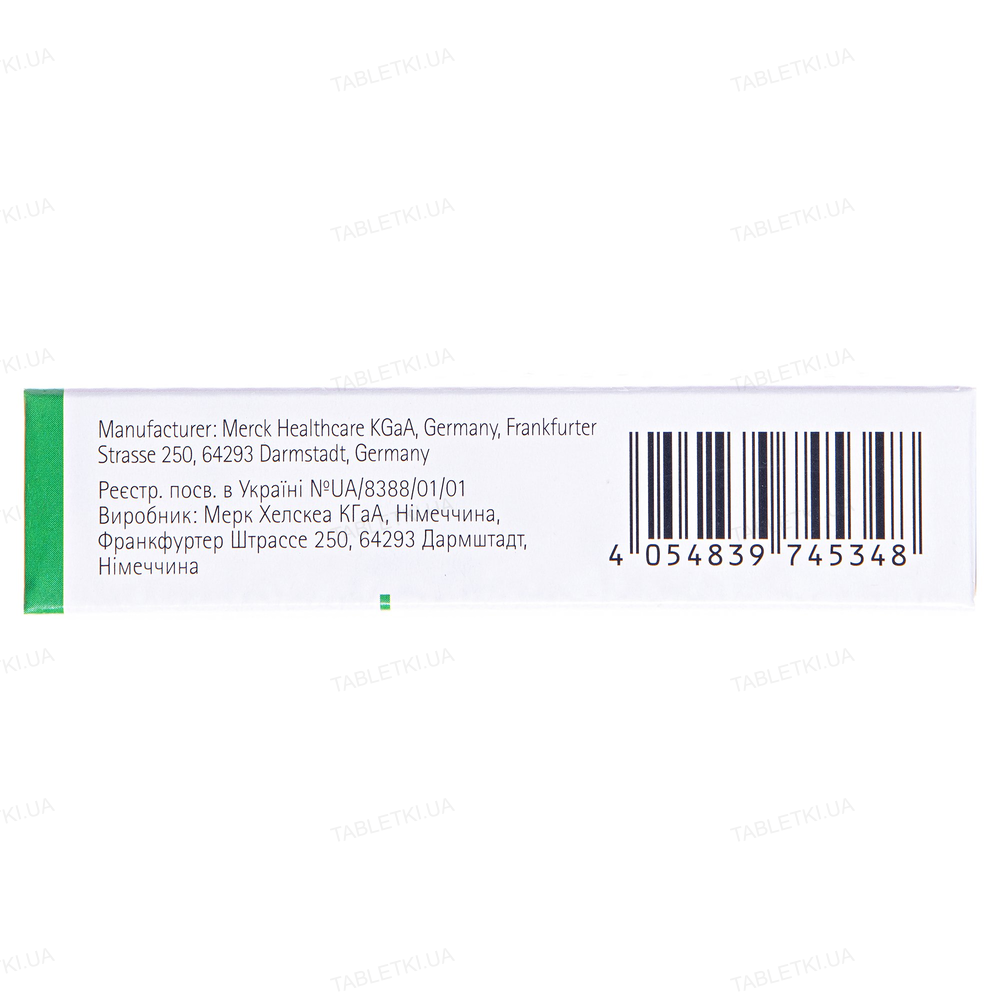
Merck Healthcare KGaA, Germany.
Address
Frankfurter Strasse 250, 64293 Darmstadt, Germany.