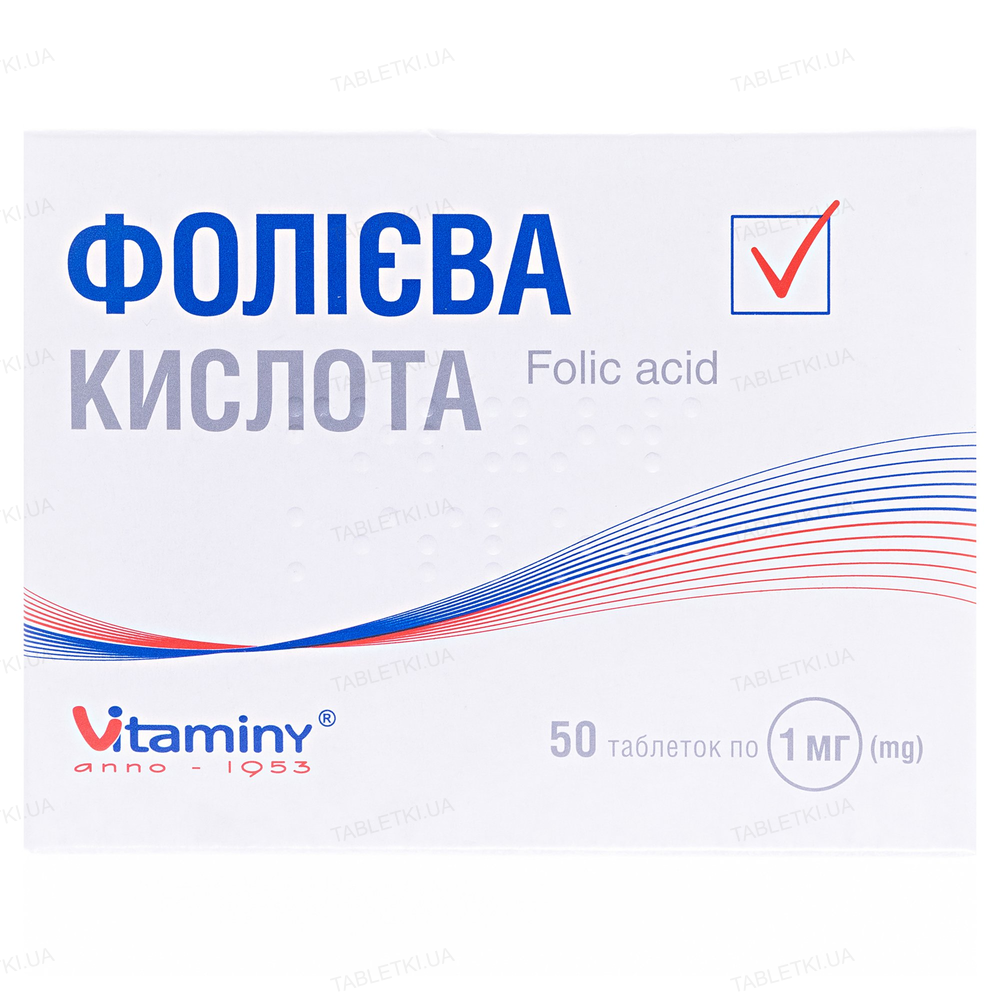
Folic Acid Tablets, 1 mg, No. 50 (10 x 5)
Ingredients
Active ingredient: folic acid;
1 tablet contains 1 mg of folic acid;
excipients: glucose monohydrate, stearic acid.
Dosage Form
Tablets.
Main physical and chemical properties: round tablets with a flat surface and a beveled edge, light yellow in color. Variations in color and minor speckles are permissible.
Pharmacotherapeutic group
Antianemic agents. Folic acid and its derivatives.
ATC code B0ZV B01.
Pharmacological Properties
Pharmacodynamics.
Folic acid belongs to the B-complex vitamins and is synthesized in the human body by the intestinal microflora. After administration, folic acid is reduced to tetrahydrofolic acid, which acts as a coenzyme involved in various metabolic processes. It is essential for the normal development of other blood cells, including the formation and maturation of megaloblasts and the formation of normoblasts. In combination with vitamin B12 (cyanocobalamin), it stimulates the process of hematopoiesis, particularly erythropoiesis. It participates in the synthesis of amino acids (including methionine, serine, glycine, and histidine), nucleic acids, purines, and pyrimidines, and is involved in choline metabolism.
During pregnancy, folic acid protects the body from the effects of teratogenic factors.
A folic acid deficiency leads to megaloblastic anemia; in pregnant women, this can cause congenital defects in the fetus (neural tube defects, hydrocephalus, etc.). The most significant consequence of folic acid deficiency is a reduced ability to repair damaged tissues.
Pharmacokinetics.
After oral administration, folic acid is well and completely absorbed from the gastrointestinal tract, primarily in the upper duodenum and the proximal small intestine. It is almost completely bound to plasma proteins. Approximately 87% of the folates entering the bloodstream are found in red blood cells, and 10–13% are found in blood serum. From the blood, folates enter the liver, where they are activated by the enzyme dihydrofolate reductase, converting to tetrahydrofolic acid. Peak blood concentration is reached within 30–60 minutes. It is excreted by the kidneys primarily as metabolites; if the dose taken significantly exceeds the daily requirement for folic acid, the kidneys begin to excrete the vitamin in its unchanged form. It is excreted in the urine via glomerular filtration; 5 mg of orally administered folic acid is excreted from the body within 5 hours. It is removed from the bloodstream during hemodialysis.
Indications
Macrocytic anemias, particularly megaloblastic anemias in pregnant women; for the treatment of sprue to normalize hematopoiesis and eliminate or reduce the clinical manifestations of the disease. Anemias and leukopenias caused by ionizing radiation, chemical substances, including medications; anemias resulting from resection of the stomach or part of the intestine, megaloblastic anemia caused by intestinal tuberculosis and chronic gastroenteritis (indicated even in the absence of anemia in these conditions), pernicious anemia, and pellagra.
Folic acid deficiency associated with an unbalanced or inadequate diet.
As an adjunctive treatment for depression and anxiety disorders; in the treatment of cervical dysplasia.
Contraindications
Hypersensitivity to folic acid or to any component of the drug; vitamin B12 deficiency; malignant neoplasms; malignant anemias; untreated cobalamin deficiency.
Interactions with Other Medications and Other Types of Interactions
In patients with folate deficiency, the use of folic acid may reduce plasma levels of phenobarbital, phenytoin, and primidone and cause a seizure.
Oral contraceptives, ethanol, sulfasalazine, cycloserine, glutethimide, and methotrexate may affect folate metabolism.
Acetylsalicylic acid may increase the elimination of folic acid. Folates enhance the efficacy of lithium. Nitrous oxide may cause acute folic acid deficiency.
Folic acid deficiency may be caused by medications such as antituberculosis drugs and folic acid antagonists, including pyrimethamine, triamterene, and trimethoprim.
The absorption of folic acid is reduced when taken concurrently with analgesics, anticonvulsants, antacids, chloramphenicol, neomycin, polymyxins, antibiotics, sulfonamides, and cytostatics.
Folic acid may reduce the absorption of zinc in the intestine.
It should not be used together with mineral acids, alkaline substances, or reducing agents, as this leads to the inactivation of folic acid.
Avoid concomitant use with fluorouracil. Antacids containing aluminum or magnesium may reduce the absorption of folic acid; therefore, patients should be advised to take antacids 2 hours after taking folic acid.
Folic acid increases the metabolism of phenytoin. Reduced or altered absorption may occur with the concurrent use of cholestyramine and folic acid. Therefore, the medication should be taken 1 hour before or 4–6 hours after taking cholestyramine.
Special Considerations for Use
Use this medication with caution in patients with anemia of unknown etiology, as folic acid may interfere with the diagnosis of pernicious anemia by improving the hematological manifestations of the disease, thereby allowing neurological complications to progress.
This medication is not indicated for healthy pregnant women, for whom the lowest doses may be recommended; however, it must be prescribed to pregnant women with folic acid deficiency or to women at risk of recurrent neural tube defects.
Long-term use of folic acid (especially in high doses) is not recommended due to a possible decrease in blood levels of cyanocobalamin (vitamin B12).
Regular monitoring of blood parameters is necessary during treatment with folic acid.
In elderly patients, a cobaltamine absorption test must be performed before starting long-term therapy.
This medication contains glucose, which should be taken into account by patients with diabetes mellitus and those with glucose-galactose malabsorption syndrome.
Folic acid should be used in combination with other medications: for pernicious anemia—only in combination with cyanocobalamin, since folic acid, while stimulating hematopoiesis, does not prevent the development of neurological complications (e.g., funicular myelosis); for sprue—in combination with ascorbic acid, cyanocobalamin, and hemotherapy.
Use during pregnancy or breastfeeding.
Folic acid deficiency, or impaired folic acid metabolism, is associated with the occurrence of birth defects and certain neural tube defects. Interference with folic acid metabolism or folic acid deficiency caused by certain medications—such as anticonvulsants and anticancer drugs—during early pregnancy can lead to congenital anomalies. A deficiency of this vitamin or its metabolites may also contribute to spontaneous abortion and intrauterine growth restriction.
For therapeutic purposes, the drug may be used as prescribed by a physician, in the doses and for the duration specified in the instructions.
Effect on reaction time when operating motor vehicles or other machinery.
There are no data on the adverse effects of folic acid on the ability to operate machinery.
Directions for Use and Dosage
Take folic acid orally after meals.
The dosage and duration of treatment are determined by the doctor depending on the nature and course of the disease.
For therapeutic purposes, the drug is prescribed to adults at a dose of 1–2 mg (1–2 tablets) 1–3 times daily.
To prevent folic acid deficiency associated with an unbalanced or inadequate diet, the dose is 1–5 mg (1–5 tablets) per day. The course of treatment is 20–30 days.
It is recommended to repeat the course of treatment after 1 month.
For children aged 3 years and older, depending on the child’s age and the nature of the condition, the medication should be prescribed at a dose of 1 mg (1 tablet) 1–2 times daily. The maximum daily dose is 2 mg (2 tablets).
The usual course of treatment is 20–30 days.
For macrocytic anemia, the drug should be prescribed to adults at a dose of 5 mg 2–3 times daily for 10–15 days.
For pregnant women with low hemoglobin levels in the first trimester, folic acid should be prescribed at a dose of 4 mg per day in combination with iron supplements for 3 months. Afterward, the dose of folic acid should be reduced to 4 mg once a week.
Children.
The use of this medication is contraindicated in children under 3 years of age.
Overdose
Symptoms: An overdose of folic acid may mask a vitamin B12 deficiency.
Prolonged and significant exceedance of the recommended doses may cause a dangerous accumulation of folacin crystals, leading to systemic toxicity and an increase in side effects.
Treatment: discontinuation of the drug, symptomatic therapy.
Side Effects
The drug is well tolerated.
- Gastrointestinal tract: rarely—nausea, vomiting, abdominal distension, flatulence, bitter taste; very rarely—anorexia;
- Immune system: rare—allergic reactions, including skin rash, erythema, urticaria, itching, and respiratory distress due to bronchospasm, hypotension, anaphylactic reactions;
- Central nervous system: fever, sleep disturbances, convulsions;
- Urinary system: hypertrophy of epithelial cells in the renal tubules and impaired renal function.
Shelf life
3 years.
Storage conditions
Store in the original packaging at a temperature not exceeding 25 °C.
Keep out of reach of children.
Packaging
10 tablets per blister pack. 3 or 5 blister packs per package.
25 tablets per blister pack. 2 blister packs per box.
Dispensing Category
Available without a prescription.
Manufacturer
JSC “VITAMINS.”
Address
Ukraine, 20300, Cherkasy Oblast, Uman, 31 Uspenska St.
Applicant
JSC “VITAMINY.”