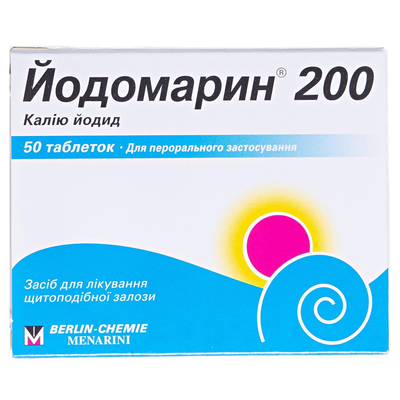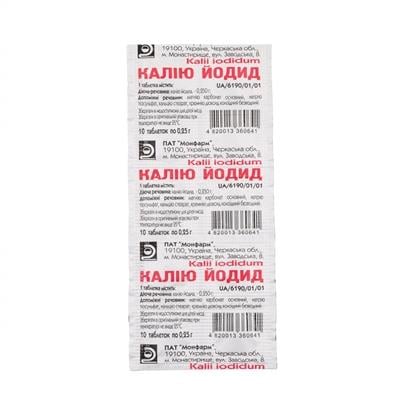
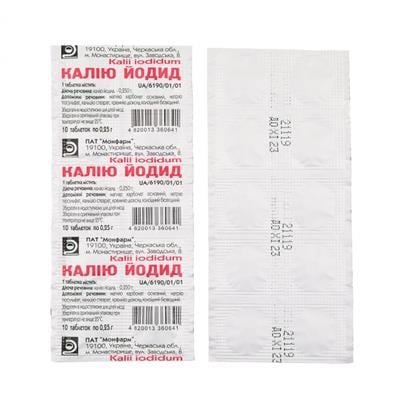
Potassium Iodide Tablets, 0.25 g each, No. 10
Ingredients
Active ingredient: Potassium iodide;
1 tablet contains 250 mg (0.25 g) of potassium iodide;
Excipients: basic magnesium carbonate, sodium thiosulfate, calcium stearate, colloidal anhydrous silicon dioxide.
Dosage Form
Tablets.
Main physical and chemical properties: white tablets with a flat surface, beveled edges, and a score line; speckles and marbling are permissible.
Pharmacotherapeutic group
Iodine preparations used in thyroid disorders. ATC code H0ZS A.
Pharmacological properties
Pharmacodynamics.
When iodides enter the epithelial cells of the thyroid follicles, under the influence of the enzyme iodide peroxidase, iodine is oxidized to form elemental iodine, which is incorporated into the tyrosine molecule. In this process, some of the tyrosine radicals in thyroglobulin are iodinated. The iodinated tyrosine radicals condense into thyrotrophs, the main ones being thyroxine (T4) and triiodothyronine (T3). The resulting complex of thyroxine and thyroglobulin is secreted as a stored form of thyroid hormone into the follicular colloid and remains in this state for several days or weeks. In the event of iodine deficiency, this process is disrupted. Potassium iodide compensates for this deficiency and helps restore impaired thyroid hormone synthesis.
An important property of potassium iodide is its ability to prevent the accumulation of radioactive iodine in the thyroid gland and to protect it from the effects of radiation.
Pharmacokinetics.
When taken orally, it is rapidly absorbed from the gastrointestinal tract. It is widely distributed throughout all tissues and body fluids. It is excreted primarily by the kidneys.
Indications
Prevention during nuclear accidents to avoid radiation exposure.
Contraindications
Pulmonary tuberculosis, nephritis, nephrosis, furunculosis, acne, pyoderma, hemorrhagic diathesis, urticaria, hypersensitivity to iodine, hypersensitivity to any of the drug’s components. Severe hyperthyroidism, latent hyperthyroidism, thyroid hyperfunction, toxic adenoma, nodular or diffuse toxic goiter, dermatitis herpetiformis (Dühring’s disease).
Interactions with Other Medications and Other Types of Interactions
Concomitant high-dose therapy with iodine and potassium-sparing diuretics may lead to hyperkalemia; concomitant use with lithium-containing medications may lead to goiter and hypothyroidism. Perchlorate and thiocyanate competitively inhibit iodine uptake by the thyroid gland, while TSH stimulates it.
Quinidine: Concomitant use enhances the cardiac effects of quinidine due to increased plasma potassium concentrations.
Plant alkaloids and heavy metal salts: Concomitant use may lead to the formation of an insoluble precipitate and impair iodine absorption.
Special Considerations for Use
Hyperkalemia may develop during therapy in patients with renal insufficiency.
Use during pregnancy or breastfeeding.
Do not use this medication during pregnancy or while breastfeeding, except in cases where there is a risk of radioactive iodine isotopes entering the body. In such cases, the decision to use the medication is made by the physician, and potassium perchlorate should be prescribed concurrently with potassium iodide. Breastfeeding must be discontinued if daily doses exceed 300 μg of iodine.
Effect on reaction time when operating motor vehicles or other machinery.
No studies have been conducted to investigate the effect on the ability to drive vehicles or operate machinery.
Dosage and Administration
If there is a risk of radioactive iodine entering the body, to protect the thyroid gland from radiation exposure, administer 125 mg (1/2 tablet) once daily to adults and children aged 2 years and older. Crush half a tablet and administer it with a small amount of sweet tea. Continue treatment daily until the risk of radioactive iodine entering the body has passed.
Children.
Use in children under 2 years of age is not recommended.
Overdose
In cases of acute iodine poisoning, reflex vomiting, abdominal pain, diarrhea (sometimes bloody), and brown discoloration of the mucous membranes may occur. Dehydration and shock may follow. Esophageal stenosis is rarely observed. Chronic overdose leads to a condition known as iodism: a metallic taste in the mouth, swelling, and inflammation of the mucous membranes (rhinitis, conjunctivitis, gastroenteritis, bronchitis); acne; dermatitis; swelling and pain in the salivary glands; hemorrhages; fever; irritability.
With prolonged use of high doses of the drug (more than 300 mcg per day), iodine-induced hyperthyroidism may develop (especially in elderly patients with nodular goiter or toxic adenoma).
In rare cases, goiter and hypothyroidism may develop during therapy with high doses of iodine (more than 1 mg/day).
Treatment. First aid consists of gastric lavage and administration of activated charcoal. Hemodialysis can be used to reduce plasma iodine levels.
Side Effects
Allergic reactions: manifestations of iodism: swelling of the nasal mucosa, hives, angioedema, anaphylactic shock, skin rashes, itching.
Hematologic system: eosinophilia.
Cardiovascular system: tachycardia.
Central nervous system: irritability, sleep disturbances, increased sweating.
Gastrointestinal system: diarrhea (in patients aged 40 years and older).
Other: In rare cases, goiter and hypothyroidism may develop with high-dose therapy.
If any adverse effects occur, the patient should consult a doctor.
Shelf life
4 years.
Storage conditions
Store in the original packaging at a temperature not exceeding 25 °C.
Keep out of reach of children.
Packaging
10 tablets per strip, No. 150 (15 × 10) strips.
Dispensing Category
By prescription.
Manufacturer
Monfarm PJSC.