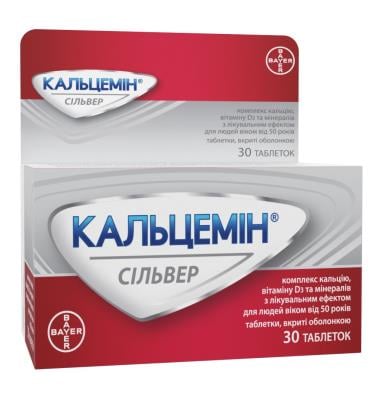
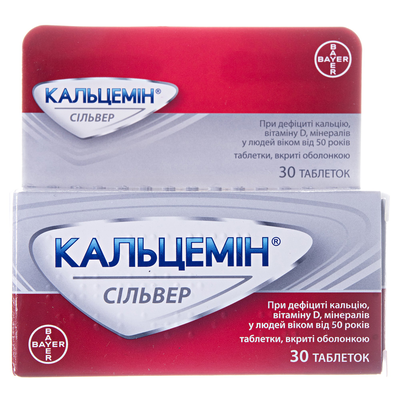
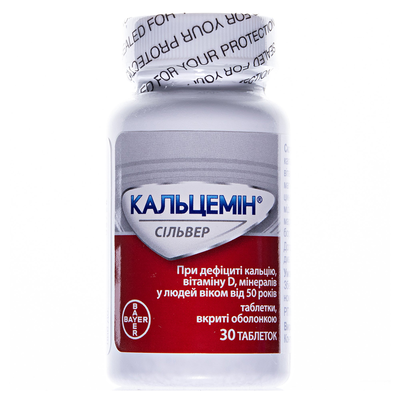
Calcemin Silver tablets, coated, No. 30 per bottle.
Ingredients
Active ingredients:
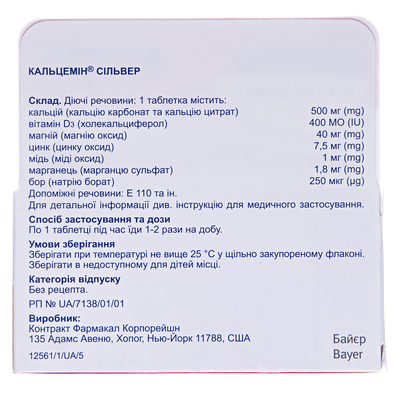
1 tablet contains: calcium (calcium carbonate, calcium citrate) 500 mg, vitamin D3 (cholecalciferol) 400 IU, magnesium (magnesium oxide) 40 mg, zinc (zinc oxide) 7.5 mg, copper (copper oxide) 1 mg, manganese (manganese sulfate) 1.8 mg, boron (sodium borate) 250 mcg;
excipients: croscarmellose sodium, acacia, maltodextrin, microcrystalline cellulose, hypromellose, soy polysaccharide, stearic acid, titanium dioxide (E 171), sodium lauryl sulfate, magnesium silicate, triacetin, mineral oil, magnesium stearate, indigo carmine (E 132), sunset yellow FCF (E 110).
Dosage Form
Film-coated tablets.
Main physical and chemical properties: oval, light gray film-coated tablets with a cross-shaped score line on one side.
Pharmacotherapeutic group
Calcium, combinations with vitamin D and/or other drugs. ATC code A12A X.
Pharmacological properties
Pharmacodynamics.
Calcium is an important structural component of bone tissue. Calcium supplementation corrects dietary calcium deficiency, especially in cases of increased calcium requirements or reduced calcium absorption.
Calcium carbonate is the salt with the highest content of elemental calcium. Calcium citrate increases the bioavailability of the drug in patients with low gastric acidity, achlorhydria, or those taking H2-histamine receptor blockers; reduces the risk of urinary tract stone formation with long-term use and has high antiresorptive potential due to the inhibition of parathyroid hormone.
Vitamin D is extremely important for the absorption of calcium, phosphate, and magnesium in the small intestine. It regulates the levels of these elements in body fluids and helps maintain normal blood calcium levels, as well as participating in the synthesis of organic compounds and skeletal calcification.
Magnesium is involved in bone metabolism, prevents bone demineralization, and inhibits calcium deposition in the walls of blood vessels, heart valves, muscles, and the urinary tract.
Zinc acts as a cofactor for more than 200 enzymes and influences the process of bone remodeling.
Copper is involved in the formation of the most important connective tissue proteins—collagen and elastin—which form the matrix of bone and cartilage tissue.
Manganese normalizes the synthesis of glycosaminoglycans, which are essential for the formation of bone and cartilage tissue. It duplicates the calcium-retaining functions of vitamin D.
Boron regulates the activity of parathyroid hormone and, through it, the metabolism of calcium, magnesium, phosphorus, and cholecalciferol.
Indications
Comprehensive treatment of osteoporosis of various origins: menopausal, senile, idiopathic, steroid-induced, and osteoporosis caused by prolonged immobilization and its complications (fractures, etc.), as well as severe dental and periodontal diseases. Recommended as a foundation therapy when using antiresorptive agents (hormone replacement therapy, calcitonin, bisphosphonates) and bone-forming stimulants. To reduce the risk of fractures in people aged 50 and older with deficiencies in calcium, vitamin D, and minerals in their diet.
Contraindications
Hypersensitivity to any of the drug’s components (allergic reactions); hypercalcemia and/or conditions leading to hypercalcemia (sarcoidosis, malignant neoplasms, and primary hyperthyroidism), severe hypercalciuria, impaired renal function, nephrolithiasis; vitamin D toxicity.
Drug Interactions and Other Interactions
Consult a doctor before using this medication in combination with other drugs.
Interactions with other medications.
Calcium may reduce the absorption of other medicinal substances by forming insoluble complexes in the gastrointestinal tract, including antibiotics (e.g., tetracyclines, quinolones), antiviral drugs, eltrombopag, and sodium fluoride. At the same time, calcium absorption may also be reduced. To prevent potential interactions, these medications should be taken at least 2 hours before or 4–6 hours after taking calcium, unless otherwise specified.
Interactions with protease inhibitors. Concomitant use of medications containing calcium or magnesium, including buffered medications, leads to a decrease in the plasma concentrations of all these compounds. Therefore, it is recommended to administer protease inhibitors 2 hours before or 1 hour after medications containing aluminum, calcium, or magnesium. Such effects have been observed with amprenavir, atazanavir, and tipranavir.
Levothyroxine should be taken at least 4 hours before or 4 hours after calcium, as calcium reduces its absorption, possibly through the formation of insoluble complexes.
Phosphates, bisphosphonates, and fluorides. Calcium supplements reduce the absorption of bisphosphonates; therefore, they should be taken at least 30 minutes before taking calcium, but it is preferable to take them at a different time or on a different day. Concomitant use with aluminum-containing antacids is not recommended due to reduced efficacy.
Eltrombopag. When taken with a high-fat breakfast containing 427 mg of calcium, a 59% reduction in plasma eltrombopag levels was observed; whereas a meal with a low calcium content (<50 mg) had no effect on plasma levels of eltrombopag. Foods high in calcium and antacids containing aluminum, calcium, and magnesium resulted in a significant reduction in systemic absorption.
Calcium and/or vitamin D. Thiazide diuretics reduce urinary calcium excretion. Due to the increased risk of hypercalcemia when used concomitantly with thiazide diuretics, serum calcium levels should be monitored regularly.
When used concomitantly with furosemide and other loop diuretics, renal calcium excretion increases.
Cardiac glycosides and calcium channel blockers. Hypercalcemia increases the risk of fatal arrhythmias when cardiac glycosides, such as digoxin, are used, and reduces the effectiveness of calcium channel blockers, such as verapamil, in atrial fibrillation. It is recommended to monitor serum calcium levels, the ECG, and the patient’s clinical condition. Glucocorticoids and hormonal contraceptives impair the absorption of calcium ions.
Vitamin D. Certain medications may reduce the absorption of vitamin D in the gastrointestinal tract. To minimize interactions, these medications and vitamin D should be taken at least 2 hours before or 4–6 hours after taking vitamin D. Such medications include: ion-exchange resins (e.g., cholestyramine), laxatives, and orlistat. Carbamazepine, phenytoin, or barbiturates increase the metabolism of vitamin D into its inactive metabolites and, thus, reduce its effect.
When Calcemine® Silver is taken concurrently with vitamin A, the toxicity of vitamin D3 is reduced.
Interactions of calcium with foods and supplements. Oxalic acid, found in spinach and rhubarb, and phytic acid, found in whole grains, can inhibit calcium absorption. Therefore, it is not recommended to consume calcium-containing foods within two hours of eating meals rich in oxalic and phytic acids.
Iron, zinc, magnesium. Calcium supplements may reduce the absorption of iron, zinc, and copper from food. For individuals at risk of iron, zinc, or magnesium deficiency, it is recommended to take calcium supplements before bedtime rather than with meals to prevent the inhibition of mineral absorption from food.
Fiber. Certain components of dietary fiber may reduce calcium absorption. Concomitant use of psyllium with calcium does not result in a significant reduction in calcium absorption.
Special Instructions for Use
Do not exceed the recommended dose. Calcemin® Silver should not be taken concurrently with other calcium or vitamin D supplements.
Overdose of calcium and vitamin D is associated with side effects, including hypercalcemia and hypercalciuria. Calcium and vitamin D should be used with caution to avoid exceeding a total daily dose of 2,500 mg of calcium and 4,000 IU of vitamin D, taking into account dietary intake (see the “Overdose” section).
Patients receiving other medications containing vitamin D and/or calcium, or any other medications, should consult a doctor before starting this medication.
During long-term treatment with medications containing calcium in combination with vitamin D, as well as in cases of mild or moderate renal insufficiency (including in elderly patients), serum levels of calcium, phosphate, and creatinine, as well as urinary levels of calcium and phosphate, must be monitored. If signs of hypercalcemia, impaired renal function, or calcium excretion exceeding 7.5 mmol/day (300 mg/day) appear, the dose should be reduced or the drug discontinued. In cases of impaired renal function and when used concomitantly with cardiac glycosides, calcium channel blockers, and/or thiazide diuretics, renal function should be monitored by measuring serum creatinine levels (see the section “Interactions with Other Medications and Other Types of Interactions”).
Combination products should be used with caution in immobilized patients due to an increased risk of hypercalcemia.
No dose adjustment is required for patients with impaired liver function. This medication should not be used in patients with impaired renal function, nephrolithiasis, or a predisposition to calcium deposits.
Use during pregnancy or breastfeeding.
During pregnancy and lactation, the daily dose should not exceed 1 film-coated Calcemine® Silver tablet.
During pregnancy and breastfeeding, the drug should be used only as indicated and under a doctor’s supervision. Use of the drug at the recommended doses is considered safe. The recommended doses should not be exceeded, as chronic overdose may be harmful to the fetus and newborn.
During pregnancy and lactation, the total daily dose—including dietary intake and supplements—should not exceed 2,500 mg of calcium and 4,000 IU of vitamin D.
In animals, a teratogenic effect has been observed following vitamin D overdose during pregnancy. There are no data to suggest a possible teratogenic effect in humans when vitamin D is used at recommended doses.
Hypercalcemia in a pregnant woman resulting from taking high doses of vitamin D has been associated with hypercalcemia in the fetus, which may lead to the development of adverse effects in the newborn, including suppression of parathyroid hormone, hypocalcemia, tetany, epileptic seizures, and aortic stenosis syndrome, symptoms of which may include retinopathy, delayed mental development, or growth disorders; it may also lead to the development of hypercalcemia in newborns.
Vitamin D and calcium are excreted in breast milk. This should be taken into account if the infant is receiving any products containing vitamin D and calcium.
Fertility. To date, there are no data indicating a possible adverse effect of vitamin D and/or calcium on human fertility.
Effect on the ability to drive or operate machinery. No effect on the ability to drive or operate machinery has been observed.
Dosage and Administration
Adults and children 12 years of age and older: 1 tablet with a meal 1–2 times daily. Take with a sufficient amount of water (200 mL). The maximum daily dose should not exceed 3 film-coated tablets. The duration of treatment is determined by the physician. Repeat courses of treatment may be administered if necessary.
Children. Not intended for use in children under 12 years of age.
Overdose
No cases of overdose have been observed when used at the recommended doses. The vast majority of reports of overdose are associated with the simultaneous use of high doses of single-ingredient or multivitamin preparations. In the event of accidental overdose, symptomatic treatment is recommended: gastric lavage, consumption of large amounts of fluid, and a low-calcium diet.
Long-term intake of calcium and vitamin D in excessive doses—exceeding 2,500 mg of calcium and 4,000 IU of vitamin D per day—may lead to toxic effects.
In patients with hypercalcemia or conditionswith hypercalcemia, renal insufficiency, and/or a predisposition to nephrolithiasis, toxic effects of calcium and vitamin D may occur even at lower doses.
Acute or prolonged overdose of calcium and vitamin D may cause hypervitaminosis D, hypercalcemia, hypercalciuria, and hyperphosphatemia, as well as increased calcium absorption. Consequences include renal failure, milk-alkali syndrome—particularly in patients with impaired renal function—and calcification of blood vessels and soft tissues, including calcinosis, which leads to nephrocalcinosis and nephrolithiasis, particularly in patients predisposed to nephrolithiasis.
Nonspecific initial symptoms, such as sudden onset of headache, muscle weakness, impaired consciousness, and gastrointestinal disturbances (abdominal pain, constipation, diarrhea, nausea, and vomiting) may indicate an acute overdose.
If such symptoms occur, discontinue use of the drug and seek medical attention immediately.
Laboratory and clinical manifestations of poisoning and hypercalcemia may include the following symptoms: anorexia, weight loss, increased fatigue, thirst, polyuria, bone pain, cardiac arrhythmias, and impaired absorption of other minerals. Changes in laboratory test results may include elevated levels of aspartate aminotransferase (AST) and alanine aminotransferase (ALT) in blood plasma. Chronic overdose may cause calcification of blood vessels and organs due to hypercalcemia. Extremely high levels of hypercalcemia may lead to coma and death.
Side Effects
Gastrointestinal system. Gastrointestinal pain and abdominal pain, dyspepsia (including abdominal discomfort), constipation, diarrhea, flatulence, nausea, and vomiting.
Immune system disorders (allergic reactions, anaphylactic reactions, anaphylactic shock). Hypersensitivity reactions, accompanied by corresponding laboratory and clinical manifestations, including asthma syndrome, have been rarely reported, mild-to-moderate reactions affecting the skin and/or respiratory system, the gastrointestinal tract, and/or the cardiovascular system. Symptoms may include rash, hives, swelling, skin redness, itching, and non-cardiogenic pulmonary edema. Very rare cases of severe reactions, including anaphylactic shock, have been reported.
Laboratory findings. With prolonged use at high doses, hypercalcemia, hypercalciuria, and vitamin D toxicity may develop.
Shelf life
3 years. Do not use the drug after the expiration date indicated on the package.
Storage Conditions
Store at a temperature not exceeding 25 °C in a tightly closed bottle.
Keep out of the reach of children.
Packaging
Primary packaging: a plastic bottle containing 30 or 60 film-coated tablets, with a screw-on cap and a protective film. Secondary packaging: a cardboard box.
Dispensing Category
Over-the-counter.
Manufacturer
Contract Pharmacal Corporation /
Contract Pharmacal Corporation.