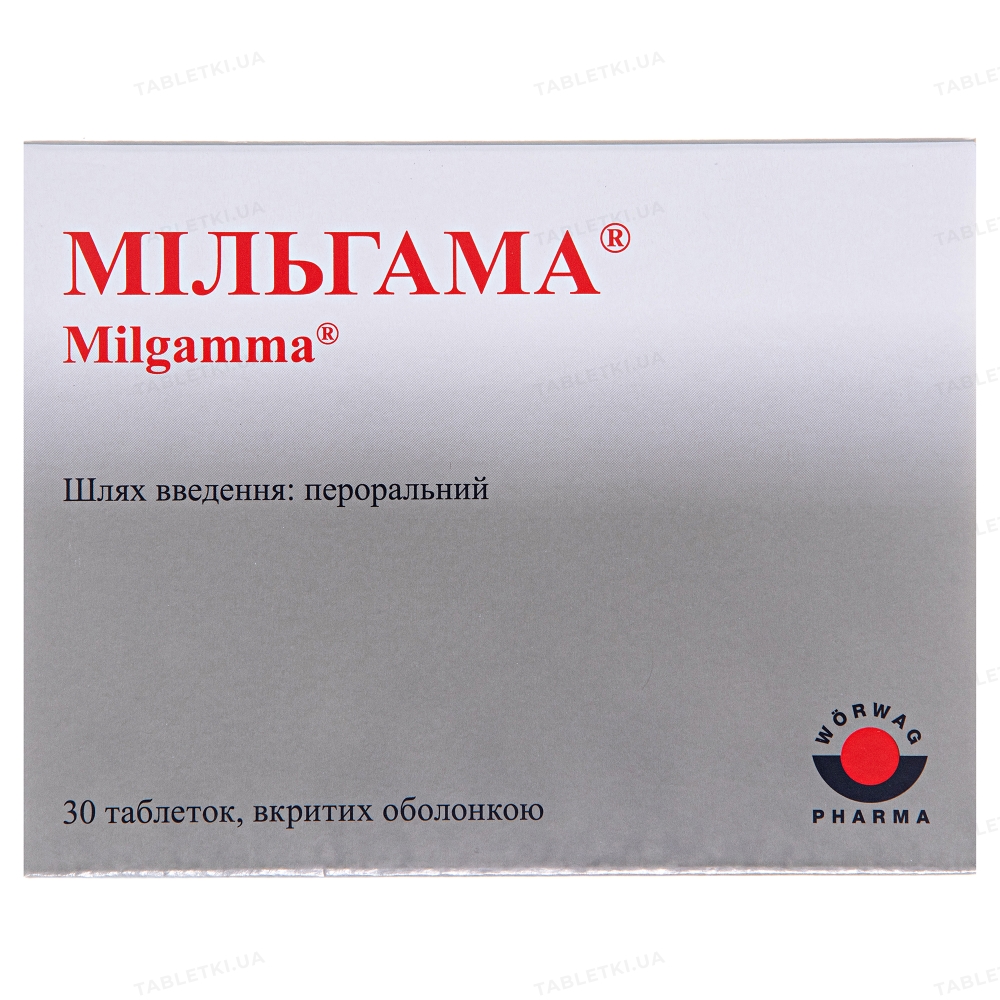
Milgama tablets, coated, No. 30 (15 x 2)
Composition
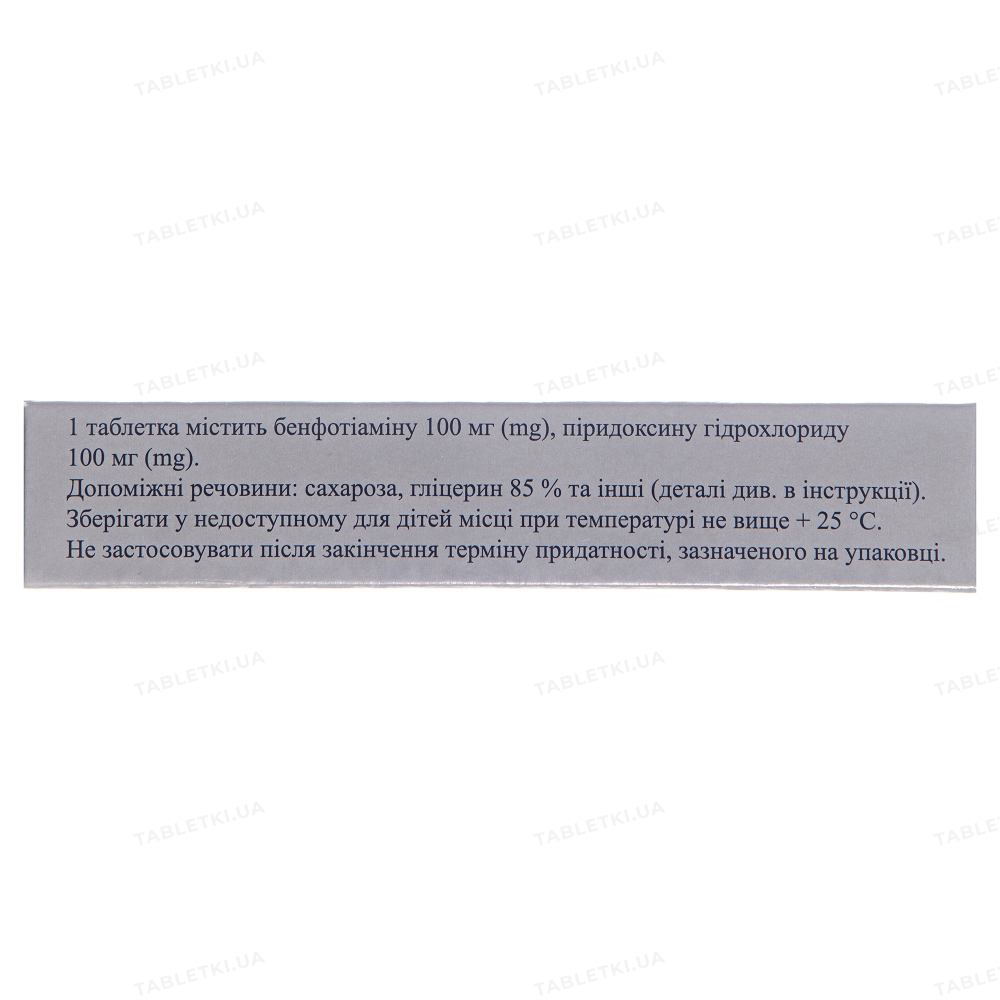
Active ingredients: Each tablet contains 100 mg of benfotiamine and 100 mg of pyridoxine hydrochloride;
Excipients: colloidal anhydrous silicon dioxide, microcrystalline cellulose, croscarmellose sodium, povidone, talc, long-chain partial glycerides; coating: shellac, sucrose, calcium carbonate (E 170), talc, acacia, corn starch, titanium dioxide (E 171), anhydrous colloidal silicon dioxide, povidone, polyethylene glycols, glycerin 85%, polysorbates, montan glycol wax.
Dosage Form
Film-coated tablets.
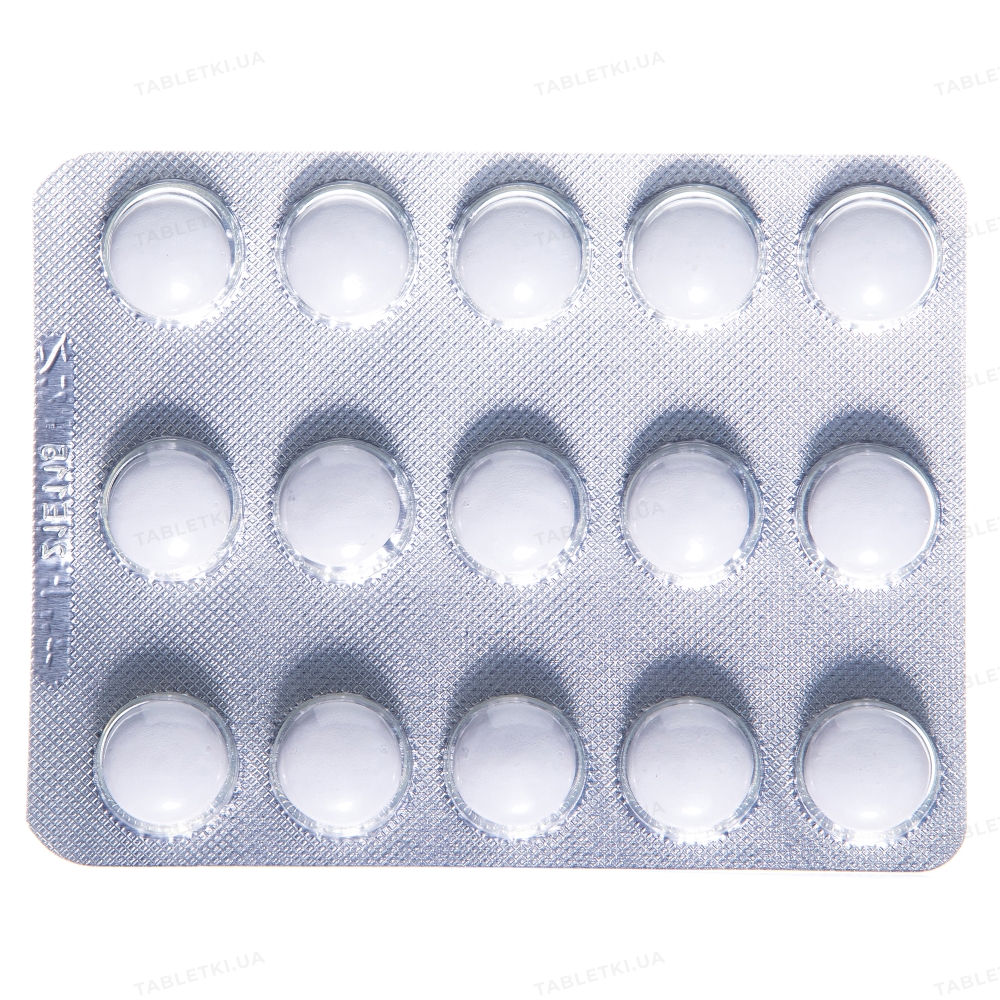
Main physical and chemical properties: white, film-coated tablets with a smooth surface.
Pharmacotherapeutic group
Vitamin B1 preparations, either alone or in combination with vitamins B6 and B12. ATC code A11D B.
Pharmacological properties
Pharmacodynamics.
Neurotropic B vitamins have a beneficial effect on the course of inflammatory and degenerative diseases of the nerves and the musculoskeletal system. They should be used to correct deficiency states; in high doses, these vitamins have analgesic properties, improve blood circulation, and normalize nervous system function and hematopoiesis.
Pharmacokinetics.
Vitamin B6 and its derivatives are generally rapidly absorbed in the upper gastrointestinal tract via passive diffusion and are excreted within 2–5 hours.
Indications
For neurological disorders caused by a proven deficiency of vitamins B1 and B6.
Contraindications
- Hypersensitivity to any component of the drug.
- Vitamin B1 is contraindicated in cases of allergic reactions.
- Vitamin B6 is contraindicated in cases of gastric or duodenal ulcers during the acute phase (as it may increase gastric acidity).
- Pregnancy or breastfeeding.
Interactions with Other Medications and Other Types of Interactions
Thiamine is inactivated by 5-fluorouracil, as the latter competitively inhibits the phosphorylation of thiamine to thiamine pyrophosphate. Antacids reduce the absorption of thiamine.
Loop diuretics (e.g., furosemide), which inhibit tubular reabsorption, may cause increased thiamine excretion during long-term therapy and thus reduce thiamine levels.
When taken concomitantly with levodopa, vitamin B6 may reduce the effect of levodopa.
Concomitant use of pyridoxine antagonists (e.g., isoniazid, hydralazine, D-penicillinamine, or cycloserine), alcohol, as well as long-term use of oral contraceptives containing estrogens, may lead to vitamin B6 deficiency.
Consumption of alcohol and black tea reduces the absorption of thiamine.
Benfotiamine is incompatible with oxidizing and reducing compounds: mercury chloride, iodide, carbonate, acetate, tannic acid, and iron ammonium citrate, as it is inactivated in their presence. Copper accelerates the breakdown of benfotiamine; furthermore, thiamine loses its effectiveness as pH levels rise (above 3).
Beverages containing sulfites (e.g., wine) enhance the degradation of thiamine.
Pyridoxine may reduce the effectiveness of altretamine.
Special Considerations for Use
The decision to use Milgami® for the treatment of patients with severe and acute forms of decompensated heart failure is made by the physician on a case-by-case basis, taking into account the patient’s condition.
When vitamin B12 is administered, the clinical picture and laboratory test results in cases of funicular myelosis or pernicious anemia may lose their specificity.
Since the drug contains vitamin B6, it should be prescribed with caution to patients with gastric or duodenal ulcers, or a history of severe hepatic or renal insufficiency.
Milgamma® should not be used in patients with neoplasms, except in cases associated with megaloblastic anemia and vitamin B12 deficiency. The drug should not be used in cases of severe or acute decompensated heart failure or angina pectoris.
If signs of peripheral sensory neuropathy (paresthesia) appear, the dosage should be reviewed and Milgamma® discontinued if necessary. With long-term use (more than 6–12 months) of daily doses exceeding 50 mg of vitamin B6, as well as with short-term use (more than 2 months) of more than 1 g of vitamin B6 per day, neuropathies have been observed; therefore, regular monitoring is recommended during long-term use.
This medication contains sucrose. Patients with rare hereditary fructose intolerance, glucose-galactose malabsorption, or sucrase-isomaltase deficiency should not take this medication.
Use during pregnancy or breastfeeding.
The daily requirement for vitamin B6 during pregnancy and breastfeeding is up to 2.5 mg.
During pregnancy or breastfeeding, daily intake of 1.4–1.6 mg of vitamin B1 and 2.4–2.6 mg of vitamin B6 is recommended.
There is no evidence supporting the use of doses higher than the recommended daily doses.
Vitamins B1 and B6 pass into breast milk.
High doses of vitamin B6 may interfere with milk production. This medication contains 100 mg of vitamin B6 and should therefore not be used during pregnancy or while breastfeeding.
Effect on reaction time when operating motor vehicles or other machinery.
Since this medication may cause side effects such as dizziness, headache, and tachycardia in some patients, caution should be exercised when driving or operating machinery.
Dosage and Administration
Take orally with a sufficient amount of liquid.
The recommended dose is 1 tablet per day. In individual cases, the dose may be increased to 1 tablet 3 times daily.
Tablets should be swallowed whole with liquid after a meal.
The duration of treatment is determined by the doctor on a case-by-case basis. After the maximum treatment period (4 weeks), a decision is made regarding dose adjustment and reduction.
Children.
The efficacy and safety of this medication in children have not been established; therefore, it should not be prescribed to this age group.
Overdose
With chronic use in high doses, decreased liver enzyme activity, chest pain, and hypercoagulation may occur. High doses of vitamin B1 have a curare-like effect.
Vitamin B1
Thiamine has a wide therapeutic range. Very high doses (more than 10 g) produce a ganglion-blocking effect similar to that of curare and inhibit the transmission of nerve impulses.
Vitamin B6
The toxicity of vitamin B6 is considered very low. However, long-term use (more than 6–12 months) of vitamin B6 in doses exceeding 50 mg per day may cause peripheral sensory neuropathy.
Continuous use of vitamin B6 in doses exceeding 1 g per day for longer than 2 months may lead to neurotoxic effects.
With long-term use of vitamin B1 at doses exceeding 2 g per day, cases of neuropathy with ataxia and sensory disturbances have been reported, cerebral seizures with EEG abnormalities, and, in isolated cases, hypochromic anemia and seborrheic dermatitis.
In case of overdose, the side effects of the drug are exacerbated.
Treatment: gastric lavage, administration of activated charcoal. Treatment is symptomatic.
Side Effects
Gastrointestinal: nausea, vomiting, diarrhea, abdominal pain, increased gastric acidity.
Cardiovascular system: tachycardia.
Immune system: hypersensitivity reactions, including anaphylactic shock; anaphylaxis; hives.
Skin: skin rash, itching.
In extremely rare cases—shock.
Nervous system: Long-term use (more than 6–12 months) at doses exceeding 50 mg of vitamin B6 daily may lead to peripheral sensory neuropathy, nervous agitation, dizziness, and headache.
Endocrine system: Prolactin secretion is inhibited.
Shelf life
5 years.
Storage conditions
Store out of the reach of children at a temperature not exceeding +25 °C.
Do not use after the expiration date printed on the package.
Packaging
15 film-coated tablets per blister pack; 2 or 4 blister packs per cardboard box.
Dispensing Category
Over-the-counter.
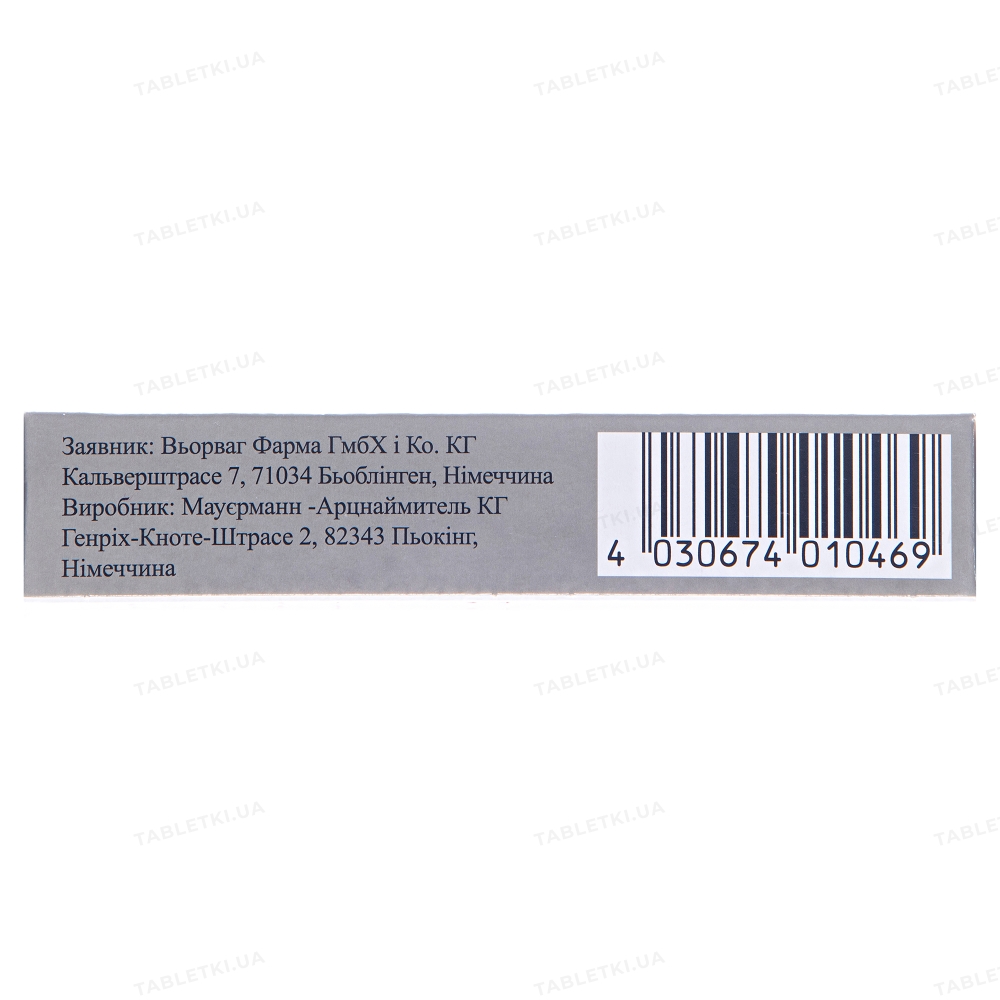
Manufacturer
Mauermann-Arzneimittel KG, Germany.
Address
Heinrich-Knote-Strasse 2, 82343 Poecking, Germany.