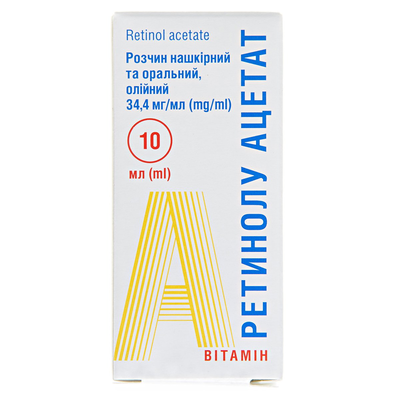
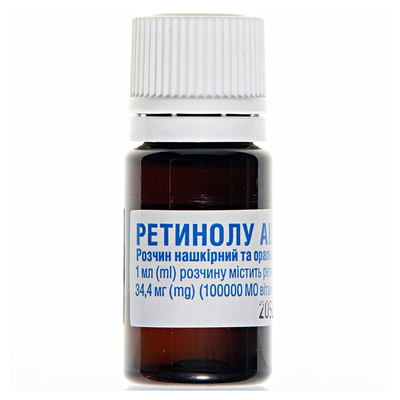
Retinol acetate solution, for topical and subcutaneous use, 3.44%, 10 mL per bottle.
Ingredients
Active ingredient: retinol (vitamin A);
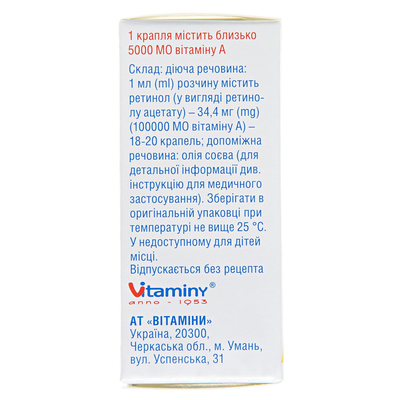
1 mL of solution contains retinol (as retinol acetate)—34.4 mg (100,000 IU of vitamin A)—18–20 drops;
1 drop contains approximately 5,000 IU of vitamin A;
excipient: soybean oil.
Dosage Form
Ointment and oral solution, oil-based.
Main physicochemical properties: a clear, oily liquid ranging in color from light yellow to dark yellow, without a rancid taste; a characteristic odor is permissible.
Pharmacotherapeutic group
Simple vitamin A preparations. Retinol (vitamin A). ATC code A11C A01.
Pharmacological Properties
Pharmacodynamics.
Vitamin A (retinol) belongs to the group of fat-soluble vitamins.
Retinol acetate is an analogue of natural vitamin A and is necessary for restoring normal retinol concentrations in the body. Vitamin A plays an important role in the synthesis of proteins, lipids, and mucopolysaccharides, and regulates mineral balance.
The most specific function of vitamin A is to support vision (photoreception). Retinol participates in the synthesis of visual purple—rhodopsin—located in the retinal rods.
Vitamin A modulates the differentiation of epithelial cells, participates in the development of secretory glands, and is involved in the processes of keratinization and the regeneration of mucous membranes and skin.
Vitamin A is essential for the normal functioning of the endocrine glands and for the body’s growth, as it acts as a synergist for somatomedins.
Vitamin A influences the division of immunocompetent cells, the synthesis of factors involved in both specific (immunoglobulin) and nonspecific (interferon, lysozyme) defense mechanisms against infectious and other diseases, and stimulates myelopoiesis.
Retinol increases glycogen levels in the liver and stimulates the production of trypsin and lipase in the digestive system; inhibits photochemical free-radical reactions and the oxidation of cysteine; activates the incorporation of sulfates into the components of connective tissue, cartilage, and bones; meets the body’s need for sulfocerebrosides and myelin, ensuring the conduction and transmission of nerve impulses.
A vitamin A deficiency leads to impaired twilight vision (night blindness) and atrophy of the epithelium of the conjunctiva, cornea, and lacrimal glands. Degenerative-dystrophic processes are observed in the respiratory tract (mucous membranes of the nasopharynx, paranasal sinuses, trachea, and bronchi), in the genitourinary system (the epithelium of the renal pelvis, ureters, bladder, urethra, vagina, ovaries, fallopian tubes, and endometrium, the seminal vesicles and ducts, and the prostate), and in the digestive system (the mucous membranes of the digestive tract, salivary glands, and pancreas). Vitamin A deficiency leads to impaired skin trophism (hyperkeratosis), deterioration in the growth and quality of hair and nails, as well as impaired function of the sebaceous and sweat glands. In addition, there is a decrease in body weight and slowed bone growth, reduced synthesis of glucocorticoids and steroid hormones, and impaired resistance to infectious and other diseases. A predisposition to cholelithiasis and nephrolithiasis is noted.
A deficiency or excess of vitamin A in a woman’s body can cause fetal developmental abnormalities.
Retinol has an antitumor effect, which does not extend to non-epithelial tumors.
Pharmacokinetics.
Retinol is biotransformed in the liver and then excreted by the kidneys in the form of inactive metabolites. Retinol may be partially excreted in bile and participate in enterohepatic circulation. Elimination of retinol is slow—34% of the administered dose is excreted from the body within 3 weeks.
When taken orally, retinol acetate is well absorbed in the upper small intestine. It is then transported as part of chylomicrons from the intestinal wall into the lymphatic system and enters the bloodstream via the thoracic duct. Retinol esters are transported in the blood by β-lipoproteins. Peak serum levels of vitamin A esters are observed 3 hours after administration. Vitamin A is stored in the liver parenchyma, where it accumulates in stable ester forms. In addition, high levels of vitamin A are found in the pigment epithelium of the retina. This storage site is necessary for the regular supply of vitamin A to the outer segments of the rods and cones.
Indications
Vitamin A deficiency and hypovitaminosis A, eye diseases (pigmentary retinitis, xerophthalmia, night blindness, superficial keratitis, corneal lesions, conjunctivitis, pyoderma, and eczematous lesions of the eyelids), as part of complex therapy for:
- rickets;
- acute respiratory diseases occurring against a background of exudative diathesis;
- acute and chronic bronchopulmonary diseases;
- hypotrophy;
- collagenoses;
- in cases of skin pathologies (frostbite, burns, wounds, ichthyosis, follicular dyskeratosis, senile keratosis, cutaneous tuberculosis, certain forms of eczema, psoriasis);
- in cases of inflammatory and ulcerative-erosive lesions of the intestine;
- liver cirrhosis.
Contraindications
Hypersensitivity to the drug’s components; acute and chronic nephritis; decompensated heart failure; gallstone disease; chronic pancreatitis; hypervitaminosis A, retinoid overdose, hyperlipidemia, obesity, chronic alcoholism.
Interactions with Other Medications and Other Types of Interactions
Estrogens increase the risk of hypervitaminosis A.
Retinol acetate reduces the anti-inflammatory effect of glucocorticoids.
Retinol acetate should not be taken simultaneously with nitrites or cholestyramine, as these substances interfere with the drug’s absorption.
Retinol acetate should not be used in combination with other vitamin A derivatives due to the risk of overdose and the development of hypervitaminosis A.
Combination with vitamin E helps maintain retinol acetate in its active form, promotes intestinal absorption, and enhances anabolic effects.
Concomitant use of petroleum jelly may impair the absorption of the vitamin in the intestine.
Concomitant use of vitamin A and anticoagulants increases the risk of bleeding.
Special Instructions for Use
Take this medication under a doctor’s supervision. During long-term use of retinol acetate, biochemical parameters and blood clotting time must be monitored.
When treating impaired night vision (night blindness), retinol acetate should be used in combination with riboflavin and nicotinic acid.
Use with caution in cases of severe hepatobiliary system damage or conditions accompanied by coagulation disorders.
Use of this medication is not recommended during long-term therapy with tetracyclines.
Retinol should be taken 1 hour before or 4–6 hours after taking cholestyramine.
The drug tends to accumulate and remain in the body for an extended period. Women who have taken high doses of retinol should not plan a pregnancy for at least 6–12 months. This is because during this time, there is a risk of fetal malformation due to high levels of vitamin A in the body.
The presence of fats in the diet is essential for the normal absorption of vitamin A.
Excessive alcohol and tobacco use interfere with the absorption of the medication from the digestive tract.
This medication contains soybean oil. If you are allergic to peanuts or soy, do not use this medication.
Use during pregnancy or breastfeeding.
Due to the high dose of vitamin A in this dosage form, the medication is contraindicated for oral use during pregnancy or breastfeeding.
Effect on reaction time when driving or operating machinery.
There are no data on the effect of this medication on the ability to drive or operate complex machinery.
Dosage and Administration
Retinol acetate should be administered orally 10–15 minutes after a meal and topically. 1 drop contains approximately 5,000 IU of vitamin A.
1 mL of the drug contains 100,000 IU (18–20 drops) of vitamin A.
When determining the dosage, keep in mind that the maximum single dose of vitamin A for adults is 50,000 IU. The maximum daily dose of vitamin A for adults is 100,000 IU. Therapeutic doses of vitamin A for mild to moderate vitamin A deficiency in adults are up to 33,000 IU per day. For this purpose, it is preferable to use the drug in the form of coated tablets or capsules (1 coated tablet of 10 mg or 1 capsule per day). For skin diseases, as well as for pigmentary retinitis, xerophthalmia, and night blindness, the daily dose of vitamin A is 50,000–100,000 IU (riboflavin [vitamin B2] should be prescribed concurrently at a daily dose of 0.02 g). For skin surface lesions (ulcers, burns, frostbite), after hygienic cleansing, apply the solution to the affected areas and cover with a gauze bandage (5–6 times a day, gradually reducing the number of applications to one as epithelialization progresses). At the same time, administer the medications orally. To prevent the formation of calculi, establish prophylactic doses based on the human body’s daily requirement for vitamin A. The duration of treatment is 10 days to 1 month.
Children.
Do not administer this medication orally to children at this dose.
Overdose
Symptoms: dizziness; confusion, diarrhea, severe dehydration, irritability; generalized rash followed by large-scale peeling of the skin, beginning on the face; bleeding gums, dryness and ulceration of the oral mucosa, peeling of the lips, and sharply painful palpation of long tubular bones due to subperiosteal hemorrhages.
Acute and chronic hypervitaminosis A is accompanied by severe headache, fever, drowsiness, vomiting, visual disturbances (double vision), dry skin, joint and muscle pain, the appearance of pigmented spots, enlargement of the liver and spleen, jaundice, changes in blood counts, and loss of strength and appetite. In severe cases, seizures, heart failure, and hydrocephalus may develop.
Treatment: symptomatic; thyroxine is prescribed as an antagonist; the use of ascorbic acid and vitamin E is recommended.
Side Effects
Long-term use of high doses of vitamin A can lead to the development of hypervitaminosis A.
Nervous system and sensory organs: increased fatigue, drowsiness, lethargy, irritability, headache, insomnia, convulsions, discomfort, intraocular hypertension, visual disturbances.
Gastrointestinal system: loss of appetite, weight loss, nausea, and, very rarely, vomiting. Exacerbation of liver disease and increased levels of transaminases and alkaline phosphatase are possible.
Urinary system: pollakiuria, nocturia, polyuria.
Hematologic system: hemolytic anemia.
Musculoskeletal system: changes on bone X-rays, gait disturbance, pain in the bones of the lower extremities.
Allergic reactions: cracked lips; yellow-orange spots on the soles of the feet, palms, and in the nasolabial triangle; subcutaneous edema; in isolated cases, on the first day of use, itchy maculopapular rashes may occur, requiring discontinuation of the drug; itching; erythema and rashes; dry skin; dry mouth; fever; facial flushing followed by peeling.
Other: hair loss, menstrual irregularities, abdominal pain, canker sores, photosensitivity, hypercalcemia.
Side effects resolve on their own upon dose reduction or temporary discontinuation of the medication.
In cases of skin diseases, the use of high doses of the drug after 7–10 days of treatment may be accompanied by an exacerbation of the local inflammatory reaction, which does not require additional treatment and subsequently subsides. This effect is associated with the drug’s myelostimulatory and immunostimulatory action.
Shelf life
2 years.
Storage conditions
Store in the original packaging at a temperature not exceeding 25 °C.
Keep out of reach of children.
Packaging
10 mL in vials, packed in a carton.
Dispensing Category
Available without a prescription.
Manufacturer
JSC “VITAMINS.”