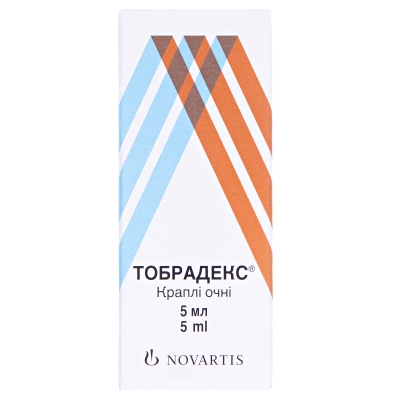
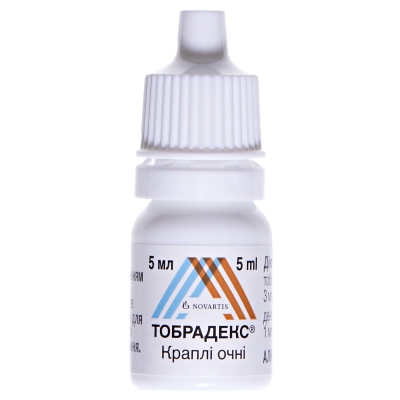
Tobradex eye drops, 5 mL per bottle in a "Drop-Tainer®" dropper bottle
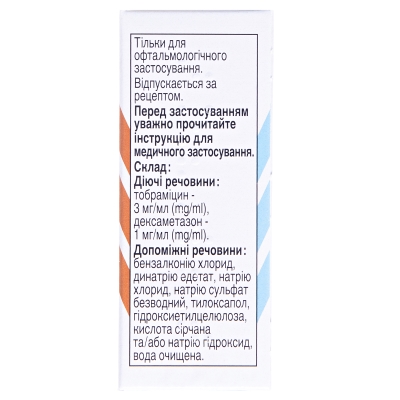
Active ingredients: tobramycin, dexamethasone;
1 mL of suspension contains 3 mg of tobramycin and 1 mg of dexamethasone;
excipients: benzalkonium chloride, disodium edetate, sodium chloride, anhydrous sodium sulfate, tiloxapol, hydroxyethylcellulose, sulfuric acid and/or sodium hydroxide, purified water.
Dosage Form
Eye drops.
Main physicochemical properties: a white or nearly white suspension.
Pharmacotherapeutic group
Combined anti-inflammatory and antimicrobial agents. Combined corticosteroids and antimicrobial agents.
ATC code S01C A01.
Pharmacological properties
Pharmacodynamics.
Dexamethasone
The efficacy of corticosteroids in the treatment of inflammatory eye diseases is well established. Corticosteroids exert their anti-inflammatory effect by inhibiting the adhesion of molecules to vascular endothelial cells, cyclooxygenase I or II, and the release of cytokines. As a result, the production of inflammatory mediators is reduced, and the adhesion of circulating leukocytes to the vascular endothelium is inhibited, which prevents their penetration into the inflamed tissues of the eye. Dexamethasone has a pronounced anti-inflammatory effect with reduced mineralocorticoid activity compared to some other steroids and is one of the most potent anti-inflammatory drugs.
Tobramycin
Tobramycin is a highly active, fast-acting bactericidal antibiotic of the aminoglycoside group that is effective against both Gram-positive and Gram-negative microorganisms. Its mechanism of action involves the inhibition of the polypeptide complex and protein synthesis in the ribosomes of bacterial cells.
In general, the activity of tobramycin is assessed in vitro by determining the minimum inhibitory concentration (MIC), which indicates the antibiotic’s activity against each bacterial species. Since the MIC of tobramycin is very low against most ocular pathogens, it is considered a broad-spectrum antibiotic. Critical MIC values have been established to determine the susceptibility or resistance of a bacterial culture to a specific antibiotic. The current MIC cut-off value for tobramycin for the relevant bacterial species takes into account the species’ intrinsic susceptibility, as well as the maximum concentration and pharmacokinetic time-concentration values measured in blood serum following oral administration. The establishment of these breakpoints, which classify microorganisms as susceptible or resistant, has been used to assess the clinical efficacy of systemically administered antibiotics. However, when an antibiotic is applied topically in high concentrations directly to the site of infection, the determination of critical values is not used. Most microorganisms that would be classified as resistant based on critical values for systemic administration actually respond well to topical treatment. This can help prevent the growth of such microorganisms that cause infection.
Clinical studies have shown that topical tobramycin solution is effective against many existing strains of ocular pathogens in patients who participated in the studies. Some of these ocular pathogens are considered resistant based on critical values determined for systemic use. Clinical studies have shown that tobramycin is effective in treating superficial ocular infections caused by the following pathogens.
Gram-positive bacteria:
Staphylococcus aureus (methicillin-susceptible or resistant*)
Staphylococcus epidermidis (methicillin-susceptible or resistant*)
Other coagulase-negative staphylococci
Streptococcus pneumoniae (penicillin-susceptible or resistant*)
Other streptococcal species
* The phenotype of beta-lactam resistance (i.e., methicillin; penicillin) is not associated with the phenotype of aminoglycoside resistance, and neither is associated with virulence or the phenotypes of pathogenic organisms. Many methicillin-resistant staphylococci have been found to be resistant to tobramycin (and other aminoglycoside antibiotics). Nevertheless, these resistant Staphylococcus strains (as determined by MIC cut-off values) usually respond well to topical treatment with tobramycin.
Gram-negative bacteria:
Acinetobacter spp.
Citrobacter spp.
Enterobacter spp.
Escherichia coli
Haemophilus influenzae
Klebsiella pneumoniae
Moraxella spp.
Morganella morganii
Proteus mirabilis
Pseudomonas aeruginosa
Serratia marcescens
Antimicrobial susceptibility testing has shown that, in some cases, gentamicin-resistant organisms remain susceptible to tobramycin. A significant portion of the microflora has not yet developed resistance to tobramycin; however, bacterial resistance may develop with prolonged use.
Cross-sensitivity to other aminoglycoside antibiotics may occur. If hypersensitivity occurs during treatment, the drug should be discontinued and appropriate treatment initiated.
Pharmacokinetics.
Dexamethasone
Systemic exposure to dexamethasone following topical ophthalmic administration of TOBRADEX® eye drops is low. Peak plasma concentrations range from 220 to 888 pg/mL (mean 555 ± 217 pg/mL) after instilling one drop of TOBRADEX® into each eye 4 times a day consecutively for two days.
Dexamethasone is eliminated from the body through metabolism. Approximately 60% of the dose is excreted in the urine as 6-β-hydroxydexamethasone. Unchanged dexamethasone has not been detected in urine. The plasma half-life is relatively short—3–4 hours.
Dexamethasone is approximately 77–84% bound to serum albumin. Clearance ranges from 0.111 to 0.225 L/h/kg, and the volume of distribution ranges from 0.576 to 1.15 L/kg. Oral bioavailability is approximately 70%.
Tobramycin
Systemic exposure to tobramycin following topical ophthalmic administration of TOBRADEX® eye drops is low. Tobramycin concentrations in blood plasma could not be quantified in 9 of 12 patients who received TOBRADEX® eye drops, one drop in each eye 4 times a day consecutively for two days. The highest measured level was 0.25 μg/mL, which is 8 times lower than the concentration of 2 μg/mL, known to be below the risk threshold for nephrotoxicity.
Tobramycin is rapidly and extensively excreted in the urine by glomerular filtration, primarily in an unchanged form. The plasma half-life is approximately 2 hours, with a clearance of 0.04 L/h/kg and a volume of distribution of 0.26 L/kg. Plasma protein binding of tobramycin is negligible—less than 10%. The oral bioavailability of tobramycin is low (< 1%).
Preclinical Safety Data
Safety Data
Data on the systemic toxicity of the active ingredients are well established. Systemic exposure to tobramycin at toxic doses significantly exceeding those associated with topical ocular administration may be associated with nephrotoxicity and ototoxicity. Systemic exposure to dexamethasone may be associated with effects related to glucocorticosteroid imbalance. Repeated-dose toxicity studies of TOBRADEX® eye drops in rabbits revealed systemic effects associated with corticosteroids; however, even at doses significantly higher than the human dose, these effects are of little clinical significance. When TOBRADEX® is used at the recommended doses, these effects are unlikely.
Mutagenicity
In vitro and in vivo studies of each active ingredient did not reveal any mutagenic effects.
Teratogenicity
Tobramycin crosses the placenta into the fetal circulation and amniotic fluid. Animal studies involving systemic administration of high doses of tobramycin to pregnant animals during organogenesis revealed renal toxicity and ototoxicity in the fetus. Other studies conducted in rats and rabbits with tobramycin at doses exceeding 100 mg/kg/day via parenteral administration (>400 times the maximum clinical dose), did not reveal any cases of impaired fertility or adverse effects on the fetus.
Animal studies have shown that corticosteroids have teratogenic effects. Intraocular administration of 0.1% dexamethasone to pregnant rabbits led to an increase in cases of fetal developmental abnormalities and intrauterine growth restriction. Fetal growth retardation and increased mortality were observed in rats receiving long-term dexamethasone therapy.
TOBRADEX® should be used during pregnancy only if the potential benefit of the drug outweighs the potential risk to the fetus.
No studies have been conducted to evaluate the carcinogenic effects of TOBRADEX®.
Indications
Eye inflammation in steroid-responsive patients who are indicated for corticosteroids and who have a superficial bacterial infection or are at risk of developing a bacterial eye infection. These inflammatory conditions may occur following surgery or be caused by an infection, a foreign body entering the eye, or eye trauma.
Contraindications
- Hypersensitivity to the active ingredients or to any component of the medication.
- Hypersensitivity to aminoglycosides.
- Keratitis caused by the herpes simplex virus.
- Cowpox, chickenpox, and other viral infections of the cornea and conjunctiva.
- Fungal infections of the eye structures or untreated parasitic infections of the eye.
- Mycobacterial infections of the eye.
- Infections or injuries limited to the superficial epithelium of the cornea.
- TOBRADEX® should not be used after the removal of a foreign body from the cornea without complications.
Drug Interactions and Other Interactions
Concomitant use of topical steroids and topical NSAIDs (nonsteroidal anti-inflammatory drugs) may increase the risk of complications during corneal wound healing.
Concomitant and/or sequential use of aminoglycoside antibiotics (e.g., tobramycin) and other systemic oral or topical medications that have toxic (harmful) effects on the nervous system, hearing, or kidneys may lead to additive toxicity; therefore, such use should be avoided whenever possible.
In patients receiving ritonavir, plasma concentrations of dexamethasone may increase (see Section 4.4).
If more than one ophthalmic agent is applied topically, the interval between applications should be at least 5 minutes. Eye ointments should be used last.
CYP3A4 inhibitors (including ritonavir and cobicistat) may reduce the clearance of dexamethasone, leading to more severe adverse events and adrenal suppression/Cushing’s syndrome. This combination should be avoided unless the benefits outweigh the increased risk of systemic corticosteroid side effects; in such cases, patients should be monitored for systemic corticosteroid side effects.
Special Instructions for Use
For ophthalmic use only.
After opening the vial for the first time, remove the tamper-evident ring.
Some patients may be hypersensitive to topical aminoglycosides. The severity of hypersensitivity reactions may range from local effects to generalized reactions, such as erythema, pruritus, urticaria, skin rash, anaphylaxis, anaphylactoid reactions, or bullous reactions. If a hypersensitivity reaction occurs, the drug should be discontinued.
Cross-hypersensitivity to other aminoglycosides may occur. The possibility should be considered that patients with local sensitivity to tobramycin may also be sensitive to other aminoglycosides administered topically or systemically.
Serious adverse reactions, including neurotoxicity, ototoxicity, and nephrotoxicity, have been reported in patients receiving systemic aminoglycoside therapy. Caution should be exercised when using this product concomitantly with systemic aminoglycosides.
Caution should be exercised when prescribing Tobradex to patients with known or suspected neuromuscular disorders, such as myasthenia gravis or Parkinson’s disease. Aminoglycosides may exacerbate muscle weakness due to their potential effect on neuromuscular function.
Prolonged treatment with topical ophthalmic corticosteroids may lead to the development of ocular hypertension and/or glaucoma with optic nerve damage, deterioration of visual acuity and visual field, and the formation of a subcapsular cataract in the posterior chamber of the eye. In patients who have been treated with ocular corticosteroids for a long time, intraocular pressure should be monitored regularly and repeatedly. This is particularly important for children aged 6 years and older, as the risk of corticosteroid-induced increased intraocular pressure may be higher in children and may manifest earlier than in adults.
The risk of corticosteroid-induced elevated intraocular pressure and/or corticosteroid-induced cataracts is increased in predisposed patients (e.g., patients with diabetes mellitus).
Visual disturbances may occur with both systemic and topical use of corticosteroids. If a patient experiences symptoms such as blurred vision or other visual disturbances, they should be referred to an ophthalmologist to evaluate possible causes, which include cataracts, glaucoma, or rare conditions such as central serous chorioretinopathy, which have been observed following the use of systemic and topical corticosteroids.
Cushing’s syndrome and/or adrenal suppression associated with systemic absorption of ophthalmic dexamethasone may occur following intensive or prolonged continuous therapy in predisposed patients, including children and patients receiving CYP3A4 inhibitors (including ritonavir and cobicistat). In these cases, treatment should be discontinued gradually.
Corticosteroids may reduce resistance to bacterial, viral, fungal, or parasitic infections, interfere with the detection of such infections, and mask the clinical signs of infection.
In cases of persistent corneal ulceration, the possibility of a fungal infection should be considered. If a fungal infection develops, corticosteroid therapy should be discontinued.
Prolonged use of antibiotics, such as tobramycin, may cause overgrowth of non-susceptible microorganisms, including fungi. If a superinfection occurs, appropriate therapy should be initiated.
Corticosteroids for ophthalmic use may slow corneal wound healing. Topical NSAIDs are also known to slow or delay wound healing. Concomitant use of topical NSAIDs and topical steroids may increase the risk of complications during wound healing (see the “Interactions with Other Medications and Other Forms of Interaction” section).
In the presence of conditions that lead to thinning of the cornea or sclera, topical steroids may cause perforation.
Wearing contact lenses is not recommended during treatment for eye inflammation or infection.
TOBRADEX® eye drops contain benzalkonium chloride, which may irritate the eyes and discolor soft contact lenses. Contact with soft contact lenses should be avoided. If a patient is permitted to wear contact lenses, they should be advised to remove them before applying TOBRADEX® eye drops and to wait at least 15 minutes before reinserting them.
After using the eye drops, to reduce systemic absorption:
- keep the eyelid closed for 2 minutes;
- Close the tear duct with your finger for 2 minutes.
The medication may be used in children as young as 2 years of age.
Pregnancy and lactation.
Reproductive function
No studies have been conducted to evaluate the effects of tobramycin and dexamethasone on human or animal reproductive function. Clinical data for evaluating the effects of dexamethasone on male or female reproductive function are limited. When dexamethasone was administered to rats sensitized to chorionic gonadotropin, no adverse effects on the reproductive system were observed.
Pregnancy
Data on the use of tobramycin or dexamethasone in pregnant women are lacking or limited. Following intravenous administration to pregnant women, tobramycin crosses the placenta and affects the fetus. In utero, tobramycin does not cause ototoxicity. Prolonged or repeated use of corticosteroids during pregnancy is associated with an increased risk of intrauterine growth restriction. Infants whose mothers received high doses of corticosteroids during pregnancy should be closely monitored for signs of hypoadrenalism. Animal studies have demonstrated reproductive toxicity following topical application of dexamethasone and systemic administration of dexamethasone and tobramycin.
The use of TOBRADEX® during pregnancy is not recommended.
Breastfeeding
Following systemic administration, tobramycin is excreted into breast milk. There are no data on the excretion of dexamethasone in breast milk. It is unknown whether tobramycin and dexamethasone are excreted into breast milk following topical ophthalmic use. It is unlikely that tobramycin and dexamethasone will be detected in breast milk or cause clinical effects in newborns following topical application. The risk to a breastfed infant cannot be ruled out.
A decision should be made regarding whether to discontinue breastfeeding or to discontinue or refrain from treatment, taking into account the benefits of breastfeeding for the infant and the benefits of therapy for the woman.
Since many medications pass into breast milk, temporary discontinuation of breastfeeding should be considered while using TOBRADEX®.
Effects on the ability to drive and operate machinery.
TOBRADEX® eye drops have no or negligible effect on the ability to drive or operate machinery. Temporary blurred vision or other visual disturbances may affect the ability to drive or operate machinery. If blurred vision occurs during instillation, the patient should wait until vision clears before driving or operating machinery.
Directions for Use and Dosage
For ophthalmic use.
Use in adults, including elderly patients, and children aged 12 to 18 years
Instill 1 or 2 drops into the conjunctival sac(s) every 4–6 hours. During the first 24–48 hours, the dose may be increased to 1 or 2 drops every 2 hours. The frequency of administration should be gradually reduced as clinical symptoms improve. Care should be taken not to discontinue therapy prematurely.
In severe cases, instill 1 or 2 drops every hour until the inflammation is brought under control, and gradually reduce the frequency of use to 1–2 drops every 2 hours for 3 days; After that, instill 1–2 drops every 4 hours for 5–8 days, and finally, 1–2 drops daily for the last 5–8 days as needed.
After cataract surgery, the dose is 1 drop 4 times a day, starting on the day of surgery and continuing for 24 days. Treatment may be started one day before surgery at a dose of 1 drop 4 times a day, continuing with 1 drop after surgery, and then 4 times a day for 23 days. If necessary, the frequency of administration may be increased to 1 drop every 2 hours during the first two days of therapy.
It is recommended to monitor intraocular pressure regularly.
It is recommended to apply pressure to the area of the nasolacrimal duct and gently close the eyelids after instillation. This reduces systemic absorption of the medication administered into the eye, thereby lowering the likelihood of systemic side effects.
Use in Children
Data confirm the safety and efficacy of the drug in children over 2 years of age who received treatment for 7 days for superficial bacterial eye inflammation.
It may be used in children requiring cataract surgery.
Use in Patients with Liver or Kidney Dysfunction
TOBRADEX® has not been studied in this patient population. However, due to the low systemic absorption of tobramycin and dexamethasone, there is no need to adjust the dose following topical administration.
Directions for Use
Shake the bottle well before use.
To avoid contaminating the dropper tip and the contents of the vial, take care not to touch the eyelids, surrounding areas, or other surfaces with the tip of the dropper.
Store the bottle in an upright position.
Children
Data confirm the safety and efficacy of this medication in children over 2 years of age.
Safety and efficacy in children under 2 years of age have not been established.
TOBRADEX® may be used in children over 2 years of age.
Overdose
Due to the characteristics of this topical medication, no toxic effects are expected either when used in ophthalmology at the recommended doses or in the event of accidental ingestion of the contents of the bottle. Possible clinical signs and symptoms of overdose (punctate keratitis, erythema, increased tearing, swelling, and itching of the eyelids) may be similar to the side effects observed in some patients.
In the event of an overdose with TOBRADEX® following topical application, rinse the excess medication from the eye(s) with warm water.
Side Effects
In clinical trials, the most common adverse reactions were eye pain, increased intraocular pressure, eye irritation, and itchy eyes, which occurred in less than 1% of patients.
In clinical studies of TOBRADEX® eye drops, the following adverse reactions were reported and classified by frequency as follows: very common (≥ 1/10); common (≥ 1/100 – < 1/10); uncommon (≥ 1/1,000 – < 1/100); rare (≥ 10,000 – < 1/1,000); very rare (< 1/10,000). Within each group, side effects are listed in descending order of severity.
Table 1
| Organ system classes
|
Adverse Reactions
[corresponding MedDRA term (v.15.1)] |
| Eye disorders | Uncommon: increased intraocular pressure, eye pain, itchy eyes, eye discomfort, eye irritation.
Rare: keratitis, eye allergy, blurred vision, dry eyes, redness of the eyes. |
| Gastrointestinal disorders | Rare: dysgeusia. |
The following adverse reactions were identified based on postmarketing studies.
Based on the available data, it is not possible to estimate their incidence.
Table 2
| Organ system classes
|
Adverse reactions
[corresponding MedDRA term (v.15.1)] |
| Immune system disorders | Hypersensitivity, anaphylactic reaction |
| Nervous system disorders | Dizziness, headache |
| Eye disorders | Eyelid swelling, eyelid erythema, mydriasis, increased tearing, ulcerative keratitis, blurred vision |
| Gastrointestinal disorders | Nausea, stomach discomfort |
| Skin and subcutaneous tissue disorders | Rash, facial swelling, itching, erythema multiforme |
| Endocrine disorders | Cushing’s syndrome, adrenal suppression |
Description of some adverse reactions
Prolonged use of topical corticosteroids in the eye may lead to increased intraocular pressure, followed by damage to the optic nerve, deterioration of visual acuity and visual field defects, as well as the formation of posterior subcapsular cataracts and delayed wound healing (see the “Trauma” section).
Since this medication contains a corticosteroid, the risk of perforation increases in patients with conditions that cause thinning of the cornea or sclera, especially after prolonged use (see the “Special Instructions and Precautions for Use” section).
Secondary infections may occur following the use of combinations containing corticosteroids and antimicrobial agents. Fungal infections of the cornea are particularly active with long-term steroid use. (See the “Special Instructions and Precautions for Use” section.)
Serious adverse reactions, including neurotoxicity, ototoxicity, and nephrotoxicity, have occurred in patients receiving systemic tobramycin therapy (see Section 4.4).
During tobramycin therapy, certain adverse reactions have been observed, such as corneal abrasions, blurred vision, conjunctival edema, eyelid abnormalities, ocular discharge, itchy eyelids, urticaria, dermatitis, madarosis, leukoderma, and dry skin.
The following adverse reactions have been observed during treatment with dexamethasone: keratoconjunctivitis, corneal discoloration, photophobia, scaling at the edges of the eyelids, decreased visual acuity, corneal erosion, ptosis.
In some patients, a hypersensitivity reaction to aminoglycosides may occur with topical application (see the “Special Instructions and Precautions for Use” section).
Shelf life
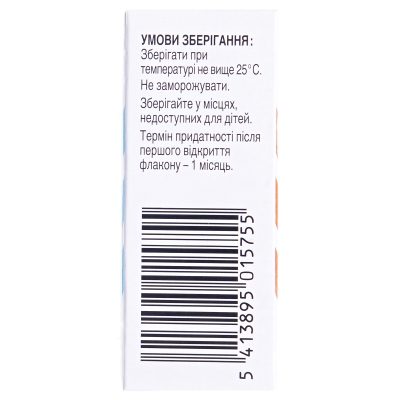
2 years. The shelf life after first opening the vial is 1 month.
Storage conditions
Store at a temperature not exceeding 25 °C.
Do not freeze. Store the vial upright in a place inaccessible to children. Keep the vial tightly closed.
Packaging
5 mL in a “Drop-Tainer®” dropper bottle; 1 dropper bottle in a cardboard box.
Manufacturer
Alcon-Couvreur.
Address
Rijksweg 14, B-2870 Puurs, Belgium.