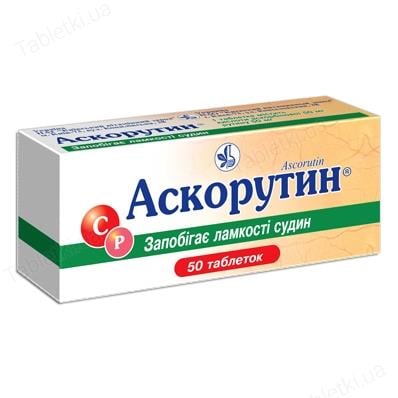
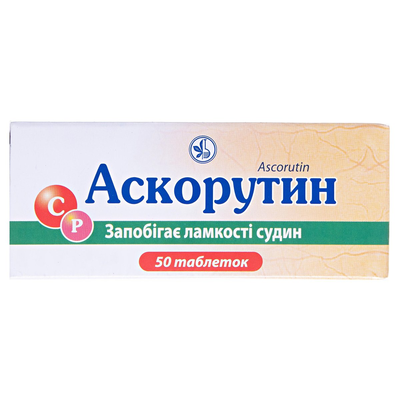
Ascorutin Tablets, No. 50 (10 x 5)
Composition
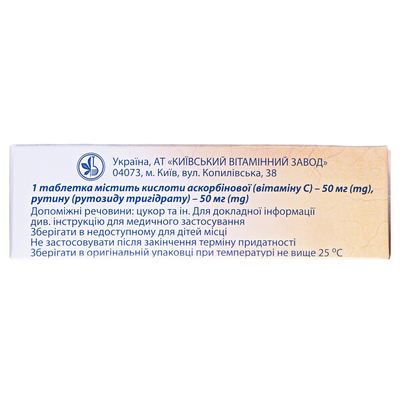
Active ingredients: Each tablet contains 50 mg of ascorbic acid (vitamin C) and 50 mg of rutin (rutoside trihydrate);
excipients: sugar, potato starch, calcium stearate, talc.
Dosage Form
Tablets.
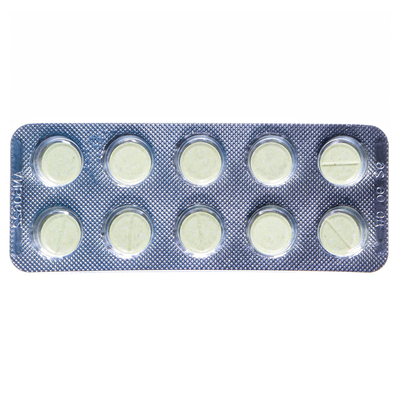
Main physical and chemical properties: round tablets with a flat surface, beveled edges, and a score line; light yellow in color with a greenish tint and speckles.
Pharmacotherapeutic group
Capillary-stabilizing agents. Bioflavonoids.
ATC code C05C A51.
Pharmacological properties
Pharmacodynamics.
A combination drug whose action is due to the effects of its constituent components.
Rutin (vitamin P) promotes the conversion of ascorbic acid to dehydroascorbic acid and prevents the further transformation of the latter into diketogulonic acid. Therefore, most of rutin’s effects are mediated by ascorbic acid.
Rutin, in combination with ascorbic acid, reduces capillary permeability and fragility, strengthens cell walls, reduces platelet aggregation, has an anti-inflammatory effect (including through the inhibition of hyaluronidase activity), antioxidant properties, and participates in redox processes.
In addition, rutin has the following effects: it reduces the exudation of the liquid component of blood plasma and the diapedesis of blood cells through the vascular wall; it also has a cholagogue effect and a mild antihypertensive effect.
In patients with chronic venous insufficiency, rutin leads to a reduction in edema and pain, trophic disorders, and a reduction or resolution of paresthesias and cramps. It helps reduce the severity of side effects of radiation therapy (cystitis, enteroproctitis, dysphagia, skin erythema) and slows the progression of diabetic retinopathy.
Pharmacokinetics.
Each vitamin in the formulation undergoes its characteristic metabolic transformations. Ascorbic acid is rapidly absorbed, primarily in the duodenum and small intestine. Within 30 minutes after administration, the concentration of ascorbic acid in the blood increases significantly, and its uptake by tissues begins; during which it is initially converted to dehydroascorbic acid, which penetrates cell membranes without energy loss and is rapidly reduced back to ascorbic acid within the cell. Ascorbic acid in tissues is found almost exclusively intracellularly and exists in three forms: ascorbic acid, dehydroascorbic acid, and ascorbigen (bound ascorbic acid). Its distribution among organs is uneven. It is found in high concentrations in the endocrine glands, especially the adrenal glands, and in lower concentrations in the brain, kidneys, liver, heart, and skeletal muscles. The concentration of ascorbic acid in white blood cells and platelets is higher than in blood plasma. It is metabolized and excreted by the kidneys—up to 90% as oxalate and partially in its free form.
Rutin, when absorbed in the gastrointestinal tract, facilitates the transport and storage of ascorbate. It is excreted unchanged as metabolites, primarily in bile and, to a lesser extent, in urine.
The half-life is 10–25 hours.
Indications
- Deficiency of rutin and ascorbic acid.
- As part of complex therapy for diseases accompanied by increased vascular permeability.
- Prevention of colds and alleviation of flu symptoms.
- To boost immunity.
Contraindications
- Hypersensitivity to any component of the product.
- Increased blood clotting, thrombophlebitis, or a tendency toward thrombosis.
- Gout, urolithiasis with urate stone formation, cystinuria, hypokalemia and hypercalcemia, oxalaturia.
- Diabetes mellitus.
- Severe kidney disease.
- Concomitant use with sulfonylureas or aminoglycosides.
- Fructose intolerance, glucose-galactose malabsorption syndrome.
Drug Interactions and Other Interactions
Acetylsalicylic acid, oral contraceptives: reduced absorption of the drug.
Ascorbic acid at a dose of ≥ 1 g increases the bioavailability of oral contraceptives (estrogens, including ethinyl estradiol), increases blood concentrations of salicylates, thereby enhancing their side effects (risk of crystalluria, effects on the gastric mucosa).
Acetylsalicylic acid, barbiturates, tetracyclines: increased urinary excretion of ascorbic acid.
Penicillin (including benzylpenicillin), tetracycline, iron supplements: high doses of ascorbic acid may increase their absorption and blood concentrations.
Desferrioxamine (deferoxamine): increased iron absorption and urinary excretion; increased tissue toxicity of iron, particularly cardiotoxicity, which may lead to cardiovascular decompensation. Cardiac dysfunction (usually reversible after discontinuation of vitamin C) has been reported in patients with idiopathic hemochromatosis and thalassemia who were taking desferrioxamine and high doses of ascorbic acid (more than 500 mg per day). This combination requires caution and careful monitoring of cardiac function in this patient population. Ascorbic acid should be taken only 2 hours after a desferrioxamine injection.
Heparin, indirect anticoagulants, phenothiazines, fluphenazine, sulfonamide drugs, and aminoglycoside antibiotics: reduced efficacy of these drugs.
Cyclosporin A: its bioavailability may be reduced.
B vitamins: mutual potentiation of therapeutic effects. High doses of ascorbic acid may affect the absorption of vitamin B12.
Corticosteroids, acetaminophen: the half-life of the latter is prolonged when high doses of ascorbic acid are used (this interaction has no clinical consequences when therapeutic doses are taken).
Calcitonin: The rate of absorption of ascorbic acid increases.
Amphetamine: Its renal excretion increases when high doses of ascorbic acid are used.
Aluminum-containing antacids: Note that ascorbic acid promotes the absorption of aluminum from the intestine; increased urinary excretion of aluminum is possible. Concomitant use of antacids and ascorbic acid is not recommended, especially in patients with renal insufficiency.
During long-term use (more than 4 weeks), this medication should not be prescribed concurrently with cardiac glycosides, antihypertensive agents, or nonsteroidal anti-inflammatory drugs, as it may potentiate their effects.
Ascorbic acid increases the excretion of oxalates in the urine, thereby raising the risk of oxalate stone formation.
The combined use of very high doses of ascorbic acid with amygdalin (complementary medicine) may increase the risk of cyanide toxicity.
Smoking and alcohol: reduce the concentration of ascorbate in blood plasma.
Disulfiram: Long-term use of high doses of ascorbic acid inhibits the disulfiram-alcohol reaction.
High doses of ascorbic acid (more than 2 g/day) may affect the results of biochemical tests for creatinine, uric acid, and glucose levels in blood and urine samples, as well as on the determination of inorganic phosphate, liver enzymes, and bilirubin levels in the blood. A fecal occult blood screening test may yield a false-negative result.
Concomitant use with alkaline beverages or the consumption of fresh fruit or vegetable juices reduces the absorption of ascorbic acid.
Special Considerations for Use
Concomitant use of this medication with alkaline beverages or fresh fruit or vegetable juices reduces the absorption of vitamin C. The absorption of ascorbic acid may be impaired in cases of intestinal dyskinesia, enteritis, and achilia.
Since ascorbic acid increases iron absorption, its use in high doses may be dangerous for patients with hemochromatosis, thalassemia, polycythemia, leukemia, and sideroblastic anemia. Patients with high iron levels in the body should use this medication in the lowest possible doses.
Ascorbic acid should be used with caution in patients with glucose-6-phosphate dehydrogenase deficiency or a history of kidney disease.
During long-term use of high doses of ascorbic acid, kidney function, blood pressure, and pancreatic function should be monitored.
In patients with urolithiasis, the daily dose of ascorbic acid should not exceed 1 g. High doses of this medication should not be prescribed to patients with increased blood clotting.
Since ascorbic acid has a mild stimulating effect, it is not recommended to take this medication at the end of the day.
Due to the presence of ascorbic acid in the medication, it may alter the results of certain laboratory tests (see the section “Interactions with Other Medications and Other Types of Interactions”).
This medication contains sugar, which should be taken into account by patients with diabetes.
Use During Pregnancy or Breastfeeding.
During pregnancy, this medication should be used only after consulting a doctor. This medication is contraindicated during the first trimester of pregnancy. During the second and third trimesters of pregnancy or while breastfeeding, the drug should be prescribed based on a benefit-risk assessment for the woman and the fetus or infant, provided that the recommended doses and duration of treatment are strictly adhered to.
Based on available clinical data regarding the use of rutin and vitamin C as separate medications by pregnant women, no significant risks to the fetus have been identified. However, no relevant, well-controlled clinical studies on the safety of combined medications containing vitamin C and rutin in pregnant women have been conducted. There are no reports of embryotoxicity from rutin or its transfer into breast milk. Vitamin C is excreted in breast milk; however, doses up to 10 times the recommended daily dose did not result in a significant increase in its concentration in breast milk.
Ability to affect reaction time when driving or operating machinery.
There are no data on the effect of Ascorutin on the ability to drive or operate machinery.
Dosage and Administration
Administer the medication orally after meals. Swallow the tablets whole with a small amount of water.
For therapeutic purposes, adults should take 1 tablet 2–3 times daily; children aged 3 years and older should take 1 tablet twice daily.
As a preventive measure, the following dosage is recommended: for adults, 1 tablet 2 times a day; for children aged 3 years and older, 1 tablet a day.
The duration of treatment is 3–4 weeks (depending on the nature of the condition and the effectiveness of treatment).
Children.
This medication is indicated for children aged 3 years and older.
Overdose
Symptoms: epigastric pain, nausea, vomiting, diarrhea, itching and skin rashes, increased nervous system excitability, headache, elevated blood pressure, thrombosis. Side effects may be more severe.
Overdose may lead to changes in the renal excretion of ascorbic and uric acids during urine acetylation, with a risk of oxalate stone formation.
With prolonged use in high doses, suppression of pancreatic islet function and impaired kidney function may occur.
Ascorbic acid in doses exceeding 3 g/day may cause acidosis or hemolytic anemia in some individuals with glucose-6-phosphate dehydrogenase deficiency.
Treatment: gastric lavage, administration of sorbents, and symptomatic treatment.
Side Effects
Central nervous system: headache, fatigue; with prolonged use at high doses—sleep disturbances, increased central nervous system excitability.
Renal and urinary tract: acidification of urine, hyperoxaluria in at-risk patients at doses exceeding 1 g/day; with prolonged use at high doses—damage to the glomerular apparatus of the kidneys, formation of urate and oxalate stones in the urinary tract, and renal failure. Ascorbic acid doses exceeding 600 mg/day have a diuretic effect.
Hematologic effects: with prolonged use at high doses—thrombocytosis, hyperprothrombinemia, thrombosis, erythrocytopenia, neutrophilic leukocytosis, and hemolytic anemia in some individuals with glucose-6-phosphate dehydrogenase deficiency.
Metabolic system: hypervitaminosis C, impaired tissue trophism; with prolonged use at high doses—suppression of pancreatic islet function (hyperglycemia, glucosuria) and glycogen synthesis, sodium and fluid retention, and disturbances in zinc and copper metabolism.
Cardiovascular system: with prolonged use at high doses—myocardial dystrophy, increased blood pressure, and the development of microangiopathies.
Gastrointestinal system: with prolonged use at high doses—irritation of the gastrointestinal mucosa, heartburn, stomach cramps, nausea, vomiting, and diarrhea.
Immune system: hypersensitivity reactions, including skin flushing, skin rashes, eczema, itching, angioedema, hives, anaphylactic shock, and respiratory hypersensitivity reactions.
Shelf life
4 years.
Storage conditions
Store in the original packaging at a temperature not exceeding 25 °C.
Keep out of reach of children.
Packaging
10 tablets per blister; 5 blisters per pack.
Dispensing Category
Over-the-counter.
Manufacturer
JSC “KYIV VITAMIN PLANT.”