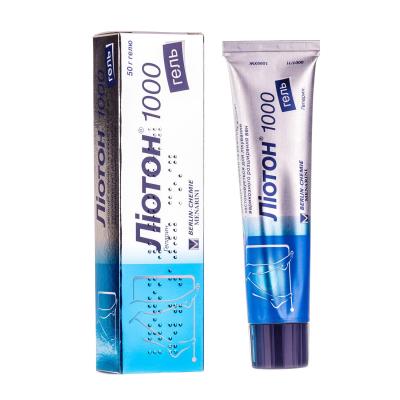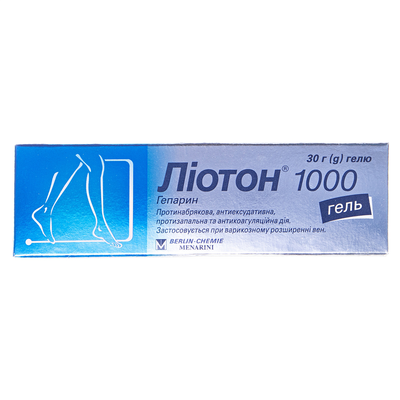
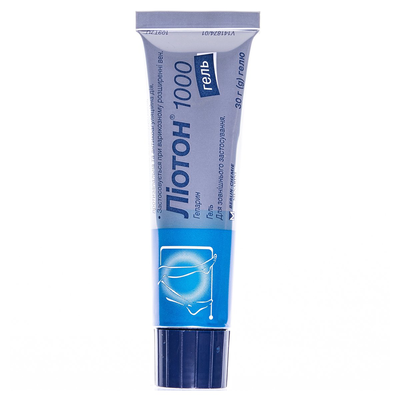
Lioton 1000 Gel, 1,000 IU/g, 30 g per tube
Composition
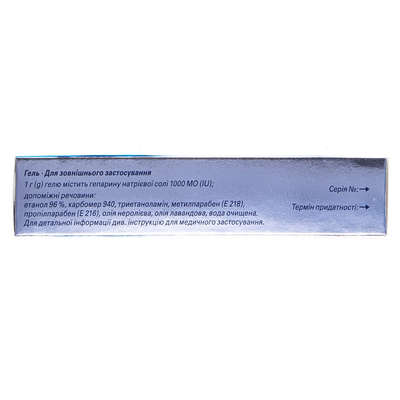
Active ingredient: 1 g of gel contains 1,000 IU of heparin sodium;
excipients: 96% ethanol, carbomer 940, triethanolamine, methylparaben (E 218), propylparaben (E 216), neroli oil (contains linalool, d-limonene, geraniol, citral, citronellol, and farnesol), lavender oil (contains linalool, d-limonene, geraniol, and coumarin), purified water.
Dosage form
Gel.
Main physical and chemical properties: a colorless or slightly yellowish, nearly transparent gel with a viscous consistency and a pleasant odor.
Pharmacotherapeutic group
Agents used in the treatment of varicose veins. Heparins or heparinoids for topical use. ATC code C05B A03.
Pharmacological properties
Pharmacodynamics.
When applied to the skin, Lioton® 1000 gel exerts anti-edematous, anti-exudative, anti-inflammatory, and anticoagulant effects.
Pharmacokinetics.
Heparin is detected in blood plasma within 24 hours after application of the product, with peak heparin concentrations reached after 8 hours. Elimination occurs primarily via the kidneys. When applied to the skin, Lioton® 1000 gel does not affect blood coagulation parameters.
Indications
Treatment of superficial vein diseases, such as varicose veins and associated complications, phlebothrombosis, thrombophlebitis, and superficial periphlebitis. Postoperative varicose phlebitis; complications following surgical removal of subcutaneous veins in the lower extremities. Injuries and contusions, infiltrates and localized edema, subcutaneous hematomas. Injuries and strains of musculotendinous and capsuloligamentous structures.
Contraindications
Hypersensitivity to heparin or any other components of the drug; bleeding trophic leg ulcers; open and/or infected wounds; hemorrhagic diathesis; purpura; thrombocytopenia; hemophilia, and a tendency to bleed.
Interactions with Other Medications and Other Types of Interactions
The use of heparin may prolong prothrombin time in patients taking oral anticoagulants. This medication should not be used in combination with topical medications, such as those containing tetracycline, hydrocortisone, salicylic acid, or anticoagulants.
Special Considerations for Use
If a patient exhibits hemorrhagic symptoms, the use of Lioton® 1000 gel should be carefully considered. The product should not be prescribed in cases of bleeding, applied to open wounds, mucous membranes, infected skin areas, or areas with purulent processes; nor should it be applied to the eyes, the area around the eyes, ulcers, or blisters. In cases of blood clotting disorders, the gel is not recommended for application to large areas of skin. When treating phlebitis, this medication should not be rubbed into the skin.
Lioton® 1000 gel contains methyl parahydroxybenzoate (E 218), propyl parahydroxybenzoate (E 216) as preservatives, which may cause allergic reactions (which may develop over time).
The medication contains aromatic substances including citral, citronellol, coumarin, d-limonene, farnesol, geraniol, and linalool. Citral, citronellol, coumarin, d-limonene, farnesol, geraniol, and linalool may cause allergic reactions.
Use during pregnancy or breastfeeding.
There are no data on the use of this product during pregnancy or breastfeeding.
Effect on reaction time when driving or operating machinery.
This medication does not affect the ability to drive or operate machinery.
Dosage and Administration
Adults should use the medication 1–3 times daily. Apply
3–10 cm of gel to the affected area of the skin and spread it with light massaging motions. The duration of treatment is determined by the physician on an individual basis, taking into account the severity of the condition.
Children. Due to limited experience with this medication, it should not be prescribed to children.
Overdose
No cases of overdose have been reported to date. Due to minimal systemic absorption, there is no risk of overdose with topical application. Accidental oral ingestion of the gel (for example, by a child) may cause nausea or vomiting. In such cases, gastric lavage should be performed, and symptomatic treatment should be administered if necessary. The effect of heparin can be neutralized with protamine sulfate.
Side Effects
When applied to the skin, allergic reactions to heparin are very rare (fewer than 1 in 10,000 patients treated). However, in isolated cases (frequency unknown: cannot be estimated from available data), hypersensitivity reactions may occur, especially with prolonged use, such as redness, itching, skin swelling, a burning sensation, skin rash, hives, angioedema, hemorrhages, and, rarely, the appearance of small pustules, vesicles, or blisters, which resolve quickly after discontinuation of the drug. Systemic adverse reactions may occur when applied to large areas of the skin.
Reporting of Suspected Adverse Reactions.
Reporting suspected adverse reactions after a drug’s approval plays an important role. This allows for continued monitoring of the benefit-risk profile of the drug. Healthcare professionals should report any suspected adverse reactions.
Shelf life
5 years. After first opening: 6 months.
Do not use the drug after the expiration date printed on the package.
Storage Conditions
Store at a temperature not exceeding 25 °C. Keep out of the reach of children.
Packaging
Tube containing 30 g, 50 g, or 100 g of gel; 1 tube per cardboard box.
Dispensing Category
Available without a prescription.