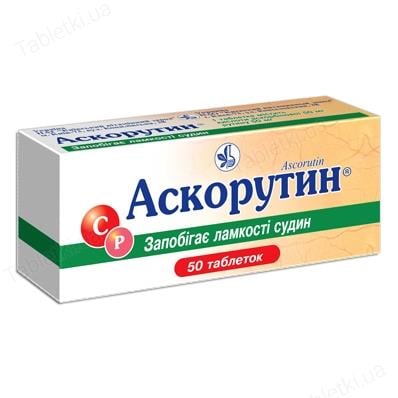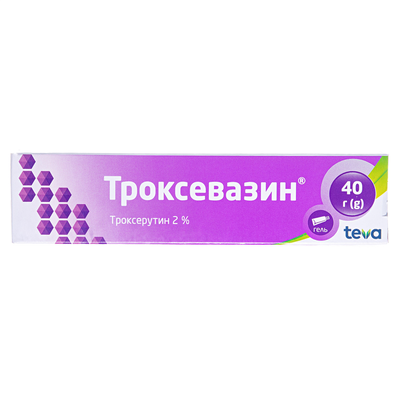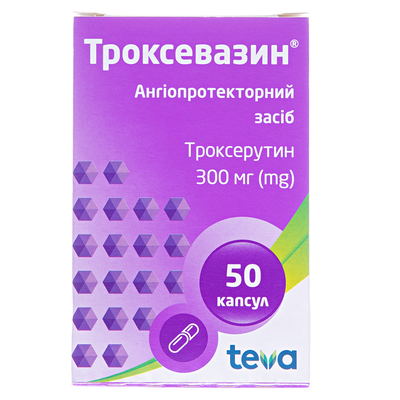
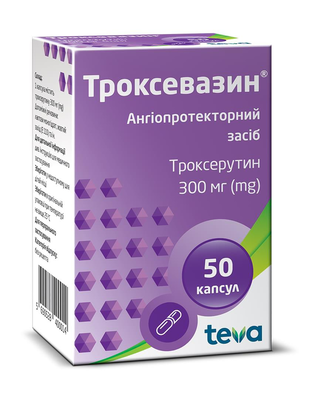
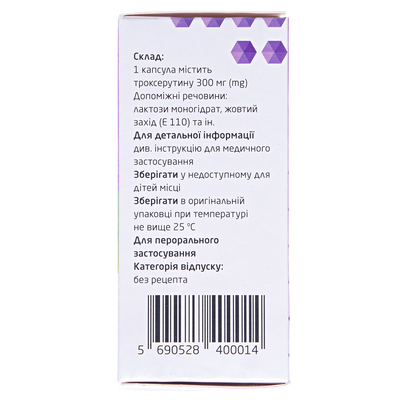
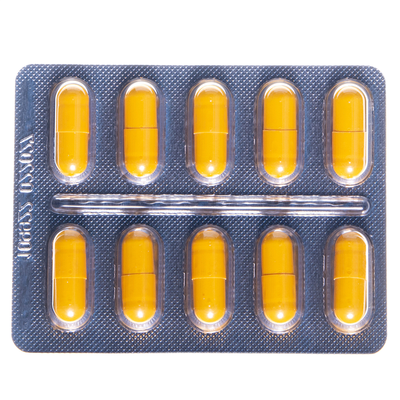
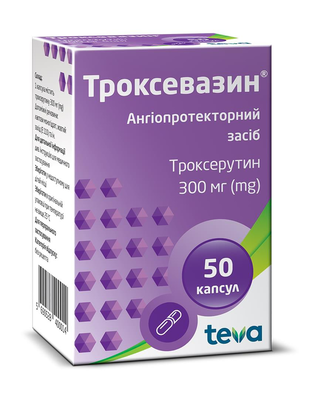
Troxevasin 300 mg capsules, No. 50 (10 x 5)
Ingredients
Active ingredient: troxerutin;
1 capsule contains 300 mg of troxerutin;
Excipients: magnesium stearate, lactose monohydrate; quinoline yellow (E 104), sunset yellow (E 110), titanium dioxide (E 171), gelatin.
Dosage Form
Capsules.
Main physical and chemical properties: hard cylindrical gelatin capsules, No. 1, yellow in color (body – yellow; cap—yellow); capsule contents—powder ranging in color from yellow to yellow-brown; the presence of agglomerates that disintegrate upon pressure is permitted.
Pharmacotherapeutic group
Angioprotectants. Capillary-stabilizing agents. Bioflavonoids. Troxerutin. ATC code C05C A04.
Pharmacological Properties
Pharmacodynamics.
Troxevasin is a mixture of bioflavonoids containing at least 95% troxerutin; it is a capillary-tonic and venotonic agent. It exhibits anti-inflammatory and antioxidant effects and inhibits hyaluronidase. It prevents the oxidation of hyaluronic acid, ascorbic acid, and epinephrine, and inhibits lipid peroxidation. Troxerutin reduces increased capillary permeability and fragility, prevents damage to the basement membrane of endothelial cells caused by various factors, and, in addition, exhibits antioxidant, membrane-stabilizing, antihemorrhagic, anti-inflammatory, and venotonic effects. It reduces edema, improves tissue nutrition, enhances microcirculation and microvascular perfusion, and alleviates other symptoms associated with venous insufficiency or impaired lymphatic drainage.
Pharmacokinetics.
Maximum plasma concentrations are reached 1–9 hours after oral administration. The decline in plasma concentration is bi-exponential. Plasma protein binding ranges from 27–29%; the drug accumulates primarily in endothelial tissue. It does not cross the blood-brain barrier, crosses the placental barrier in small amounts, and passes into breast milk in minimal amounts. It is metabolized by glucuronidation in the liver. It is primarily excreted from the body in bile and, to a small extent, in urine.
Indications
Troxevasin capsules are indicated for the symptomatic treatment of the following conditions:
- pre-varicose and varicose syndrome, varicose ulcers;
- superficial thrombophlebitis, phlebitis, and post-phlebitic conditions;
- chronic venous insufficiency;
- hemorrhoids;
- as part of complex therapy for diabetic retinopathy;
- swelling and pain associated with injuries and varicose veins, varicose dermatitis;
- combined treatment of contusions, sprains, dislocations, and symptoms of muscle cramps (spasmodic contraction of the calf muscles).
Contraindications
Troxevasin is contraindicated in patients with hypersensitivity to troxerutin or to any of the drug’s excipients; with gastric or duodenal ulcers, or with chronic gastritis (in the acute phase).
Interactions with Other Medications and Other Types of Interactions
The drug enhances the effect of ascorbic acid in strengthening the structure and reducing the permeability of the vascular wall.
Special considerations for use
Troxevasin is ineffective for edema caused by diseases of the liver, kidneys, or cardiovascular system.
Use this medication with caution in patients with severe liver or gallbladder disease.
Since the drug may irritate the stomach lining, Troxevasin should be taken with food.
If a patient has been diagnosed with an intolerance to certain sugars, they should consult a doctor before taking this medication. The medication contains lactose and should therefore not be used by patients with lactase deficiency, galactosemia, or glucose-galactose malabsorption syndrome.
Due to the presence of a dye (E 110), treatment with this medication may cause an allergic reaction, including asthma. The risk of an allergic reaction is higher in patients with an allergy to acetylsalicylic acid.
Use during pregnancy or breastfeeding.
Pregnancy
There are no data on the adverse effects of troxerutin on pregnant or breastfeeding women; however, its use during the first trimester of pregnancy is not recommended.
Breastfeeding
The drug passes into breast milk in minimal amounts, but there are no data indicating that these amounts have caused clinically significant reactions in newborns. The decision on whether to use this medication in this population is made by the physician based on a balance of the benefits to the mother against the potential risks to the fetus or infant.
Effect on the ability to react while driving or operating machinery.
Troxevasin does not affect the ability to drive or operate machinery.
Directions for Use and Dosage
Troxevasin capsules should be taken orally with meals. The dosage and duration of treatment are determined by the physician based on the nature, severity, and course of the disease.
The usual dose is 2 capsules per day. Maintenance therapy is 1 capsule per day for 3–4 weeks. This treatment may be combined with concurrent use of Troxevasin gel. The effectiveness of treatment with Troxevasin depends on regular intake, correct dosing, and the duration of therapy. Clinical experience shows that the desired effect is sometimes observed at doses exceeding 600 mg (2 capsules) per day.
Children.
Experience with the use of this medication to treat children (under 18 years of age) is limited; therefore, its use is not recommended.
Overdose
No cases of overdose have been reported.
Symptoms. Side effects may be exacerbated.
Treatment. Discontinue use of the medication. It is recommended to induce vomiting or perform gastric lavage and provide symptomatic treatment. If necessary, peritoneal dialysis may be administered.
Side Effects
Adverse reactions rarely occur during treatment with Troxevasin capsules.
Adverse reactions are classified by frequency as follows: very common (≥1/10); common (≥1/100, <1/10); uncommon (≥1/1,000, <1/100); rare (≥1/10,000, <1/1,000); very rare (<1/10,000); frequency unknown (cannot be estimated from the available data).
Immune system disorders: very rare—anaphylactic shock, anaphylactoid reactions, hypersensitivity reactions.
Skin and subcutaneous tissue disorders: rare—rash; frequency unknown—allergic dermatitis (itching, hives).
Psychiatric disorders: frequency unknown—sleep disturbances.
Nervous system disorders: very rare—dizziness, headache.
Vascular disorders: very rare—ecchymosis.
Gastrointestinal disorders: rare—stomach pain, abdominal discomfort, dyspepsia, flatulence, diarrhea; frequency unknown—nausea, vomiting.
General disorders: very rare—increased fatigue.
Shelf life
5 years.
Do not use this medication after the expiration date printed on the package.
Storage conditions
Store in the original packaging at a temperature not exceeding 25 °C.
Keep out of the reach of children.
Packaging
10 capsules per blister pack; 5 or 10 blister packs per cardboard box.
Dispensing Category
Over-the-counter.