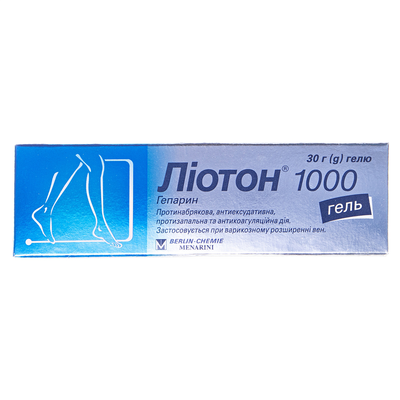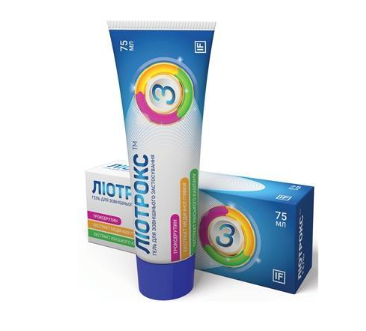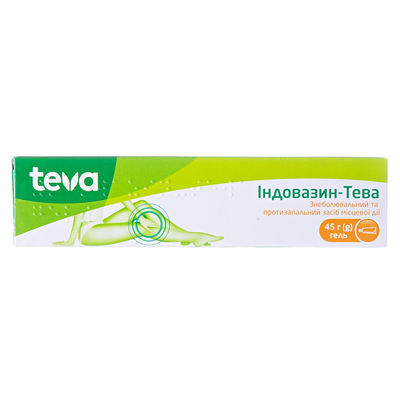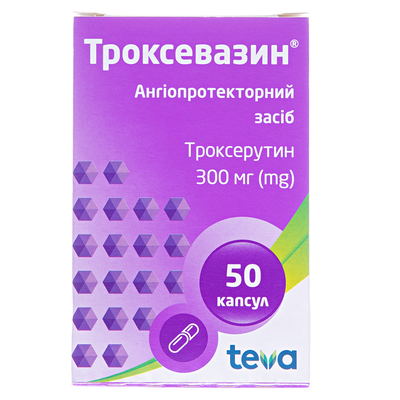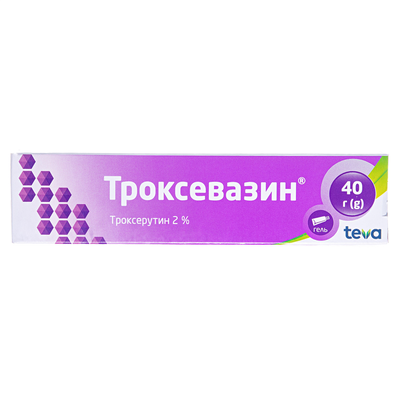
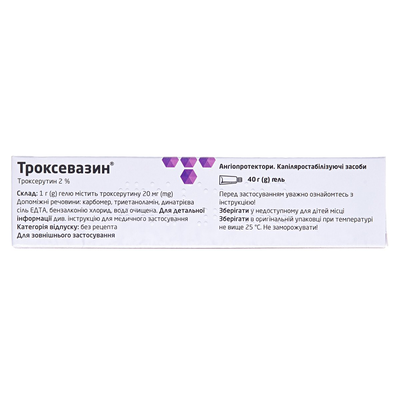
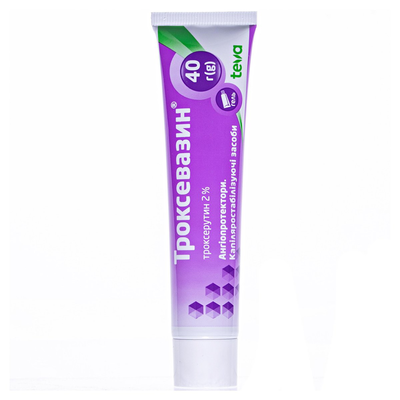
Troxevasin Gel 2%, 40 g in tubes
Ingredients
Active ingredient: troxerutin;
1 g of gel contains 20 mg of troxerutin;
Excipients: carbomer, triethanolamine, disodium EDTA, benzalkonium chloride, purified water.
Dosage Form
Lari 2%.
Main physical and chemical properties: a gel ranging in color from yellow to light brown.
Pharmacotherapeutic group
Angioprotectants. Capillary stabilizers. Bioflavonoids. Troxerutin. ATC code S05S A04.
Pharmacological properties
Pharmacodynamics.
Troxevasin® is a mixture of bioflavonoids containing at least 95% troxerutin. Troxerutin selectively accumulates in the endothelial layer of venules and penetrates deeply into the subendothelial layer of the venous wall, where its concentration is higher than in adjacent tissues. The drug prevents damage to cell membranes caused by oxidation.
Its antioxidant effect manifests as a reduction and elimination of the oxidative properties of oxygen, inhibition of lipid peroxidation, and protection of the vascular endothelium from the oxidative action of hydroxyl radicals. Troxerutin reduces increased capillary permeability and has a venotonic effect. The cytoprotective effect is due to the inhibition of neutrophil activation and adhesion, a reduction in red blood cell aggregation, an increase in red blood cell resistance to deformation, and a reduction in the release of inflammatory mediators.
It enhances veno-arterial reflux, prolongs venous filling time, and improves microcirculation and microvascular perfusion.
Troxevasin® is designed to reduce edema and pain, improve tissue nutrition, and resolve various pathological disorders associated with venous insufficiency.
Pharmacokinetics.
After topical application of Troxevasin® gel, the active ingredient is readily released from the water-soluble gel base and penetrates the dermis in approximately 30 minutes, and into the subcutaneous adipose tissue within 2–5 hours.®
Indications
Troxevasin®, gel, is used for the symptomatic treatment of the following conditions:
- venous insufficiency;
- prevaricose veins and varicose vein syndrome;
- superficial thrombophlebitis, phlebitis, and post-phlebitic conditions;
- comprehensive treatment of hemorrhoids;
- muscle cramps (spasmodic tension of the calf muscles).
Contraindications
Hypersensitivity to troxerutin or to any of the drug’s excipients. Troxevasin® Gel must not be applied to mucous membranes, open wounds, or eczematous skin areas.
Interactions with Other Medications and Other Forms of Interaction
The drug enhances the effect of ascorbic acid in strengthening the structure and reducing the permeability of the vascular wall.
Special Considerations for Use
Hypersensitivity reactions are more common in patients with skin and/or allergic conditions.
Benzalkonium chloride, a component of the medication, has an irritating effect and may cause skin reactions. Troxevasin® gel should not be applied to the eyes or to inflamed skin.
Patients with severe renal insufficiency are not recommended to use this medication for prolonged periods.
If symptoms do not improve with use of the medication, consult a doctor.
Pregnancy and Lactation
There are no data on adverse effects of the medication when used during pregnancy or lactation. However, the use of Troxevasin® gel during the first trimester of pregnancy is not recommended.
Effects on the Ability to Drive and Operate Machinery
This has no effect.
Directions for Use and Dosage
For topical use only.
Apply the gel to the affected area in an even, thin layer twice daily (morning and evening), rubbing it in with light massage movements until the medication is completely absorbed. If necessary, a tight or elastic bandage may be applied. The gel is odorless and does not leave greasy stains on clothing. For more severe conditions, combination therapy with Troxevasin® capsules is recommended. In cases of chronic venous insufficiency, combination therapy is used until symptoms completely disappear.
The dosage and duration of treatment are determined by a doctor, taking into account the severity and course of the disease.
Children
There are no contraindications for the use of this medication in children.
Overdose
No cases of overdose have been reported with topical use of the medication. If a large amount of the drug is accidentally ingested, general measures to remove the drug (e.g., inducing vomiting) should be taken, and medications for symptomatic treatment should be used. Peritoneal dialysis may be performed if necessary.
Side Effects
When using Troxevasin® gel, skin irritation or allergic reactions—including redness, itching, skin rash, dermatitis, and angioedema—may occur very rarely. These symptoms usually resolve quickly after discontinuing the medication.
Shelf Life
5 years.
Storage Conditions
Store in the original packaging at a temperature not exceeding 25 °C.
Do not freeze!
Keep out of reach of children.
Packaging
20 g, 40 g, or 100 g in tubes. One tube per cardboard box.
Terms of Sale
Available without a prescription.
Manufacturer
Balkanfarma-Troyan, JSC.