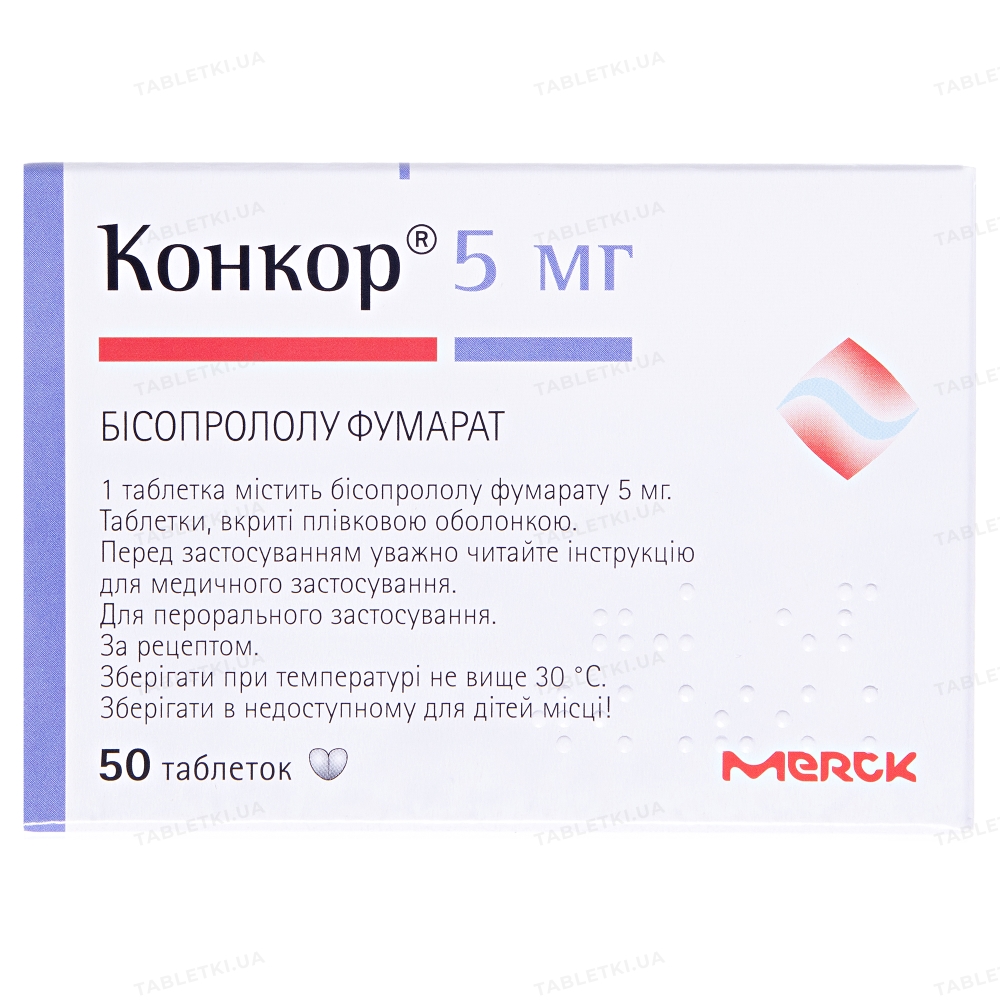
Concor tablets, film-coated, 5 mg, No. 50 (25 x 2)
Active ingredient: bisoprolol;
1 tablet contains 5 mg or 10 mg of bisoprolol fumarate;
excipients: colloidal anhydrous silicon dioxide, magnesium stearate, crospovidone, microcrystalline cellulose, corn starch, anhydrous calcium hydrophosphate;
film coating for 5 mg tablets: yellow iron oxide (E 172), dimethicone 100, polyethylene glycol 400, titanium dioxide (E 171), hypromellose 2910/15;
film coating for 10 mg tablets: yellow iron oxide (E 172), red iron oxide (E 172), dimethicone 100, polyethylene glycol 400, titanium dioxide (E 171), hypromellose 2910/15.
Dosage Form
Film-coated tablets.
Main physical and chemical properties:
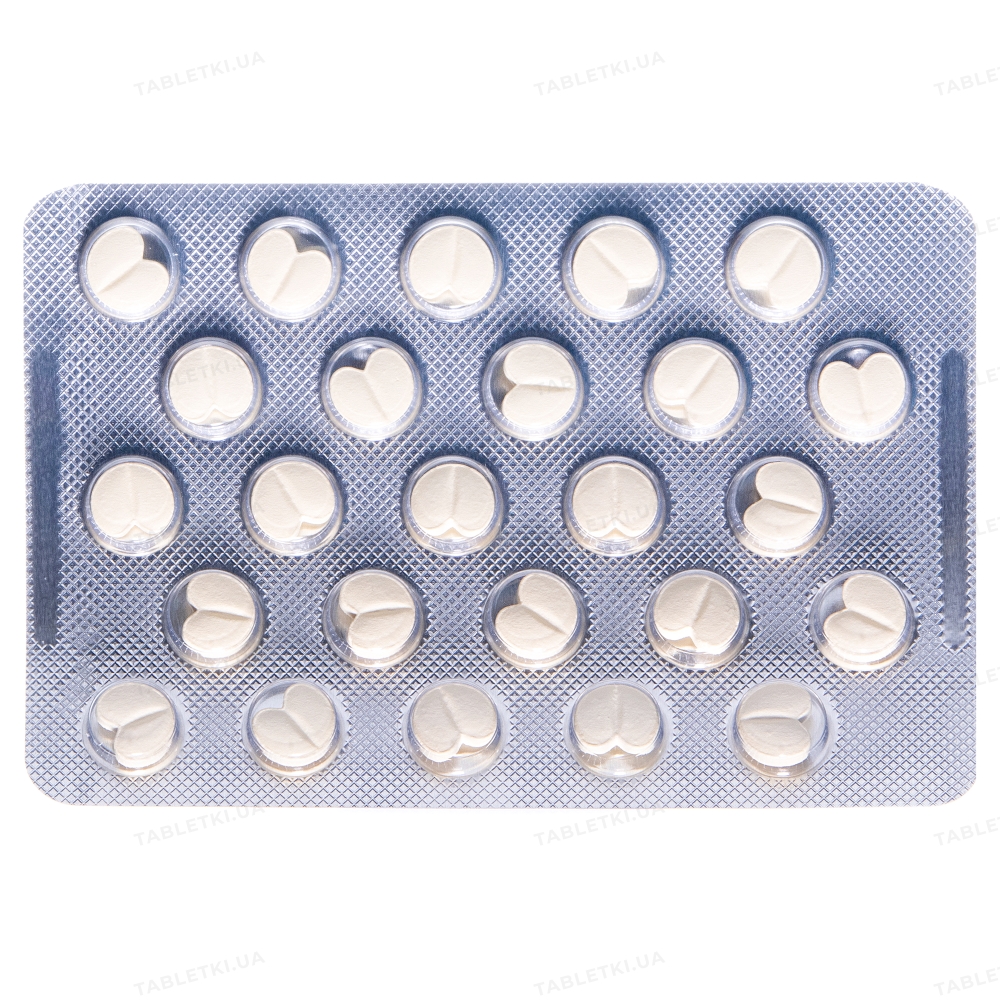
5 mg tablets: yellowish-white, heart-shaped, biconvex, film-coated, with a score line on both sides;
10 mg tablets: light orange, heart-shaped, biconvex, film-coated, with a score line on both sides.
Pharmacotherapeutic group
Selective beta-adrenoreceptor blockers.
ATC code C07A B07.
Pharmacological Properties
Pharmacodynamics.
Bisoprolol is a highly selective ß1-adrenergic receptor blocker. It has no intrinsic sympathomimetic activity and no clinically significant membrane-stabilizing properties. The drug has very low affinity for β2-receptors, for smooth muscle receptors in the bronchi and blood vessels, and for β2-receptors involved in metabolic regulation. Thus, bisoprolol has no effect on airway resistance or β2-mediated metabolic effects. Bisoprolol’s selectivity for β1-adrenoreceptors extends beyond the therapeutic dose range.
Bisoprolol does not have a pronounced negative inotropic effect.
The maximum effect of bisoprolol occurs 3–4 hours after oral administration. The plasma half-life is 10–12 hours, resulting in 24-hour efficacy following a single dose. The maximum antihypertensive effect is achieved after 2 weeks of treatment.
In intensive care, in patients with ischemic heart disease without chronic heart failure, bisoprolol reduces cardiac output and myocardial oxygen demand by decreasing heart rate and stroke volume. During long-term therapy, elevated peripheral resistance is reduced. Additionally, the antihypertensive effect of beta-blockers is based on a mechanism that reduces plasma renin activity.
Bisoprolol inhibits the response to sympathomimetic activity by blocking cardiac receptors. This leads to a slower heart rate and reduced myocardial contractility, which decreases myocardial oxygen demand. This achieves the desired effect in patients with angina and ischemic heart disease.
Pharmacokinetics.
Absorption. After oral administration, more than 90% of bisoprolol is absorbed from the gastrointestinal tract. Absorption is not affected by food intake. First-pass effect is ≤ 10%. Bioavailability is approximately 90%.
Distribution. The volume of distribution is 3.5 L/kg. Plasma protein binding is approximately 30%.
Metabolism and Excretion. Bisoprolol is eliminated from the body via two pathways: 50% is biotransformed in the liver to form inactive metabolites and excreted by the kidneys, while 50% is excreted by the kidneys unchanged. The total clearance of bisoprolol is 15 L/h. Due to its long half-life (10–12 hours), the drug maintains its therapeutic effect for 24 hours following a single daily dose.
Linearity. The pharmacokinetics of bisoprolol are linear, and its parameters do not depend on age.
Special Patient Populations. Since bisoprolol is eliminated from the body equally by the kidneys and the liver, there is no need to adjust the dosing regimen for patients with hepatic or renal impairment. The pharmacokinetics in patients with stable chronic heart failure and impaired liver or kidney function have not been studied. In patients with chronic heart failure, NYHA Class III, plasma bisoprolol levels are higher and the half-life is longer compared to healthy volunteers. The maximum plasma concentration at steady state is 64 ± 21 ng/mL at a daily dose of 10 mg, with a half-life of 17 ± 5 hours.
Indications
- Hypertension;
- ischemic heart disease (angina);
- chronic heart failure with left ventricular systolic dysfunction in combination with ACE inhibitors, diuretics, and, if necessary, cardiac glycosides.
Contraindications
- Acute heart failure or decompensated heart failure requiring inotropic therapy;
- cardiogenic shock;
- second- and third-degree atrioventricular block (except in patients with a pacemaker);
- sinoatrial node dysfunction;
- sinoatrial block;
- symptomatic bradycardia;
- symptomatic hypotension;
- severe bronchial asthma;
- late stages of peripheral circulatory disorders or Raynaud’s disease;
- untreated pheochromocytoma;
- metabolic acidosis;
- hypersensitivity to bisoprolol or other components of the drug.
Interactions with Other Medications and Other Types of Interactions
Combinations that are not recommended.
Treatment of chronic heart failure.
- Class I antiarrhythmic agents (e.g., quinidine, disopyramide, lidocaine, phenytoin, flecainide, propafenone): may potentiate the effect on atrioventricular conduction and enhance the negative inotropic effect.
All indications.
- Calcium channel blockers (the verapamil group and, to a lesser extent, diltiazem): adverse effects on myocardial contractility and atrioventricular conduction. Intravenous administration of verapamil in patients taking beta-blockers may lead to severe hypotension and atrioventricular block.
- Antihypertensive drugs with a central mechanism of action (clonidine, methyldopa, moxonidine, rilmenidine): Heart failure may worsen due to a decrease in central sympathetic tone (decreased heart rate and cardiac output, vasodilation). Abrupt discontinuation of the drug, especially if preceded by discontinuation of beta-adrenergic receptor blockers, may increase the risk of hypertension recurrence.
Combinations that should be used with caution.
Treatment of hypertension or ischemic heart disease (angina).
- Class I antiarrhythmic agents (e.g., quinidine, disopyramide, lidocaine, phenytoin, flecainide, propafenone): may potentiate the effect on atrioventricular conduction and enhance the negative inotropic effect.
All indications.
- Dihydropyridine calcium channel blockers (e.g., nifedipine, felodipine, amlodipine): may increase the risk of hypotension. The possibility of an increased negative effect on myocardial inotropic function in patients with heart failure cannot be ruled out.
- Class III antiarrhythmic agents (e.g., amiodarone): may potentiate effects on atrioventricular conduction.
- Topical beta-blockers (e.g., those contained in eye drops for glaucoma): may enhance the systemic effects of bisoprolol.
- Parasympathomimetics: may prolong atrioventricular conduction time and increase the risk of bradycardia.
- Insulin and oral hypoglycemic agents: enhanced hypoglycemic effect. Beta-adrenergic receptor blockade may mask the symptoms of hypoglycemia.
- Anesthetics: increased risk of myocardial depression and hypotension (see the “Special Instructions and Precautions for Use” section).
- Cardiac glycosides: decreased heart rate, prolonged atrioventricular conduction time.
- Nonsteroidal anti-inflammatory drugs (NSAIDs): may attenuate the hypotensive effect of bisoprolol.
- β-sympathomimetics (e.g., orciprenaline, isoprenaline, dobutamine): Use in combination with Concor® may reduce the therapeutic effect of both drugs. Higher doses of epinephrine may be required to treat allergic reactions.
- Sympathomimetics that activate α- and β-adrenoreceptors (e.g., epinephrine, norepinephrine): may result in an α-adrenoreceptor-mediated vasoconstrictive effect, leading to an increase in blood pressure and worsening of intermittent claudication. This interaction is more likely when using nonselective β-blockers.
Concomitant use with antihypertensive agents and agents that have a hypotensive effect (e.g., tricyclic antidepressants, barbiturates, phenothiazines) may increase the risk of hypotension.
Possible combinations.
- Mefloquine: may increase the risk of bradycardia.
- MAOIs (except for type B MAOIs): potentiation of the hypotensive effect of beta-blockers, but there is a risk of a hypertensive crisis.
Special Considerations for Use
Treatment of stable chronic heart failure with bisoprolol should begin with a titration phase.
Patients with ischemic heart disease should not abruptly discontinue treatment unless absolutely necessary, as this may lead to a temporary worsening of their condition. The initiation and discontinuation of bisoprolol therapy require regular monitoring.
Currently, there is insufficient therapeutic experience with the treatment of heart failure in patients with the following diseases and medical conditions: type 1 diabetes mellitus (insulin-dependent), severe renal insufficiency, severe hepatic dysfunction, restrictive cardiomyopathy, congenital heart defects, hemodynamically significant acquired valvular heart disease, or myocardial infarction within the past 3 months.
The drug should be used with caution in patients with the following conditions:
- bronchospasm (in bronchial asthma, obstructive airway diseases);
- diabetes mellitus with significant fluctuations in blood glucose levels, in which symptoms of hypoglycemia (tachycardia, palpitations, sweating) may be masked;
- a strict diet;
- desensitization therapy. Like other beta-blockers, bisoprolol may increase sensitivity to allergens and worsen the severity of anaphylactic reactions. In such cases, treatment with epinephrine does not always produce a positive therapeutic effect;
- first-degree atrioventricular block;
- Prinzmetal angina; Cases of coronary vasospasm have been observed. Despite its high β1-selectivity, angina attacks cannot be completely relieved when bisoprolol is prescribed to patients with Prinzmetal angina.
- peripheral arterial occlusive disease (symptoms may worsen at the start of therapy);
- general anesthesia.
In patients scheduled for general anesthesia, the use of beta-blockers reduces the incidence of arrhythmias and myocardial ischemia during anesthesia, intubation, and the postoperative period. It is recommended to continue the use of beta-blockers during the perioperative period. It is essential to inform the anesthesiologist about the use of beta-blockers, as the anesthesiologist must consider potential interactions with other medications, which may lead to bradycardia, reflex tachycardia, and a reduced ability of the reflex mechanism to compensate for blood loss. If bisoprolol has been discontinued prior to surgery, the dose should be gradually reduced, and the medication should be stopped 48 hours before general anesthesia.
Combinations of bisoprolol with calcium channel blockers of the verapamil or diltiazem group, with Class I antiarrhythmic drugs, or with centrally acting antihypertensive drugs (see the section “Interactions with Other Medications and Other Forms of Interaction”).
Although cardioselective beta-blockers (β1) have less of an effect on lung function than nonselective beta-blockers, they should be avoided, as should all beta-blockers, in patients with obstructive airway disease unless there are compelling reasons for treatment. If such reasons exist, Concor® should be used with caution. In patients with obstructive airway disease, treatment with bisoprolol should be initiated at the lowest possible dose. Patients should be monitored for the onset of new symptoms (e.g., shortness of breath, exercise intolerance, cough).
If symptoms of bronchial asthma or other chronic obstructive pulmonary diseases appear, concomitant therapy with bronchodilators is indicated. In some cases, patients with bronchial asthma may require higher doses of β2-sympathomimetics due to increased airway resistance.
Patients with psoriasis (including a history of psoriasis) are prescribed beta-blockers (e.g., bisoprolol) after a thorough benefit-risk assessment.
Concor® should be prescribed to patients with pheochromocytoma only after treatment with α-adrenergic blockers. Symptoms of thyrotoxicosis may be masked by taking this medication. When using Concor®, a positive result may be observed during doping control.
Pregnancy and lactation.
Pregnancy. Bisoprolol has pharmacological properties that may adversely affect the course of pregnancy and/or the development of the fetus or newborn. Generally, beta-blockers reduce placental blood flow, which may cause intrauterine growth restriction, fetal death, spontaneous abortion, or preterm labor. Side effects may develop in the fetus and newborn (e.g., hypoglycemia, bradycardia). If treatment with beta-blockers is necessary, it is preferable to use a β1-selective beta-blocker.
During pregnancy, the drug should be used only when the expected benefit to the woman outweighs the potential risk to the fetus. Uteroplacental blood flow and fetal growth should be monitored. If adverse effects on the course of pregnancy or the fetus occur, alternative treatments should be considered.
After delivery, the newborn should be kept under close observation. Symptoms of hypoglycemia and bradycardia may occur during the first 3 days.
Breastfeeding. There are no data on the excretion of bisoprolol into breast milk; therefore, Concor® is not recommended during breastfeeding.
Effects on the ability to drive and operate machinery.
In studies involving patients with ischemic heart disease, the drug did not affect the ability to drive. However, in some cases, the drug may affect the ability to drive or operate complex machinery. Special attention should be paid at the start of treatment, when the dose is changed, or when the drug is combined with alcohol.
Directions for Use and Dosage
Concor® tablets should be swallowed whole, without chewing, in the morning on an empty stomach, during or after breakfast, with a small amount of liquid.
Hypertension; ischemic heart disease (angina).
Treatment should be started gradually with low doses, followed by a gradual increase in dosage. The recommended dose is 5 mg (1 Concor® 5 mg tablet) per day. For mild hypertension (diastolic blood pressure up to 105 mmHg), a dose of 2.5 mg is appropriate.
If necessary, the daily dose may be increased to 10 mg (1 Concor® 10 mg tablet) per day. Further dose increases are justified only in exceptional cases. The maximum recommended dose is 20 mg per day.
The doctor determines the appropriate dose on an individual basis, depending on the heart rate and the therapeutic effect.
Chronic heart failure with left ventricular systolic dysfunction in combination with ACE inhibitors, diuretics, and, if necessary, cardiac glycosides.
Standard therapy for chronic heart failure: ACE inhibitors (or angiotensin receptor blockers if ACE inhibitors are not tolerated), beta-blockers, diuretics, and, if necessary, cardiac glycosides.
Concor® is prescribed for the treatment of patients with chronic heart failure without signs of exacerbation.
Treatment should be administered by a physician experienced in the management of chronic heart failure.
Treatment of stable chronic heart failure with Concor® begins according to the titration schedule provided below and may be adjusted based on the patient’s individual response.
- 1.25 mg* of bisoprolol fumarate once daily for 1 week; if well tolerated, increase to
- 2.5 mg* of bisoprolol fumarate once daily for 1 week; if well tolerated, increase to
- 3.75 mg* of bisoprolol fumarate once daily for the next 1 week; if well tolerated, increase to
- 5 mg of bisoprolol fumarate once daily for the next 4 weeks; If well tolerated, increase to
- 7.5 mg of bisoprolol fumarate once daily for the next 4 weeks; If well tolerated, increase to
- 10 mg of bisoprolol fumarate once daily as maintenance therapy.
* At the start of treatment for chronic heart failure, it is recommended to use Concor® Cor, 2.5 mg film-coated tablets.
The maximum recommended dose of bisoprolol fumarate is 10 mg once daily.
During the titration phase, vital signs (blood pressure, heart rate) and symptoms of worsening heart failure should be monitored. Symptoms may develop as early as the first day of treatment.
Treatment Adjustment.
If the maximum recommended dose is poorly tolerated, a gradual dose reduction may be necessary. In the event of a gradual worsening of heart failure, hypotension, or bradycardia during or after the titration phase, dose adjustment is recommended, which may require a temporary reduction in the bisoprolol dose or, possibly, discontinuation of treatment. Once the patient’s condition has stabilized, the possibility of resuming bisoprolol treatment should always be considered.
Treatment with this medication should not be discontinued abruptly, especially in patients with ischemic heart disease, as this may lead to a worsening of the patient’s condition. If necessary, it is recommended to taper off treatment slowly by gradually reducing the dose (for example, by halving the dose weekly).
Treatment of stable chronic heart failure is typically long-term.
The course of treatment with Concor® is long-term and depends on the nature and severity of the disease.
Patients with hepatic and/or renal insufficiency.
Hypertension; Ischemic heart disease
For patients with mild to moderate hepatic or renal insufficiency, dose adjustment is generally not required. For patients with severe renal insufficiency (creatinine clearance less than 20 mL/min) and patients with severe hepatic insufficiency, the dose should not exceed a daily dose of 10 mg of Concor®. Data on the use of bisoprolol in dialysis patients are limited. No adjustment to the dosing regimen is necessary.
Chronic Heart Failure
There are no data on the pharmacokinetics of bisoprolol in patients with chronic heart failure who also have impaired liver or kidney function; therefore, the dose should be increased with caution.
No dose adjustment is required in elderly patients.
Children. There are no clinical data on the efficacy and safety of the drug for the treatment of children; therefore, the drug should not be used in this patient population.
Overdose
Symptoms.
In cases of overdose (e.g., administration of a daily dose of 15 mg instead of 7.5 mg), cases of third-degree atrioventricular block, bradycardia, and dizziness have been reported. The most common signs of beta-blocker overdose are bradycardia, hypotension, acute heart failure, hypoglycemia, and bronchospasm. To date, there have been several reported cases of overdose in patients with hypertension and/or ischemic heart disease (the maximum dose was 2,000 mg of bisoprolol). Bradycardia and/or hypotension have been reported. All patients recovered. There is wide variability in individual sensitivity to a single high dose of bisoprolol; patients with heart failure may be more sensitive to the drug. Therefore, treatment should begin with a gradual increase in dosage (see the “Dosage and Administration” section).
Treatment.
In case of overdose, treatment with the drug should be discontinued, and supportive and symptomatic therapy should be provided. There is limited evidence that bisoprolol is difficult to remove by dialysis. If an overdose is suspected, the following general measures should be considered in accordance with the expected pharmacological effects and taking into account recommendations for other beta-blockers.
For bradycardia: intravenous administration of atropine. If there is no response, isoprenaline or another drug with a positive chronotropic effect should be administered with caution. In exceptional cases, transvenous implantation of a pacemaker may be required.
For arterial hypotension: intravenous infusions and vasoconstrictors. Intravenous administration of glucagon may be beneficial.
For second- and third-degree atrioventricular block: close monitoring and infusion of isoprenaline or a transvenous pacemaker.
In the event of an exacerbation of chronic heart failure: intravenous administration of diuretics, inotropes, and vasodilators.
For bronchospasm: bronchodilators (e.g., isoprenaline), β2-adrenergic agonists, and/or aminophylline.
Hypoglycemia: intravenous administration of glucose.
Side Effects
Adverse effects are classified by frequency of occurrence into the following categories:
very common (> 1/10), common (> 1/100 and < 1/10), uncommon (> 1/1,000 and < 1/100), rare (> 1/10,000 and < 1/1,000), very rare (< 1/10,000), unknown (frequency cannot be estimated from available data).
Cardiac disorders.
Very common: bradycardia (in patients with chronic heart failure).
Common: signs of worsening heart failure (in patients with chronic heart failure).
Uncommon: atrioventricular conduction disturbances, bradycardia (in patients with hypertension or ischemic heart disease), signs of worsening heart failure (in patients with hypertension or ischemic heart disease).
Nervous system disorders.
Common: dizziness*, headache*.
Rare: syncope.
Eye disorders.
Rare: decreased tear production (should be taken into account when wearing contact lenses).
Very rare: conjunctivitis.
Hearing disorders.
Rare: hearing impairment.
Respiratory system disorders.
Uncommon: bronchospasm in patients with a history of asthma or obstructive airway disease.
Rare: allergic rhinitis.
Gastrointestinal disorders.
Common: nausea, vomiting, diarrhea, constipation.
Skin and connective tissue disorders.
Rare: hypersensitivity reactions, including itching, redness, rash, and angioedema.
Very rare: alopecia. Treatment with beta-blockers may cause a worsening of psoriasis in the form of a psoriatic rash.
Musculoskeletal disorders.
Uncommon: muscle weakness, convulsions.
Liver disorders.
Rare: hepatitis.
Vascular disorders.
Common: coldness or numbness in the extremities, hypotension (in patients with chronic heart failure).
Uncommon: orthostatic hypotension (in patients with chronic heart failure), hypotension (in patients with hypertension or ischemic heart disease).
Reproductive system disorders.
Rare: erectile dysfunction.
Mental disorders.
Uncommon: depression, sleep disturbances.
Rare: nightmares, hallucinations.
Laboratory parameters.
Rare: elevated blood triglyceride levels, elevated plasma liver enzyme levels (AST, ALT).
General disorders.
Common: asthenia (in patients with chronic heart failure), increased fatigue*.
Uncommon: asthenia (in patients with hypertension or ischemic heart disease).
* Applies only to patients with hypertension or ischemic heart disease. These symptoms usually occur at the start of therapy, are mild, and resolve within the first 1–2 weeks.
If side effects or adverse reactions occur, inform your treating physician immediately.
Shelf life
5 years.
Storage conditions
Store at a temperature not exceeding 30 °C. Keep out of the reach of children!
Packaging
30 tablets per blister pack; 1 blister pack per cardboard box. 25 tablets per blister pack; 2 blister packs per cardboard box.
Manufacturer
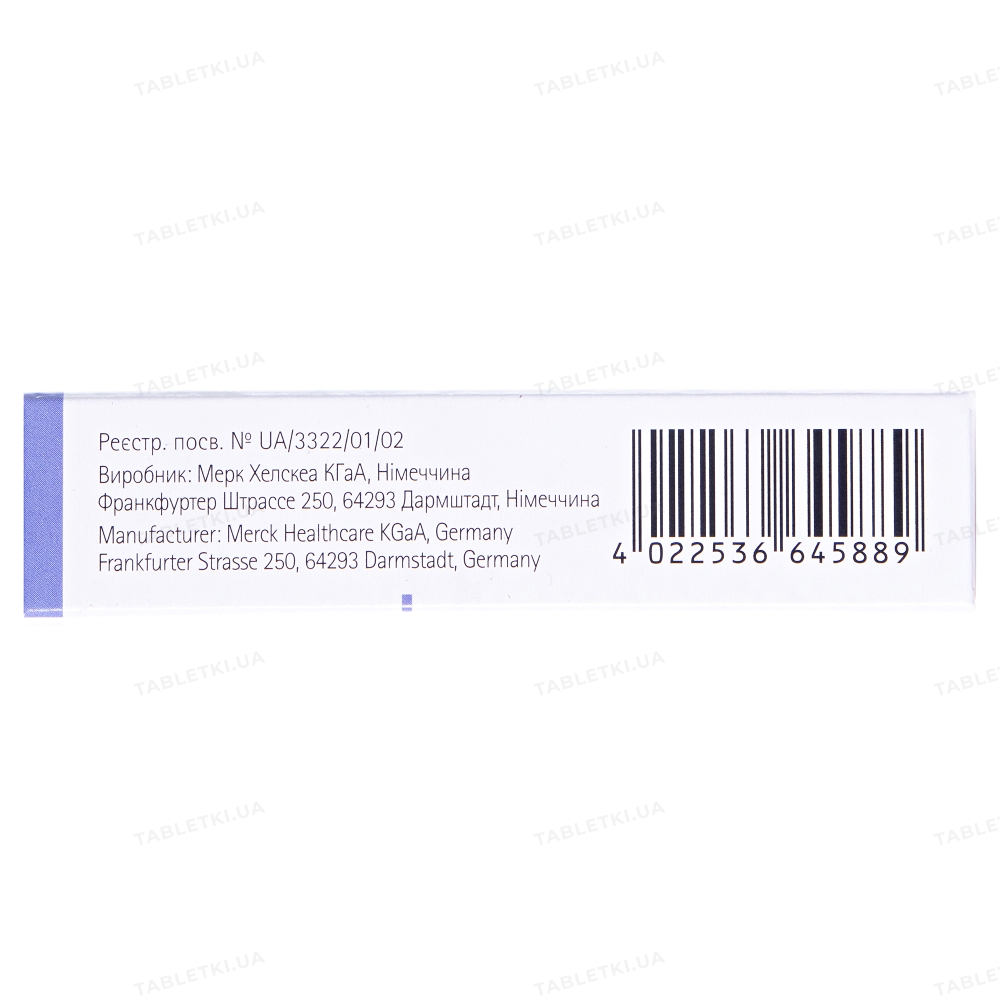
Merck Healthcare KGaA, Germany.
Address
Frankfurter Strasse 250, 64293 Darmstadt, Germany.