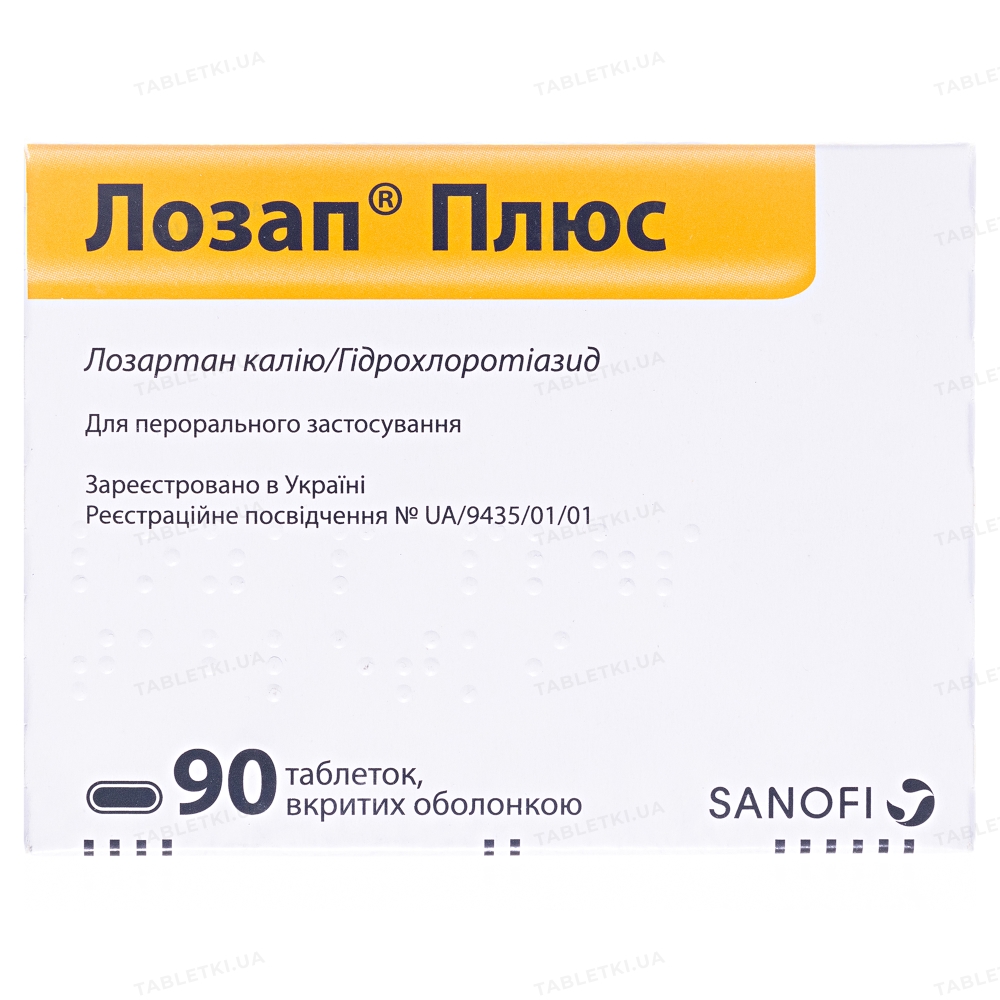
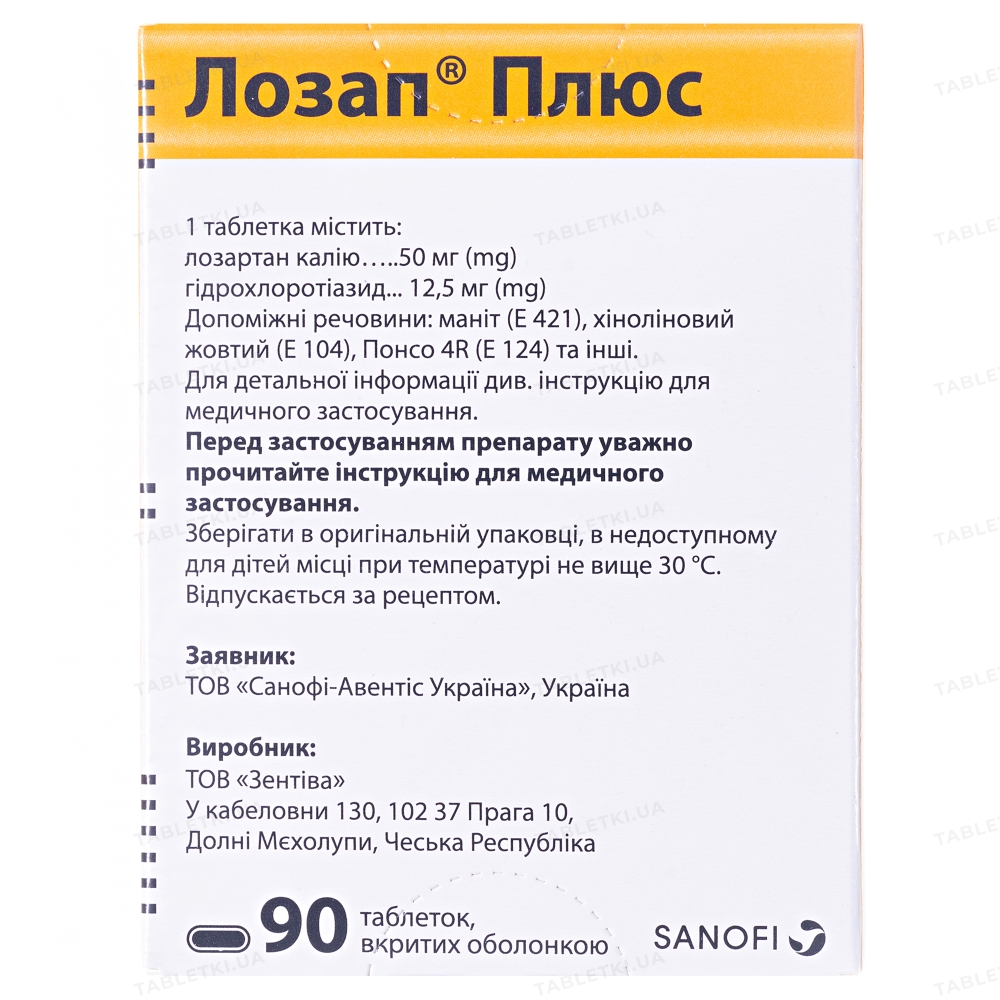
Lozap Plus Tablets, coated, No. 90 (10×9)
Composition
Active ingredients: losartan potassium, hydrochlorothiazide;
1 tablet contains 50 mg of losartan potassium and 12.5 mg of hydrochlorothiazide;
Inactive ingredients: mannitol (E 421), microcrystalline cellulose, croscarmellose sodium, povidone, magnesium stearate, hypromellose, polyethylene glycol 6000, talc, simethicone emulsion, titanium dioxide (E 171), quinoline yellow (E 104), Ponceau 4R (E 124).
Dosage Form
Film-coated tablets.
Main physical and chemical properties: yellow, oval, film-coated tablets with a score line on both sides.
Pharmacotherapeutic group
Drugs acting on the renin-angiotensin system. Angiotensin II antagonists and diuretics. ATC code C09D A01.
Pharmacological properties
Mechanism of action.
Losap® Plus is a combination of losartan and hydrochlorothiazide. In patients with hypertension and left ventricular hypertrophy, losartan, especially when combined with hydrochlorothiazide, reduces the risk of cardiovascular disease and mortality, as demonstrated by an assessment of the combined incidence of cardiovascular events, stroke, and myocardial infarction.
The components of the drug exhibit an additive antihypertensive effect, lowering blood pressure to a greater extent than either component alone. Due to its diuretic effect, hydrochlorothiazide increases plasma renin activity (PRA), stimulates aldosterone secretion, raises angiotensin II levels, and lowers serum potassium levels. Losartan blocks all physiological effects of angiotensin II and, by inhibiting the effects of aldosterone, may help reduce the potassium loss associated with diuretic use.
Losartan has a moderate uricosuric effect, which resolves upon discontinuation of the drug.
Hydrochlorothiazide slightly increases blood uric acid levels; the combination of losartan and hydrochlorothiazide attenuates diuretic-induced hyperuricemia.
Pharmacodynamics.
Losartan
Losartan is a synthetic angiotensin II receptor antagonist (AT1-type receptors) intended for oral administration. Angiotensin II—a potent vasoconstrictor—is the primary active hormone of the renin-angiotensin system and a key factor in the pathophysiology of hypertension. Angiotensin II binds to AT1 receptors, which are found in many types of tissues (for example, in the smooth muscle tissues of blood vessels, the adrenal glands, the kidneys, and the heart), leading to a number of important biological effects, including vasoconstriction and stimulation of aldosterone secretion. Angiotensin II also stimulates the proliferation of smooth muscle cells. Losartan selectively blocks AT1 receptors. In vitro and in vivo studies have demonstrated that losartan and its pharmacologically active carboxylic acid metabolite E-3174 block all physiologically important effects of angiotensin II, regardless of its source or origin. Losartan does not bind to receptors for other hormones and does not block them or the ion channels important for cardiovascular regulation. Furthermore, losartan does not inhibit ACE (kinase II)—the enzyme that breaks down bradykinin. Consequently, there is no potentiation of bradykinin-mediated adverse effects.
When losartan is administered, inhibition of the negative feedback effect of angiotensin II on renin secretion leads to an increase in renin-angiotensin system (RAS) activity. This increase in RAS activity causes a rise in plasma angiotensin II concentrations. Despite the increase in the concentrations of these substances, the antihypertensive effect and the reduction in plasma aldosterone concentrations are maintained, indicating effective blockade of angiotensin II receptors. After discontinuation of losartan, ARP and angiotensin II levels return to baseline within three days.
Both losartan and its primary active metabolite have a higher affinity for AT1 receptors than for AT2 receptors. The active metabolite is 10–40 times more potent than losartan on a body-weight-adjusted basis.
According to the results of a study conducted specifically to assess the incidence of cough in patients taking losartan compared with patients receiving ACE inhibitors, the incidence of cough in patients taking losartan or hydrochlorothiazide was approximately the same and, at the same time, statistically significantly lower than in patients taking ACE inhibitors. In addition, a pooled analysis of 16 double-blind clinical trials involving a total of 4,131 patients showed that the incidence of spontaneous reports of cough in patients taking losartan (3.1%) was similar to the incidence of such reports in patients receiving placebo (2.6%) or hydrochlorothiazide (4.1%), whereas the incidence of cough in patients taking ACE inhibitors was 8.8%.
The use of losartan potassium in patients without diabetes who have hypertension with proteinuria reduces proteinuria as well as the fractional excretion of albumin and immunoglobulin IgG by a statistically significant amount. Losartan maintains glomerular filtration rate and reduces the plasma filtration fraction. Lozartan typically reduces serum uric acid concentrations (usually <0.4 mg/dL); this effect is sustained during long-term therapy.
Losartan does not affect autonomic nervous system reflexes and has no prolonged effect on plasma norepinephrine concentrations. In patients with left ventricular failure, losartan at doses of 25 mg and 50 mg exerts a positive hemodynamic and neurohormonal effect, characterized by an increase in the cardiac volume flow rate index and a decrease in pulmonary capillary wedge pressure, a reduction in systemic vascular resistance, a decrease in mean systemic arterial pressure and heart rate, as well as a reduction in circulating levels of aldosterone and norepinephrine, respectively. In these patients with heart failure, the incidence of arterial hypotension was dose-dependent.
Studies in Patients with Hypertension
In controlled clinical trials, once-daily administration of losartan to patients with mild or moderate essential hypertension resulted in a statistically significant reduction in systolic and diastolic blood pressure. Blood pressure measurements taken 24 hours after dosing, compared with those taken 5–6 hours after dosing, demonstrated that the blood pressure-lowering effect persists for
24 hours. The body’s natural circadian rhythm was preserved. The reduction in blood pressure at the end of the interval between two doses is 70–80% of the effect observed 5–6 hours after dosing.
Discontinuation of losartan in patients with hypertension does not lead to a sudden increase in blood pressure (rebound phenomenon). Although losartan causes a marked reduction in blood pressure, it does not significantly affect heart rate.
Losartan is equally effective in male and female patients, as well as in younger (under 65 years of age) and older patients with hypertension.
Hydrochlorothiazide
Hydrochlorothiazide is a thiazide diuretic. The mechanism of the antihypertensive action of thiazide diuretics has not been fully elucidated. Thiazides disrupt the mechanism of tubular reabsorption of electrolytes in the kidneys, directly increasing the excretion of sodium and chloride in approximately equal amounts. The diuretic effect of hydrochlorothiazide reduces blood plasma volume, increases plasma renin activity, and enhances aldosterone secretion, with a corresponding increase in urinary potassium concentration and loss of bicarbonate, as well as an increase in serum potassium concentration. The renin-aldosterone axis is mediated by angiotensin II; therefore, concomitant use of angiotensin II receptor antagonists may reverse the potassium loss associated with thiazide diuretics.
After oral administration, diuresis begins within two hours, peaks after approximately 4 hours, and lasts for approximately 6 to 12 hours. The antihypertensive effect persists for up to 24 hours.
Non-melanoma skin cancer: Based on available data from epidemiological studies, there is a cumulative, dose-dependent association between ACE inhibitors and non-melanoma skin cancer. One study included a population consisting of 71,533 cases of basal cell carcinoma (BCC) and 8,629 cases of squamous cell carcinoma (SCC), while the control group consisted of 1,430,833 and 172,462 cases, respectively. High exposure to GHTZ (>50,000 mg cumulatively) was associated with an adjusted OR of 1.29 (95% CI: 1.23–1.35) for BCC and 3.98 (95% CI: 3.68–4.31) for SCC. A clear “cumulative dose-response” relationship was observed for both BCC and SCC. Another study demonstrated a possible association between lip cancer (PCCC) and the use of CHTZ: 633 cases of lip cancer corresponded to 63,067 cases in the control group (a risk-stratified sampling strategy was used). A “cumulative dose-effect” relationship was demonstrated using the adjusted odds ratio (OR), which was 2.1 (95% CI: 1.7–2.6), increasing to an OR of 3.9 (3.0–4.9) for high exposure (~25,000 mg) and an OR of 7.7 (5.7–10.5) for the highest cumulative dose (~100,000 mg) (see also the “Special Considerations for Use” section).
Pharmacokinetics.
Absorption
Losartan
When taken orally, losartan is well absorbed and undergoes first-pass metabolism in the liver, resulting in the formation of an active carboxylated metabolite and inactive metabolites. The systemic bioavailability of losartan in tablet form is approximately 33%. Mean peak concentrations of losartan and its active metabolite are reached after 1 hour and 3–4 hours, respectively. When losartan is administered with a regular meal, no clinically significant effect on the plasma concentration profile of losartan has been observed.
Distribution
Losartan
Losartan and its active metabolite are bound to plasma proteins (primarily albumin) to more than 99%. The volume of distribution of losartan is 34 L. Animal studies have shown that losartan hardly crosses the blood-brain barrier.
Hydrochlorothiazide
Hydrochlorothiazide crosses the placental (but not the blood-brain) barrier and is excreted into breast milk.
Biotransformation
Losartan
Approximately 14% of the losartan dose is converted to its active metabolite. Following oral administration of 14C-labeled losartan, the radioactivity in circulating plasma is primarily attributable to the presence of losartan and its active metabolite.
In addition to the active metabolite, biologically inactive metabolites are formed, including two major metabolites resulting from hydroxylation of the butyl side chain and one minor metabolite—N-2-tetrazole glucuronide.
Elimination
Losartan
The plasma clearance of losartan and its active metabolite is approximately 600 mL/min and 50 mL/min, respectively. The renal clearance of losartan and its active metabolite is approximately 74 mL/min and 26 mL/min, respectively. Following oral administration of losartan, approximately 4% of the dose is excreted unchanged in the urine, and approximately 6% of the dose is excreted in the urine as the active metabolite. Losartan and its active metabolite exhibit linear pharmacokinetics following oral administration of losartan at doses up to 200 mg.
Following administration, plasma concentrations of losartan and its active metabolite decline poly-exponentially with terminal half-lives of approximately 2 and 6–9 hours, respectively. When 100 mg of the drug is taken once daily, neither losartan nor its active metabolite accumulates significantly in plasma.
Losartan and its metabolites are excreted in bile and urine. Following oral administration of 14C-labeled losartan, approximately 35% of the radioactivity is recovered in urine and 58% in feces.
Hydrochlorothiazide
Hydrochlorothiazide is not metabolized and is rapidly excreted by the kidneys. When plasma levels were monitored for at least 24 hours, the half-life ranged from 5.6 to 14.8 hours. At least 61% of the administered dose was excreted unchanged within 24 hours.
Patient Characteristics
Losartan-hydrochlorothiazide
Plasma concentrations of losartan and its active metabolite, as well as the extent of hydrochlorothiazide absorption, in elderly patients with hypertension do not differ statistically significantly from those in younger patients with hypertension.
Losartan
In patients with mild or moderate alcoholic cirrhosis of the liver, plasma concentrations of losartan and its active metabolite following oral administration were 5- and 1.7-fold higher, respectively, than in young, healthy male volunteers. Neither losartan nor its active metabolite is removed by hemodialysis.
Indications
Hypertension in patients whose blood pressure cannot be adequately controlled with monotherapy with losartan or hydrochlorothiazide.
Contraindications
- Hypersensitivity to losartan or to any component of the drug.
- Hypersensitivity to sulfonamide derivatives (such as hydrochlorothiazide).
- Treatment-resistant hypokalemia or hypercalcemia.
- Anuria.
- Severe hepatic impairment: cholestasis and disorders associated with biliary tract obstruction.
- Refractory hyponatremia.
- Symptomatic hyperuricemia/gout.
- Pregnant women or women planning to become pregnant (see the section “Use During Pregnancy or Breastfeeding”).
- Severe renal impairment (creatinine clearance <30 mL/minute).
- Concomitant use of Lozap® Plus with medications containing aliskiren is contraindicated in patients with diabetes mellitus or renal impairment (GFR [glomerular filtration rate] <60 mL/min/1.73 m²) (see sections “Pharmacodynamics” and “Interactions with Other Medications and Other Types of Interactions”).
Interactions with Other Medications and Other Types of Interactions
Losartan
Rifampin and fluconazole have been reported to reduce the levels of the active metabolite. The clinical implications of these interactions have not been studied.
The combination of losartan, as with other agents that block angiotensin II or its effects, with potassium-sparing diuretics (e.g., spironolactone, triamterene, amiloride), potassium-containing supplements, or potassium-containing salt substitutes may lead to an increase in serum potassium levels. Concomitant use of such agents is not recommended. As with other medications that impair sodium excretion, this drug may reduce lithium excretion. Therefore, if concomitant administration of lithium salts and angiotensin II receptor antagonists is planned, serum lithium levels must be carefully monitored.
When angiotensin II receptor antagonists are used in combination with nonsteroidal anti-inflammatory drugs (NSAIDs) (e.g., selective cyclooxygenase-2 (COX-2) inhibitors, acetylsalicylic acid at anti-inflammatory doses, and non-selective NSAIDs), the antihypertensive effect may be reduced. Concomitant use of angiotensin II receptor antagonists or diuretics and NSAIDs may increase the risk of renal impairment, including possible acute renal failure, as well as an increase in serum potassium levels, especially in patients with pre-existing impaired renal function. This combination of medications should be used with caution, especially in elderly patients. The patient should receive adequate fluid intake, and consideration should be given to monitoring renal function immediately after initiating concomitant use of these medications and periodically thereafter.
In some patients with impaired renal function who have been treated with NSAIDs (including selective COX-2 inhibitors), therapy with angiotensin II receptor antagonists may cause further deterioration of renal function. These effects are usually reversible.
Other agents that cause hypotension (tricyclic antidepressants, antipsychotics, baclofen, amifostin)—when used concomitantly with these agents, which lower blood pressure either through their therapeutic effect or as a side effect—may increase the risk of hypotension.
Dual blockade (e.g., the use of an ACE inhibitor with an angiotensin II receptor antagonist) should be limited to specific cases with careful monitoring of blood pressure, renal function, and electrolyte levels. Data from clinical trials have shown that in patients with atherosclerosis, heart failure, or diabetes mellitus with target organ damage, dual blockade of the renin-angiotensin-aldosterone system (RAAS) is associated with a higher incidence of hypotension, hyperkalemia, and worsening renal function (including acute renal failure) compared with the use of a single agent (see the “Pharmacodynamics,” “Contraindications,” and “Special Precautions for Use” sections).
Aliskiren should not be used concomitantly with Lozap® Plus in patients with diabetes mellitus. The use of aliskiren in combination with this medication should be avoided in patients with renal impairment (eGFR < 60 mL/min).
Hydrochlorothiazide
When thiazide diuretics are used concomitantly with:
alcohol, barbiturates, narcotics, and antidepressants, the risk of orthostatic hypotension may increase;
antidiabetic agents (oral and insulin), thiazide use may affect glucose tolerance. Dosage adjustment of antidiabetic agents may be necessary. Metformin should be used with caution due to the risk of lactic acidosis caused by functional renal impairment, which may occur under the influence of hydrochlorothiazide;
other antihypertensive agents—additive effect;
cholestyramine and cholestipol resins—in the presence of anionic exchange resins, the absorption of hydrochlorothiazide is reduced. Single doses of cholestyramine and cholestipol resins bind hydrochlorothiazide and reduce its absorption in the gastrointestinal tract by 85% and 43%, respectively;
corticosteroids, adrenocorticotropic hormone (ACTH)—a marked decrease in electrolyte levels, particularly hypokalemia;
pressor amines (e.g., epinephrine)—a possible reduction in the severity of the response to pressor amines, but not sufficient to preclude their use;
non-depolarizing muscle relaxants (e.g., tubocurarine)—the effect of the muscle relaxant may be potentiated;
lithium—diuretics reduce renal clearance of lithium and increase the risk of lithium toxicity; their combined use is not recommended.
Medications for the treatment of gout (probenecid, sulfinpyrazone, and allopurinol)
A dose adjustment of uricosuric medications (used to remove uric acid from the body) may be necessary, as hydrochlorothiazide may cause an increase in serum uric acid levels. An increase in the dose of probenecid or sulfinpyrazone may be necessary. Concomitant administration with thiazides may increase the incidence of hypersensitivity reactions to allopurinol.
Anticholinergic agents (e.g., atropine, biperiden)
Increased bioavailability of thiazide diuretics due to reduced gastrointestinal motility and delayed gastric emptying.
Cytotoxic agents (e.g., cyclophosphamide, methotrexate)
Thiazides may reduce the renal excretion of cytotoxic drugs and potentiate their myelosuppressive effects.
Salicylates
When high doses of salicylates are used in combination with hydrochlorothiazide, the toxic effects of salicylates on the central nervous system may be exacerbated.
Methyldopa
There have been isolated reports of cases of hemolytic anemia during the concomitant use of hydrochlorothiazide and methyldopa.
Cyclosporine
Concomitant use with cyclosporine may increase the risk of hyperuricemia and gout-like complications.
Digitalis glycosides
Thiazide-induced hypokalemia or hypomagnesemia may cause digitalis-induced cardiac arrhythmias.
Medications Affected by Changes in Serum Potassium Concentrations
Periodic monitoring of serum potassium levels and ECG monitoring are recommended when losartan/hydrochlorothiazide is used concomitantly with medications affected by changes in serum potassium levels (e.g., digitalis glycosides and antiarrhythmic agents) and when medications that cause polymorphic ventricular tachycardia (torsades de pointes) are subsequently administered (including certain antiarrhythmic agents); hypokalemia is a factor contributing to the development of torsades de pointes (polymorphic ventricular tachycardia):
- Class Ia antiarrhythmic drugs (e.g., quinidine, hydroquinidine, disopyramide);
- Class III antiarrhythmic drugs (e.g., amiodarone, sotalol, dofetilide, ibutilide);
- certain antipsychotics (e.g., thioridazine, chlorpromazine, levomepromazine, trifluoperazine, cyamemazine, sulpiride, sultopride, amisulpride, tiapride, pimozide, haloperidol, droperidol);
- other agents (e.g., bepridil, cisapride, difemanil, intravenous erythromycin, halofantrine, mizolastine, pentamidine, terfenadine, intravenous vincamine).
Calcium salts
Thiazide diuretics may increase serum calcium levels by reducing its excretion from the body. If calcium supplements are necessary, serum calcium levels should be monitored, and the calcium dose should be adjusted accordingly.
Effect of the Drug on Laboratory Test Results
Due to the effect of thiazides on calcium metabolism, their use may alter the results of parathyroid function tests (see the “Special Considerations for Use” section).
Carbamazepine
There is a risk of symptomatic hyponatremia. Clinical and laboratory monitoring are required.
Iodine-containing contrast media
In the presence of diuretic-induced dehydration, there is an increased risk of acute renal failure, especially when high doses of iodine-containing agents are used. Dehydration must be corrected in patients prior to administration of the drug.
Amphotericin B (for parenteral administration), corticosteroids, ACTH, stimulant laxatives, or glycyrrhizin (found in licorice)
Hydrochlorothiazide may worsen electrolyte imbalances, specifically worsening conditions associated with hypokalemia, hyponatremia, hypochloremia, alkalosis, and elevated blood urea nitrogen levels (primarily in renal failure).
Beta-blockers and diazoxide
Concomitant use of thiazide diuretics, including hydrochlorothiazide, with beta-blockers may increase the risk of hyperglycemia. Thiazide diuretics, including hydrochlorothiazide, may potentiate the hyperglycemic effect of diazoxide.
Amantadine
Thiazides, including hydrochlorothiazide, may increase the risk of side effects caused by amantadine.
Special Considerations for Use
Losartan
Angioedema
Patients with a history of angioedema (swelling of the face, lips, throat, and/or tongue) should be monitored closely (see “Adverse Reactions”).
Hypotension and intravascular hypovolemia
Symptomatic hypotension, especially after the first dose, may occur in patients with hypovolemia and/or hyponatremia due to aggressive diuretic therapy, dietary salt restriction, diarrhea, or vomiting. These conditions must be corrected before starting treatment with Lozap® Plus (see the “Contraindications” and “Dosage and Administration” sections).
Electrolyte Imbalance
Electrolyte imbalance is frequently observed in patients with impaired renal function, with or without diabetes mellitus. Plasma potassium levels and creatinine clearance must be carefully monitored, especially in patients with heart failure and creatinine clearance between 30 and 50 mL/minute. Concomitant use of losartan/hydrochlorothiazide with potassium-sparing diuretics, potassium-containing dietary supplements, and potassium-containing salt substitutes is not recommended (see the section “Interactions with Other Medications and Other Types of Interactions”).
Hepatic impairment
Pharmacokinetic data indicate that plasma concentrations of losartan are significantly increased in patients with liver cirrhosis; therefore, Lozap® Plus should be used with caution in patients with a history of mild to moderate hepatic impairment. There is no clinical experience with losartan in patients with severe hepatic impairment. Therefore, Lozap® Plus is contraindicated in patients with severe hepatic impairment (see the “Pharmacokinetics,” “Contraindications,” and “Dosage and Administration” sections).
Renal Impairment
Cases of worsening renal function, including renal failure, due to RAAS inhibition, particularly in patients whose renal function depends on the RAAS, such as those with severe heart failure or pre-existing renal dysfunction. As with other drugs that affect the RAAS, increases in blood urea and serum creatinine levels have also been reported in patients with bilateral renal artery stenosis or stenosis of the artery to a single kidney. These changes in renal function may be reversible upon discontinuation of the drug.
Losartan should be used with caution in patients with bilateral renal artery stenosis or stenosis of the artery to a solitary kidney.
Kidney Transplantation
There is no experience with the use of this drug in patients who have recently undergone a kidney transplant.
Primary hyperaldosteronism
Patients with primary hyperaldosteronism typically do not respond to antihypertensive drugs that act by inhibiting the renin-angiotensin system. Therefore, the use of Lozap® Plus is not recommended for these patients.
Ischemic heart disease and cerebrovascular disorders
Excessive lowering of blood pressure in patients with ischemic cardiovascular diseases and cerebrovascular disorders may lead to myocardial infarction or stroke.
Heart Failure
In patients with heart failure, with or without renal impairment, as with other drugs that affect the renin-angiotensin system, there is a risk of severe hypotension and (often acute) renal failure.
Aortic and mitral valve stenosis, obstructive hypertrophic cardiomyopathy
As with other vasodilators, this medication should be used with extreme caution in patients with aortic or mitral valve stenosis or obstructive hypertrophic cardiomyopathy.
Effect of Ethnic Factors
Like all ACE inhibitors, losartan and other angiotensin antagonists are significantly less effective at lowering blood pressure in African Americans than in other racial groups. This may be due to the fact that the low-renin form of hypertension predominates in the population of African American patients with hypertension.
Pregnancy
Angiotensin II receptor antagonists (ARBs) should not be used as initial therapy during pregnancy. Unless continued therapy with ARBs is deemed absolutely necessary, patients planning to become pregnant should be switched to an alternative antihypertensive medication with a proven safety profile for use during pregnancy.
If pregnancy is diagnosed, ARBs should be discontinued immediately and, if necessary, alternative therapy should be initiated (see sections “Contraindications” and “Use During Pregnancy or Breastfeeding”).
Dual RAAS Blockade
There is evidence suggesting that the concomitant use of ACE inhibitors, angiotensin II receptor blockers, or aliskiren increases the risk of hypotension, hyperkalemia, and renal impairment (including acute renal failure). Therefore, dual RAAS blockade through the concomitant use of ACE inhibitors, angiotensin II receptor blockers, or aliskiren is not recommended (see the sections “Pharmacodynamics,” “Interactions with Other Medications and Other Types of Interactions”).
If therapy involving such dual blockade is absolutely necessary, it should be administered under the supervision of a specialist and with frequent and careful monitoring of renal function, electrolyte levels, and blood pressure.
ACE inhibitors and angiotensin II receptor antagonists must not be used concomitantly in patients with diabetic nephropathy.
Hydrochlorothiazide
Hypotension and Disturbances in Water and Electrolyte Balance
As with any antihypertensive agent, symptomatic hypotension may occur in some patients. Patients should be monitored for early detection of clinical signs of fluid and electrolyte imbalance, such as dehydration, hyponatremia, hypochloremic alkalosis, hypomagnesemia, or hypokalemia, which may develop in the presence of concomitant diarrhea or vomiting. Serum electrolyte levels should be monitored in such patients. Patients suffering from edema may develop dilutional hyponatremia in hot weather.
Metabolic and Endocrine Effects
Thiazide therapy may impair glucose tolerance. In some cases, dose adjustment of hypoglycemic agents, including insulin, may be necessary (see the section “Interactions with Other Medications and Other Types of Interactions”). During thiazide therapy, latent diabetes mellitus may become overt.
Thiazides may reduce urinary calcium excretion and cause episodic and mild increases in serum calcium levels. Severe hypercalcemia may indicate latent hyperparathyroidism. Thiazide diuretic therapy should be discontinued prior to testing parathyroid function.
Elevated blood cholesterol and triglyceride levels may also be associated with thiazide diuretic therapy.
In some patients, thiazide therapy may accelerate the development of hyperuricemia and/or gout. Since losartan lowers uric acid levels, losartan in combination with hydrochlorothiazide reduces the manifestations of hyperuricemia caused by diuretic use.
Liver dysfunction
Thiazides should be used with caution in patients with hepatic impairment or progressive liver disease, as they may cause intrahepatic cholestasis, and even minor deviations from normal fluid and electrolyte balance may accelerate the onset of hepatic coma.
Lozap® Plus is contraindicated in patients with severe hepatic impairment (see the “Pharmacokinetics” and “Contraindications” sections).
Non-melanoma skin cancer
Two epidemiological studies based on data from the Danish National Cancer Registry found an increased risk of developing non-melanoma skin cancer (NMSC) [basal cell carcinoma (BCC) and squamous cell carcinoma (SCC)] with increasing cumulative doses of hydrochlorothiazide (HCTZ). A possible mechanism for the development of NMSC may be the photosensitizing effect of HCTZ.
Patients taking HCTZ should be informed of the risk of NMSC and advised to regularly check their skin for new lesions and to report any suspicious skin lesions immediately. To reduce the risk of skin cancer, patients should be advised of possible preventive measures, such as limiting exposure to sunlight and ultraviolet rays and ensuring adequate skin protection when such exposure occurs. Suspected skin lesions should be evaluated as soon as possible, including a biopsy with histological examination of the tissue. The use of GHTZ may also require reevaluation in patients with a history of non-melanoma skin cancer (see also the “Adverse Reactions” section).
Choroidal effusion, acute myopia, and/or secondary acute angle-closure glaucoma
Hydrochlorothiazide is a sulfonamide. Drugs that are sulfanilamides or sulfanilamide derivatives may cause idiosyncratic reactions that can lead to choroidal effusion with visual field defects, transient myopia, and acute angle-closure glaucoma. Symptoms are characterized by a sudden onset of decreased visual acuity or eye pain and typically develop within a period ranging from several hours to several weeks after the start of treatment. Untreated acute angle-closure glaucoma can lead to irreversible vision loss. Initial treatment involves discontinuing the drug as soon as possible. If intraocular pressure remains uncontrolled thereafter, the need for immediate medical or surgical intervention may need to be considered. Risk factors for the development of acute angle-closure glaucoma may include a history of allergy to sulfonamides or penicillin (see the “Adverse Reactions” section).
Acute Respiratory Toxicity
Very rare and severe cases of acute respiratory toxicity, including acute respiratory distress syndrome (ARDS), have been reported following administration of hydrochlorothiazide. Pulmonary edema usually develops within a few minutes or hours after taking hydrochlorothiazide. Initial symptoms include shortness of breath, fever, impaired lung function, and hypotension. If ARDS is suspected, the drug should be discontinued and appropriate treatment initiated. Hydrochlorothiazide should not be prescribed to patients who have previously experienced ARDS following hydrochlorothiazide administration.
Laboratory Tests
This medication may lower plasma iodine levels. Treatment with this medication should be discontinued prior to laboratory testing to assess parathyroid function. This medication may increase the concentration of free bilirubin in serum.
Other Effects
In patients taking thiazide diuretics, hypersensitivity reactions may occur even in the absence of a history of allergies or bronchial asthma. There have been reports of exacerbation or progression of systemic lupus erythematosus with the use of thiazide diuretics.
Excipients
This medication contains the dye Ponceau 4R, which may cause allergic reactions.
This medication contains less than 1 mmol of sodium (23 mg) per tablet, meaning it is essentially “sodium-free.”
Use during pregnancy or breastfeeding.
Pregnancy
This medication is contraindicated in pregnant women or women planning to become pregnant. If pregnancy is confirmed during treatment with this medication, its use must be discontinued immediately and replaced with another medication approved for use in pregnant women.
Breastfeeding
Angiotensin II receptor antagonists (ARA II)
There is no information available regarding the use of Lozap® Plus during breastfeeding; therefore, its use is not recommended during this period. It is advisable to select an alternative medication with a more stable safety profile for use during breastfeeding, especially for newborns and premature infants.
Hydrochlorothiazide
Hydrochlorothiazide is excreted into human breast milk in small amounts. Thiazides, when administered in high doses, may increase diuresis and thereby inhibit breast milk secretion. The use of Lozap® Plus during breastfeeding is not recommended. If Lozap® Plus is used during this period, the dose should be as low as possible.
Effect on the ability to react while driving or operating machinery.
No studies have been conducted to investigate the drug’s effect on the ability to drive or operate machinery. However, patients who plan to drive or operate machinery should be aware that dizziness or drowsiness may occasionally occur during antihypertensive therapy, particularly at the start of treatment and when the dose is increased.
Dosage and Administration
Lozap® Plus may be taken with or without food. The tablet should be swallowed whole with a glass of water.
Hypertension
The combination of losartan and hydrochlorothiazide is not intended for use as initial therapy. It is indicated only for patients whose blood pressure cannot be adequately controlled with losartan potassium monotherapy or hydrochlorothiazide monotherapy. It is recommended to titrate the dose of each component separately (for losartan and hydrochlorothiazide). In clinically appropriate cases, the feasibility of a direct switch from monotherapy to a fixed-dose combination may be considered in patients whose blood pressure cannot be adequately controlled.
The usual maintenance dose is 1 tablet once daily. For patients who do not respond adequately to therapy, the dose may be increased to 2 tablets once daily.
The maximum dose is 2 tablets once daily. A stable antihypertensive effect is usually achieved within 3–4 weeks of starting treatment.
Use in patients with renal impairment and patients on hemodialysis
In patients with moderate renal impairment (i.e., when creatinine clearance is 30–50 mL/minute), no adjustment of the initial dose is required. Tablets containing losartan and hydrochlorothiazide are not recommended for patients on hemodialysis. Lozap® Plus should not be used in patients with severe renal impairment (i.e., when creatinine clearance is < 30 mL/minute) (see the “Contraindications” section).
Use in Patients with Intravascular Hypovolemia
Before administering Lozap® Plus, intravascular hypovolemia and/or hyponatremia must first be corrected.
Use in patients with hepatic impairment
Lozap® Plus is contraindicated in patients with severe hepatic impairment (see the “Contraindications” section).
Use in Elderly Patients
No dose adjustment is usually necessary when administering the drug to elderly patients.
Use in Children
There is no experience with the use of this medication in children and adolescents; therefore, it should not be used in this patient population.
Children.
The safety and efficacy of this medication in children and adolescents have not been established; therefore, Lozap® Plus should not be used in this patient population.
Overdose
There are no data on specific treatment for overdose with this drug. In case of overdose, therapy should be discontinued, and the patient should be monitored. If the drug was taken recently, induce vomiting and take measures to correct dehydration, electrolyte imbalances, hepatic coma, and hypotension. Treatment is symptomatic and supportive.
Losartan
Data on overdose in humans are limited. The most likely manifestations of overdose are hypotension and tachycardia; bradycardia may result from parasympathetic (vagal) stimulation. In cases of symptomatic hypotension, supportive therapy is indicated. Losartan and its active metabolite are not removed by hemodialysis.
Hydrochlorothiazide
The most common symptoms of overdose result from electrolyte deficiencies (hypokalemia, hypochloremia, hyponatremia) and dehydration due to excessive urine output (polyuria, oliguria), or anuria, alkalosis, and elevated blood urea nitrogen levels (primarily due to renal failure). When taken concomitantly with cardiac glycosides, hypokalemia may cause worsening of arrhythmias, tachycardia, hypotension, and shock; as well as weakness, nausea, vomiting, thirst, confusion, dizziness, muscle spasms, paresthesia, exhaustion, and altered mental status. Hydrochlorothiazide is removed by hemodialysis; however, the extent of removal has not been established.
Side Effects
Adverse reactions are listed below according to the “System-Organ-Class” categories and their frequency of occurrence, which was determined according to the following criteria: very common (≥ 1/10); common (≥ 1/100 to < 1/10); uncommon (≥ 1/1,000 to < 1/100); rare (≥ 1/10,000 to < 1/1,000); very rare (< 1/10,000); frequency unknown (cannot be estimated from the available data).
In clinical trials of losartan potassium and hydrochlorothiazide, no adverse reactions specific to the combination of these active ingredients were observed. The adverse reactions observed were limited to those previously reported with losartan and/or hydrochlorothiazide when used separately.
In controlled clinical trials in patients with essential hypertension, dizziness was the only treatment-related adverse reaction the incidence of which exceeded that observed with placebo in 1% or more of patients taking losartan and hydrochlorothiazide.
The following adverse reactions to losartan potassium/hydrochlorothiazide have been reported during postmarketing use.
Nervous system disorders:
frequency unknown – dysgeusia.
Cardiovascular system:
frequency unknown – dose-dependent orthostatic effects.
Hepatobiliary system: rare – hepatitis
Skin and immune system disorders:
frequency unknown – cutaneous lupus erythematosus.
Laboratory findings: rare – hyperkalemia, increased alanine aminotransferase (ALT) levels.
Additional adverse reactions observed with the use of one of the drug’s active ingredients alone and that may potentially occur with the use of the losartan/hydrochlorothiazide combination include:
Adverse reactions associated with losartan
The following adverse reactions have been reported during clinical trials and postmarketing use of losartan:
Blood and lymphatic system disorders: uncommon—anemia, Henoch-Schönlein purpura, ecchymosis, hemolysis; frequency unknown—thrombocytopenia.
Immune system disorders: rare—hypersensitivity reactions (including anaphylactic reactions, angioedema, laryngeal and vocal cord edema leading to airway obstruction, and/or edema of the face, lips, pharynx, and/or tongue). Angioedema has been reported in the past in some of these patients in association with the use of other medications, including ACE inhibitors.
Metabolic and nutritional disorders: uncommon—loss of appetite, gout.
Psychiatric disorders: common—insomnia; uncommon—anxiety, anxiety disorder, panic disorder, confusion, depression, unusual dreams, sleep disturbances, drowsiness, memory impairment.
Nervous system disorders: common—headache, dizziness; uncommon—nervousness, paresthesia, peripheral neuropathy, tremor, migraine, syncope; frequency unknown—dysgeusia.
Eye disorders: uncommon—blurred vision, burning or stinging sensation in the eyes, conjunctivitis, decreased visual acuity;
Ear and balance disorders: uncommon—vertigo, sensation of noise/ringing in the ears.
Cardiac disorders: uncommon—hypotension, orthostatic hypotension, sternalgia, angina pectoris, second-degree atrioventricular block, cerebrovascular disorders, myocardial infarction, palpitations, arrhythmias (atrial fibrillation, sinus bradycardia, tachycardia, ventricular tachycardia, ventricular fibrillation).
Vascular system: uncommon—vasculitis; frequency unknown—dose-dependent orthostatic effects.
Respiratory, thoracic, and mediastinal disorders: common—cough, upper respiratory tract infections, nasal congestion, sinusitis, disorders of the paranasal sinuses; uncommon – throat discomfort, pharyngitis, laryngitis, shortness of breath, bronchitis, epistaxis, rhinitis, congestion of the airways and lungs; very rare – acute respiratory distress syndrome (ARDS) (see the “Special Considerations for Use” section).
Gastrointestinal disorders: common – abdominal pain, nausea, diarrhea, dyspepsia; uncommon – constipation, toothache, dry mouth, flatulence, gastritis, vomiting, intestinal obstruction; frequency unknown – pancreatitis.
Hepatobiliary system: frequency unknown—abnormal liver function tests.
Skin and subcutaneous tissue disorders: uncommon—alopecia, dermatitis, dry skin, erythema, skin redness, photosensitivity, itching, rash, hives, excessive sweating.
Musculoskeletal and connective tissue disorders: common—muscle spasms, back pain, leg pain, myalgia; uncommon—arm pain, joint swelling, knee pain, musculoskeletal pain, shoulder pain, stiffness, arthralgia, arthritis, hip pain, fibromyalgia, muscle weakness; frequency unknown – rhabdomyolysis.
Renal and urinary tract disorders: common – impaired renal function, renal failure; uncommon – nocturia, frequent urination, urinary tract infections.
Reproductive system and breast disorders: uncommon – decreased libido, erectile dysfunction/impotence.
General disorders and administration site conditions: common—asthenia, increased fatigue, chest pain; uncommon—facial edema, edema, fever; frequency unknown – flu-like symptoms, general malaise.
Laboratory test results: common—hyperkalemia, slight decrease in hematocrit and hemoglobin levels, hypoglycemia; uncommon—slight increase in serum urea and creatinine levels; very rare – increased levels of liver enzymes and bilirubin; frequency unknown – hyponatremia.
Adverse reactions associated with hydrochlorothiazide
Benign, malignant, and unspecified neoplasms (including cysts and polyps): frequency unknown—non-melanoma skin cancer (basal cell carcinoma and squamous cell carcinoma).
Blood and lymphatic system disorders: uncommon—agranulocytosis, aplastic anemia, hemolytic anemia, leukopenia, purpura, thrombocytopenia, neutropenia.
Immune system disorders: rare—anaphylactic reactions, anaphylactic shock.
Metabolism and nutrition disorders: uncommon—loss of appetite, anorexia, hyperglycemia, suppression of hematopoiesis, hyperuricemia, hypomagnesemia, hypokalemia, hyponatremia, hypercalcemia; elevated blood lipid levels are possible with high doses.
Psychiatric disorders: uncommon—insomnia.
Nervous system disorders: common—cephalgia (headache).
Ocular disorders: uncommon—transient blurred vision, xanthopsia; frequency unknown—acute myopia, secondary acute angle-closure glaucoma, choroidal effusion.
Vascular disorders: uncommon – necrotizing angiitis (vasculitis, cutaneous vasculitis).
Respiratory, thoracic, and mediastinal disorders: uncommon—respiratory distress, including pneumonitis and pulmonary edema.
Gastrointestinal system: uncommon—sialadenitis, dry mouth, cramps, gastric mucosal irritation, nausea, vomiting, diarrhea, constipation.
Hepatobiliary system: uncommon—jaundice (intrahepatic cholestasis), cholecystitis, pancreatitis, hypochloremic alkalosis, which may induce hepatic encephalopathy or hepatic coma.
Skin and subcutaneous tissue disorders: uncommon—photosensitivity, urticaria, toxic epidermal necrolysis, Stevens–Johnson syndrome; frequency unknown – cutaneous lupus erythematosus.
Musculoskeletal and connective tissue disorders: uncommon—muscle spasms, convulsions.
Renal and urinary tract disorders: uncommon—glucosuria, interstitial nephritis, renal dysfunction, renal failure, impaired glucose tolerance.
Reproductive system: erectile dysfunction/impotence.
General disorders and administration site conditions: uncommon—increased body temperature, fever, dizziness.
Description of Selected Adverse Reactions
Non-melanoma skin cancer: Based on available data from epidemiological studies, there is a cumulative, dose-dependent association between HRT and non-melanoma skin cancer (see also the sections “Special Considerations for Use” and “Pharmacodynamics”).
Reporting of Suspected Adverse Reactions
Reporting adverse reactions after the drug’s approval is of great importance. This allows for monitoring the benefit-risk profile of this drug. Healthcare and pharmaceutical professionals, as well as patients or their legal representatives, should report all cases of suspected adverse reactions and lack of efficacy of the drug through the Automated Pharmacovigilance Information System at the following link: https://aisf.dec.gov.ua
Shelf Life
3 years.
Storage conditions
Store in the original packaging, out of the reach of children, at a temperature not exceeding 30 °C.
Incompatibility
Unknown.
Packaging
No. 10, No. 30 (10×3), No. 30 (15×2), No. 90 (10×9), No. 90 (15×6):
10 tablets per blister; 1, 3, or 9 blisters per cardboard box;
15 tablets per blister; 2 or 6 blisters per cardboard box.
Manufacturer
Zentiva LLC.
Manufacturer’s location and address of its place of business.
U Kabelovny 130, 102 37 Prague 10, Dolní Meholupy, Czech Republic.