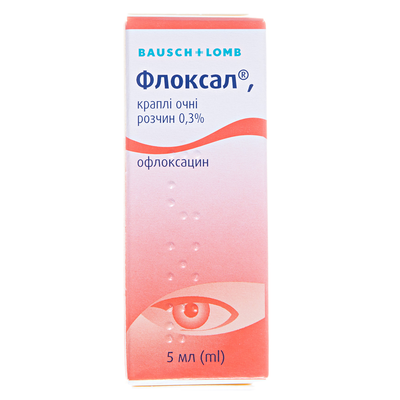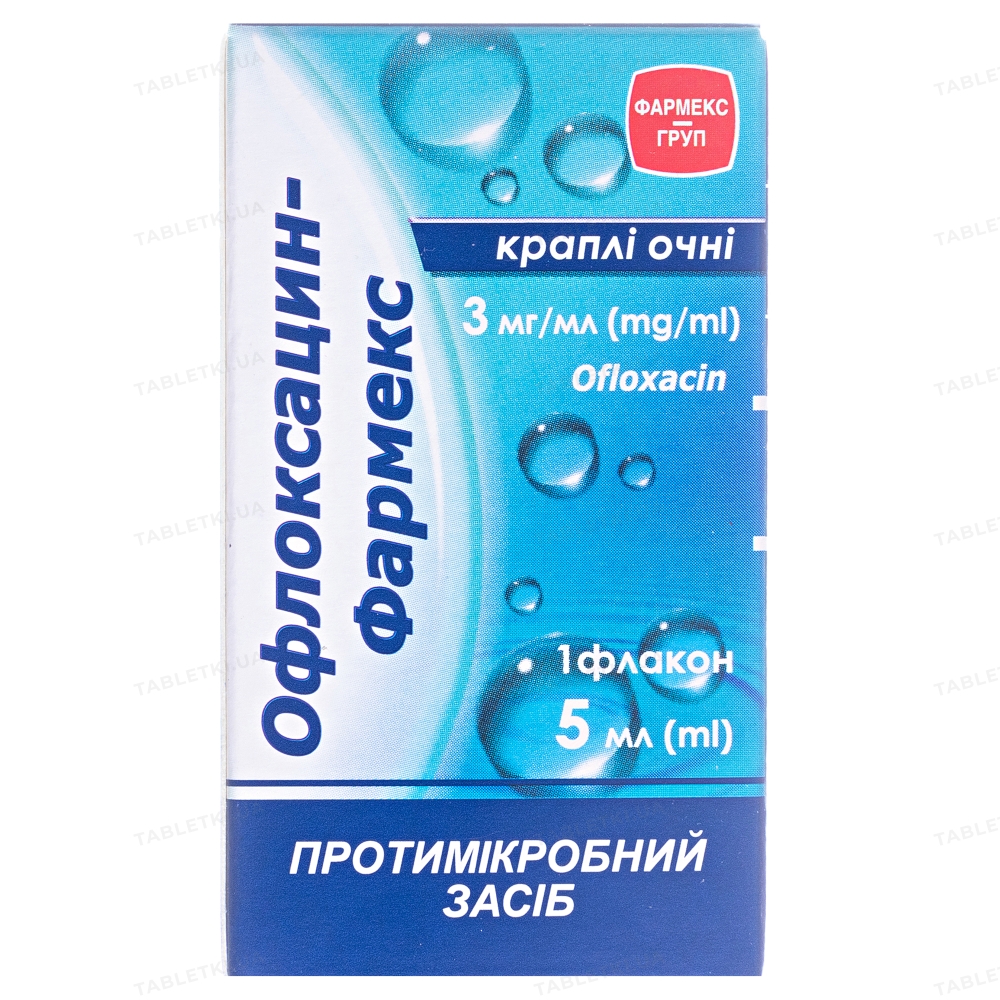
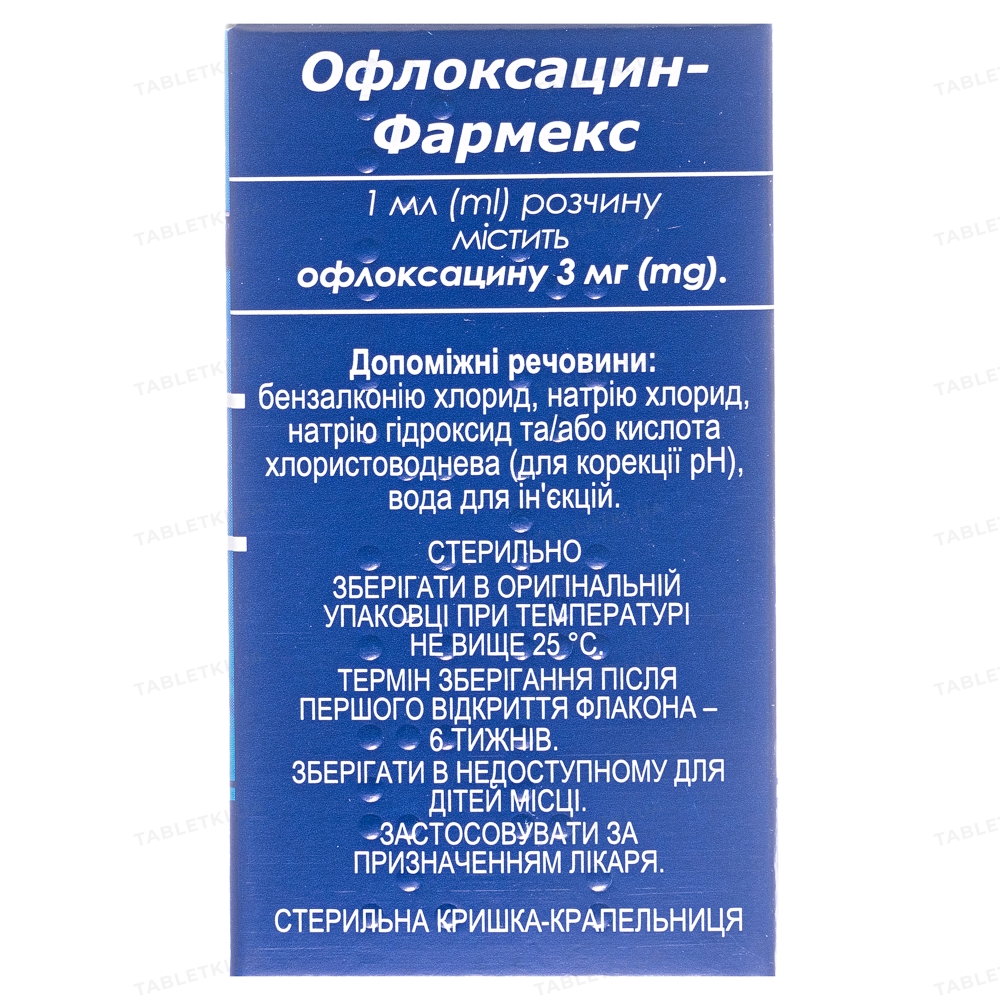
Ofloxacin-Farmeks Eye Drops, 3 mg/mL, 5 mL per bottle with a dropper cap.
Active ingredient: ofloxacin;
1 mL of solution contains 3 mg of ofloxacin;
Excipients: benzalkonium chloride, sodium chloride, sodium hydroxide and/or hydrochloric acid (for pH adjustment), water for injection.
Dosage Form
Eye drops.
Main physicochemical properties: a clear, greenish-yellow solution.
Pharmacotherapeutic group
Products used in ophthalmology. Antimicrobial agents. Ofloxacin.
ATC code S01A E01.
Pharmacological properties
Pharmacodynamics.
Ofloxacin is a synthetic antimicrobial agent belonging to the fluoroquinolone group, exhibiting high antimicrobial activity against a broad spectrum of Gram-negative microorganisms and against a smaller number of Gram-positive microorganisms. Ofloxacin has been shown to be highly active against most strains of these microorganisms in vitro and in clinical practice for the treatment of eye infections. Data from clinical studies on the efficacy of ofloxacin against Streptococcus pneumoniae are based only on a limited number of isolates. Ofloxacin is active against the following Gram-negative microorganisms: Acinetobacter calcoaceticus; Enterobacter species, including E. cloacae; Haemophilus species, including H. influenzae and H. aegyptius; Klebsiella species, including K. pneumoniae; Moraxella species, Morganella morganii; Proteus species, including P. mirabilis; Pseudomonas species, including P. aeruginosa, P. cepacia, and P. fluoroscens; Serratia species, including S. marcescens.
Ofloxacin is active against the following Gram-positive microorganisms: Bacillus, Corynebacterium, Micrococcus, Staphylococcus, including S. aureus and S. epidermidis, Streptococcus, including S. pneumoniae (see above), S. viridans, and beta-hemolytic S. species.
The primary mechanism of action is the inhibition of bacterial DNA gyrase, an enzyme responsible for maintaining DNA structure.
Ofloxacin is not inactivated by beta-lactamases and is not altered by chloramphenicol acetyltransferase, aminoglycoside deadenylase, or aminoglycoside phosphorylase.
Pharmacokinetics.
After instillation into the eye, the mean concentration of ofloxacin in tears, measured 4 hours after administration (9.2 μg/g), was higher than the minimum concentration required to inhibit 90% of most strains causing ocular infections (MIC90) in vitro, which was 2 μg/g.
The maximum serum concentration of ofloxacin after 10 days of topical ophthalmic use was 1,000 times lower than the concentration following standard oral administration of ofloxacin. No systemic adverse reactions have been reported following topical administration of ofloxacin.
Indications
Topical treatment of external eye infections (such as conjunctivitis and keratitis) in adults and children caused by microorganisms susceptible to ofloxacin.
Official guidelines on the proper use of antibacterial agents should be followed.
Contraindications
Hypersensitivity to any of the drug’s components or to other quinolones.
Drug Interactions and Other Interactions
It has been shown that systemic administration of certain quinolones inhibits the clearance of caffeine and theophylline metabolites. Drug interaction studies conducted during systemic administration of ofloxacin showed that the clearance of caffeine and theophylline metabolites is only slightly affected by ofloxacin.
An increased incidence of central nervous system toxicity has also been reported following systemic administration of fluoroquinolones in combination with nonsteroidal anti-inflammatory drugs (NSAIDs), but no such effects have been reported with the concurrent systemic use of NSAIDs and ofloxacin.
Ofloxacin, like other fluoroquinolones, should be used with caution in patients receiving medications that prolong the QT interval (e.g., Class IA and III antiarrhythmics, tricyclic antidepressants, macrolides, and neuroleptics).
Special Considerations for Use
Ofloxacin-Farmeks is not intended for use as an injection. Serious and sometimes fatal hypersensitivity reactions (anaphylactic/anaphylactoid) have been reported, some of which occur after the first dose in patients receiving systemic quinolones, including ofloxacin. Some reactions were accompanied by cardiovascular failure, loss of consciousness, angioedema (including swelling of the larynx, pharynx, or face), airway obstruction, shortness of breath, hives, and itching.
If an allergic reaction to Ofloxacin-Farmeks occurs, administration of the drug should be discontinued. The drug should be used with caution in patients with a history of hypersensitivity to other antibacterial agents of the quinolone group.
When using Ofloxacin-Farmeks, the risk of the drug entering the nasopharynx should be considered, as this may contribute to the emergence and spread of bacterial resistance. As with other anti-infective drugs, prolonged use may lead to the overgrowth of non-susceptible microorganisms.
If the infection worsens or clinical improvement is not observed within a reasonable period of time, the drug should be discontinued and alternative therapy should be used.
Cases of Stevens-Johnson syndrome have been reported in patients using ofloxacin eye drops for topical use, but a causal relationship has not been established.
Heart Disease
Fluoroquinolones, including ofloxacin, should be used with caution in patients with known risk factors for QT interval prolongation, such as:
- congenital long QT syndrome;
- concomitant use of drugs known to prolong the QT interval (e.g., Class IA and III antiarrhythmics, tricyclic antidepressants, macrolides, neuroleptics);
- uncorrected electrolyte imbalance (e.g., hypokalemia, hypomagnesemia);
- heart disease (e.g., heart failure, myocardial infarction, bradycardia).
Elderly patients and young women may be more sensitive to drugs that prolong the QT interval. Therefore, Ofloxacin-Pharmex should be used with caution in these patient groups.
Children
The safety and efficacy of this medication in children under 1 year of age have not been established.
Data on the efficacy and safety of Ofloxacin-Farmeks eye drops for the treatment of conjunctivitis in newborns are very limited.
The use of Ofloxacin-Farmeks eye drops is not recommended for neonatal blennorrhea caused by Neisseria gonorrhoeae or Chlamydia trachomatis, as its use in these patients has not been evaluated.
Use in Elderly Patients
There are no data on the topical use of the drug in elderly patients compared with other age groups.
Clinical and preclinical publications have reported cases of corneal perforation in patients with pre-existing corneal epithelial defects or corneal ulcers during treatment with topical fluoroquinolones. However, many of these reports described significant contributing factors, including advanced age, the presence of large ulcers, concomitant eye conditions (e.g., severe dry eye), systemic inflammatory diseases (e.g., rheumatoid arthritis), and concomitant use of ophthalmic steroids or NSAIDs. Caution should be exercised in patients with corneal epithelial defects or corneal ulcers due to the risk of corneal perforation.
Corneal discharge has been reported during treatment with ophthalmic ofloxacin preparations, but a causal relationship has not been established.
Prolonged use of other fluoroquinolones at high doses in experimental animals caused lens opacity. However, this effect has not been reported in humans, nor has it been reported following six months of topical ofloxacin use in animal studies.
During treatment with ofloxacin, exposure to sunlight and ultraviolet radiation should be avoided due to the potential for photosensitization.
Ofloxacin-Farmeks contains the preservative benzalkonium chloride, which may cause eye irritation and discoloration of soft contact lenses.
Do not wear contact lenses during treatment.
When using Ofloxacin-Farmeks, apply the eye drops at least 15 minutes apart from other eye drops, eye ointments, or medications. In any case, eye ointment should be applied last.
Pregnancy and lactation.
Pregnancy.
No adequate and well-controlled studies have been conducted on the use of Ofloxacin-Farmeks in pregnant women. Since systemic fluoroquinolones can cause arthropathy in sexually mature animals, the drug should not be used during pregnancy.
Breastfeeding.
Since ofloxacin and other systemically administered quinolones are excreted in breast milk and there is a potential for harm to the infant, a decision should be made to temporarily discontinue breastfeeding, taking into account the importance of this drug for the mother.
Fertility.
Ofloxacin did not affect fertility in animals.
Effect on the ability to drive and operate machinery
The use of Ofloxacin-Farmeks eye drops does not affect the patient’s reaction time.
Blurred vision may occur for several minutes after instilling the medication into the conjunctival sac. If blurred vision occurs, patients should refrain from driving or operating machinery.
Directions for Use and Dosage
This medication is intended for topical use in the eyes only.
For the first 2 days, instill 1–2 drops every 2–4 hours, and then 4 times a day. The duration of treatment should not exceed 10 days.
Children
Safety and efficacy in children under 1 year of age have not been established.
Ofloxacin-Pharmex eye drops may be prescribed to children 1 year of age and older.
Overdose
In case of overdose, symptomatic treatment should be administered. Since QT interval prolongation is possible, ECG monitoring is necessary.
Side Effects
General manifestations.
Following systemic administration of ofloxacin, serious reactions are rare, and most symptoms are reversible. Since a small amount of ofloxacin is systemically absorbed after topical administration, side effects associated with systemic use of the drug may occur.
The following categories were used to classify the frequency of side effects:
very common (≥1/10), common (≥1/100 to <1/10), uncommon (≥1/1,000 to <1/100), rare (≥1/10,000 to <1/1,000), very rare (<1/10,000), frequency unknown (cannot be estimated from the available data).
Immune system disorders.
Unknown: hypersensitivity reactions, including signs and symptoms of allergy (e.g., itchy eyes and eyelids) and anaphylactic reactions (e.g., angioedema, shortness of breath, anaphylactic shock, oropharyngeal edema, facial and tongue edema).
Nervous system disorders.
Unknown: dizziness.
Eye disorders.
Common: eye irritation, eye discomfort.
Frequency unknown: keratitis, conjunctivitis, blurred vision, photophobia, eye swelling, foreign body sensation, increased tearing, dry eyes, eye pain, eye redness, periorbital swelling (including eyelid swelling).
Cardiovascular disorders.
Unknown: ventricular arrhythmia and pirouette ventricular tachycardia (observed mainly in patients with risk factors for QT prolongation), QT prolongation on the ECG.
Gastrointestinal disorders.
Unknown: nausea.
Skin and subcutaneous tissue disorders.
Unknown: Stevens-Johnson syndrome, toxic epidermal necrolysis.
Reporting of Suspected Adverse Reactions
It is very important to report suspected adverse reactions after a drug has been approved. This allows for continuous monitoring of the drug’s benefit-risk profile. Healthcare professionals should report any suspected adverse reactions through the national adverse event reporting system.
Shelf life
2 years.
The shelf life after first opening the vial is 6 weeks.
Storage conditions
Store in the original packaging at a temperature not exceeding 25 °C. Keep out of the reach of children.
Packaging
5 mL per vial; 1 vial with a dropper cap per package.
Manufacturer
FARMEKS GROUP, LLC.
Address
Ukraine, 08301, Kyiv Oblast, Boryspil, 100 Shevchenko Street.