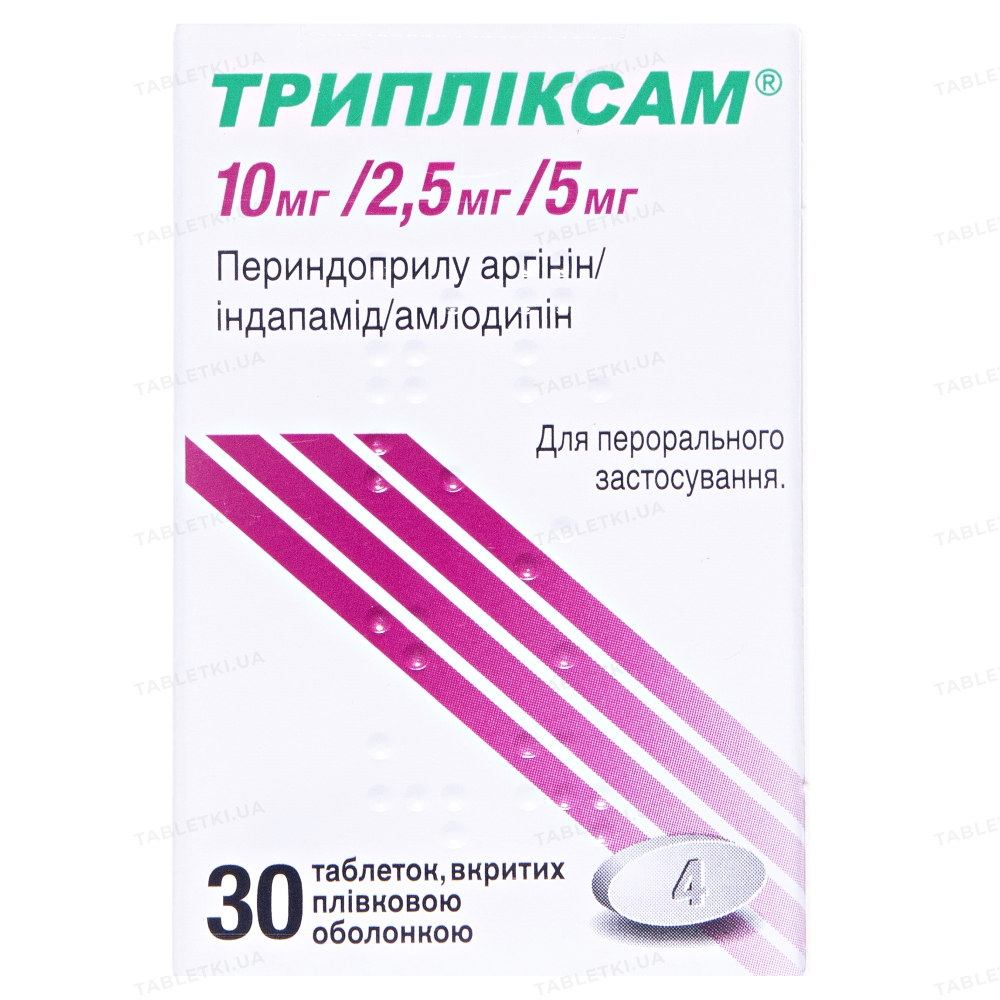
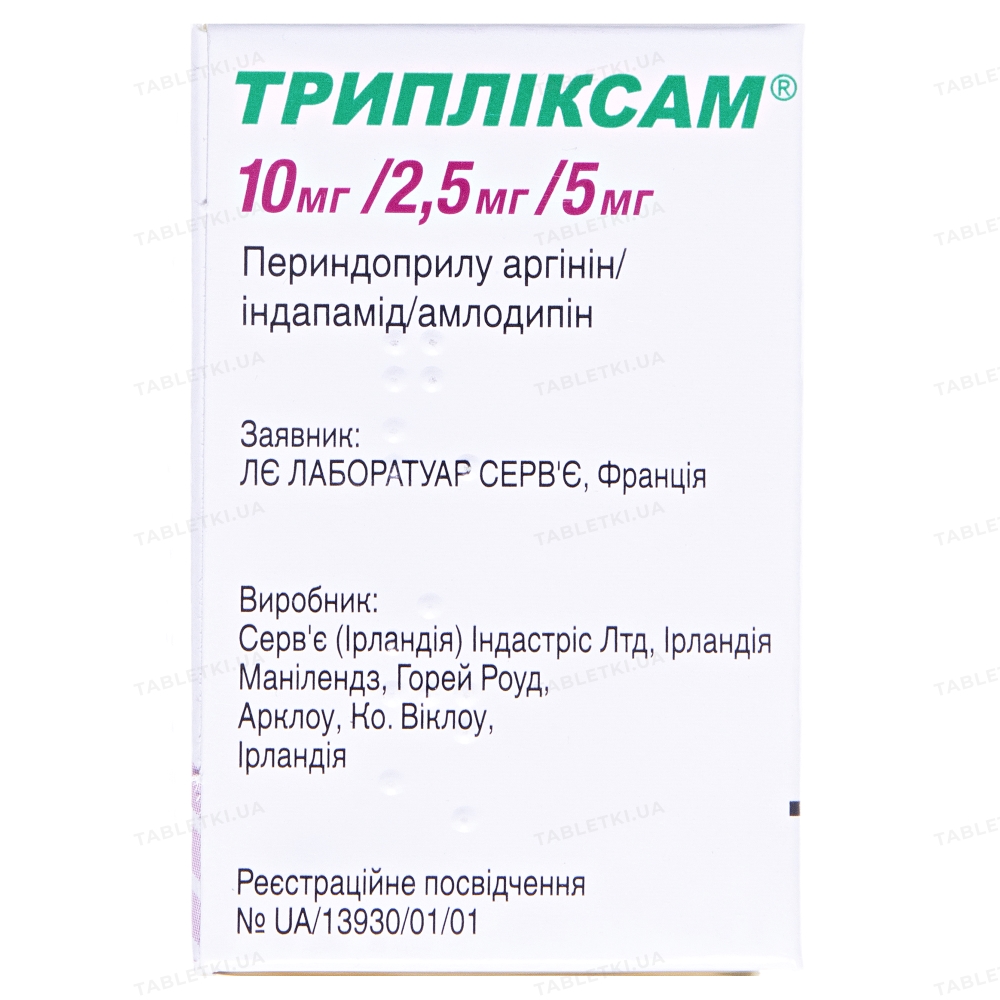
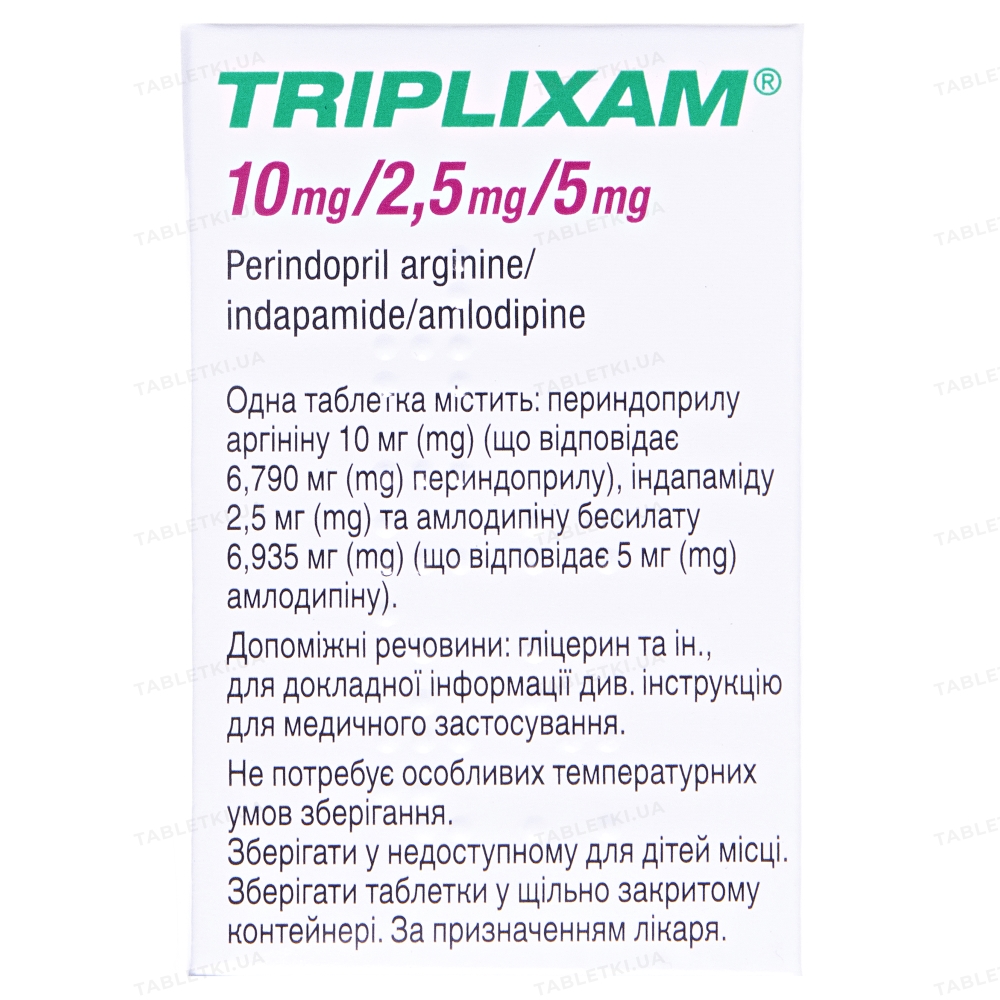
Triplex 10 mg/2.5 mg/5 mg tablets, film-coated, 10 mg/2.5 mg/5 mg, No. 30 in a container.
TRIPLIXAM® 5 mg/1.25 mg/5 mg
Active ingredients: Each tablet contains 5 mg of perindopril arginine (equivalent to 3.395 mg of perindopril), 1.25 mg of indapamide, and 6.935 mg of amlodipine besylate (equivalent to 5 mg of amlodipine);
TRIPLIXAM® 5 mg/1.25 mg/10 mg
Active ingredients: Each tablet contains 5 mg of perindopril arginine (equivalent to 3.395 mg of perindopril), 1.25 mg of indapamide, and 13.870 mg of amlodipine besylate (equivalent to 10 mg of amlodipine);
TRIPLIXAM® 10 mg/2.5 mg/5 mg
Active ingredients: Each tablet contains 10 mg of perindopril arginine (equivalent to 6.790 mg of perindopril), 2.5 mg of indapamide, and 6.935 mg of amlodipine besylate (equivalent to 5 mg of amlodipine);
TRIPLIXAM® 10 mg/2.5 mg/10 mg
Active ingredients: Each tablet contains 10 mg of perindopril arginine (equivalent to 6.790 mg of perindopril), 2.5 mg of indapamide, and 13.870 mg of amlodipine besylate (equivalent to 10 mg of amlodipine);
Inactive ingredients: tablet: a mixture of calcium carbonate and starch, microcrystalline cellulose, croscarmellose sodium, magnesium stearate, anhydrous colloidal silicon dioxide, pregelatinized starch; film coating: glycerin, hypromellose, polyethylene glycol 6000, magnesium stearate, titanium dioxide (E 171).
Dosage Form
Film-coated tablets.
Main physical and chemical properties:
Triplixam® 5 mg/1.25 mg/5 mg: white, oblong, film-coated tablet with an imprint on one side and an imprint on the other.
Triplixam® 5 mg/1.25 mg/10 mg: white, oblong, film-coated tablets with an imprint on one side and an imprint on the other.
Triplixam® 10 mg/2.5 mg/5 mg: a white, oblong, film-coated tablet with an imprint on one side and an imprint on the other.
Triplixam® 10 mg/2.5 mg/10 mg: white, oblong, film-coated tablets with an imprint on one side and an imprint on the other.
Pharmacotherapeutic group
ACE inhibitors, other combinations. Perindopril, amlodipine, and indapamide. ATC code S09B X01.
Pharmacological Properties
Pharmacodynamics. Triplixam is a combination of three antihypertensive components whose mechanisms of action complement each other in controlling blood pressure in patients with hypertension. Perindopril arginine is an angiotensin-converting enzyme inhibitor; indapamide is a sulfonamide diuretic; and amlodipine—a calcium channel blocker belonging to the dihydropyridine group.
The pharmacological action of Triplixam is due to the properties of each component individually. In addition, the perindopril/indapamide combination results in additive synergy of the antihypertensive effects of the two components.
Mechanism of action. Perindopril. Perindopril is an angiotensin-converting enzyme (ACE) inhibitor; ACE converts angiotensin I into angiotensin II (a vasoconstrictor), further stimulates aldosterone secretion by the adrenal cortex and the cleavage of bradykinin (a vasodilator) into inactive heptapeptides. As a result of ACE inhibition, there is a decrease in aldosterone secretion; an increase in plasma renin activity without the negative effects of aldosterone; a reduction in total peripheral vascular resistance due to a predominant effect on the blood vessels of the muscles and kidneys, with no water or salt retention or reflex tachycardia, even with long-term treatment.
Perindopril also lowers blood pressure in patients with normal and low plasma renin levels.
Perindopril acts through its active metabolite, perindoprilat. Other metabolites are inactive.
Perindopril reduces the workload on the heart through its vasodilatory effect on veins (possibly by altering prostaglandin metabolism), which reduces preload on the heart and, by lowering total peripheral vascular resistance, reduces afterload on the heart.
Studies in patients with heart failure have shown that the use of perindopril leads to a reduction in left and right ventricular filling pressures; a reduction in total peripheral vascular resistance; an increase in cardiac output and an improvement in cardiac index; and enhanced regional blood flow in the muscles.
In addition, exercise test results improve significantly.
Indapamide. Indapamide is a sulfanilamide derivative with an indole ring, pharmacologically classified as a thiazide diuretic. Indapamide inhibits sodium reabsorption in the cortical segment of the kidneys. This increases the excretion of sodium and chloride in the urine and, to a lesser extent, the excretion of potassium and magnesium, thereby increasing diuresis. This mechanism produces the antihypertensive effect.
Amlodipine. Amlodipine is a calcium channel blocker belonging to the dihydropyridine group (a slow calcium channel blocker or calcium ion antagonist) and blocks the transmembrane flow of calcium ions into myocardial muscle cells and vascular smooth muscle cells.
Pharmacodynamic effects. Perindopril/indapamide. The perindopril/indapamide combination reduces systolic and diastolic blood pressure in patients of any age with hypertension, both when lying on their back and when standing. The drug’s antihypertensive effect is dose-dependent. Clinical studies have demonstrated that the concomitant administration of perindopril and indapamide produces a synergistic antihypertensive effect compared to the effects of each component when administered as separate medications.
Perindopril. Perindopril is effective in lowering blood pressure in patients with hypertension of any severity: mild, moderate, or severe. A reduction in systolic and diastolic blood pressure is observed in both the supine and standing positions. The maximum antihypertensive effect develops 4–6 hours after a single dose and persists for more than 24 hours. Perindopril has a high rate of complete ACE inhibition (approximately 80%) 24 hours after administration.
In patients who respond to treatment, blood pressure normalizes within one month and remains stable without the development of tachyphylaxis.
Discontinuation of therapy is not accompanied by a withdrawal effect.
Perindopril has vasodilatory properties, restores the elasticity of large arteries, corrects histomorphometric changes in arterial resistance, and reduces left ventricular hypertrophy. The addition of a thiazide diuretic, if necessary, produces additional synergistic effects.
The combination of an ACE inhibitor and a thiazide diuretic reduces the risk of hypokalemia, which may occur when a diuretic is prescribed as monotherapy.
Indapamide. The antihypertensive effect of indapamide, when used as monotherapy, lasts 24 hours. This effect is observed at doses at which the diuretic properties are minimal.
The antihypertensive effect of indapamide is associated with improved arterial elasticity and a reduction in arteriolar resistance and total peripheral vascular resistance.
Indapamide reduces left ventricular hypertrophy.
When the recommended dose is exceeded, the antihypertensive effect of thiazide and thiazide-like diuretics reaches a plateau, while the incidence of adverse effects increases. If treatment is ineffective, the dose should not be increased.
Furthermore, as shown by studies of varying durations (short, medium, and long-term) in patients with hypertension, indapamide does not affect lipid metabolism (triglycerides, low-density lipoproteins, and high-density lipoproteins) and does not affect carbohydrate metabolism, even in patients with hypertension and diabetes mellitus.
Amlodipine. The mechanism of amlodipine’s antihypertensive action is due to its direct relaxing effect on vascular smooth muscle. The exact mechanism by which amlodipine reduces angina has not been fully elucidated, but it is known to help reduce total ischemia during exercise through the following two actions:
- Amlodipine dilates peripheral arterioles and thus reduces total peripheral resistance (afterload); Since the heart rate remains unchanged, the reduced workload on the heart decreases myocardial energy expenditure and its oxygen demand;
- Amlodipine partially contributes to the dilation of the main coronary arteries and arterioles in both unaffected and ischemic areas of the myocardium; This dilation increases oxygen delivery to the myocardium in patients with vasospastic angina (Prinzmetal angina, or variant angina).
In patients with hypertension, once-daily administration of amlodipine provides a clinically significant reduction in blood pressure over a 24-hour period, both when lying down and when standing. Due to its slow onset of action, amlodipine does not cause acute hypotension.
Amlodipine is not associated with adverse metabolic effects or changes in plasma lipid levels and may therefore be used in patients with asthma, diabetes mellitus, and gout.
Pharmacokinetics. The use of perindopril/indapamide and amlodipine in a fixed-dose combination does not alter their pharmacokinetic properties compared to their use as separate agents.
Perindopril. After oral administration, perindopril is rapidly absorbed, reaching peak plasma concentrations within 1 hour (perindopril is the parent drug, and perindoprilat is the active metabolite). The plasma half-life of perindopril is 1 hour. 27% of an orally administered dose of perindopril enters the bloodstream as the active metabolite perindoprilat. In addition to the active metabolite perindoprilat, perindopril forms 5 other inactive metabolites. The maximum concentration of perindoprilat in plasma is reached after 3–4 hours.
Since food reduces the conversion of perindopril to perindoprilat and, consequently, its bioavailability, perindopril arginine is recommended to be taken orally as a single daily dose in the morning before a meal. There is a linear relationship between the dose of perindopril and its plasma concentration.
The volume of distribution of unbound perindoprilat is approximately 0.2 L/kg. The plasma protein binding of perindoprilat is 20%, primarily to angiotensin-converting enzyme, and is dose-dependent. Perindoprilat is excreted in the urine, and the terminal half-life of the unbound fraction is approximately 17 hours. Steady state is reached after 4 days.
The excretion of perindoprilat is reduced in elderly patients and in patients with heart or kidney failure. In patients with kidney failure, the dose should be adjusted based on the severity of kidney failure (creatinine clearance).
The dialysis clearance of perindoprilat is 70 mL/min.
The pharmacokinetics of perindopril in patients with liver cirrhosis are altered: hepatic clearance of the parent compound is reduced by half. However, the amount of perindoprilat produced does not decrease. Therefore, no dose adjustment is necessary for these patients (see the sections “Dosage and Administration” and “Special Instructions and Precautions for Use”).
Indapamide. Indapamide is rapidly and completely absorbed in the gastrointestinal tract. Maximum plasma concentration is reached approximately 1 hour after oral administration. Plasma protein binding is 79%. The half-life ranges from 14 to 24 hours (average 18 hours). Repeated dosing does not result in accumulation.
Indapamide is excreted primarily in the urine (70% of the dose) and feces (22%) as inactive metabolites. In patients with renal insufficiency, the pharmacokinetic parameters remain unchanged.
Amlodipine. When taken orally at therapeutic doses, amlodipine is well absorbed and reaches peak plasma concentrations 6–12 hours after administration. Absolute bioavailability ranges from 64% to 80%. The volume of distribution is approximately 21 L/kg. In vitro studies have shown that approximately 97.5% of circulating amlodipine is bound to plasma proteins. Food intake does not affect the bioavailability of amlodipine. The half-life of amlodipine in plasma is approximately 35–50 hours, allowing for once-daily dosing. Amlodipine is primarily metabolized in the liver to form inactive metabolites; 60% of the metabolites are excreted in the urine, and 10% are excreted unchanged.
The time to reach peak plasma concentrations of amlodipine is the same in elderly and younger patients. In elderly patients, there is a tendency toward reduced amlodipine clearance, which leads to an increase in AUC and half-life. The increase in AUC and half-life in patients with congestive heart failure was consistent with the age-related characteristics of the study population.
There are very limited clinical data on the use of amlodipine in patients with hepatic impairment. In patients with hepatic impairment, amlodipine clearance is reduced, leading to a prolonged half-life and an increase in AUC of approximately 40–60%.
Indications
Triplix is indicated for the treatment of hypertension in patients requiring therapy with perindopril, indapamide, and amlodipine at doses available in a fixed-dose combination.
Contraindications
- Patients undergoing hemodialysis;
- Untreated decompensated heart failure;
- severe renal insufficiency (creatinine clearance below 30 mL/min);
- moderate renal insufficiency (creatinine clearance below 60 mL/min) (for Triplixam, which contains a combination of active ingredients in doses of 10 mg/2.5 mg/5 mg or 10 mg/2.5 mg/10 mg);
- hypersensitivity to the active ingredients, other sulfonamide drugs, dihydropyridine derivatives, any other ACE inhibitors, or any of the excipients listed in the “Composition” section;
- pregnancy or planning to become pregnant (see the “Use During Pregnancy or Lactation” section);
- history of angioedema associated with previous treatment with ACE inhibitors (see the “Special Instructions and Precautions for Use” section);
- congenital or idiopathic angioedema;
- hepatic encephalopathy;
- severe hepatic insufficiency;
- Hypokalemia;
- severe hypotension;
- shock, including cardiogenic shock;
- left ventricular outflow tract obstruction (e.g., severe aortic stenosis);
- heart failure with unstable hemodynamics following an acute myocardial infarction;
- concomitant use with drugs containing the active ingredient aliskiren in patients with diabetes mellitus or renal insufficiency (glomerular filtration rate < 60 mL/min/1.73 m²) (see the sections “Special Instructions and Precautions for Use” and “Drug Interactions and Other Interactions”);
- Concomitant use with sacubitril/valsartan. Treatment with Triplix should be initiated no earlier than 36 hours after the last dose of sacubitril/valsartan (see the sections “Special Instructions and Precautions for Use” and “Interactions with Other Medications and Other Forms of Interaction”);
- extracorporeal therapy in which blood comes into contact with negatively charged surfaces (see the section “Interactions with Other Medications and Other Forms of Interaction”);
- significant bilateral renal artery stenosis or stenosis of the artery supplying a single functioning kidney (see the section “Special Instructions and Precautions for Use”).
Interactions with Other Medications and Other Forms of Interaction
Data from clinical studies indicate that dual blockade of the renin-angiotensin-aldosterone system (RAAS) using a combination of ACE inhibitors, angiotensin II receptor blockers, or aliskiren is associated with a higher incidence of adverse reactions, such as hypotension, hyperkalemia, and worsening renal function (including acute renal failure) compared with the use of a single drug that affects the RAAS (see the “Contraindications” and “Special Instructions and Precautions for Use” sections).
Drugs that increase the risk of angioedema. Concomitant use of ACE inhibitors with sacubitril/valsartan is contraindicated, as it increases the risk of angioedema (see the “Contraindications” and “Special Instructions and Precautions for Use” sections). Sacubitril/valsartan should be initiated no earlier than 36 hours after the last dose of perindopril. Treatment with perindopril should be initiated no earlier than 36 hours after the last dose of sacubitril/valsartan (see the “Contraindications” and “Special Instructions and Precautions for Use” sections).
Concomitant use of ACE inhibitors with racecadotril, mTOR inhibitors (e.g., sirolimus, everolimus, temsirolimus), and gliptins (e.g., linagliptin, saxagliptin, sitagliptin, vildagliptin) may increase the risk of angioedema (see Section 4.4).
Medications that cause hyperkalemia. Serum potassium levels usually remain within the normal range, but some patients taking Triplix may develop hyperkalemia. Certain medications or therapeutic classes of medications may cause hyperkalemia, namely: aliskiren, potassium salts, potassium-sparing diuretics (e.g., spironolactone, triamterene, or amiloride), ACE inhibitors, angiotensin II receptor antagonists, nonsteroidal anti-inflammatory drugs (NSAIDs), heparins, immunosuppressants such as cyclosporine or tacrolimus, trimethoprim and co-trimoxazole (trimethoprim/sulfamethoxazole), since trimethoprim is known to act as a potassium-sparing diuretic similar to amiloride. Concomitant use of these medications increases the risk of hyperkalemia. Therefore, concomitant use of Triplixam with the above-mentioned medications is not recommended. If such concomitant use is prescribed, these drugs should be used with caution, and serum potassium levels should be monitored frequently.
Concomitant use is contraindicated (see the “Contraindications” section).
Aliskiren: Patients with diabetes mellitus or renal impairment are at increased risk of hyperkalemia, worsening renal function, cardiovascular morbidity, and mortality.
Extracorporeal therapy: Extracorporeal therapy in which blood comes into contact with negatively charged surfaces, such as dialysis or hemofiltration using certain membranes with high hydraulic permeability (e.g., polyacrylonitrile) and low-density lipoprotein apheresis with dextran sulfate, due to an increased risk of severe anaphylactoid reactions (see Section 4.4). If necessary, such treatment should be considered using a different type of dialysis membrane or a different class of antihypertensive agents.
Concomitant use is not recommended.
Perindopril/indapamide. Reversible increases in serum lithium concentrations and increased lithium toxicity have been reported with the concomitant use of lithium and ACE inhibitors. Concomitant use of perindopril with indapamide and lithium preparations is not recommended. However, if such a combination is used, serum lithium levels should be carefully monitored (see the “Special Instructions and Precautions for Use” section).
Perindopril. Aliskiren: In any other patients, as well as in patients with diabetes mellitus or renal impairment, there is an increased risk of hyperkalemia, worsening renal function, cardiovascular morbidity, and mortality (see the “Special Instructions and Precautions for Use” section).
Published data indicate that in patients with established atherosclerosis, heart failure, or diabetes mellitus with target organ damage, the concomitant use of ACE inhibitors and angiotensin receptor blockers was associated with an increased incidence of hypotension, syncope, hyperkalemia, and worsening renal function (including acute renal failure) compared with monotherapy with drugs that affect the renin-angiotensin-aldosterone system. Dual blockade (i.e., the combination of an ACE inhibitor with an angiotensin II receptor antagonist) is possible only in rare cases, provided that renal function, potassium levels, and blood pressure are carefully monitored (see the “Special Instructions and Precautions for Use” section).
Estramustine: increased risk of adverse reactions, such as angioedema (angioedema).
Potassium-sparing diuretics (e.g., triamterene, amiloride, etc.), potassium salts: development of hyperkalemia (potentially life-threatening), especially in patients with impaired renal function (additive hyperkalemic effect). These drugs are not recommended for use concomitantly with perindopril (see the “Special Instructions and Precautions for Use” section). However, if concomitant use of these agents is necessary, they should be used with caution, and serum potassium levels should be monitored frequently. For information on the use of spironolactone in heart failure, see “Spironolactone” below under “Concomitant Use Requiring Special Attention.”
Amlodipine. Dantrone (infusion): Fatal ventricular fibrillation and cardiovascular collapse have been observed in animal studies in association with hyperkalemia following intravenous administration of verapamil and dantrone. Given the potential for hyperkalemia, patients with established or suspected malignant hyperthermia are advised to avoid concomitant use of calcium channel blockers, such as amlodipine.
Grapefruit or grapefruit juice: In some patients, the bioavailability of amlodipine may increase, leading to a potentiation of the hypotensive effect.
Concomitant use requiring special attention.
Perindopril/indapamide. Baclofen enhances the antihypertensive effect. Blood pressure should be monitored, and the dose of the antihypertensive agent adjusted as necessary.
Perindopril/indapamide. Nonsteroidal anti-inflammatory drugs (NSAIDs), including high doses of acetylsalicylic acid. When ACE inhibitors are used concomitantly with NSAIDs, such as acetylsalicylic acid at anti-inflammatory doses, COX-2 inhibitors, and nonselective NSAIDs, the antihypertensive effect may be reduced. Concomitant use of ACE inhibitors and NSAIDs may lead to an increased risk of impaired renal function, including the possible development of acute renal failure, and an increase in serum potassium levels, especially in patients with pre-existing renal impairment. This combination should be used with caution, particularly in elderly patients. Patients should maintain fluid balance and have their renal function monitored after initiation of concomitant therapy and during subsequent treatment.
Perindopril. Epidemiological studies indicate that the concomitant use of ACE inhibitors and antidiabetic agents (insulin, oral hypoglycemic agents) may lead to an enhanced hypoglycemic effect with a risk of hypoglycemia. This phenomenon occurs more frequently during the first weeks of combination therapy and in patients with renal insufficiency.
In patients taking diuretics, especially those with fluid and electrolyte imbalances, an excessive decrease in blood pressure may occur after starting treatment with an ACE inhibitor. The likelihood of a hypotensive effect is reduced by discontinuing the diuretic, increasing circulating blood volume, or taking salt prior to starting perindopril therapy, which should be initiated at low doses and gradually increased. In patients with hypertension, a previously prescribed diuretic may cause water-electrolyte imbalance and should be discontinued before starting treatment with an ACE inhibitor (in this case, the diuretic may be resumed over time) or an ACE inhibitor at low doses with gradual titration. In cases of congestive heart failure while taking a diuretic, an ACE inhibitor should be started at the lowest possible dose, possibly after reducing the diuretic dose. In any case, renal function (creatinine levels) should be monitored during the first few weeks of treatment with an ACE inhibitor.
Potassium-sparing diuretics (eplerenone, spironolactone). When eplerenone or spironolactone is administered concomitantly at doses ranging from 12.5 mg to 50 mg per day with low-dose ACE inhibitors in patients with heart failure in functional classes II–IV according to the NewYork Heart Association (NYHA) functional class II–IV and an ejection fraction < 40%, who have previously taken ACE inhibitors and loop diuretics, there is a risk of developing hyperkalemia, which can be life-threatening, especially if recommendations for prescribing this combination are not followed. Before initiating treatment with this combination, it must be ensured that there is no hyperkalemia or renal impairment. Careful monitoring of serum potassium and creatinine levels is recommended weekly during the first month of treatment and monthly thereafter.
Indapamide. Due to the risk of hypokalemia, indapamide should be used with caution in combination with drugs that may cause paroxysmal ventricular tachycardia (torsades de pointes), such as, but not limited to:
- Class Ia antiarrhythmic drugs (e.g., quinidine, hydroquinidine, disopyramide);
- Class III antiarrhythmic drugs (e.g., amiodarone, dofetilide, ibutilide, bretylium, sotalol);
- certain antipsychotics: phenothiazines (e.g., chlorpromazine, cyamemazine, levomepromazine, thioridazine, trifluoperazine), benzamides (e.g., amisulpride, sulpiride, sultopride, tiapride), butyrophenones (e.g., droperidol, haloperidol), other antipsychotics (e.g., pimozide);
- other drugs (e.g., bepridil, cisapride, difemanil, intravenous erythromycin, halofantrine, mizolastine, moxifloxacin, pentamidine, sparfloxacin, intravenous vincamine, methadone, astemizole, terfenadine).
A decrease in serum potassium should be prevented, corrected if necessary, and the QT interval should be monitored.
Intravenous amphotericin B, glucocorticoids and mineralocorticoids (systemic use), tetracosactide, and laxatives (those that stimulate peristalsis) increase the risk of a decrease in serum potassium levels (additive effect). Serum potassium levels should be monitored and corrected as necessary, especially when taken concomitantly with cardiac glycosides. It is recommended to use laxatives that do not stimulate peristalsis.
Cardiac glycosides
Hypokalemia and/or hypomagnesemia contribute to digitalis toxicity. It is recommended to monitor plasma potassium and magnesium levels, monitor the ECG, and adjust treatment as necessary.
Allopurinol. Concomitant use with indapamide may increase the risk of hypersensitivity reactions to allopurinol.
Amlodipine. Concomitant use with known CYP3A4 inducers may alter amlodipine plasma concentrations. Therefore, blood pressure should be monitored and the dose adjusted during and after concomitant use with CYP3A4 inducers, particularly strong CYP3A4 inducers (e.g., rifampicin, St. John’s wort).
Concomitant use of amlodipine with strong or moderate CYP3A4 inhibitors (protease inhibitors, azole antifungals, macrolides such as erythromycin or clarithromycin, verapamil, or diltiazem) may cause a significant increase in amlodipine concentrations. The clinical manifestation of the aforementioned pharmacokinetic changes may be more pronounced in elderly patients. In such cases, close clinical monitoring of the patient’s condition and dose adjustment are recommended.
There is an increased risk of hypotension in patients taking clarithromycin in combination with amlodipine. Close monitoring is recommended for such patients.
Concomitant use requiring caution.
Perindopril/indapamide/amlodipine. Imipramine-like (tricyclic) antidepressants and neuroleptics potentiate the antihypertensive effect and increase the risk of orthostatic hypotension (additive effect).
The use of other antihypertensive drugs may cause a further decrease in blood pressure.
Corticosteroids, tetracosactide. The antihypertensive effect may be reduced (due to water and salt retention when taking corticosteroids).
Perindopril. Antihypertensive and vasodilator agents: Concomitant use with nitroglycerin and other nitrates or with other vasodilators may contribute to a further decrease in blood pressure.
Allopurinol, cytostatics, immunosuppressants, systemic corticosteroids, or procainamide: Concomitant use with ACE inhibitors increases the risk of leukopenia.
ACE inhibitors may potentiate the hypotensive effect of certain anesthetics.
Diuretics (thiazides and loop diuretics): Prior treatment with high doses of diuretics may cause dehydration, which increases the risk of hypotension at the start of perindopril therapy.
Sympathomimetics may attenuate the antihypertensive effect of ACE inhibitors.
When ACE inhibitors, including perindopril, are used concomitantly with injectable gold (sodium aurothiomalate), reactions similar to those caused by nitrates have occasionally been reported (symptoms: facial flushing (hot flashes), nausea, vomiting, and hypotension).
Indapamide. Metformin may cause lactic acidosis due to the potential development of functional renal failure associated with the use of diuretics, especially loop diuretics. Metformin should not be prescribed if the plasma creatinine level exceeds 15 mg/L (135 μmol/L) in men and 12 mg/L (110 μmol/L) in women.
In cases of dehydration associated with diuretic use, there is an increased risk of acute renal failure, especially when high doses of iodine-containing contrast media are administered. Fluid balance must be restored before administering such contrast media.
Calcium salts: There is a risk of hypercalcemia due to reduced urinary calcium excretion.
Cyclosporine: There is a risk of elevated creatinine levels, which do not affect circulating cyclosporine levels, even in the absence of water and sodium deficiency.
Amlodipine: Clinical interaction studies have shown that amlodipine does not affect the pharmacokinetics of atorvastatin, digoxin, or warfarin.
Tacrolimus: There is a risk of increased tacrolimus plasma concentrations when used concomitantly with amlodipine. To avoid tacrolimus toxicity when used concomitantly with amlodipine, tacrolimus plasma levels should be monitored and the dose adjusted as necessary.
Mechanistic rapamycin inhibitors (mTOR). mTOR inhibitors, such as sirolimus, temsirolimus, and everolimus, are CYP3A substrates. Amlodipine is a weak CYP3A inhibitor. When used concomitantly with mTOR inhibitors, amlodipine may potentiate the effects of the latter.
No studies on the interaction between cyclosporine and amlodipine have been conducted in healthy volunteers or other populations, with the exception of kidney transplant patients, in whom increased variability in the trough concentration of cyclosporine was observed (on average, 0 to 40%). In kidney transplant patients receiving amlodipine, cyclosporine blood levels should be monitored and the dose reduced if necessary.
Administration of amlodipine in 10-mg doses in combination with 80 mg of simvastatin resulted in a 77% increase in simvastatin concentrations compared with monotherapy. Patients taking amlodipine should limit their simvastatin dose to 20 mg per day.
Special Considerations
All of the following warnings for each component of the drug also apply to the fixed-dose combination Triplixam.
Lithium. Concomitant use of lithium and the perindopril/indapamide combination is generally not recommended (see the “Drug Interactions and Other Interactions” section).
Dual blockade of the renin-angiotensin-aldosterone system (RAAS). There is evidence that the concomitant use of ACE inhibitors, angiotensin II receptor blockers, or aliskiren increases the risk of hypotension, hyperkalemia, and impaired renal function (including acute renal failure). Therefore, dual RAAS blockade through the combination of ACE inhibitors, angiotensin II receptor blockers, or aliskiren is not recommended (see the section “Interactions with Other Medications and Other Forms of Interaction”). In the treatment of concomitant conditions, the use of two RAAS blockers is considered absolutely necessary; it may only occur under the supervision of a specialist and provided that renal function, electrolyte levels, and blood pressure are monitored frequently and carefully. ACE inhibitors and angiotensin II receptor blockers should not be used concomitantly in patients with diabetic nephropathy.
Potassium-sparing medications, potassium-containing dietary supplements, or potassium salt substitutes.
Concomitant use of perindopril with potassium-sparing medications, potassium-containing dietary supplements, or potassium salt substitutes is generally not recommended (see the section “Interactions with Other Medications and Other Forms of Interaction”).
Neutropenia/agranulocytosis/thrombocytopenia/anemia. Cases of neutropenia, agranulocytosis, thrombocytopenia, and anemia have been reported in patients taking ACE inhibitors. In patients with normal renal function and no risk factors, neutropenia is rare. Perindopril should be used with great caution in patients with collagen vascular disease, during immunosuppressive therapy, or when taking allopurinol, procainamide, or a combination of these agents, especially in the presence of impaired renal function. Some of these patients have developed serious infectious diseases, in some cases resistant to intensive antibiotic therapy. When prescribing perindopril, it is recommended to periodically monitor white blood cell counts. In addition, patients should be informed that they must report any signs of an infectious disease (e.g., sore throat, fever) to their doctor (see the “Side Effects” section).
Renovascular hypertension. Patients with bilateral renal artery stenosis or stenosis of the artery to a single functioning kidney are at increased risk of developing hypotension and renal failure during treatment with ACE inhibitors (see the “Contraindications” section). The use of diuretics may be a predisposing factor. Decreased renal function may manifest as only minor changes in serum creatinine levels, even in patients with unilateral renal artery stenosis.
Hypersensitivity/angioedema. Rare cases of angioedema of the face, extremities, lips, tongue, glottis, and/or larynx have been reported with the use of ACE inhibitors, including perindopril. This may occur at any time during treatment.
In such cases, perindopril should be discontinued immediately, and the patient should be closely monitored until symptoms resolve completely. If the swelling is limited to the face and lips, the patient’s condition usually improves without treatment, and antihistamines may help relieve symptoms.
Angioedema accompanied by laryngeal edema can be fatal. If the swelling extends to the tongue, the glottis, or the larynx—with the potential for airway obstruction—emergency treatment is urgently required, which may include subcutaneous administration of epinephrine 1:1000 (0.3–0.5 mL) and/or airway management.
It has been reported that ACE inhibitors are more likely to cause angioedema in Black patients compared with patients of other races.
Patients with a history of angioedema not associated with ACE inhibitors are at increased risk of angioedema when taking ACE inhibitors (see the “Side Effects” section).
Rare cases of intestinal angioedema have occurred in patients receiving ACE inhibitors. These patients experienced abdominal pain (with or without nausea and vomiting); in some cases, there was no prior history of facial angioedema, and C-1 esterase levels were within the normal range. The diagnosis of intestinal angioedema was confirmed by computed tomography, ultrasound, or surgical intervention. After discontinuation of the ACE inhibitor, the symptoms of angioedema resolved. When conducting a differential diagnosis of abdominal pain in patients taking ACE inhibitors, the possibility of intestinal angioedema should be considered.
Concomitant use of perindopril with sacubitril/valsartan is contraindicated due to an increased risk of angioedema (see Box 4.4).
Sacubitril/valsartan should be initiated no earlier than 36 hours after the last dose of perindopril. When discontinuing treatment with sacubitril/valsartan, therapy with perindopril should be initiated no earlier than 36 hours after the last dose of sacubitril/valsartan (see the “Contraindications” and “Drug Interactions and Other Interactions” sections).
Concomitant use of ACE inhibitors with neutral endopeptidase (NEP) inhibitors (e.g., racecadotril), mTOR inhibitors (e.g., sirolimus, everolimus, temsirolimus), and gliptins (e.g., linagliptin, saxagliptin, sitagliptin, vildagliptin) may lead to an increased risk of angioedema (e.g., swelling of the airways or tongue, with or without respiratory distress) (see the “Interactions with Other Medications and Other Forms of Interaction” section). Caution should be exercised when initiating treatment with racecadotril, mTOR inhibitors (e.g., sirolimus, everolimus, temsirolimus), and gliptins (e.g., linagliptin, saxagliptin, sitagliptin, vildagliptin) in patients already taking ACE inhibitors.
Anaphylactoid reactions during desensitization therapy. Isolated cases of prolonged, life-threatening anaphylactoid reactions have been reported in patients receiving ACE inhibitors while undergoing desensitization therapy with medications containing insect venom (bees, wasps). ACE inhibitors should be used with caution in patients with allergies following desensitization and should be avoided during immunotherapy with preparations containing toxic substances of animal origin.
However, in patients who require both ACE inhibitors and desensitization therapy, such reactions can be avoided by temporarily discontinuing the ACE inhibitor at least 24 hours before desensitization.
Anaphylactoid reactions during low-density lipoprotein (LDL) plasmapheresis. In rare cases, life-threatening anaphylactoid reactions have occurred in patients taking ACE inhibitors during LDL apheresis using dextran sulfate. These reactions can be avoided by temporarily discontinuing ACE inhibitor therapy before each plasmapheresis session.
Patients on hemodialysis. Cases of anaphylactoid reactions have been reported in patients taking ACE inhibitors during hemodialysis using high-flux polyacrylate membranes (e.g., AN 69®). In such patients, a different type of dialysis membrane or a different class of antihypertensive drugs should be used.
Primary aldosteronism. Patients with primary hyperaldosteronism generally do not respond to treatment with antihypertensive drugs that act by inhibiting the renin-angiotensin system. Therefore, use of this drug in such patients is not recommended.
Pregnancy. ACE inhibitors should not be prescribed during pregnancy. If continued treatment with ACE inhibitors is considered essential, patients planning a pregnancy should be switched to alternative antihypertensive medications with proven safety profiles for use during pregnancy. If pregnancy is diagnosed, treatment with an ACE inhibitor should be discontinued immediately and, if necessary, replaced with another alternative medication approved for use in pregnant women (see the “Contraindications” and “Use During Pregnancy or Lactation” sections).
Hepatic encephalopathy. In patients with impaired liver function, the use of thiazide and thiazide-like diuretics, especially in the presence of electrolyte imbalance, may cause hepatic encephalopathy, which may progress to coma. In such cases, diuretics should be discontinued immediately.
Photosensitivity. Cases of photosensitivity reactions have been reported in patients taking thiazide and thiazide-like diuretics (see the “Side Effects” section). If such reactions occur, it is recommended to discontinue diuretic therapy. If it is necessary to resume diuretic therapy, exposed areas should be protected from sunlight or artificial sources of ultraviolet radiation.
Renal function. Treatment with this drug is contraindicated in patients with severe renal insufficiency (creatinine clearance < 30 mL/min). In patients with moderate renal insufficiency (creatinine clearance < 60 mL/min), treatment with Triplixam, containing a combination of perindopril/indapamide in doses of 10 mg/2.5 mg (i.e., Triplixam 10 mg/2.5 mg/5 mg and 10 mg/2.5 mg/10 mg). If some patients with hypertension show no signs of kidney damage but laboratory blood test results indicate signs of functional renal insufficiency, treatment with the drug should be discontinued; treatment may be resumed at a lower dose or with only one of its components. Potassium and creatinine levels in such patients should be monitored frequently: 2 weeks after the start of treatment and subsequently every two months during the therapeutic stabilization period. Cases of renal failure have been observed primarily in patients with severe heart failure or renal impairment, including renal artery stenosis.
This combination is not recommended for patients with bilateral renal artery stenosis or stenosis of the arteries of a single functioning kidney.
Risk of developing hypotension and/or renal failure (in cases of heart failure, water and electrolyte depletion, etc.): Significant stimulation of the renin-angiotensin-aldosterone system has been observed primarily in combination with perindopril in cases of severe water and electrolyte depletion (strict salt-restricted diet or prolonged treatment with diuretics), in patients with initially low blood pressure, renal artery stenosis, congestive heart failure, or in patients with liver cirrhosis presenting with edema and ascites.
Blockade of this system by an ACE inhibitor, especially upon administration of the first dose and during the first two weeks of treatment, may cause a sharp drop in blood pressure and/or an increase in plasma creatinine, indicating the presence of functional renal insufficiency. Sometimes it may have an acute onset and, very rarely, occur at any time. In such cases, treatment should be started at a lower dose and gradually increased. In patients with ischemic heart disease or cerebrovascular disease, a significant decrease in blood pressure may lead to a myocardial infarction or stroke.
Thiazide and thiazide-like diuretics are most effective in the absence of renal insufficiency or when it is mild (creatinine approximately below 25 mg/L, i.e., 220 μmol/L, in adults).
In elderly patients, plasma creatinine levels should be appropriate for age, body weight, and sex. Hypovolemia caused by water and sodium loss due to diuretics at the start of treatment leads to a decrease in glomerular filtration rate. As a result, elevated levels of urea and creatinine in the blood may be observed. Such transient functional renal impairment has no adverse effects in patients with normal renal function but may exacerbate pre-existing renal impairment.
In patients with renal insufficiency, amlodipine may be administered at the usual doses. Changes in amlodipine plasma concentrations do not correlate with the severity of renal insufficiency.
No studies have been conducted on the use of the Triplixam fixed-dose combination in patients with impaired renal function. For patients with impaired renal function, the dosage of the Triplixam fixed-dose combination should correspond to the individually selected doses of the individual components.
Hypotension, water, and electrolyte depletion. There is a risk of a sudden drop in blood pressure in patients with pre-existing sodium depletion (especially in patients with renal artery stenosis). Therefore, systematic monitoring of clinical signs of water and electrolyte depletion is necessary, as these may occur against a background of intercurrent vomiting or diarrhea. In such patients, serum electrolyte levels should be monitored regularly.
If severe hypotension occurs, intravenous administration of isotonic sodium chloride solution may be required. Transient hypotension is not a contraindication for continued use of the drug. Once circulating blood volume (CBV) has been restored and blood pressure has normalized, treatment may be resumed at a lower dose or with one of the drug’s components.
Initially, a decrease in sodium concentration may be asymptomatic; therefore, it is very important to monitor this parameter regularly in a laboratory setting. More frequent monitoring is necessary for elderly patients and patients with liver cirrhosis (see the “Side Effects” and “Overdose” sections).
Any treatment with diuretics may cause hyponatremia, sometimes with very serious consequences. Hyponatremia combined with hypovolemia may lead to dehydration and orthostatic hypotension. Concomitant loss of chloride ions may lead to secondary compensatory metabolic alkalosis; the frequency and severity of this effect are negligible.
Potassium levels. Treatment with a combination of indapamide, perindopril, and amlodipine does not rule out the possibility of hypokalemia, especially in patients with diabetes mellitus or renal insufficiency. As with any antihypertensive drug combined with a diuretic, plasma potassium levels should be monitored regularly.
In some patients, an increase in plasma potassium concentration has been observed during treatment with ACE inhibitors, including perindopril. ACE inhibitors may cause hyperkalemia because they inhibit the release of aldosterone. In patients with normal renal function, this effect is usually insignificant. Risk factors for hyperkalemia include renal insufficiency, worsening renal function, age over 70 years, diabetes mellitus, intercurrent conditions such as dehydration, acute cardiac decompensation, metabolic acidosis, and concomitant use of potassium-sparing diuretics (e.g., spironolactone, eplerenone, triamterene, or amiloride), potassium supplements, or potassium salt substitutes; use of other medications that cause an increase in serum potassium levels (e.g., heparin, co-trimoxazole, also known as trimethoprim/sulfamethoxazole), and especially aldosterone antagonists or angiotensin receptor blockers. The use of potassium supplements, potassium-sparing diuretics, or potassium salt substitutes may also lead to a significant increase in serum potassium levels, especially in patients with impaired renal function. Hyperkalemia can cause serious, sometimes fatal, arrhythmias. Patients taking ACE inhibitors should use potassium-sparing diuretics and angiotensin receptor blockers with caution and should have their serum potassium levels and renal function monitored. If concomitant use of perindopril and any of the above-listed substances is deemed appropriate, they should be used with caution, with frequent monitoring of serum potassium levels (see the section “Interactions with Other Medications and Other Forms of Interaction”).
Potassium depletion due to hypokalemia is a major risk associated with the use of thiazides and thiazide-like diuretics. Hypokalemia may cause muscle disorders. Cases of rhabdomyolysis have been reported, predominantly in association with severe hypokalemia. The risk of low potassium levels (< 3.4 mmol/L) should be avoided in high-risk patients (elderly and/or debilitated patients, regardless of whether they are taking multiple medications or not, patients with cirrhosis accompanied by edema and ascites, patients with ischemic heart disease, and patients with heart failure). If hypokalemia occurs, the cardiotoxicity of cardiac glycosides increases, as does the risk of arrhythmias. Patients with a prolonged QT interval of congenital or iatrogenic origin are also at risk. Hypokalemia, like bradycardia, can contribute to severe cardiac arrhythmias, including paroxysmal ventricular tachycardia, which can be fatal.
In all these cases, more frequent monitoring of serum potassium levels is necessary. The first measurement of this parameter should be performed within the first week of treatment.
If serum potassium levels decrease, they must be corrected. Hypokalemia detected in conjunction with low serum magnesium levels may be unresponsive to treatment unless serum magnesium levels are corrected.
Calcium Levels. Thiazide and thiazide-like diuretics may reduce urinary calcium excretion and lead to a moderate and transient increase in plasma calcium levels. Significantly elevated calcium levels may be the result of previously undiagnosed hyperparathyroidism. In such cases, treatment should be discontinued until parathyroid function has been evaluated (see the “Side Effects” section).
Plasma magnesium. It has been shown that thiazides and related diuretics, including indapamide, increase urinary magnesium excretion, which may cause hypomagnesemia (see the sections “Interactions with Other Medications and Other Forms of Interaction” and “Side Effects”).
Renovascular hypertension. The treatment for renovascular hypertension is revascularization. However, ACE inhibitors may be beneficial for patients with renovascular hypertension who are awaiting surgery or for whom surgery is not an option.
If Triplixam is prescribed to patients with diagnosed or suspected renal artery stenosis, therapy should be initiated in a hospital setting with low doses and monitoring of renal function and potassium levels. Some patients have developed functional renal failure, which was reversible after discontinuation of treatment.
Cough. A dry cough has been reported during treatment with ACE inhibitors. This cough is persistent and resolves after discontinuation of the drug. If this symptom occurs, consider an iatrogenic cause for the cough. If an ACE inhibitor remains the preferred treatment, continuation of therapy may be considered.
Atherosclerosis. The risk of hypotension exists in all patients, but particular caution should be exercised when prescribing perindopril to patients with ischemic heart disease or cerebral insufficiency. In such cases, treatment should be initiated at a low dose.
Hypertensive crisis. The safety and efficacy of amlodipine in patients with a hypertensive crisis have not been studied.
Heart failure/severe heart failure. Amlodipine should be used with caution in patients with heart failure. In a long-term, placebo-controlled study in patients with severe heart failure (New York Heart Association [NYHA] Class III, IV), the incidence of angioedema was higher with amlodipine than with placebo. Calcium channel blockers, including amlodipine, should be used with caution in patients with congestive heart failure, as they increase the risk of cardiovascular events and death.
In patients with severe heart failure (Class IV), treatment should be initiated under medical supervision with a reduced starting dose. Treatment with beta-blockers in patients with hypertension and coronary artery disease should not be discontinued; an ACE inhibitor should be added to the beta-blocker regimen.
Aortic or mitral valve stenosis/hypertrophic cardiomyopathy. ACE inhibitors should be used with caution in patients with left ventricular outflow tract obstruction.
Patients with diabetes mellitus. In patients with insulin-dependent diabetes mellitus (due to a tendency toward spontaneous increases in potassium levels), treatment should be initiated under medical supervision with a reduced starting dose.
In patients with diabetes mellitus who are taking oral hypoglycemic agents or receiving insulin, blood glucose levels should be carefully monitored, especially during the first month of therapy with ACE inhibitors.
In patients with diabetes, it is important to monitor blood glucose levels, especially when potassium levels are low.
Racial considerations. Perindopril, like other ACE inhibitors, is likely less effective in lowering blood pressure in Black patients with hypertension than in patients of other races, possibly due to low blood renin levels in these patients.
Surgery/Anesthesia. ACE inhibitors may cause hypotension during anesthesia, especially when used with an anesthetic that lowers blood pressure. Therefore, when treating with long-acting ACE inhibitors, such as perindopril, it is recommended to discontinue the medication one day before surgery, if possible.
Hepatic dysfunction. In rare cases, ACE inhibitors have been associated with a syndrome that begins with cholestatic jaundice and progresses to transient hepatic necrosis, sometimes with a fatal outcome. The mechanism underlying this syndrome is unknown. Patients who develop jaundice or a significant increase in liver enzyme levels while taking an ACE inhibitor should discontinue the ACE inhibitor and undergo appropriate medical evaluation and treatment (see the “Side Effects” section).
Patients with hepatic impairment have a prolonged half-life of amlodipine and higher AUC levels; there are no dosage recommendations. Treatment with amlodipine should be initiated at the lowest dose, with caution at the start of therapy and when increasing the dose. Patients with severe hepatic impairment may require gradual dose adjustment and close monitoring.
No studies have been conducted on the use of the Triplix fixed-dose combination in patients with hepatic insufficiency. Since the effects of the individual components of the Triplixa fixed-dose combination are known, the drug is contraindicated in patients with severe hepatic insufficiency and should be used with caution in patients with mild to moderate hepatic insufficiency.
Uric acid. Patients with elevated uric acid levels may be prone to an increased frequency of gout attacks.
Elderly patients. Renal function and potassium levels should be checked before starting treatment. To reduce the risk of sudden hypotension, especially in the presence of water or electrolyte deficiency, the initial dose should be adjusted according to the blood pressure response to treatment. Dose increases in elderly patients should be carried out with caution (see the “Dosage and Administration” section and the “Pharmacokinetics” subsection).
Excipients. Sodium content. Triplixam contains less than 1 mmol of sodium (23 mg) per tablet, i.e., it is essentially “sodium-free.”
Choroidal effusion, acute myopia (nearsightedness), and secondary angle-closure glaucoma. Sulfonamide-containing drugs or sulfonamide derivatives may cause an idiosyncratic reaction leading to choroidal effusion with visual field defects, transient myopia, and acute angle-closure glaucoma. Symptoms include an acute onset of decreased visual acuity or eye pain and usually occur within a few hours or weeks after starting the medication. Untreated acute angle-closure glaucoma can lead to irreversible vision loss. The primary treatment is to discontinue the medication as soon as possible. If intraocular pressure remains uncontrolled, immediate medical or surgical treatment may be required. Risk factors for acute angle-closure glaucoma may include a history of allergy to sulfonamides or penicillin.
Athletes. Athletes should be aware that this medication contains an active ingredient that may result in a positive doping test.
Pregnancy and Lactation
Pregnancy. Triplixam is contraindicated during pregnancy (see the “Contraindications” section).
Perindopril. The use of ACE inhibitors is contraindicated during pregnancy. Epidemiological data on the risk of teratogenic effects caused by ACE inhibitors during the first trimester of pregnancy are inconclusive; therefore, a slight increase in risk cannot be ruled out. The drug is contraindicated in pregnant women or women planning to become pregnant. If continued treatment with ACE inhibitors is considered essential, patients planning a pregnancy should be switched to alternative antihypertensive medications with proven safety data for use during pregnancy. If pregnancy is confirmed during treatment with an ACE inhibitor, its use must be discontinued immediately and replaced with another alternative medication approved for use in pregnant women.
It is known that taking ACE inhibitors during the second and third trimesters of pregnancy leads to fetal toxicity (decreased kidney function, oligohydramnios, delayed skull bone formation) and neonatal toxicity (renal failure, hypotension, hyperkalemia).
If a woman takes ACE inhibitors starting in the second trimester of pregnancy, the infant should undergo an ultrasound examination of kidney function and skull bone development. Newborns whose mothers took ACE inhibitors during pregnancy should be closely monitored to ensure timely detection and correction of hypotension (see the “Contraindications” and “Special Instructions and Precautions for Use” sections).
Indapamide. Data on the use of indapamide during pregnancy are limited (fewer than 300 cases). Prolonged use of a thiazide diuretic during the third trimester of pregnancy may lead to a decrease in circulating blood volume and uteroplacental blood flow, which may cause fetoplacental ischemia and fetal growth restriction. In addition, hypoglycemia and thrombocytopenia have occasionally been observed in newborns. Animal studies have not revealed any direct or indirect toxic effects on reproductive function. Note.
Amlodipine. The safety of amlodipine use in pregnant women has not been established. Animal studies have shown toxic effects on reproductive function when high doses were administered.
Breastfeeding. Triplix is not recommended for use during breastfeeding.
Perindopril. The use of perindopril during breastfeeding is not recommended due to a lack of data. In particular, when breastfeeding a newborn or premature infant, an alternative treatment with a proven safety profile during breastfeeding should be prescribed.
Indapamide. There is insufficient information on the excretion of indapamide or its metabolites into breast milk. Hypersensitivity to sulfanilamide derivatives and hypokalemia may develop. A risk to newborns/infants cannot be ruled out.
Indapamide is a thiazide-like diuretic; its use during breastfeeding is associated with a decrease and suppression of lactation.
Amlodipine. Amlodipine passes into breast milk. The proportion of the initial dose received by the infant from the mother has been estimated to range from 3% to 7% (interquartile range), with a maximum of 15%. The effects of amlodipine on infants are unknown.
Fertility. Perindopril and indapamide. Reproductive toxicity studies have not revealed any effects on fertility in female or male animals. No effect on human fertility is expected.
Amlodipine. Reversible biochemical changes in the sperm head have been reported in some patients receiving calcium channel blockers. There are insufficient clinical data on the potential effect of amlodipine on fertility. It is known that animal studies have shown a negative effect of the drug on male fertility.
Effects on the Ability to Drive and Operate Machinery
No studies have been conducted on the effect of Triplixam on the ability to drive a car or operate other automated systems.
Perindopril and indapamide do not affect the ability to drive or operate machinery. However, some patients may experience individual reactions associated with a decrease in blood pressure.
Amlodipine may have a minor or moderate effect on the ability to drive and operate machinery. Reaction time may be impaired if the patient experiences dizziness, headache, weakness, fatigue, or nausea. As a result, the ability to drive vehicles and operate other automated systems may be impaired. Caution is advised, especially at the start of treatment.
Directions for Use and Dosage
For oral use.
1 Triplixam tablet per day as a single dose, preferably in the morning before a meal.
This fixed-dose combination is not intended for initial therapy.
If necessary, the dose of the Triplixam fixed-dose combination may be adjusted, or an individualized dose adjustment for each component may be recommended.
Special Patient Populations.
Patients with renal impairment (see the “Contraindications” and “Special Instructions and Precautions for Use” sections)Treatment with this drug is contraindicated in patients with severe renal insufficiency (creatinine clearance below 30 mL/min). In patients with moderate renal insufficiency (creatinine clearance 30–60 mL/min), the administration of Triplixam in doses of 10 mg/2.5 mg/5 mg and 10 mg/2.5 mg/10 mg is contraindicated. Routine medical monitoring should include frequent monitoring of serum creatinine and potassium levels.
Elderly patients (see the “Special Instructions and Precautions for Use” section)It should be noted that the excretion of perindoprilat is reduced in elderly patients (see the “Pharmacokinetics” subsection). Triplixam may be prescribed to elderly patients, taking renal function into account (see the “Contraindications” section).
Patients with hepatic impairment (see the “Contraindications,” “Special Instructions and Precautions for Use,” and “Pharmacokinetics” subsections). Treatment with Triplixam is contraindicated in patients with severe hepatic impairment. Triplixam should be used with caution in patients with mild to moderate hepatic impairment due to the lack of dosage recommendations for amlodipine.
Children
There are no data on the safety and efficacy of Triplixam in children; therefore, it is not indicated for use in this age group.
Overdose
There are no reports of Triplixam overdose in humans.
For the perindopril/indapamide combination, the most common adverse reaction in case of overdose is hypotension, which may sometimes be accompanied by nausea, vomiting, seizures, dizziness, drowsiness, confusion, and oliguria, which may progress to anuria (due to hypovolemia). Fluid and electrolyte imbalances may occur (decreased serum sodium and potassium levels).
First aid measures include rapid elimination of the drug from the body: gastric lavage and/or administration of activated charcoal, followed by restoration of fluid and electrolyte balance in a hospital setting until these parameters return to normal ranges.
If significant hypotension occurs, the patient should be placed in a horizontal position with the head of the bed lowered. If necessary, an isotonic sodium chloride solution is administered intravenously or any other method of restoring blood volume is used.
Perindoprilat, the active form of perindopril, can be removed from the body by hemodialysis (see the “Pharmacokinetics” subsection).
Data on intentional overdose of amlodipine in humans are limited.
Based on available data, it can be assumed that ingestion of very high doses will lead to excessive peripheral vasodilation and reflex tachycardia. Severe, presumably prolonged systemic hypotension and fatal shock have been reported.
In rare cases, non-cardiogenic pulmonary edema has been reported as a consequence of amlodipine overdose; this may manifest with a delayed onset (24 to 48 hours after administration) and may require mechanical ventilation. Early resuscitation (including fluid overload) to maintain perfusion and cardiac output may lead to tachycardia.
Clinically significant hypotension caused by amlodipine overdose requires active cardiovascular support, including frequent monitoring of cardiac and respiratory function, placing the patient in a supine position with the lower extremities elevated, and monitoring circulating blood volume and urine output.
Administration of a vasopressor may be helpful in restoring vascular tone and blood pressure, provided there are no contraindications. Intravenous administration of calcium gluconate may help reverse the effects of calcium channel blockade.
In some cases, gastric lavage is indicated. A study in healthy volunteers demonstrated that the rate of amlodipine absorption in the body is reduced by the administration of activated charcoal 2 hours after oral administration of 10 mg of amlodipine. Since amlodipine has a high degree of binding to blood proteins, hemodialysis is considered ineffective.
Side Effects
The most common adverse reactions observed with perindopril, indapamide, and amlodipine when taken separately are: hypokalemia, dizziness, headache, paresthesia, drowsiness, dysgeusia, visual disturbances, diplopia, tinnitus, vertigo, palpitations, hot flashes, hypotension (and associated symptoms), cough, shortness of breath, gastrointestinal disorders (abdominal pain, constipation, diarrhea, dyspepsia, nausea, vomiting, changes in bowel habits), itching, skin rash, maculopapular rash, muscle spasms, ankle swelling, asthenia, edema, and fatigue.
During treatment with perindopril, indapamide, or amlodipine, the following adverse reactions have been observed, classified by frequency as follows: very common (≥ 1/10); common (≥ 1/100, < 1/10); rare (> 1/1,000, < 1/100); very rare (> 1/10,000, < 1/1,000); extremely rare (< 1/10,000); frequency unknown (cannot be estimated from the available data).
Infections and infestations. Rhinitis: perindopril—very rare; amlodipine—rare.
Endocrine disorders. Syndrome of inappropriate antidiuretic hormone secretion (SIADH): perindopril—rare.
Circulatory and lymphatic system disorders. Eosinophilia: perindopril – rare*; agranulocytosis: perindopril and indapamide – very rare; aplastic anemia: indapamide – very rare; pancytopenia: perindopril—very rare; leukopenia: perindopril, indapamide, amlodipine—very rare; neutropenia: perindopril – very rare; hemolytic anemia: perindopril, indapamide – very rare; thrombocytopenia: perindopril, indapamide, amlodipine – very rare.
Immune system disorders. Hypersensitivity reactions: amlodipine—very rare; indapamide—uncommon.
Metabolism and metabolic disorders. Hypokalemia: indapamide – common; hypoglycemia: perindopril – rare*; hyperkalemia, which resolves after discontinuation: perindopril—rare*; hyponatremia: perindopril—rare*, indapamide—rare; hypochloremia: indapamide—rare; Hypomagnesemia: indapamide – rare; hyperglycemia: amlodipine – very rare; hypercalcemia: indapamide – very rare.
Psychiatric disorders. Insomnia: amlodipine – rare; mood changes (including anxiety): amlodipine, perindopril – rare; depression: amlodipine – rare, perindopril – rare*; sleep disturbances: perindopril – rare; confusion: perindopril – very rare, amlodipine – rare.
Nervous system disorders. Dizziness: perindopril and amlodipine—common; headache: perindopril and amlodipine—common, indapamide—rare; paresthesias: perindopril – common, indapamide – rare, amlodipine – rare; drowsiness: perindopril – rare*, amlodipine – common; hypoesthesia: amlodipine – rare; dysgeusia: perindopril – common, amlodipine – rare; tremor: amlodipine – rare; syncope: perindopril – rare*, indapamide – unknown, amlodipine – rare;
hypertension: amlodipine – very rare; peripheral neuropathy: amlodipine – very rare; extrapyramidal disorders (extrapyramidal syndrome): amlodipine – frequency unknown; stroke, possibly due to excessive blood pressure reduction in high-risk patients: perindopril – very rare; Hepatic encephalopathy may occur in cases of liver failure: indapamide—frequency unknown.
Eye disorders. Visual disturbances: perindopril and amlodipine—common; indapamide—frequency unknown; acute angle-closure glaucoma: indapamide—frequency unknown; choroidal effusion: indapamide—frequency unknown; diplopia: amlodipine—common; myopia: indapamide—frequency unknown; blurred vision: indapamide—frequency unknown.
Ear and labyrinth disorders. Tinnitus: perindopril—common; amlodipine—rare; dizziness: perindopril—common; indapamide—rare.
Cardiac system. Palpitations: perindopril—rare*, amlodipine—common; tachycardia: perindopril—rare*; angina pectoris: perindopril—very rare; arrhythmia (including bradycardia, ventricular tachycardia, and atrial fibrillation): perindopril and indapamide—very rare; amlodipine—exceptionally rare; Myocardial infarction may occur as a result of excessive blood pressure reduction in high-risk patients: perindopril and amlodipine – very rarely; Paroxysmal ventricular tachycardia of the “torsade de pointes” type, which may be fatal: indapamide—frequency unknown.
Vascular disorders. Flushes: amlodipine—common; perindopril—rare*; arterial hypotension (and associated symptoms): perindopril—common; indapamide—very rare; amlodipine—rare; vasculitis: perindopril—rare*, amlodipine—very rare; Raynaud’s phenomenon: perindopril—frequency unknown.
Respiratory, thoracic, and mediastinal disorders. Cough: perindopril—common; amlodipine—rare; shortness of breath: perindopril and amlodipine—common; bronchospasm: perindopril – rare; eosinophilic pneumonia: perindopril – very rare.
Gastrointestinal disorders. Abdominal pain: perindopril and amlodipine—common; constipation: perindopril and amlodipine—common, indapamide—rare; diarrhea: perindopril and amlodipine—common; dyspepsia: perindopril and amlodipine—common; nausea: perindopril and amlodipine—common, indapamide—rare; vomiting: perindopril—common, indapamide and amlodipine—common; vomiting: perindopril—common; indapamide and amlodipine—uncommon; dry mouth: perindopril and amlodipine – rare; indapamide – rare; changes in bowel habits: amlodipine – common; gum hyperplasia: amlodipine—very rare; pancreatitis: perindopril, indapamide, and amlodipine—very rare; gastritis: amlodipine—very rare.
Hepatobiliary disorders. Hepatitis: perindopril and amlodipine—very rare; indapamide—frequency unknown; jaundice: amlodipine—very rare; hepatic failure: indapamide—very rare.
Skin and subcutaneous tissue disorders. Itching: perindopril—common; amlodipine—rare; rash: perindopril—common; amlodipine—rare; maculopapular rash: indapamide—common; urticaria: perindopril and amlodipine – rarely, indapamide – very rarely; angioedema: perindopril – rarely, indapamide and amlodipine – very rarely; alopecia: amlodipine – rarely; purpura: indapamide and amlodipine – rarely; skin discoloration: amlodipine – rarely; hyperhidrosis: perindopril and amlodipine—rare; exanthema: amlodipine—rare; photosensitivity reaction: perindopril—rare*, indapamide—unknown, amlodipine—very rare; Exacerbation of psoriasis symptoms: perindopril—rare; pemphigoid: perindopril—rare*; erythema multiforme: perindopril and amlodipine—very rare; Stevens-Johnson syndrome: indapamide and amlodipine – very rare; exfoliative dermatitis: amlodipine – very rare; toxic epidermal necrolysis: indapamide—very rare; amlodipine—frequency unknown; angioedema: amlodipine—very rare.
Musculoskeletal and connective tissue disorders. Muscle spasms: perindopril and amlodipine—common; indapamide—frequency unknown; ankle swelling: amlodipine—common; arthralgia: perindopril—rare*, amlodipine—rare; muscle weakness: indapamide—unknown; myalgia: perindopril—rare*, indapamide—unknown, amlodipine—unusual; rhabdomyolysis: indapamide—frequency unknown; back pain: amlodipine—rare; possible worsening of existing systemic lupus erythematosus: indapamide—frequency unknown.
Kidney and urinary tract disorders. Urination disorders: amlodipine – rare; nocturia: amlodipine – rare; pollakiuria: amlodipine – rare; anuria/oliguria: perindopril—rare*; acute renal failure: perindopril—rare; renal failure: perindopril—rare, indapamide—very rare.
Reproductive system and breast disorders. Erectile dysfunction: perindopril and amlodipine – rare; indapamide – rare; gynecomastia: amlodipine – rare.
General disorders. Asthenia: perindopril and amlodipine—common; fatigue: indapamide—rare, amlodipine—common; edema: amlodipine—very common; chest pain: perindopril—rare*, amlodipine—rare; Pain: amlodipine – rare; malaise: perindopril – rare*, amlodipine – rare; peripheral edema: perindopril – rare*; hyperthermia: perindopril – rare*.
Laboratory findings. Weight gain: amlodipine – rarely; weight loss: amlodipine – rarely; Elevated blood urea nitrogen: perindopril – rare*; elevated blood creatinine: perindopril – rare*; elevated blood bilirubin: perindopril – rare; elevated liver enzyme levels: perindopril – rare, indapamide – unknown, amlodipine – very rare; decreased hemoglobin and hematocrit: perindopril – very rare; QT interval prolongation on an electrocardiogram: indapamide – unknown; elevated blood glucose levels: indapamide – unknown; elevated blood uric acid levels: indapamide – unknown.
Injuries, poisonings, and complications following oral administration. In the fall: perindopril—rare*.
*The frequency of adverse reactions identified from spontaneous reports is calculated based on clinical trials.
Reporting of Suspected Adverse Reactions. Reporting suspected adverse reactions during the postmarketing period of a drug is of great importance. This allows for continuous monitoring of the drug’s benefit-risk profile. Healthcare professionals are required to report any suspected adverse reactions through the national reporting system.
Shelf life
3 years.
Storage conditions
Store the tablets in a tightly closed container. No special temperature conditions are required for storage. Keep out of the reach of children.
Packaging
30 tablets in a pill container; 1 or 3 pill containers in a cardboard box.
Manufacturer
Servier (Ireland) Industries Ltd., Ireland.
Manufacturer’s location and address.
Moneylands, Gory Road, Arklow, County Wicklow, Ireland.
Applicant
LES LABORATOIRES SERVIER, France.
Location of the applicant.
50, rue Carnot, 92284 Suresnes Cedex, France.
For any information regarding this medicinal product, please contact Servier Ukraine LLC by phone at (044) 490 3441 or by fax at (044) 490 3440.